Quranic Answer
The concept of family in the Holy Quran is presented as a highly valuable and sacred institution, which serves as a foundation for individual and community development. The emphasis on the importance of family is explicitly illustrated through various verses that provide guidelines for familial relationships, moral obligations, and social responsibilities. Understanding family through the lens of the Quran allows us to appreciate its critical role in shaping individuals and fostering harmonious societies. This article aims to explore how the Quran views family, the responsibilities of its members, and the virtues of maintaining strong familial bonds. At the heart of the Quranic perspective on family lies the assertion that it is a divine creation that showcases Allah's wisdom and benevolence. In Surah An-Nisa, verse 1, Allah addresses mankind with a profound reminder of the origin of human relationships and unity: "O mankind, fear your Lord, who created you from one soul and created from it its mate." This verse underscores the spiritual connection that binds family members together, transcending mere biological ties. Each family is a microcosm of society, reflecting the harmony and love that should exist on a larger scale. The Quran encourages believers to recognize the importance of their kinship ties as a moral obligation, making it clear that family relationships should be nurtured and protected. The Quran does not only emphasize the creation of family ties but also highlights the significance of maintaining kindness and respect towards parents. In Surah Luqman, verse 14, it states: "And We have enjoined upon man [care] for his parents." This powerful directive serves as a reminder of the fundamental rights of parents and the paramount duty of children to honor and care for them. The bond between parents and children is sacred, and the Quran illustrates that showing kindness to one’s parents is not merely a recommendation, but an obligation imposed by Allah. In a world where familial relationships may sometimes become strained, this verse serves to reaffirm the values of forgiveness, compassion, and gratitude that should govern family interactions. Furthermore, the Quran acknowledges the role of family in nurturing future generations, emphasizing the importance of raising children in an encouraging and supportive environment. In Surah Al-Imran, verse 6, Allah says: "Allah is the one who brings people forth from the wombs of their mothers." This verse signifies that the act of bringing a child into the world is a divine act, and with it comes the responsibility of providing for the child's physical and emotional needs. The familial setting should be characterized by love, guidance, and moral education, ensuring that children grow into righteous adults who contribute positively to society. The significance of family extends beyond immediate relationships; it encompasses extended family and community ties as well. The Quran encourages believers to maintain relationships with all members of their extended families and to support one another in both difficult and joyous times. This sense of community is essential for cultivating an atmosphere of mutual respect and cooperation. The importance of building strong family networks is echoed in various hadiths, where the Prophet Muhammad (peace be upon him) emphasized the validity of kinship ties, suggesting that those who wish to enhance their livelihood and longevity should maintain their family relationships. The lessons extolled in the Quran about family extend to the broader social context as well. When families are strong and united, they create a stable society. This stability fosters social cohesion, reduces conflicts, and creates an environment conducive to peace and prosperity. Conversely, when family ties become weak, it can lead to societal breakdown and moral decay. The Quran, therefore, provides not only guidelines for individual relationships but also offers a vision for societal harmony rooted in strong family bonds. In the modern world, where technology often replaces face-to-face interactions and social dynamics shift rapidly, the teachings of the Quran regarding family remain relevant and essential. The challenges faced by families today, such as disconnection and fragmentation, can often be addressed by revisiting these teachings and reinforcing the values of mutual respect, responsibility, and love. Maintaining clear communication, spending quality time together, and being present for each family member are all effective practices that contribute to strong family relationships as highlighted in the Quranic guidelines. The impacts of familial relationships extend into various aspects of life, influencing mental health, social behaviors, and even spiritual well-being. A nurturing family environment fosters self-confidence, emotional resilience, and a sense of belonging, critical for individual development. The Quran’s emphasis on kindness, support, and care promotes the understanding of love as the cornerstone of family life. Such nurturing conditions prepare future generations not only to succeed personally but also to contribute meaningfully to society. In conclusion, from the Quran's perspective, family emerges as one of the most essential pillars of social and spiritual life. Its sacredness is reflected in the teachings that encourage love, kindness, respect, and responsibility among family members. The Quran's emphasis on caring for parents, nurturing children, and maintaining strong kinship ties showcases how pivotal family is in creating a harmonious, stable, and moral society. The enduring values present in the Quran provide a guiding framework that can help families navigate the complexities of modern life while fostering mutual support and love. As we embrace these principles, we ensure that family remains a cherished and respected aspect of our lives.
Related Verses
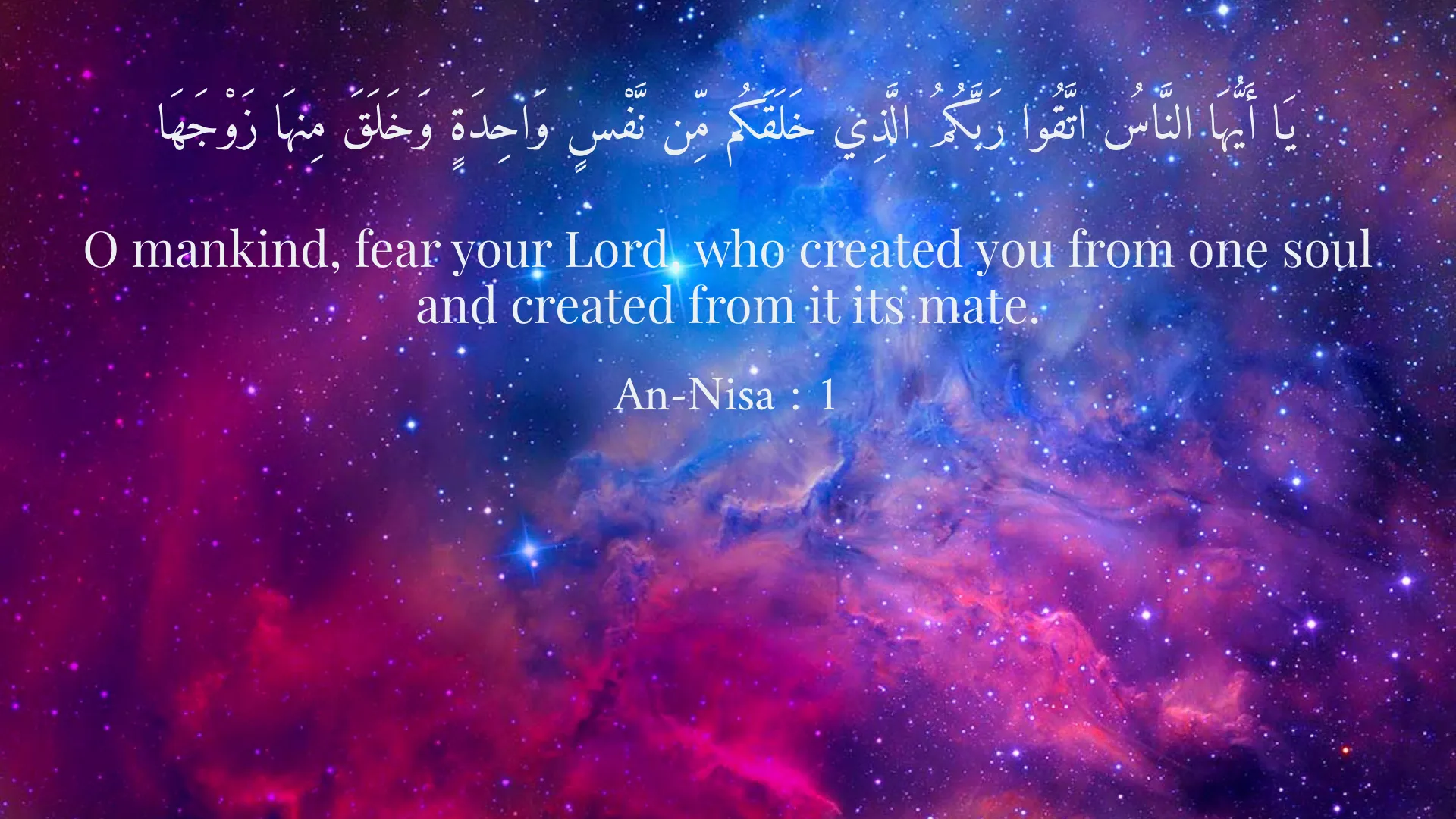
يَا أَيُّهَا النَّاسُ اتَّقُوا رَبَّكُمُ الَّذِي خَلَقَكُم مِّن نَّفْسٍ وَاحِدَةٍ وَخَلَقَ مِنهَا زَوْجَهَا
O mankind, fear your Lord, who created you from one soul and created from it its mate.
An-Nisa : 1
وَوَصَّيْنَا الإِنْسانَ بِوَالِدَيْهِ
And We have enjoined upon man [care] for his parents.
Luqman : 14
اللَّهُ يَسْتَخرِجُكُم مِّن بُطُونِ أُمَّهَاتِكُمْ
Allah is the one who brings people forth from the wombs of their mothers.
Al-Imran : 6
Short Story
One day, Imam Sadiq (AS) was sitting in a gathering when a person said to him, 'I am not satisfied with my family and I feel misaligned with them.' The Imam, smiling, replied, 'Family is like a tree; if its roots are strong, the fruits will also be sweet. Strive to implement love and respect in your relations with your family.' This saying of the Imam changed the person's perspective and helped him establish a better relationship with his family.