Quranic Answer
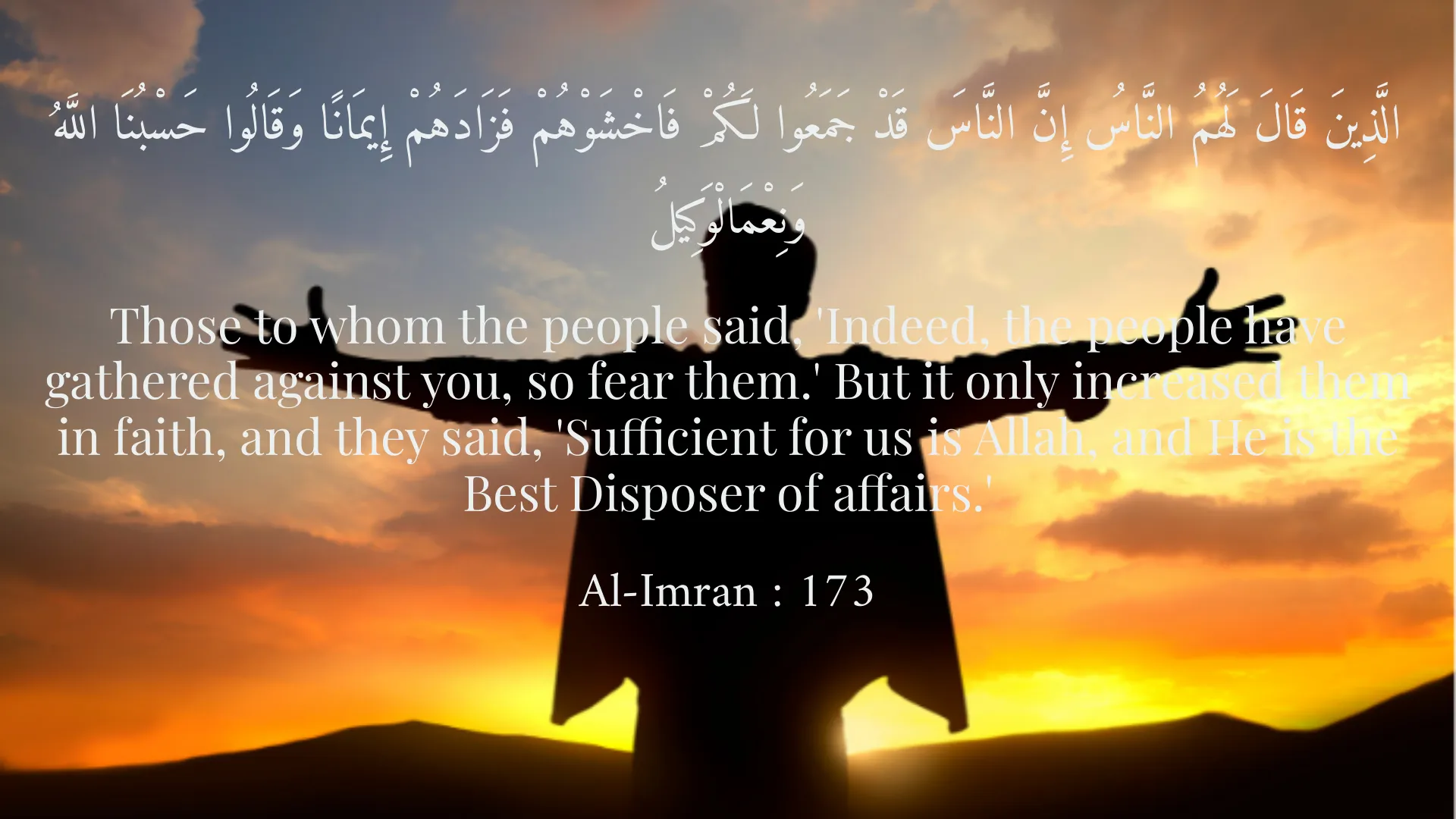
Fear is an inherent aspect of the human experience, encompassing a wide array of emotions and responses to perceived threats or dangers. In the context of the Holy Quran, fear is understood not merely as a negative emotion but as a natural part of life that can drive individuals toward spiritual awakening and reliance on Divine help. Within its teachings, the Quran provides profound insights and solutions for individuals grappling with fear. These solutions, found in various verses, reflect the depth of Islamic teachings and their applicability in everyday life. One compelling example can be found in Surah Al-Imran, verse 173, which states: 'Those to whom the people said, “Indeed, the people have gathered against you, so fear them.” But it only increased them in faith, and they said, “Sufficient for us is Allah, and He is the Best Disposer of affairs.”' This verse demonstrates a remarkable reaction to fear—the affected individuals did not allow the fear instigated by external threats to overcome them. Instead, they responded with increased faith and trust in Allah. This reaction highlights two essential concepts in Islam: reliance on Allah (Tawakkul) and the recognition of His sovereignty over all affairs. By placing their trust in Allah, believers are encouraged to confront fear with courage and resolve, reinforcing their faith and empowering them to face challenges head-on. Moreover, the Quran emphasizes the significance of consistently remembering Allah as a way to overcome fear. In Surah Ar-Ra’d, verse 28, it is stated, 'Unquestionably, by the remembrance of Allah hearts are assured.' This assertion underlines the psychological and spiritual benefits of engaging in the dhikr (remembrance) of Allah. When individuals consistently recall Allah’s presence, they find solace and comfort in His promises. This remembrance acts as a form of spiritual armor, shielding believers from the anxieties of the world. It is through the practice of dhikr that Muslims can cultivate a sense of peace in their hearts and minds, reducing the power that fear holds over them. Additionally, the Quran speaks to the importance of patience (Sabr) as a means of overcoming fear. Surah Al-Baqarah, verse 153 states: 'O you who have believed, seek help through patience and prayer.' This directive emphasizes that during moments of fear and uncertainty, believers are encouraged to turn to patience and prayer as tools for empowerment. Patience enables individuals to endure difficult situations without succumbing to despair or panic. It fosters resilience and cultivates a mindset open to learning and growth during trials. Similarly, through prayer, believers can connect deeply with Allah, seeking guidance and support. This connection not only strengthens their faith but also provides a refuge amidst turmoil. The intertwining of trust, remembrance, and patience as pathways to overcoming fear is a recurrent theme throughout the Quran. To illustrate, consider the diverse trials that various prophets faced according to Islamic tradition. Prophet Musa (Moses), for example, experienced immense fear when confronting Pharaoh. Yet, through his unwavering faith and reliance on Allah, he ultimately triumphed. This example serves as a powerful reminder that fear, when met with faith and divine assistance, can lead to divine favor and eventual triumph. Furthermore, it is important to recognize that fear may arise not only from external circumstances but also from within oneself—stemming from doubts, insecurities, and the unknown. In this regard, the Quran invites believers to confront and reflect on their inner fears with a perspective grounded in faith. Engaging with the Quranic verses, believers can find reassurance and strength, as they are reminded of Allah’s omnipotence and continual presence in their lives. However, understanding fear and its implications is a resilient educational endeavor. The Quran does not shy away from acknowledging fear as an emotion that can inspire action. Instead, it encourages individuals to utilize fear as a catalyst for introspection, growth, and a deeper connection to Allah. It reminds believers that while fear is a natural reaction, it does not have to dictate responses or outcomes. Additionally, scholars and Islamic thinkers have emphasized that the teachings of the Quran extend beyond mere acknowledgment of fear; they offer life-changing strategies that encourage individuals to consciously shift their focus away from their fears and toward their faith. These teachings serve to empower believers, reinforcing that while they may face fears, they are never alone when they place their trust in Allah. Ultimately, fear, as introduced in the Quran, serves a dual purpose: it can be a reminder of the transient nature of worldly concerns and a prompt for believers to seek greater closeness to Allah. Through the prism of reliance, remembrance, and patience, believers can transform their fear into a source of strength, propelling them toward spiritual fulfillment. In conclusion, reliance on Allah, the continuous remembrance of Him, and the exercise of patience are among the most significant solutions provided by the Quran for overcoming fear. By incorporating these principles into daily life, individuals not only confront their fears but also embark on a journey of spiritual elevation and profound peace. The Quranic narrative thus serves as both a source of solace during times of distress and a guide to navigating life with the assurance that Allah is ever-present, capable of all things, and a source of unending support. This understanding transforms the way Muslims approach fear, inviting them to face challenges with renewed faith and steadfast hearts.
Related Verses
الَّذِينَ قَالَ لَهُمُ النَّاسُ إِنَّ النَّاسَ قَدْ جَمَعُوا لَكُمْ فَاخْشَوْهُمْ فَزَادَهُمْ إِيمَانًا وَقَالُوا حَسْبُنَا اللَّهُ وَنِعْمَالْوَكِيلُ
Those to whom the people said, 'Indeed, the people have gathered against you, so fear them.' But it only increased them in faith, and they said, 'Sufficient for us is Allah, and He is the Best Disposer of affairs.'
Al-Imran : 173
أَلَا بِذِكْرِ اللَّهِ تَطْمَئِنُّ الْقُلُوبُ
Unquestionably, by the remembrance of Allah hearts are assured.
Ar-Ra'd : 28
يَاأَيُّهَا الَّذِينَ آمَنُوا اسْتَعِينُوا بِالصَّبْرِ وَالصَّلَاةِ ۚ إِنَّ اللَّهَ مَعَ الصَّابِرِينَ
O you who have believed, seek help through patience and prayer. Indeed, Allah is with the patient.
Al-Baqarah : 153
Short Story
One day, a wise scholar was asked about the fear of the future that prevents many from moving forward and striving. In response, he said: 'As long as you rely on God, there is no fear.' He shared the story of a brave farmer who, during a storm, worked on his land with faith and reaped the highest yield. As a result, his faith in God and effort in this tumultuous world made his fears vanish.