Quranic Answer
The Holy Quran, as a divine guide, presents a balanced and comprehensive approach to wealth and possessions. While it not only permits but sometimes encourages the lawful earning of livelihood and efforts to improve economic well-being, it strongly opposes excessive wealth accumulation and unrestrained capitalism that harms society and leads to injustice. The Quran views wealth as a tool; it is a means to achieve higher goals such as assisting the needy, promoting justice, and developing the earth, rather than an ultimate end for self-aggrandizement and boasting. From the Quranic perspective, wealth is a trust from Allah in human hands, which must be utilized in accordance with divine principles and ethical standards, and expended in good and righteous ways. One of the most significant concepts in the Quran concerning excessive wealth accumulation is 'Kanz' (hoarding). Kanz refers to the accumulation of gold, silver, and other assets with the intention of not spending them in the way of Allah or not paying due financial rights. The Quran strongly condemns hoarders and warns them of painful consequences in the afterlife. Verses 34 and 35 of Surah At-Tawbah explicitly address this, stating: "And those who hoard gold and silver and do not spend it in the way of Allah - give them tidings of a painful punishment." These verses clearly indicate that the mere accumulation of wealth is not the goal; rather, it is the failure to use it properly and stinginess in spending it on charity and helping the needy that is deemed reprehensible and blameworthy. Wealth must circulate and play an active role in the economy, not remain stagnant, serving only as a source of pride or a tool for power. The Quran places immense emphasis on the concept of 'economic justice.' The goal of the Islamic economic system is the equitable distribution of wealth and the prevention of its concentration in the hands of a select few. Verse 7 of Surah Al-Hashr states: "So that it (wealth) may not become a perpetual distribution among the rich from among you." This verse articulates a fundamental principle in Islamic economics, aiming to prevent monopolies and the creation of class divisions. Islam, through mechanisms such as Zakat, Sadaqah (charity), Khums (one-fifth tax), and Waqf (endowment), strives to circulate wealth within society and support the deprived. Zakat, as a compulsory financial obligation, not only purifies wealth but also acts as a social insurance for the poor and needy, reducing the wealth gap. These mechanisms are vital not only for supporting the vulnerable but also for ensuring the overall health and dynamism of the society's economy. Furthermore, the Quran strongly opposes 'Israf' (extravagance) and 'Tabdhir' (wastefulness and senseless squandering). Excessive capitalism is often accompanied by unrestrained consumerism and extravagance, which the Quran considers acts of Satan. Verse 27 of Surah Al-Isra states: "Indeed, the squanderers are brothers of the devils, and ever has Satan been to his Lord ungrateful." This prohibition of extravagance includes personal consumption, unproductive and aimless investments, and any form of wasting resources. On the other hand, the Quran emphasizes 'Qana'ah' (contentment) and 'I'tidal' (moderation) in all aspects of life, including the acquisition and consumption of wealth. This balance implies avoiding limitless greed and covetousness while striving to benefit from divine blessings. The Quran also refers to the testing nature of wealth. In many verses, wealth is presented as a 'fitnah' or 'test' for humanity. How does one use their wealth? Does one transgress through it and violate the rights of others, or does one use it for good and development? This perspective on wealth as a responsibility and a trial reminds humans that wealth is not solely for personal pleasure but a means to attain perfection and closeness to Allah. Therefore, while capitalism, in the sense of value creation, entrepreneurship, and wealth generation within lawful and ethical boundaries, is permissible, any form of excessive capitalism that leads to oppression, exploitation, hoarding, usury (riba), and disregard for the rights of the poor is strongly condemned and forbidden by the Quran. Islam advocates an economic system based on social justice, cooperation, and responsibility, where wealth should serve humanity and divine values, rather than humanity becoming enslaved by wealth and its greed.
Related Verses
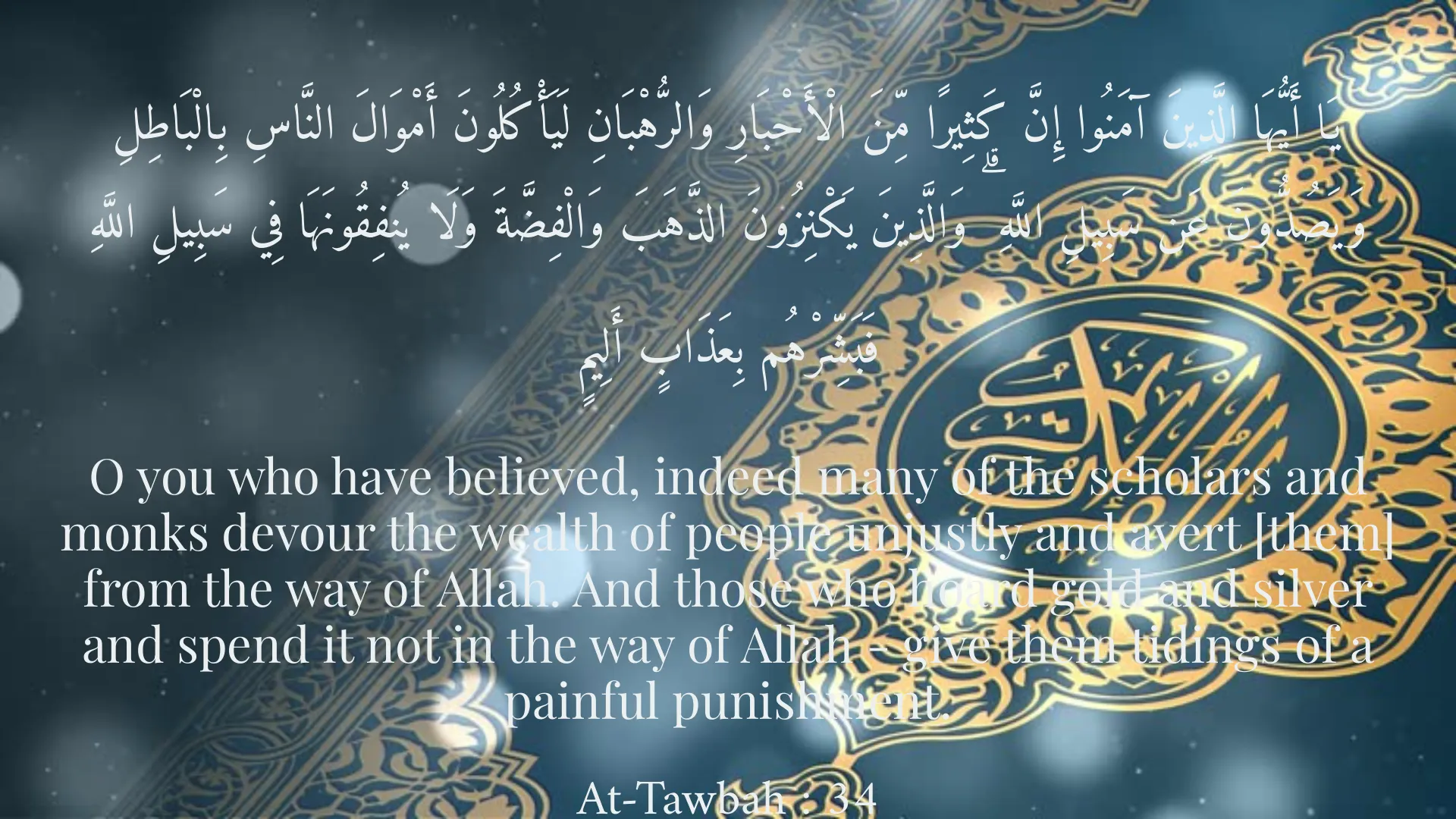
يَا أَيُّهَا الَّذِينَ آمَنُوا إِنَّ كَثِيرًا مِّنَ الْأَحْبَارِ وَالرُّهْبَانِ لَيَأْكُلُونَ أَمْوَالَ النَّاسِ بِالْبَاطِلِ وَيَصُدُّونَ عَن سَبِيلِ اللَّهِ ۗ وَالَّذِينَ يَكْنِزُونَ الذَّهَبَ وَالْفِضَّةَ وَلَا يُنفِقُونَهَا فِي سَبِيلِ اللَّهِ فَبَشِّرْهُم بِعَذَابٍ أَلِيمٍ
O you who have believed, indeed many of the scholars and monks devour the wealth of people unjustly and avert [them] from the way of Allah. And those who hoard gold and silver and spend it not in the way of Allah - give them tidings of a painful punishment.
At-Tawbah : 34
يَوْمَ يُحْمَىٰ عَلَيْهَا فِي نَارِ جَهَنَّمَ فَتُكْوَىٰ بِهَا جِبَاهُهُمْ وَجُنُوبُهُمْ وَظُهُورُهُمْ ۖ هَٰذَا مَا كَنَزْتُمْ لِأَنفُسِكُمْ فَذُوقُوا مَا كُنتُمْ تَكْنِزُونَ
On the Day a fever will be ignited for it in the fire of Hell, and their foreheads, their flanks, and their backs will be branded with it, [and it will be said], "This is what you hoarded for yourselves, so taste what you used to hoard."
At-Tawbah : 35
مَّا أَفَاءَ اللَّهُ عَلَىٰ رَسُولِهِ مِنْ أَهْلِ الْقُرَىٰ فَلِلَّهِ وَلِلرَّسُولِ وَلِذِي الْقُرْبَىٰ وَالْيَتَامَىٰ وَالْمَسَاكِينِ وَابْنِ السَّبِيلِ كَيْ لَا يَكُونَ دُولَةً بَيْنَ الْأَغْنِيَاءِ مِنكُمْ ۚ وَمَا آتَاكُمُ الرَّسُولُ فَخُذُوهُ وَمَا نَهَاكُمْ عَنْهُ فَانتَهُوا ۚ وَاتَّقُوا اللَّهَ ۖ إِنَّ اللَّهَ شَدِيدُ الْعِقَابِ
What Allah has restored to His Messenger from the people of the towns - it is for Allah and for the Messenger and for [his] near relatives and the orphans and the needy and the traveler - so that it will not be a perpetual distribution among the rich from among you. And whatever the Messenger has given you - take it; and what he has forbidden you - refrain from. And fear Allah; indeed, Allah is severe in penalty.
Al-Hashr : 7
Short Story
It is narrated in Saadi's Golestan that there was a very wealthy man who was self-sufficient in worldly possessions, yet he never gave anything from his assets to anyone and was constantly preoccupied with increasing his wealth. He added to his fortune every day but found no joy in it; instead, he perpetually feared losing it and dreaded future poverty and destitution. One day, a poor neighbor, who lived with dervish-like contentment, saw him and said: "O friend, if all this wealth brought you peace, then why is your face always troubled and the scent of fear emanating from you?" The rich man sighed and replied: "This wealth is like salty water; the more you drink of it, the thirstier you become, and your suffering increases. I wish for comfort, but this wealth has enslaved me instead of bringing ease." Saadi reminds us with this story that excessive wealth accumulation, if accompanied by stinginess and fear of the future, brings neither happiness nor peace; rather, it is a source of distress and trouble. True peace lies in contentment and giving, not in boundless hoarding.