Quranic Answer
From the perspective of the Holy Quran, worldly life is not a final destination, but rather a temporary passage and an unparalleled opportunity to achieve perfection and closeness to God. This view is deeply intertwined with the existential philosophy of humanity, imbuing every moment of its existence with meaning and purpose. The Quran clearly states that the creation of humans and the universe was not in vain or without purpose, but rather based on a transcendent wisdom and a specific ultimate goal. The most important axis of this meaning is 'worship' and 'servitude to God.' However, this worship is not limited to prayer and fasting; it encompasses all dimensions of life, from contemplation and reasoning to work and striving, social interactions, and serving creation. Every good deed and every step taken on the path of divine pleasure is considered a form of worship and gives human life a deeper meaning. This means that all our daily activities, if undertaken with divine intention and for the good and well-being of individuals and society, can become a means of drawing closer to God. Life, in the Quran's view, is a great 'test' and 'trial.' The Almighty God created death and life to test humanity and to distinguish those who are best in deeds. This test includes all aspects of human existence, from patience in the face of difficulties, gratitude for blessings, justice in relationships, kindness to others, to striving in the way of God and standing against oppression. The purpose of this test is the growth and elevation of the human soul, preparing it for an eternal life in the Hereafter. Every challenge and hardship we experience on this path is an opportunity to demonstrate our faith, will, and reliance on God. In fact, worldly life is like a field where the seeds of good deeds are sown so that their fruits may be reaped in the Hereafter. Therefore, every decision, every choice, and every action we take will have a direct impact on our ultimate destiny. The Quran places great emphasis on 'righteous deeds' (amal salih). Righteous deeds mean any action that is in accordance with divine teachings and is aimed at goodness and benevolence, benefiting not only the individual but also society and the world. True faith gains meaning only alongside righteous deeds, and these two are inseparable. A true believer is one who, with sincere faith, fulfills their duties towards God, themselves, their family, and society. This includes respecting the rights of others, being kind to parents, caring for orphans and the needy, establishing justice, avoiding corruption, and striving for the betterment of society. Righteous deeds are not merely the performance of religious rituals; they encompass a wide range of social and moral responsibilities, each contributing to the meaning of life and the attainment of felicity. These righteous deeds remain as a provision for the Hereafter, and their true reward will be given in the eternal world. Another fundamental dimension of the meaning of life in the Quran is 'knowledge and recognition of God.' The Quran invites humanity to contemplate and reason upon God's signs, both in the universe and within themselves. Knowing God's greatness and power, understanding His perfect attributes, and comprehending His wisdom in creation leads humanity to pure devotion. This knowledge not only brings spiritual tranquility but also guides humanity on the right path in life. The closer one gets to understanding God's names and attributes, the more fruitful and meaningful their life becomes. This recognition frees them from worldly and transient attachments, leading them towards a higher purpose. Ultimately, the true meaning of life from the Quran's perspective is 'attaining the meeting with Allah' (Liqa' Allah) and 'His pleasure' (Ridhwan Allah). This world is a place for planting, and the Hereafter is a place for reaping. The ultimate goal of a believer is to enter Paradise and enjoy the eternal blessings of God, which are the result of their righteous deeds and purposeful life in this world. But higher than the blessings of Paradise is the pleasure and satisfaction of God, which is considered the greatest felicity and success for humanity. A Quranic life is one in which every moment is accompanied by the remembrance of God, good intentions, and righteous deeds, so that one can emerge honorably from the divine test and return to their Creator, achieving eternal salvation. This perspective gives human life depth, direction, and endless motivation, saving it from emptiness and confusion, and bestowing inner peace and assurance.
Related Verses
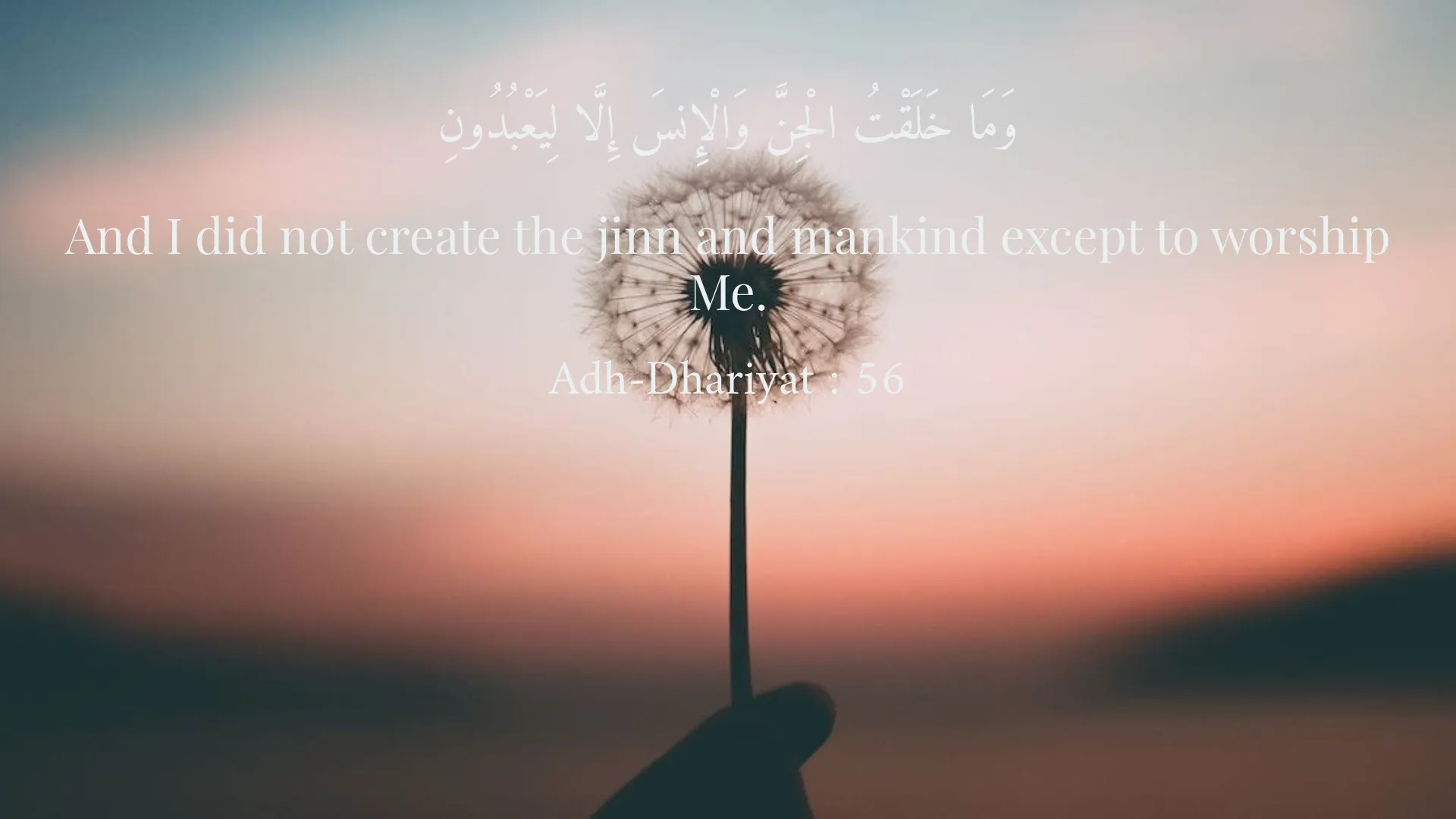
وَمَا خَلَقْتُ الْجِنَّ وَالْإِنسَ إِلَّا لِيَعْبُدُونِ
And I did not create the jinn and mankind except to worship Me.
Adh-Dhariyat : 56
الَّذِي خَلَقَ الْمَوْتَ وَالْحَيَاةَ لِيَبْلُوَكُمْ أَيُّكُمْ أَحْسَنُ عَمَلًا ۚ وَهُوَ الْعَزِيزُ الْغَفُورُ
He who created death and life to test you [as to] which of you is best in deed - and He is the Exalted in Might, the Forgiving.
Al-Mulk : 2
وَالْعَصْرِ
By time,
Al-Asr : 1
إِنَّ الْإِنسَانَ لَفِي خُسْرٍ
Indeed, mankind is in loss,
Al-Asr : 2
إِلَّا الَّذِينَ آمَنُوا وَعَمِلُوا الصَّالِحَاتِ وَتَوَاصَوْا بِالْحَقِّ وَتَوَاصَوْا بِالصَّبْرِ
Except for those who have believed and done righteous deeds and advised each other to truth and advised each other to patience.
Al-Asr : 3
Short Story
In Saadi's Golestan, it is narrated that a just king had a loyal servant. One day, the king asked the servant: "You have served me for a lifetime, and with great loyalty, you gathered all that I possessed. Now tell me, what have you accumulated from this pious life for your eternal tomorrow?" The servant humbly replied: "O King, everything gathered in this world was transient and perishable. But I learned that the true meaning of life is not in accumulating wealth, but in gaining the Creator's pleasure. Every day I served people with a pure intention, and every night I sat in remembrance of God, I made it provisions for my journey to the Hereafter. True wealth is righteous deeds that never perish, and the Lord's pleasure is an eternal treasure." The king was greatly pleased with the servant's words and realized that he had grasped the true meaning of life; that life is a field for cultivating the Hereafter and an opportunity for servitude and benevolence.