Quranic Answer
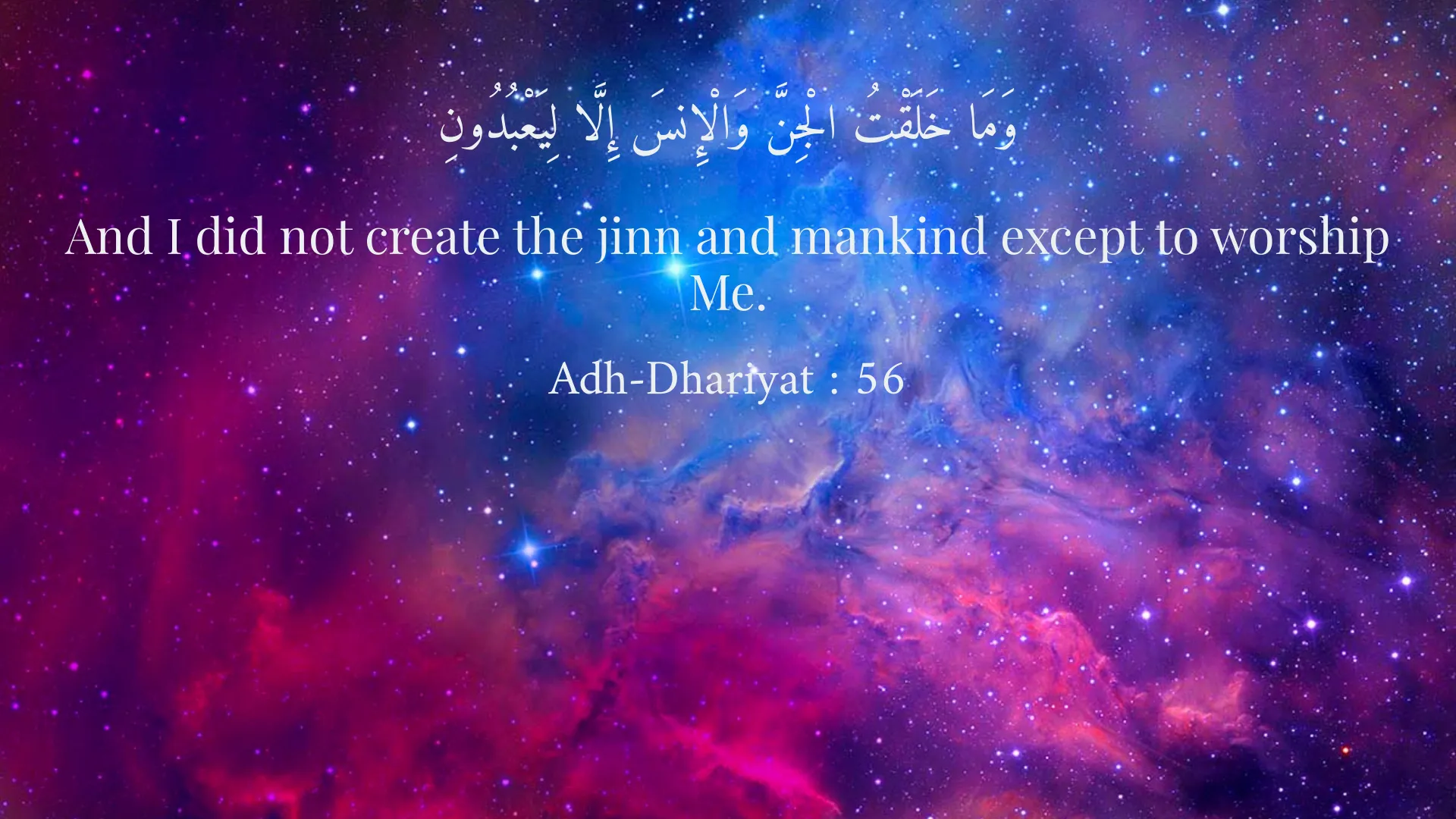
The ultimate purpose of life is a profound question that humanity has sought answers for since time immemorial. In Islam, as illuminated by the clear teachings of the Holy Quran, this purpose is articulated with remarkable clarity and depth. The Quran presents worldly life not merely as a temporary existence, but as a crucial arena for human growth, self-realization, and connection with the ultimate source of being: Allah (God). The foundational verse articulating this purpose is found in Surah Adh-Dhariyat (51:56): 'And I did not create the jinn and mankind except to worship Me.' This verse serves as the cornerstone for understanding the purpose of existence. However, 'worship' (Ibadah) in this Quranic context extends far beyond mere ritualistic acts like prayer and fasting. It encompasses a comprehensive and all-encompassing lifestyle that includes every aspect of human existence. Every good deed, every pure thought, and every step taken towards truth and justice is considered an act of worship.
This deep understanding of worship means recognizing and knowing Allah, obeying His commands in all facets of life, and striving to earn His pleasure. Human life in this world is a precious opportunity to build a bridge towards eternal bliss in the Hereafter through our actions and intentions. Every step taken in the pursuit of knowledge, engaging in beneficial work, helping others, striving for justice, upholding honesty, fulfilling covenants, and embracing any moral virtue can be considered an embodiment of worship. This perspective helps individuals find deep meaning in every moment of their lives, even during the most challenging circumstances, ensuring they never lose sight of their sublime goal.
The Quran metaphorically describes this world as the 'sowing field' for the Hereafter; meaning, this world is the ground for planting the seeds of deeds that will bear fruit in the afterlife. As 'Khalifatullah' (vicegerent of God) on Earth, humanity bears the responsibility of nurturing and improving society and the environment. This responsibility includes establishing justice and fairness, alleviating oppression, promoting good, and forbidding evil. Any benevolent act performed in service to creation and for the betterment of society is in itself a form of worship and a fulfillment of life's ultimate purpose. The goal is not for humans to renounce worldly blessings, but to utilize them in the best possible way to reach the exalted destination.
The path to achieving this purpose is not without its trials and tribulations. The Quran emphasizes that worldly life is full of tests to reveal the true essence of individuals: 'He who created death and life to test you [as to] which of you is best in deed' (Surah Al-Mulk, 67:2). These trials are opportunities for growth, patience, gratitude, and steadfastness in the path of truth. The purpose of these tests is not to punish humanity, but to guide them towards perfection and higher spiritual ranks. Indeed, every hardship endured in seeking Allah's pleasure is a step closer to the ultimate goal.
Furthermore, attaining true inner peace and spiritual tranquility is a significant outcome of understanding and walking the path of life's purpose. The Quran declares: 'Unquestionably, by the remembrance of Allah hearts are assured' (Surah Ar-Ra'd, 13:28). This peace is not achieved through accumulating wealth and status, but through a profound connection with the Creator of existence and living according to divine principles. By grasping this purpose, individuals no longer feel emptiness or meaninglessness in their lives; instead, they see every moment as an opportunity for growth and drawing closer to Allah. The divine prophets were sent to guide humanity towards this noble objective. They came to lead humanity from the darkness of ignorance and deviation to the light of knowledge and salvation. Their teachings, including the Holy Quran, serve as a roadmap, showing the path to perfection and divine pleasure step by step. Thus, the ultimate purpose of life, in a nutshell, is a conscious and voluntary return to the Origin of existence, carrying a baggage of righteous deeds and a heart overflowing with divine knowledge and love, so that we may reach a destination where happiness knows no end—the paradise of Allah's good pleasure. This ultimate destination motivates humans to be the best version of themselves and to build a fruitful and meaningful life.
Related Verses
وَمَا خَلَقْتُ الْجِنَّ وَالْإِنسَ إِلَّا لِيَعْبُدُونِ
And I did not create the jinn and mankind except to worship Me.
Adh-Dhariyat : 56
الَّذِي خَلَقَ الْمَوْتَ وَالْحَيَاةَ لِيَبْلُوَكُمْ أَيُّكُمْ أَحْسَنُ عَمَلًا ۚ وَهُوَ الْعَزِيزُ الْغَفُورُ
[He] who created death and life to test you [as to] which of you is best in deed - and He is the Exalted in Might, the Forgiving.
Al-Mulk : 2
الَّذِينَ آمَنُوا وَتَطْمَئِنُّ قُلُوبُهُم بِذِكْرِ اللَّهِ ۗ أَلَا بِذِكْرِ اللَّهِ تَطْمَئِنُّ الْقُلُوبُ
Those who have believed and whose hearts are assured by the remembrance of Allah. Unquestionably, by the remembrance of Allah hearts are assured.
Ar-Ra'd : 28
Short Story
It is recounted in Saadi's Bustan that a man's house was destroyed by a flood, and he sat in a corner, overwhelmed with grief. A compassionate sage passed by and, seeing his distraught state, said to him with a gentle and kind tone: 'O good man, why are you so sorrowful and immersed in despair? Although the flood has swept away your house, it has not taken your life! Your spirit still resides within you, and with this precious capital, you can build hundreds of new houses, or more importantly, construct an eternal dwelling in the Hereafter with righteous deeds that no flood can ever destroy. This world is merely a passing bridge, and what truly remains are good reputation and virtuous actions.' Upon hearing these wise words, the man came to his senses, lifted his head, and with a fresh perspective on life, realized that the true purpose is not in clinging to what is perishable, but in building the eternal abode with the provisions of piety and good deeds.