Quranic Answer
The Holy Quran, as the ultimate guide for humanity, does not provide a direct, explicit instruction saying "be silent at this time and speak at that time." However, by pondering its noble verses, clear principles and criteria can be derived for discerning when and how to speak or remain silent. The core of these teachings revolves around wisdom in speech, abstaining from vain and harmful words, and emphasizing truthful and beneficial discourse. From a Quranic perspective, silence is a virtue that is often praised, but not in an absolute or constant sense. Silence is highly commendable when speaking would only lead to corruption, contention, backbiting, slander, falsehood, or any form of vain speech. Allah frequently warns believers against idle talk (laghw), considering it a characteristic of true believers who turn away from it. For instance, in Surah Al-Mu'minoon, verse 3, it states: "And they who turn away from ill speech." This verse clearly indicates that words that bring no benefit, or worse, cause harm, should be abandoned, and one should opt for silence in such situations. Backbiting and slander are grave sins vehemently condemned in the Quran. Verse 12 of Surah Al-Hujurat likens backbiting to eating the flesh of one's dead brother, signifying the extreme ugliness and detestability of this act. Therefore, in gatherings of gossip, slander, and malicious talk, silence, and even leaving the gathering, becomes an absolute necessity. Furthermore, silence is very wise when one lacks sufficient knowledge, or when one's speech would merely lead to disputes and futile arguments. The Quran advocates for graceful argumentation but condemns contention and verbal quarrels that lack the goal of guidance and reform. Silence in the face of the ignorant and those who only seek fruitless debates is considered a trait of the servants of the Most Gracious (Ibad-ur-Rahman), as stated in Surah Al-Furqan, verse 63: "And when the ignorant address them [harshly], they say [only], 'Peace.'" This kind of silence does not mean refraining from confronting injustice, but rather avoiding entry into the realm of idle talk and fruitless contention. On the other hand, there are times when silence is not merely an absence of virtue but a sin and a neglect of duty. The Holy Quran encourages believers to "enjoin good and forbid evil" (Amr bil Ma'ruf wa Nahi anil Munkar). This duty necessitates speaking, advising, and guiding others. In Surah Al-Imran, verse 104, it states: "And let there be [arising] from you a nation inviting to [all that is] good, enjoining what is right and forbidding what is wrong, and those will be the successful." Silence in the face of injustice, sin, and deviation, when one possesses the ability to speak and rectify, is condemned by the Quran. In Surah An-Nisa, verse 135, the necessity of testifying truthfully, even against oneself or one's closest relatives, is emphasized: "O you who have believed, be persistently firm in justice, witnesses for Allah, even if it be against yourselves or parents and relatives." This verse demonstrates that speaking the truth in all circumstances, even with difficulty, is one of the most essential duties, and in these cases, silence is not permissible. Speaking with good intention, for the purpose of promoting knowledge, guidance, bringing comfort to others, and establishing justice is also highly recommended. The Quran commands Moses and Aaron (peace be upon them) when confronting Pharaoh to speak to him gently: "And speak to him a soft word; perhaps he may be reminded or fear [Allah]" (Taha, 44). This indicates that even when dealing with oppressors, if there is hope for their guidance, one should speak with kind and gentle words. Furthermore, speaking for the remembrance of Allah, reciting the Quran, and anything that brings divine pleasure, are among the highest virtues of speech. In summary, the Quranic criterion for speaking or being silent is the benefit, truthfulness, and the positive or negative impact of speech. Silence in the face of falsehood, idleness, backbiting, and futile arguments is a virtue, while speaking for the establishment of truth, enjoining good and forbidding evil, testifying justly, guiding others, and remembering Allah is obligatory or highly recommended. Wisdom here means placing speech in its rightful place and silence in its rightful place so that individual and social life may flourish according to divine principles. Therefore, every believer must, by reflecting on their circumstances and intentions, decide whether it is time for silence or time for speech, and in both instances, their goal should be the pleasure of Allah and the well-being of society.
Related Verses
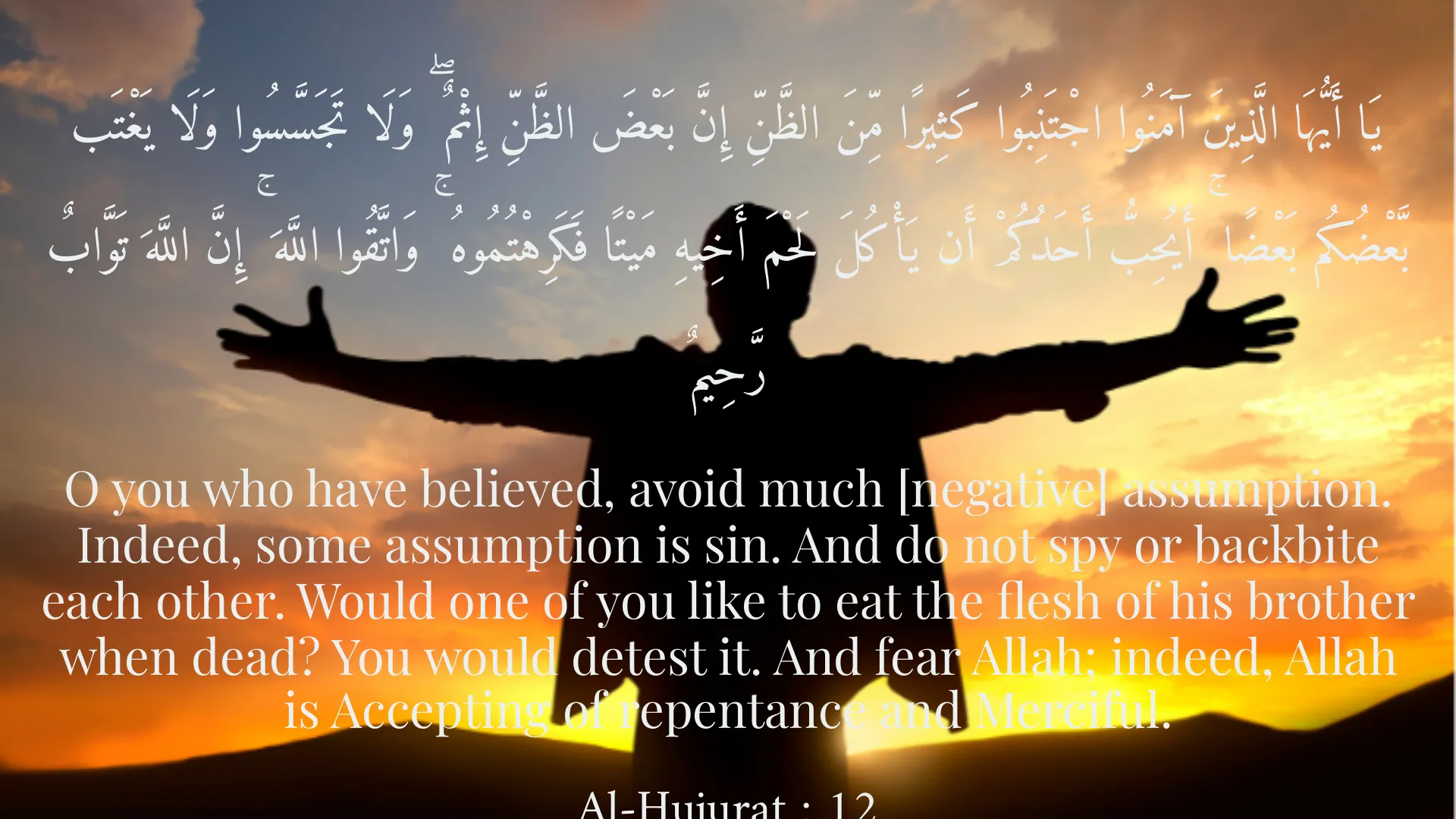
يَا أَيُّهَا الَّذِينَ آمَنُوا اجْتَنِبُوا كَثِيرًا مِّنَ الظَّنِّ إِنَّ بَعْضَ الظَّنِّ إِثْمٌ ۖ وَلَا تَجَسَّسُوا وَلَا يَغْتَب بَّعْضُكُم بَعْضًا ۚ أَيُحِبُّ أَحَدُكُمْ أَن يَأْكُلَ لَحْمَ أَخِيهِ مَيْتًا فَكَرِهْتُمُوهُ ۚ وَاتَّقُوا اللَّهَ ۚ إِنَّ اللَّهَ تَوَّابٌ رَّحِيمٌ
O you who have believed, avoid much [negative] assumption. Indeed, some assumption is sin. And do not spy or backbite each other. Would one of you like to eat the flesh of his brother when dead? You would detest it. And fear Allah; indeed, Allah is Accepting of repentance and Merciful.
Al-Hujurat : 12
وَقُل لِّعِبَادِي يَقُولُوا الَّتِي هِيَ أَحْسَنُ ۚ إِنَّ الشَّيْطَانَ يَنزَغُ بَيْنَهُمْ ۚ إِنَّ الشَّيْطَانَ كَانَ لِلْإِنسَانِ عَدُوًّا مُّبِينًا
And tell My servants to say that which is best. Indeed, Satan induces [dissension] among them. Indeed Satan is ever, to man, a clear enemy.
Al-Isra : 53
وَلْتَكُن مِّنكُمْ أُمَّةٌ يَدْعُونَ إِلَى الْخَيْرِ وَيَأْمُرُونَ بِالْمَعْرُوفِ وَيَنْهَوْنَ عَنِ الْمُنكَرِ ۚ وَأُولَٰئِكَ هُمُ الْمُفْلِحُونَ
And let there be [arising] from you a nation inviting to [all that is] good, enjoining what is right and forbidding what is wrong, and those will be the successful.
Al-Imran : 104
Short Story
One day, as recounted in Sa'di's Gulistan, a very talkative man sat before a wise sage, speaking endlessly about various topics and trying to appear knowledgeable and intelligent. The sage listened calmly with a kind smile. When the man finally paused to catch his breath, the sage gently told him: "Two things are far from wisdom: silence when it is time to speak, and speaking when it is time for silence." The man pondered these words. The sage continued: "Speech is like medicine; if it is timely and in due measure, it is a remedy, but if untimely and excessive, it is a malady. When you must defend the truth, let your words be a sharp sword, and when speaking leads to nothing but gossip and contention, let your silence be a treasure of tranquility." The man bowed his head and from then on, before every word, he would reflect: Is this word a remedy or a malady? Is it time to speak or to be silent?