Quranic Answer
The need for external validation is a profound challenge many individuals face throughout their lives. This desire often stems from deep-seated feelings of inadequacy, fear of rejection, or a longing for acceptance within a social group. From the perspective of the Holy Quran, the answer to this question lies in understanding one's true status as a human being, the purpose of creation, and the concept of genuine reliance (Tawakkul) upon Allah. The Quran, with its profound and comprehensive outlook, offers solutions to break free from these emotional dependencies and achieve true inner peace and self-esteem, attainable only through connection with the infinite source of power and wisdom: Allah the Almighty. The first and most crucial principle the Quran establishes in this regard is the principle of Tawhid (Oneness of God) and Tawakkul (reliance upon Allah). When a person views their entire existence in relation to Allah and accepts that He alone is the absolute power and the source of all good and evil, they understand that true and lasting validation comes only from Him. Surah At-Talaq, verse 3, states: "And whoever relies upon Allah – He is sufficient for him. Indeed, Allah will accomplish His purpose. Allah has already set for everything a [decreed] extent." This verse clearly indicates that whenever a person entrusts all their affairs to Allah and places complete trust in Him, Allah will be sufficient for them. The need for others' validation often arises from a sense of inadequacy; Tawakkul replaces this feeling with confidence in divine power and sufficiency. When we know that our Creator is our best guardian and supporter, we no longer need to seek the approval of creation. The second point the Quran highlights is the importance of pure intention (Ikhlas) in all actions. Often, people seek external validation because they want their deeds to be praised or to avoid criticism. The Quran teaches believers to perform every action solely for the pleasure of Allah. Surah Al-Insan, verse 9, states: "We feed you only for the countenance of Allah. We do not want from you reward or gratitude." This verse illustrates that our intention in doing good deeds should only be to gain Allah's pleasure, not to expect reward or praise from people. When intentions are pure, a person is freed from the shackles of others' expectations and judgments, finding inner peace, because the value of their work no longer depends on the opinions of others but on Allah's acceptance. The Quran also reminds humanity that true honor and abasement are solely in the hands of Allah. Surah Al-Imran, verse 26, declares: "Say, 'O Allah, Owner of Sovereignty, You give sovereignty to whom You will and You take sovereignty from whom You will. You honor whom You will and You humble whom You will. In Your hand is [all] good. Indeed, You are over all things competent.'" This verse teaches us that our honor and abasement are not in the hands of people, nor do they depend on their opinions. When this truth settles in one's heart, they no longer resort to creatures to gain honor and respect, nor do they fear potential humiliation in others' eyes, because the only standard for honor and value is Allah's gaze. Furthermore, the Quran encourages believers to stand firm on truth, even in the face of blame and rebuke from others. Surah Al-Ma'idah, verse 54, describes believers as those who: "...and they will not fear the blame of a blamer. That is the favor of Allah; He bestows it upon whom He wills. And Allah is all-Encompassing and Knowing." This verse carries a powerful message for those who seek validation from others: a true believer is one who, in the path of truth and duty, does not fear the criticisms and reproaches of people. This signifies a spiritual and emotional maturity that frees an individual from the servitude of others' opinions. When a person is certain that their path is approved by Allah, they will have no more concerns about superficial and changeable human judgments. To overcome this desire for external validation, the Quran also provides practical solutions: strengthening the relationship with Allah through prayer, remembrance (Dhikr), supplication (Dua), and recitation of the Quran; contemplating divine verses and the grandeur of creation; and understanding that every human being has been created with special dignity and honor by Allah (Indeed, We have created man in the best of stature - Surah At-Tin, verse 4). When a person understands their true worth, bestowed upon them by Allah, they no longer need others' stamp of approval to validate their existence and value. This divine self-knowledge is the foundation of true self-esteem. Ultimately, overcoming the need for external validation does not mean indifference to society or constructive feedback; rather, it means emotional and psychological independence from these validations. One can listen to constructive criticism, but weigh their self-worth and actions solely in the balance of divine pleasure. This true freedom brings unparalleled peace and enables a person to live with greater confidence and sincerity, achieving higher human objectives. The Quran invites us to remove the criteria for evaluating our actions and character from the fluctuating and unstable hands of humans and place it in the hands of the absolute and constant power of Allah. This fundamental transformation is the key to inner peace and spiritual strength.
Related Verses
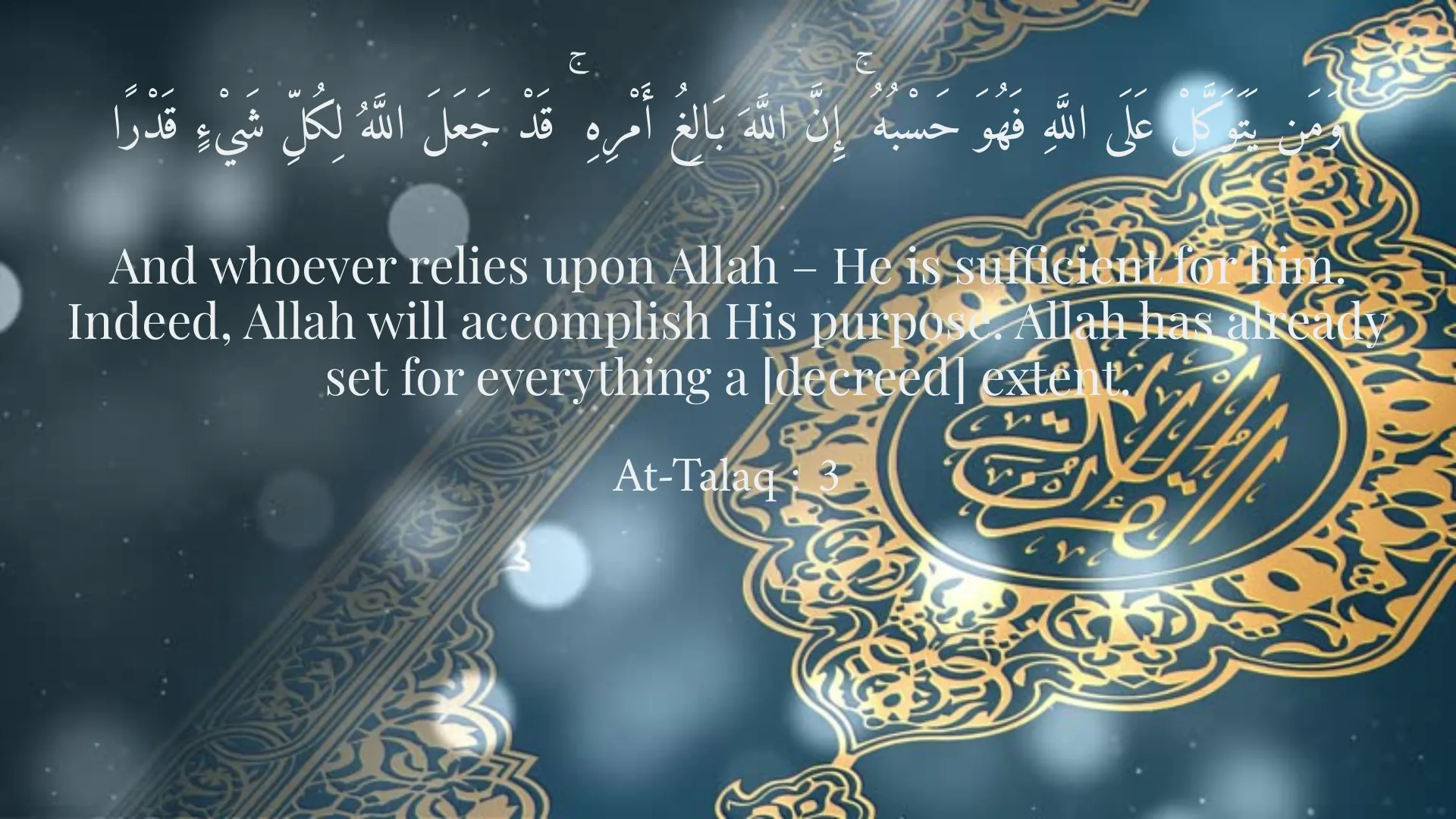
وَمَن يَتَوَكَّلْ عَلَى اللَّهِ فَهُوَ حَسْبُهُ ۚ إِنَّ اللَّهَ بَالِغُ أَمْرِهِ ۚ قَدْ جَعَلَ اللَّهُ لِكُلِّ شَيْءٍ قَدْرًا
And whoever relies upon Allah – He is sufficient for him. Indeed, Allah will accomplish His purpose. Allah has already set for everything a [decreed] extent.
At-Talaq : 3
إِنَّمَا نُطْعِمُكُمْ لِوَجْهِ اللَّهِ لَا نُرِيدُ مِنكُمْ جَزَاءً وَلَا شُكُورًا
We feed you only for the countenance of Allah. We do not want from you reward or gratitude.
Al-Insan : 9
يَا أَيُّهَا الَّذِينَ آمَنُوا مَن يَرْتَدَّ مِنكُمْ عَن دِينِهِ فَسَوْفَ يَأْتِي اللَّهُ بِقَوْمٍ يُحِبُّهُمْ وَيُحِبُّونَهُ أَذِلَّةٍ عَلَى الْمُؤْمِنِينَ أَعِزَّةٍ عَلَى الْكَافِرِينَ يُجَاهِدُونَ فِي سَبِيلِ اللَّهِ وَلَا يَخَافُونَ لَوْمَةَ لَائِمٍ ۚ ذَٰلِكَ فَضْلُ اللَّهِ يُؤْتِيهِ مَن يَشَاءُ ۚ وَاللَّهُ وَاسِعٌ عَلِيمٌ
O you who have believed, whoever of you reverts from his religion - Allah will bring forth [in place of them] a people He will love and who will love Him [who are] humble toward the believers, powerful against the disbelievers; they strive in the way of Allah and do not fear the blame of a blamer. That is the favor of Allah; He bestows it upon whom He wills. And Allah is all-Encompassing and Knowing.
Al-Ma'idah : 54
Short Story
It is narrated that in ancient times, there was a king deeply enamored with the praise and flattery of his courtiers. Every day, his advisors would shower him with sweet, exaggerated words of admiration, and the king would swell with pride upon hearing them. One day, a pious and reclusive dervish, renowned for his wisdom and honesty, came to visit the king. The king asked him, "O Dervish, why is it that you do not speak of our virtues and grandeur like others? Have you become independent of our generosity, or do you not deem us worthy of praise?" The dervish replied with a calm smile, "O King, the praise of creatures is like writing on water, which quickly vanishes. My heart is filled with the remembrance of the Almighty, and there is no room left to occupy it with the praises of creation. I speak the truth, so perhaps this word may free you from the servitude of human validation; for the only satisfaction that endures is the satisfaction of the Creator, not the praise of creation, which is here today and gone tomorrow." The king was touched by the dervish's words, and thereafter, he less indulged in flattery and more considered the pleasure of God, finding a peace in his heart that he had not found amidst all the praises before.