Quranic Answer
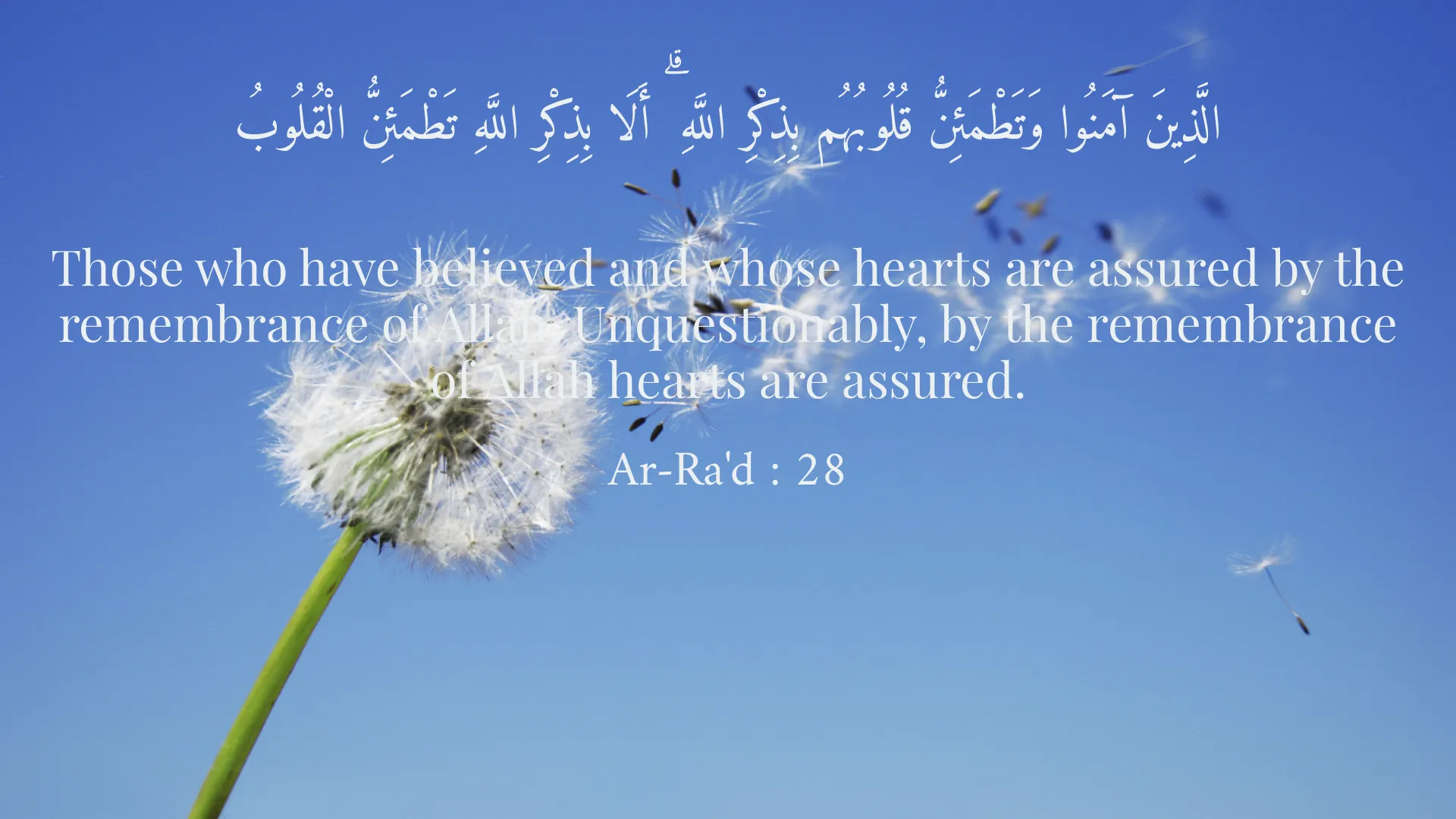
My dear brother or sister, your question is profound and insightful, indicating your true search for inner peace. Many believers, at various stages of their lives, encounter this very question. Indeed, the answer to this lies at the heart of the teachings of the Holy Quran, showing us that true peace of heart transcends the mere performance of outward acts of worship; rather, it originates from the nature and quality of our connection with God and our perspective on existence. The Quran clearly states that the human heart finds tranquility through the remembrance of Allah, but this remembrance carries a much broader meaning than merely performing ritual prayers or fasting. In Surah Ar-Ra'd, verse 28, the Holy Quran explicitly states: "الَّذِينَ آمَنُوا وَتَطْمَئِنُّ قُلُوبُهُم بِذِكْرِ اللَّهِ ۗ أَلَا بِذِكْرِ اللَّهِ تَطْمَئِنُّ الْقُلُوبُ" which means: "Those who have believed and whose hearts are assured by the remembrance of Allah. Unquestionably, by the remembrance of Allah hearts are assured." This verse is the focal point of your answer. The term "Dhikr" (remembrance) in the Quran does not merely mean the verbal repetition of words, but rather refers to the constant presence of God in one's life, awareness of His oversight, attention to His commands, and mindfulness of one's actions and thoughts. When our acts of worship, be it prayer, fasting, charity, or Hajj, are not accompanied by this "true Dhikr" – meaning our hearts are preoccupied with worldly matters during those moments, and we don't feel God's presence with our entire being – the expected tranquility will not be achieved. Praying without a present heart, fasting without controlling the tongue and eyes, and giving charity without sincerity, are like watering a tree whose roots have not fully penetrated the soil; it will not yield true fruit. One of the most significant reasons for the lack of inner peace, despite performing acts of worship, can be a "lack of sincerity" or the "contamination of the heart with sins." Sometimes, a person performs worship, but their intention is not purely for the sake of Allah's pleasure; for example, it might be for showing off, gaining social prestige, or alleviating a sense of guilt. When worship is performed for other than God, its spiritual fruits will not be complete. Furthermore, sins, even those committed in private that no one knows about, cast a veil over the heart and prevent the divine light from shining through, hindering the feeling of peace. Sins are like rust on the mirror of the heart, preventing the reflection of divine truths and the reception of tranquility from the Lord. Cleansing the heart from sins through sincere repentance (Tawbah Nasuh) and continuous seeking of forgiveness (Istighfar) is a very crucial step on the path to peace. The Quran states: "وَلَا تَمُوتُنَّ إِلَّا وَأَنتُم مُّسْلِمُونَ" (Al-Imran, 102) meaning: "And do not die except while you are Muslims." This verse implicitly refers to being pure from sin at the moment of death, which necessitates living a life on the right path and avoiding disobedience. Another factor is "excessive attachment to this world" and forgetting the Hereafter. Many of us, in our daily lives, become engrossed in material affairs, economic concerns, social status, and worldly desires. These attachments, and the greed to achieve them, cause the heart to be constantly anxious and worried. Even if we outwardly worship, but our entire thoughts are occupied with the world, how can we expect peace? The human heart has only one center and cannot simultaneously be filled with the love of the world and the love of God. The Quran, in numerous verses, points to the impermanence and deceptiveness of this world and calls us towards the permanence and everlasting nature of the Hereafter. This focus on the world and forgetfulness of death and the Day of Judgment is one of the greatest obstacles to true peace. In Surah Al-Hadid, verse 20, we read: "اعْلَمُوا أَنَّمَا الْحَيَاةُ الدُّنْيَا لَعِبٌ وَلَهْوٌ وَزِينَةٌ وَتَفَاخُرٌ بَيْنَكُمْ وَتَكَاثُرٌ فِي الْأَمْوَالِ وَالْأَوْلَادِ" meaning: "Know that the life of this world is only amusement and diversion and adornment and boasting among yourselves and competition in increase of wealth and children." When a person realizes this truth, they are freed from the bondage of greed and avarice, and their heart turns towards eternal peace. Furthermore, a "lack of true reliance on Allah" (Tawakkul) can be a significant barrier. A person might pray and supplicate, but in practice, worries about the future, fear of failure, and uncertainty about divine provision can disturb their heart. Tawakkul means complete trust in God's planning and will, and believing that He desires the best for His servants. One who truly relies on Allah knows that all matters are in His hands and that He wills good for His servant, thus they do not worry about the outcomes of affairs and find peace. In Surah At-Talaq, verse 3, Allah says: "وَمَن يَتَوَكَّلْ عَلَى اللَّهِ فَهُوَ حَسْبُهُ" meaning: "And whoever relies upon Allah – then He is sufficient for him." This verse is a divine guarantee for those who surrender their hearts to Him. Finally, inner peace is the result of a "comprehensive and balanced" life, where all dimensions of human existence – physical, spiritual, intellectual, and social – are aligned with the pleasure of Allah. This includes fulfilling the rights of others, earning lawful sustenance, adhering to good morals, studying and contemplating the Quran, and helping the needy. Sometimes our lack of peace stems from "injustices" we have committed against others, or "grudge and envy" we have harbored in our hearts. The Quran advises us to approach Allah with a sound heart: "يَوْمَ لَا يَنفَعُ مَالٌ وَلَا بَنُونَ إِلَّا مَنْ أَتَى اللَّهَ بِقَلْبٍ سَلِيمٍ" (Ash-Shu'ara, verses 88-89) meaning: "The Day when neither wealth nor children will benefit, except him who comes to Allah with a sound heart." A sound heart is one that is purified from polytheism, hypocrisy, malice, envy, and all moral vices. Therefore, to achieve true peace, we must undertake a deep introspection of our relationship with God and His creation, perform worship with presence of heart and sincerity, abstain from sins, reduce worldly attachments, and increase our reliance on the Creator of all existence. This path is gradual and requires patience and steadfastness, but its fruit is a lasting and profound peace that nothing in the world can replace.
Related Verses
الَّذِينَ آمَنُوا وَتَطْمَئِنُّ قُلُوبُهُم بِذِكْرِ اللَّهِ ۗ أَلَا بِذِكْرِ اللَّهِ تَطْمَئِنُّ الْقُلُوبُ
Those who have believed and whose hearts are assured by the remembrance of Allah. Unquestionably, by the remembrance of Allah hearts are assured.
Ar-Ra'd : 28
إِلَّا مَنْ أَتَى اللَّهَ بِقَلْبٍ سَلِيمٍ
Except he who comes to Allah with a sound heart.
Ash-Shu'ara : 89
إِنَّمَا الْمُؤْمِنُونَ الَّذِينَ إِذَا ذُكِرَ اللَّهُ وَجِلَتْ قُلُوبُهُمْ وَإِذَا تُلِيَتْ عَلَيْهِمْ آيَاتُهُ زَادَتْهُمْ إِيمَانًا وَعَلَىٰ رَبِّهِمْ يَتَوَكَّلُونَ
The believers are only those who, when Allah is mentioned, their hearts tremble, and when His verses are recited to them, it increases them in faith; and upon their Lord they rely.
Al-Anfal : 2
Short Story
It is narrated that there was a wealthy man who was constantly worried and restless. The more he worshipped and gave charity, the less peace of mind he found. One day, he went to a wise dervish and told him of his condition. The dervish, with a kind smile, said: 'My dear man, you give from your hand, but not from your heart. Your hand is busy with worship, but your heart is attached to this world and what you possess or lack. If you wish to find peace, free your heart, do not merely engage your hand in worship.' Upon hearing these words, the man understood the depth of the dervish's statement; he realized that peace depended on freeing the heart from the shackles of the world and surrendering completely to the divine will, not merely on the outward performance of worship.