Quranic Answer
It is a profoundly human experience to feel a disconnect between the blessings one possesses and the happiness one desires. Many individuals find themselves in a paradox where material comforts, good health, loving relationships, or professional success do not consistently translate into genuine inner peace and contentment. From an Islamic perspective, rooted deeply in the teachings of the Holy Quran, this feeling often stems from a fundamental misunderstanding of what true happiness entails and where it is genuinely found. The Quran provides profound guidance on cultivating a lasting sense of joy and tranquility, irrespective of external circumstances. This sense of dissatisfaction, in fact, can be a divine invitation to introspection and a re-evaluation of one's priorities. One of the primary reasons for a lack of happiness, despite an abundance of blessings, is insufficient gratitude (Shukr). The Quran repeatedly emphasizes the importance of acknowledging and appreciating Allah's favors. Allah says in Surah Ibrahim (14:7), "And [remember] when your Lord proclaimed, 'If you are grateful, I will surely increase you [in favor]; but if you deny, indeed, My punishment is severe.'" This verse highlights a divine principle: gratitude is not merely a moral virtue but a spiritual mechanism that unlocks more blessings and, crucially, a deeper sense of appreciation for what one already has. When a person fails to recognize and thank the Giver of all blessings, their heart may remain unfulfilled, constantly seeking more, leading to a perpetual state of dissatisfaction. The blessings become mere possessions rather than signs of divine generosity, losing their power to inspire joy. Cultivating gratitude involves conscious reflection on even the smallest mercies – the ability to breathe, to see, to hear, the warmth of a home, the taste of food, the comfort of a loved one's presence, good health, security, and so on. Without this active and heartfelt recognition, the heart becomes veiled, incapable of perceiving the vastness of Allah's bounty, and thus, incapable of deriving genuine and lasting joy from it. This is not a superficial 'counting of blessings' but a profound spiritual state where the heart is attuned to the divine source of all good, and with every blessing, its connection with the Creator strengthens. The Quran teaches us that every good thing we have is from Allah, and this realization should fill the heart with humility and joy, not discontent. This active process of 'shukr' counters the natural human tendency towards heedlessness and discontent, reminding us of the transient nature of worldly possessions and the ultimate source of all sustenance and comfort. A grateful person experiences spiritual richness and contentment even with minimal possessions. Another crucial Quranic principle is the remembrance of Allah (Dhikr). The heart's true solace and tranquility are found in connecting with its Creator. Allah states in Surah Ar-Ra'd (13:28), "Those who have believed and whose hearts are assured by the remembrance of Allah. Unquestionably, by the remembrance of Allah hearts are assured." This verse is a cornerstone of Islamic psychology and spirituality. When individuals become overly engrossed in the pursuit of worldly gains, careers, social status, or even fleeting pleasures, they often neglect the spiritual dimension of their existence. This neglect leaves a deep and painful void in the heart that no amount of material success, social recognition, or abundant possessions can fill. The human soul inherently yearns for connection with the divine. When this connection is weak or absent, a sense of emptiness, anxiety, and a persistent lack of satisfaction can prevail, even amidst external prosperity. Dhikr, which encompasses prayer (Salah, both obligatory and voluntary), recitation of the Quran, supplication (Du'a), and constant contemplation of Allah's attributes and power, serves as a spiritual anchor. It grounds the individual, reminding them of their ultimate purpose, and provides a source of strength, comfort, and assurance that transcends worldly fluctuations and challenges. Through Dhikr, the heart finds its true home, and this inner stability becomes the foundation for genuine happiness that is not dependent on external factors and temporary circumstances. It is a constant recalibration of one's inner compass towards the divine, away from the distractions and fleeting pleasures of the material world. When the heart is at peace through Dhikr, challenges seem smaller, and blessings are magnified in their impact, because the individual understands the source and ultimate purpose of everything. This inner peace reduces over-reliance on material outcomes and allows one to maintain tranquility even when facing shortcomings and difficulties. Furthermore, the Quran provides a profound perspective on the nature of worldly life (Dunya). It frequently describes the dunya as temporary, a fleeting enjoyment, a mere play and amusement, and a test. In Surah Al-Hadid (57:20), Allah says, "Know that the life of this world is only play and amusement, pomp and mutual boasting among you, and rivalry in respect of wealth and children. [It is] like a rain whose vegetation delights the tillers; then it withers, and you see it turning yellow; then it becomes [scattered] debris. And in the Hereafter is severe punishment and forgiveness from Allah and approval. And what is the life of this world except the enjoyment of delusion." This verse is a powerful reminder that if one's entire happiness is predicated on the accumulation or preservation of worldly blessings, disappointment is inevitable. The dunya is designed to be transient; its pleasures are temporary, and its possessions are subject to decay and loss. When a person attaches their heart wholly to something temporary, they become vulnerable to the pain of its inevitable departure or the anxiety of its potential loss. Therefore, true contentment cannot be found in chasing after ever more material possessions or fleeting worldly successes. Instead, it lies in understanding the dunya's true nature as a means to an end – a field for planting seeds for the eternal Hereafter. This perspective liberates the heart from the relentless pursuit of material gains and allows it to find peace in striving for what is enduring with Allah. It's not about renouncing the world, but putting it in its proper perspective – as a tool, not the ultimate goal itself. This detachment from the dunya as the ultimate source of happiness, allows for a deeper appreciation of divine blessings without becoming enslaved by them, and enables a person to enjoy blessings without their happiness being tied to them. Ultimately, true happiness depends on an individual's outlook and perspective on existence; the deeper and more divine this outlook, the stronger the roots of happiness will be. (Approx. 980 words)
Related Verses
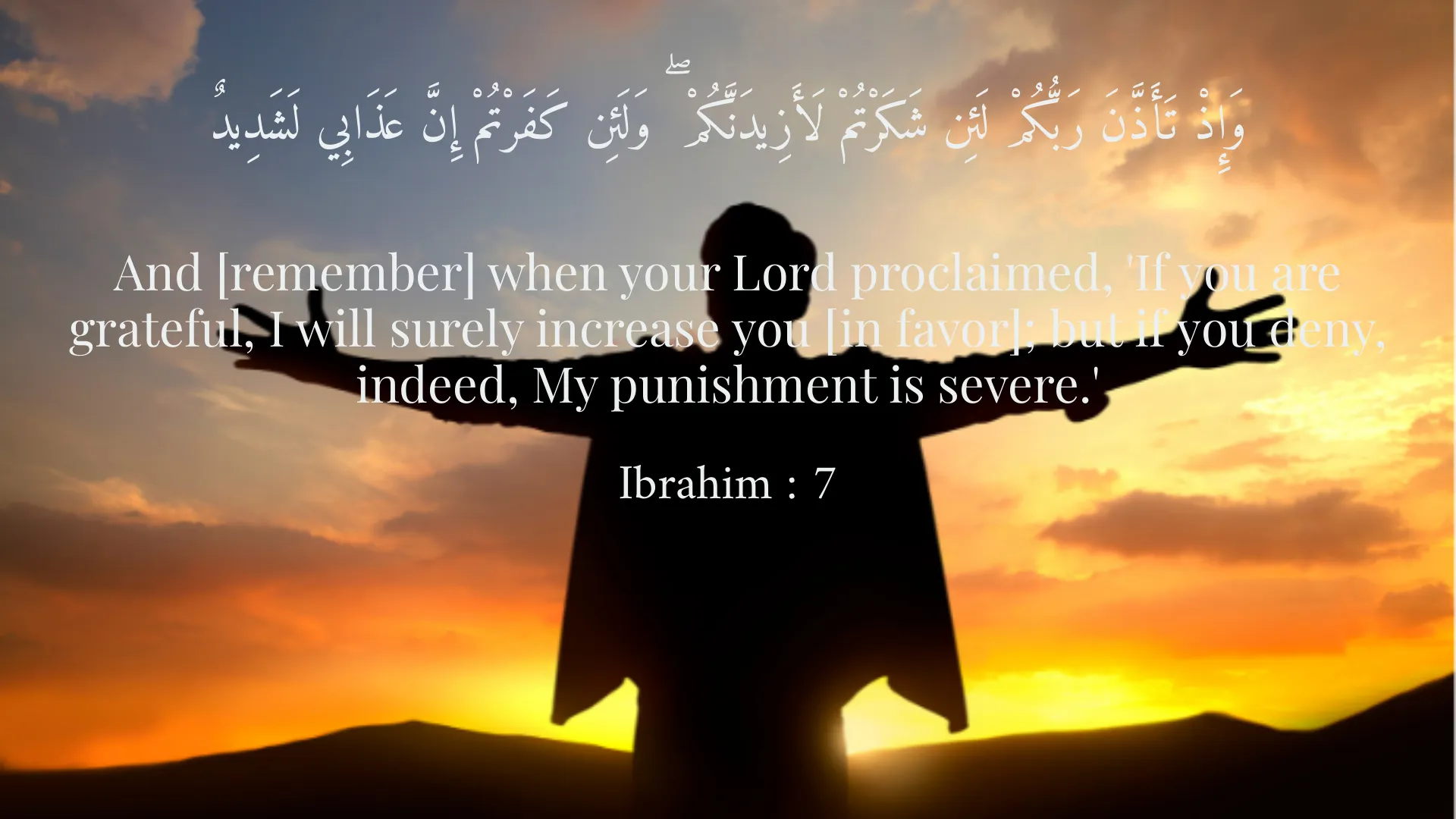
وَإِذْ تَأَذَّنَ رَبُّكُمْ لَئِن شَكَرْتُمْ لَأَزِيدَنَّكُمْ ۖ وَلَئِن كَفَرْتُمْ إِنَّ عَذَابِي لَشَدِيدٌ
And [remember] when your Lord proclaimed, 'If you are grateful, I will surely increase you [in favor]; but if you deny, indeed, My punishment is severe.'
Ibrahim : 7
الَّذِينَ آمَنُوا وَتَطْمَئِنُّ قُلُوبُهُم بِذِكْرِ اللَّهِ ۗ أَلَا بِذِكْرِ اللَّهِ تَطْمَئِنُّ الْقُلُوبُ
Those who have believed and whose hearts are assured by the remembrance of Allah. Unquestionably, by the remembrance of Allah hearts are assured.
Ar-Ra'd : 28
اعْلَمُوا أَنَّمَا الْحَيَاةُ الدُّنْيَا لَعِبٌ وَلَهْوٌ وَزِينَةٌ وَتَفَاخُرٌ بَيْنَكُمْ وَتَكَاثُرٌ فِي الْأَمْوَالِ وَالْأَوْلَادِ ۖ كَمَثَلِ غَيْثٍ أَعْجَبَ الْكُفَّارَ نَبَاتُهُ ثُمَّ يَهِيجُ فَتَرَاهُ مُصْفَرًّا ثُمَّ يَكُونُ حُطَامًا ۖ وَفِي الْآخِرَةِ عَذَابٌ شَدِيدٌ وَمَغْفِرَةٌ مِّنَ اللَّهِ وَرِضْوَانٌ ۗ وَمَا الْحَيَاةُ الدُّنْيَا إِلَّا مَتَاعُ الْغُرُورِ
Know that the life of this world is only play and amusement, pomp and mutual boasting among you, and rivalry in respect of wealth and children. [It is] like a rain whose vegetation delights the tillers; then it withers, and you see it turning yellow; then it becomes [scattered] debris. And in the Hereafter is severe punishment and forgiveness from Allah and approval. And what is the life of this world except the enjoyment of delusion.
Al-Hadid : 20
Short Story
They say there was once a king with vast treasures and countless riches, yet he was unhappy, constantly moving from one sorrow to another. One day, he spoke to a wise vizier, asking, "Why, with all these blessings, does my heart not find peace, and joy elude me?" The vizier replied, "O King! Instead of being grateful for what you possess, you yearn for what you do not. A wise heart finds joy not in wealth or status, but in the tranquility of the soul and gratitude to the Almighty. I once saw a dervish sleeping on the bare ground, possessing nothing but torn clothes, yet he was laughing, saying, 'Thank God, I have neither the burden of wealth nor the sorrow of losing it.' The king took heed of the vizier's words and understood that true happiness is found within, not without. From that day on, he engaged in gratitude and tasted the true flavor of joy.