Quranic Answer
The Holy Quran, a pivotal text in Islam, contains profound moral and philosophical teachings that speak to the hearts and minds of millions of believers. Two central concepts emphasized within its pages are gratitude (shukr) and ingratitude (kufr). These dichotomous virtues shape the way individuals relate to their blessings and the world around them. Gratitude is not merely a verbal expression; it is an essential attitude that reflects an individual's recognition of God's endless bounties. In Surah Ibrahim, verse 7, Allah asserts, 'If you are grateful, I will surely increase your favor; but if you deny, indeed, My punishment is severe.' This verse succinctly encapsulates the reciprocal relationship between acknowledging divine blessings and the consequent increase in these blessings. In essence, gratitude serves as a catalyst for abundance, while ingratitude often leads to deprivation and spiritual desolation. Gratitude in this context is multifaceted. It involves recognizing, acknowledging, and appreciating the myriad blessings bestowed by Allah – from the most mundane aspects of life, such as food and shelter, to the profound ones, including health, happiness, and family. A grateful heart is constantly aware of the richness that life holds and radiates positivity, while an ungrateful soul often overlooks these gifts, fixating instead on personal troubles and perceived shortcomings. This myopic view can breed feelings of dissatisfaction and cultivate an ungrateful spirit, leading to an endless cycle of negativity and despair. In Human psychology, the act of appreciation and acknowledgment of one’s blessings has been shown to improve emotional well-being. Gratitude fosters a sense of connection, reduces feelings of loneliness, and can even impact one's physical health. By regularly practicing gratitude, individuals can cultivate a positive mindset that facilitates resilience against life’s inevitable challenges. The Quran encourages such reflection and awareness, urging believers not only to recognize their blessings but to express them actively. Further illustrating the contrasting behaviors of the grateful and the ungrateful, Surah Az-Zumar, verse 49 highlights a common human tendency. Allah states, 'And when affliction touches a man, he calls upon his Lord, turning to Him; then when He instills upon him a favor from Himself, he forgets what he cried out for before and makes for Allah equals.' This verse poignantly illustrates the fickleness of human nature; individuals often turn to Allah in times of distress, seeking solace and intervention, yet once they are relieved of their hardship, they can easily succumb to arrogance, forgetting their acknowledgment of divine help. This tendency to disregard God’s blessings once the crisis passes can be seen as a form of ingratitude, where individuals fail to recognize their dependence on divine mercy. The Quran does not just warn against ingratitude; it provides guidance on how to nurture a grateful heart and cultivate a spirit of appreciation. One key practice is continuous reflection on one’s blessings. Engaging in regular introspection allows individuals to evaluate their lives through a lens of thankfulness, recognizing each small joy and achievement. Whether through personal reflection or communal expressions of gratitude, believers are encouraged to remember the favors they have received. Additionally, expressing gratitude should extend beyond verbal acknowledgment. Acts of service, kindness, and compassion towards others can also be seen as forms of gratitude. When one shares their blessings with those in need, it reflects not only appreciation for what one has but also reinforces the interconnectedness of the human experience. This unity among humanity is a core teaching of Islam, where the shared experience of life’s blessings often serves to foster empathy and community support. In practical terms, implementing gratitude practices in daily life can be transformative. Starting a gratitude journal, for instance, can help individuals focus on the positive elements of their day-to-day lives, shifting attention from a deficit mindset to one of abundance. Setting aside moments each day to express appreciation—whether through prayers or simply acknowledging the goodness around—can significantly enhance one’s overall psychological state. Moreover, cultivating a culture of gratitude within families and communities is critical. Teaching children the importance of recognizing and appreciating their blessings equips them with a powerful tool for emotional resilience. Encouraging expressions of gratitude towards others can foster a nurturing environment, where the value of each person's contributions, no matter how small, is recognized and celebrated. The relationship between gratitude and happiness is another critical aspect explored within Islamic teachings. A grateful individual is often a content individual, as they have learned to focus on what they have rather than what they lack. This mindset not only promotes mental health but also aligns with the Quranic principles of appreciation, leading to a more fulfilled life experience. The teachings of Islam continually remind believers that material wealth is fleeting, yet the richness of a thankful heart leads towards the true essence of happiness. In conclusion, gratitude and ingratitude as depicted in the Holy Quran present a critical framework for understanding human relationships with the divine and with one another. Allah’s clarion call for gratitude is not merely a directive but an essential directive for leading a fulfilling life. By recognizing our blessings, resisting the traps of ingratitude, and fostering a culture of appreciation, individuals can navigate through life's challenges with grace and positivity. Practicing gratitude serves as a beacon of hope and joy, illuminating paths towards emotional fulfillment and spiritual closeness to Allah. As we engage in this practice, we are reminded that gratitude is not just an act; it is a state of being, one that ultimately guides us towards peace, satisfaction, and divine favor.
Related Verses
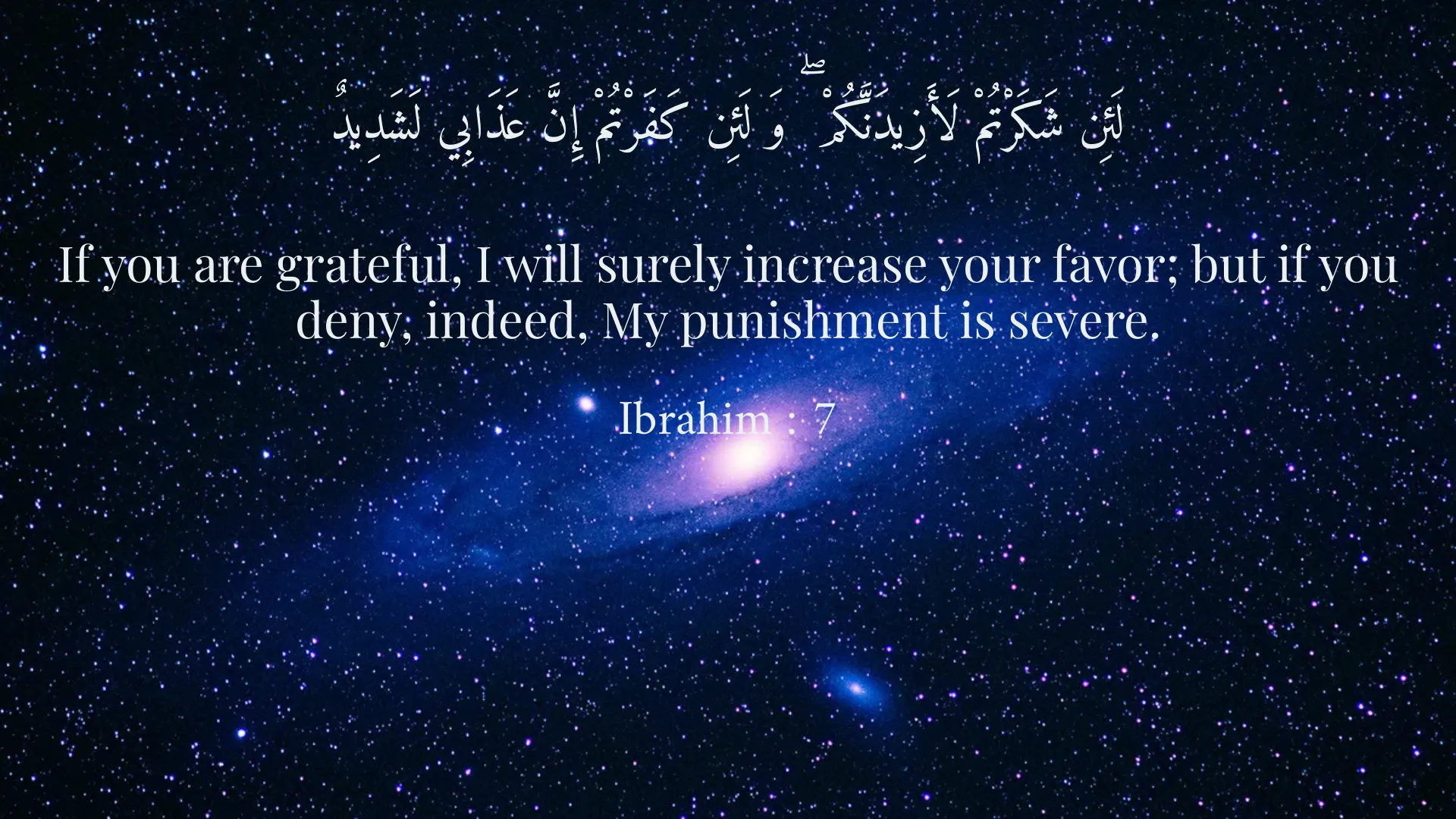
لَئِن شَكَرْتُمْ لَأَزِيدَنَّكُمْ ۖ وَ لَئِن كَفَرْتُمْ إِنَّ عَذَابِي لَشَدِيدٌ
If you are grateful, I will surely increase your favor; but if you deny, indeed, My punishment is severe.
Ibrahim : 7
وَإِذَا مَسَّ الْإِنْسَانَ ضُرٌّ دَعَا رَبَّهُ مُنِيبًا إِلَيْهِ ۖ ثُمَّ إِذَا خَوَّلَهُ نِعْمَةً مِّنْهُ نَسِيَ مَا كَانَ يَدْعُو إِلَيْهِ مِن قَبْلُ وَجَعَلَ لِلَّهِ أَندَادًۭا
And when affliction touches a man, he calls upon his Lord, turning to Him; then when He instills upon him a favor from Himself, he forgets what he cried out for before and makes for Allah equals.
Az-Zumar : 49
Short Story
On a beautiful day, a young man named Saman wondered why some people were ungrateful. He remembered the verses of the Quran and decided to take out a notebook each morning and write down all the blessings he had. After a few weeks, he realized how much more satisfied and happier he was with his life. He felt that gratitude was a way to draw closer to God and brought about good occurrences in his life.