Quranic Answer
The Holy Quran, regarded as the divine scripture of Islam, is revered not only for its spiritual guidance but also for its profound insights into human behavior and societal dynamics. One of the significant themes that emerge from the Quran is the exploration of why some individuals choose to distance themselves from religion. A comprehensive examination of this issue highlights several critical factors, including lack of understanding, societal pressures, and the influence of ignorance. In Surah Hud, verse 116, Allah articulates a poignant message regarding the consequences of disbelief and the rejection of truth: "If the people of those cities had believed and been conscious of God, We would have opened up to them the gates of mercy and showered them with blessings from the heavens and the earth; but they rejected the truth as falsehood." This verse not only emphasizes the importance of faith but also underscores the blessings that come with sincere belief and consciousness of God. The notion that many individuals drift away from religion can be traced back to a fundamental lack of understanding of its teachings and the benefits it promises. Often, individuals who cultivate misconceptions or possess limited knowledge about the fundamental tenets of Islam may find themselves unable to connect with its messages on a deeper level. Their indifference, therefore, acts as a barrier that distances them from the rich spiritual and moral framework that Islam offers. Moreover, the role of media and prevailing secular values in contemporary society cannot be overlooked. In an age where information is abundant, the narratives propagated by mass media significantly influence people's perceptions and alignments. Secular ideologies, often promoted through various platforms, encourage an individualistic lifestyle that may clash with religious principles. This creates a dichotomy where individuals feel compelled to choose between adhering to religious teachings and pursuing a lifestyle that is portrayed as 'free' but is often void of spiritual connection. Surah Al-A'raf, verse 46, reinforces this issue: "And between each group [of intelligent ones] and the foolish ones is a barrier." This barrier stems from a lack of perception and comprehension, leading individuals to align themselves with misguided beliefs. When the allure of secularism appears more appealing, it can result in individuals straying from religious paths and grappling with the moral dilemmas that arise from such a divide. Furthermore, the impact of ignorance cannot be underestimated. Surah Al-Baqarah, verse 26 states, "And those who disbelieve experience a similar fate, but it does not benefit them." Ignorance of the principles and intricacies of faith can contribute to a person's disillusionment with religion. Those who fail to engage with Islamic teachings due to ignorance are often unaware of the intellectual richness and spiritual depth that Islam encompasses. They may view religion merely as a set of restrictions rather than a comprehensive guide to living a fulfilling and purposeful life. This perspective can lead to feelings of alienation as they navigate a world that offers competing narratives that seem more appealing and aligned with contemporary values. To understand the phenomena of distancing from religion, it is also important to recognize personal struggles and crises of faith that can contribute to an individual's journey away from religious observance. Life challenges such as loss, trauma, and disillusionment with religious communities can foster feelings of resentment or disappointment. When individuals encounter hardships they perceive as unfair or a lack of support from their religious community, they may question their beliefs and turn away. These personal crises serve to exacerbate the effects of ignorance and societal pressure, rendering individuals susceptible to abandoning their religious convictions. Addressing the reasons behind individuals distancing themselves from Islam requires a multifaceted approach. First, it necessitates fostering an environment for open dialogues about faith, encouraging individuals to explore and question their beliefs without fear of judgment. Education plays a pivotal role here, as greater understanding of Islamic teachings can illuminate the paths of spirituality and moral guidance that individuals may have previously overlooked. Religious communities must engage in outreach efforts aimed at dispelling misconceptions and answering concerns, presenting Islam not as a restrictive doctrine but as an expansive guide that encourages critical thinking and personal growth. Moreover, combating societal pressures that promote secularism over spirituality can be implemented by leveraging media smartly. By utilizing platforms to disseminate comprehensive knowledge about Islam, followers can challenge the prevailing narratives that distract from religious teachings. Creating positive portrayals of Islamic values that resonate with contemporary audiences can aid in bridging the gap between faith and modern life, thus rendering Islam more approachable and relatable to those who might otherwise feel alienated. It is essential to consider that the journey towards reconnection with faith is deeply personal and may vary from individual to individual. Individuals distancing themselves from religion often experience a multitude of factors that contribute to their feelings of disconnect. Recognizing and addressing these multifaceted issues is vital for encouraging a society that not only understands but values the teachings of Islam. The Quran provides a clear, insightful framework for understanding these challenges, reminding us that the search for purpose and truth is not an isolated endeavor but rather a communal journey that thrives on understanding, compassion, and open discourse. In this world filled with distractions and challenges, cultivating a profound understanding of faith is essential for bridging the divides that surface in the contemporary landscape of belief.
Related Verses
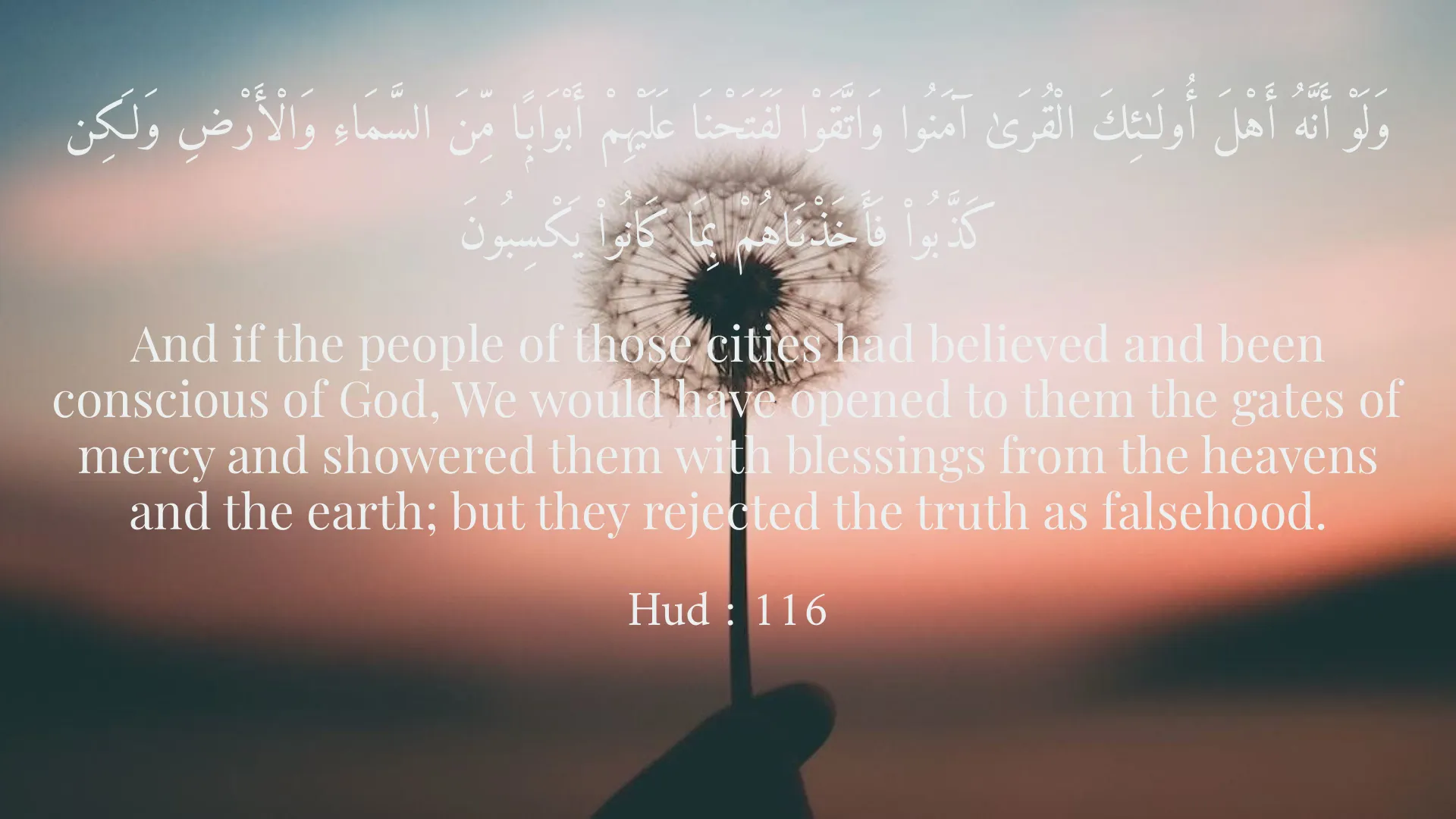
وَلَوْ أَنَّهُ أَهْلَ أُولَٰئِكَ الْقُرَىٰ آمَنُوا وَاتَّقَوْا لَفَتَحْنَا عَلَيْهِمْ أَبْوَابًۭا مِّنَ السَّمَاءِ وَالْأَرْضِ وَلَكِن كَذَّبُواْ فَأَخَذْنَاهُمْ بِمَا كَانُواْ يَكْسِبُونَ
And if the people of those cities had believed and been conscious of God, We would have opened to them the gates of mercy and showered them with blessings from the heavens and the earth; but they rejected the truth as falsehood.
Hud : 116
وَبَيْنَ كُلَّ مَجْمُوعَةٍ مَّحْجُوبٌ
And between each group [of intelligent ones] and the foolish ones is a barrier.
Al-A'raf : 46
إِنَّ اللَّهَ لَا يَسْتَحْيِي أَن يَضْرِبَ مَثَلًۭا مَّا بَعُوضَةًۭ فَمَا فَوْقَهَا ۚ أَمَّا الَّذِينَ آمَنُوا فَيَعْلَمُونَ أَنَّهُ الْحَقُّ مِن رَّبِّهِمْ ۖ وَأَمَّا الَّذِينَ كَفَرُوا فَيَقُولُونَ مَاذَا أَرَادَ اللَّهُ بِهَذَا مَثَلًۭا ۖ يُضِلُّ بِهِ كَثِيرًا وَيَهْدِي بِهِ كَثِيرًا ۖ وَمَا يُضِلُّ بِهِ إِلَّا الْفَاسِقِينَ
Indeed, Allah does not shy away from presenting an example, even of a mosquito; but those who believe know that it is the truth from their Lord, and those who disbelieve say, 'What did Allah intend by this example?' He misleads many and guides many. And He does not mislead except the disobedient.
Al-Baqarah : 26
Short Story
Once upon a time, there was a young man named Ali who was in search of meaning and purpose in his life. He grew up in a society indifferent to religion and its teachings. Ali couldn't understand this indifference and resolved to learn from within himself. One day, he listened to the talk of a Quranic scholar and learned valuable points on love and deep understanding of faith. This experience brought Ali back closer to religion, and he began to feel greater peace and happiness.