Quranic Answer
The question of why some believers are not happy is a profound and fundamental one, delving into our understanding of the nature of faith and happiness in Islam. From the perspective of the Holy Quran, true faith not only lays the groundwork for inner peace and contentment but also equips an individual to remain resilient and steadfast in the face of life's challenges. Nevertheless, it is observed that some individuals, despite professing faith, do not experience inner joy and tranquility. There are several reasons for this phenomenon, which can be examined through the lens of Quranic verses. One of the primary reasons is a lack of proper and complete understanding of the concepts of 'felicity' (sa'adah) and 'happiness' in Islam. Many mistakenly perceive happiness solely as the absence of worldly problems, the accumulation of wealth, social status, or fleeting material pleasures. However, the Holy Quran defines lasting and true happiness as being intrinsically linked to God and the peace of heart derived from His remembrance. Surah Ar-Ra'd, verse 28, explicitly states: "Those who have believed and whose hearts are assured by the remembrance of Allah. Unquestionably, by the remembrance of Allah hearts are assured." If an individual has faith but their heart does not find solace in the remembrance of Allah, perhaps their faith has not yet deepened sufficiently, remaining merely at the level of verbal affirmation and theoretical belief, rather than a faith that permeates their actions and every aspect of their life. This inner peace and contentment are independent of the material ups and downs of life. Another reason could be an intense attachment to worldly life (dunya) and a neglect of the afterlife. The Quran repeatedly warns against the deceptive nature of worldly life, describing it as a fleeting and meager provision. When a person, even a believer, ties their heart to worldly attachments and defines their happiness by material successes or the absence of worldly problems, it is natural for them to experience sorrow and grief with every fluctuation and loss. In Surah Al-Hadid, verse 20, Allah says: "Know that the life of this world is only amusement and diversion and adornment and boasting among yourselves and competition in increase of wealth and children - like the example of a downpour whose resulting plant growth pleases the tillers; then it dries and you see it turned yellow; then it becomes [scattered] debris. And in the Hereafter is severe punishment and forgiveness from Allah and approval. And what is the worldly life except the enjoyment of delusion." If a believer becomes too attached to this delusive provision, their happiness will inevitably wane with its decay. Lack of gratitude and a focus on what one lacks instead of what one possesses is also a significant factor. A person who constantly focuses on shortcomings and problems rather than acknowledging Allah's countless blessings cannot taste true happiness. In Surah Ibrahim, verse 7, Allah states: "If you are grateful, I will surely increase you [in favor]; but if you deny, indeed, My punishment is severe." Gratitude shifts one's perspective towards the positive aspects of life, enabling an individual to see points of hope and blessing even in difficult circumstances and to remain appreciative. Lack of patience (sabr) in the face of divine trials and tribulations is another crucial cause of unhappiness. Worldly life is full of tests and calamities. In Surah Al-Baqarah, verse 155, the Holy Quran states: "And We will surely test you with something of fear and hunger and a loss of wealth and lives and fruits, but give good tidings to the patient." A true believer is one who exercises patience during these trials, understanding that everything is from God and contains inherent good. Despair in Allah's mercy and an incomplete reliance on Him (Tawakkul) can also strip a believer of happiness. Satan always attempts to make humans despair, and a believer must overcome these temptations by trusting in Allah and believing in His power. In summary, true happiness in Islam is not the absence of problems, but rather having a tranquil heart content with divine decree. This happiness stems from profound faith, complete reliance on Allah, continuous gratitude, patience in the face of adversity, and detachment from excessive worldly concerns. A believer who lives by these principles will find an anchor of peace and contentment in their heart, even amidst life's storms. Thus, the unhappiness observed in some believers often arises from a deficiency in understanding or applying these deeper dimensions of faith, rather than merely a lack of initial belief. Happiness is a state of mind intimately linked with spiritual well-being. If an individual adheres to their religious duties but suffers from spiritual ailments like envy, arrogance, or backbiting, or if they constantly compare themselves to others, they will never achieve true peace and happiness. These afflictions, like poison, contaminate the human soul and heart, preventing them from perceiving spiritual delights. Therefore, faith is not merely an intellectual conviction; it is a way of life that influences every aspect of human existence, from thoughts and emotions to actions and behaviors. If this influence is not complete and comprehensive, the individual, despite being labeled a 'believer,' may be deprived of the sweet fruits of faith, namely peace and happiness.
Related Verses
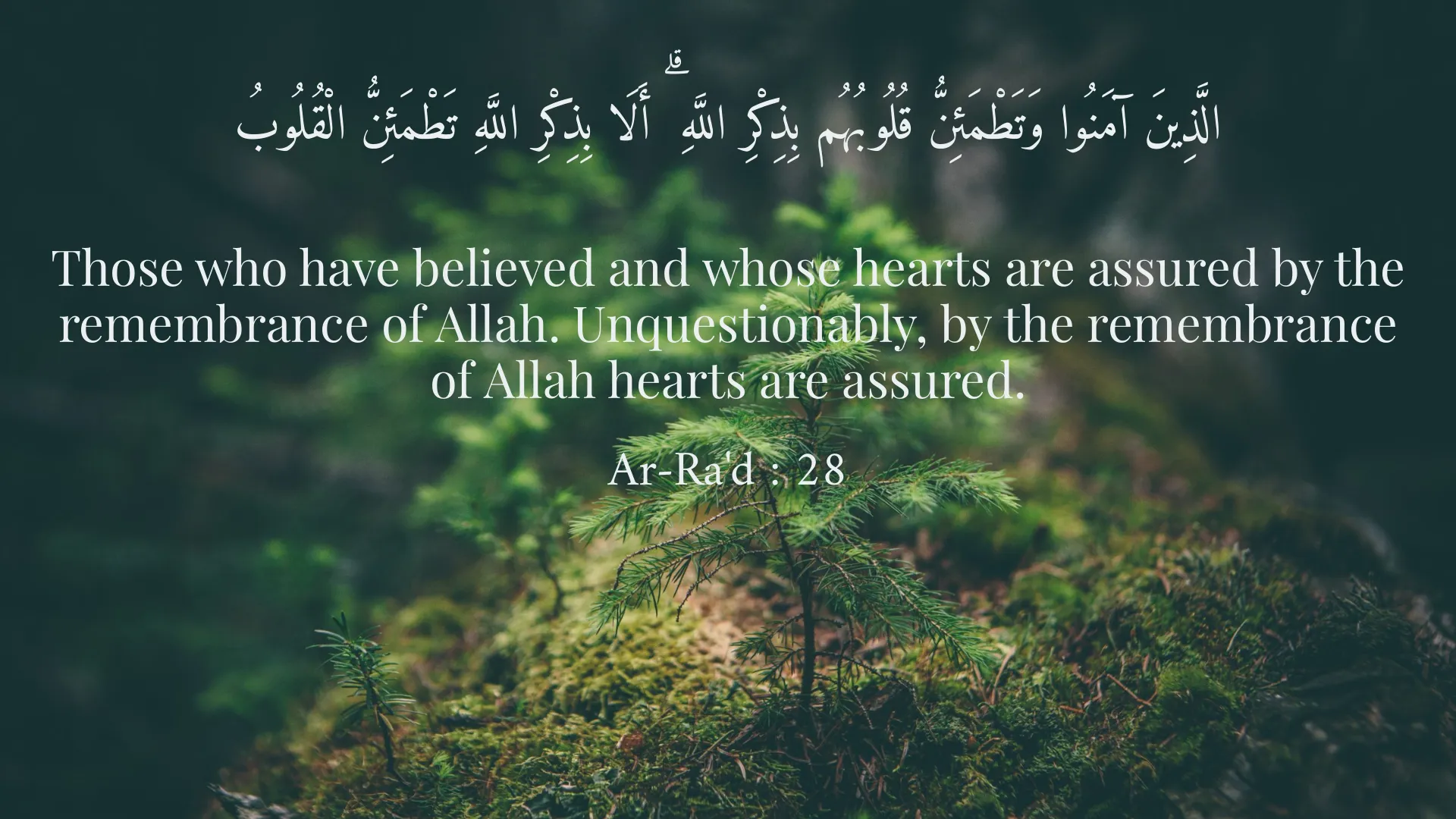
الَّذِينَ آمَنُوا وَتَطْمَئِنُّ قُلُوبُهُم بِذِكْرِ اللَّهِ ۗ أَلَا بِذِكْرِ اللَّهِ تَطْمَئِنُّ الْقُلُوبُ
Those who have believed and whose hearts are assured by the remembrance of Allah. Unquestionably, by the remembrance of Allah hearts are assured.
Ar-Ra'd : 28
اعْلَمُوا أَنَّمَا الْحَيَاةُ الدُّنْيَا لَعِبٌ وَلَهْوٌ وَزِينَةٌ وَتَفَاخُرٌ بَيْنَكُمْ وَتَكَاثُرٌ فِي الْأَمْوَالِ وَالْأَوْلَادِ ۖ كَمَثَلِ غَيْثٍ أَعْجَبَ الْكُفَّارَ نَبَاتُهُ ثُمَّ يَهِيجُ فَتَرَاهُ مُصْفَرًّا ثُمَّ يَكُونُ حُطَامًا ۖ وَفِي الْآخِرَةِ عَذَابٌ شَدِيدٌ وَمَغْفِرَةٌ مِّنَ اللَّهِ وَرِضْوَانٌ ۚ وَمَا الْحَيَاةُ الدُّنْيَا إِلَّا مَتَاعُ الْغُرُورِ
Know that the life of this world is only amusement and diversion and adornment and boasting among yourselves and competition in increase of wealth and children - like the example of a downpour whose resulting plant growth pleases the tillers; then it dries and you see it turned yellow; then it becomes [scattered] debris. And in the Hereafter is severe punishment and forgiveness from Allah and approval. And what is the worldly life except the enjoyment of delusion.
Al-Hadid : 20
وَلَنَبْلُوَنَّكُم بِشَيْءٍ مِّنَ الْخَوْفِ وَالْجُوعِ وَنَقْصٍ مِّنَ الْأَمْوَالِ وَالْأَنفُسِ وَالثَّمَرَاتِ ۗ وَبَشِّرِ الصَّابِرِينَ
And We will surely test you with something of fear and hunger and a loss of wealth and lives and fruits, but give good tidings to the patient.
Al-Baqarah : 155
Short Story
In Saadi's Golestan, there is a tale: “Two dervishes were traveling together. One was stronger, and the other more frail. The stronger dervish would eat a little of what he had acquired each night, hiding the rest for the next day. But the frail dervish would eat whatever came to his hand that same night, offering thanks, saying: ‘Tomorrow is another day, and the Sustainer is the same.’ The stronger dervish was always preoccupied with the thought of tomorrow, and the sorrow of tomorrow prevented him from enjoying today. Meanwhile, the frail dervish, with complete reliance on God, was at peace and happy every moment. One whose heart is attached to what is with God never grieves, and one whose heart is attached to what is in their hand is in fear of losing it every day.” This story illustrates that true happiness lies not in accumulation and hoarding, but in trusting the Provider and being content with one's portion; a lesson many of us, even with faith, sometimes forget, tying our happiness to baseless anxieties.