Quranic Answer
In the Holy Quran, Allah emphasizes that humans face challenges and issues in life that may lead them astray. These challenges are inherent to the human experience, often arising from both external pressures and internal temptations. Each individual encounters a unique set of circumstances that test their faith, resilience, and adherence to the path of righteousness. However, the Quran reassures believers that challenges are not merely obstacles but also opportunities for growth, repentance, and spiritual awakening. One key aspect of human existence highlighted in the Quran is the profound mercy of Allah, which plays a crucial role in the journey of every believer. Among the verses that encapsulate this idea is Surah Az-Zumar, verse 53, where Allah calls out to His servants, urging them to turn back to Him: 'O My servants who have believed, fear your Lord. For those who do good in this world is good, and the earth of Allah is spacious. Indeed, the patient will be given their reward without account.' This verse articulates multiple concepts crucial to the understanding of repentance and divine mercy. First, the verse addresses those who have faith, an important reminder that belief is the foundation upon which everything else is built. The command to 'fear your Lord' suggests a sense of piety and mindfulness that should accompany the life of a believer, driving them to act righteously and fulfill their obligations. Furthermore, the promise of goodness in this world for those who do right indicates that, despite life's challenges, there is potential for positive outcomes through good deeds. It reflects Allah's understanding of human struggles and His bestowal of hope in every situation. The mention of Allah's vast earth serves as a metaphor for the ample opportunities available to individuals seeking to engage in righteous actions. The concluding remark, 'Indeed, the patient will be given their reward without account,' emphasizes that true perseverance in the face of adversity not only strengthens a person’s character but also opens the door to countless blessings. The notion of patience is pivotal in the context of success in the eyes of Allah. Patience is not merely passive waiting; instead, it signifies an active commitment to maintaining faith, upholding moral values, and continually striving to better oneself, even when faced with setbacks and trials. This patient perseverance is directly linked to divine reward, promoting the understanding that success in life is not only measured by external achievements but also by the internal journey of growth, faith renewal, and repentance. Moreover, Surah Al-Baqarah, verse 286, asserts another vital principle: 'Allah does not burden a soul beyond that it can bear.' This verse serves not only as a reminder of Allah’s mercy but also of His fairness and justice. Throughout various trials, whether they are personal failures, societal pressures, or spiritual dilemmas, believers can take comfort knowing that Allah does not overwhelm them beyond their capabilities. This assurance fosters a sense of hope and strengthens their resolve to overcome challenges while seeking closeness to Allah. The often-complex nature of repentance in the Islamic faith indicates that it is a journey rather than a destination. Sins and mistakes are viewed as part of the human condition; they do not define a person's worth or their ultimate fate. Instead, it is the sincerity of an individual's intent to turn back to Allah that carries great weight in the divine scale of mercy. It highlights that success does not equate to being sinless but rather signifies the effort to make amends and to seek Allah's compassion diligently. This understanding encourages believers to embrace their flaws while continuously striving for self-improvement through acts of worship, service, and kindness. Most importantly, it invites them to recognize their innate weaknesses as a pathway for Allah’s mercy rather than a permanent mark of failure. The Quran constantly points to stories of previous prophets who faced immense trials, sins, and struggles, yet their journey towards repentance and relationship with Allah illustrates that righteous paths are often carved from mistakes. Therefore, one might say that the essence of Islamic teaching is about balance. It underscores the importance of striving for goodness while also recognizing the inevitability of human imperfection. This duality offers believers a clear roadmap toward spiritual success, showing them that they can transcend their sinful behaviors through intentional action and a heartfelt return to Allah. Ultimately, the Quran's messages regarding success, patience, and repentance serve as a powerful toolkit for believers navigating life’s trials. Instead of fearing challenges and becoming discouraged by sins, they can be viewed as stepping stones toward a more profound connection with the divine. The journey towards repentance, bolstered by Allah’s mercy, reminds believers that they are never beyond the grasp of forgiveness as long as they are sincere in their efforts to change and improve their lives. The success in this life and the next does not hinge solely on a flawless record but significantly on the intention and effort to seek forgiveness, to strive for goodness, and to nurture a heart and soul aligned with Allah’s will. In conclusion, as individuals reflect upon their own lives, the insights drawn from these verses of the Quran can inspire resilience amidst challenges and provide comfort in the understanding of divine mercy. It empowers believers to embrace their flaws, cultivate patience in their journeys, and engage in self-improvement as they affirm their commitment to a life filled with faith and devotion to Allah.
Related Verses
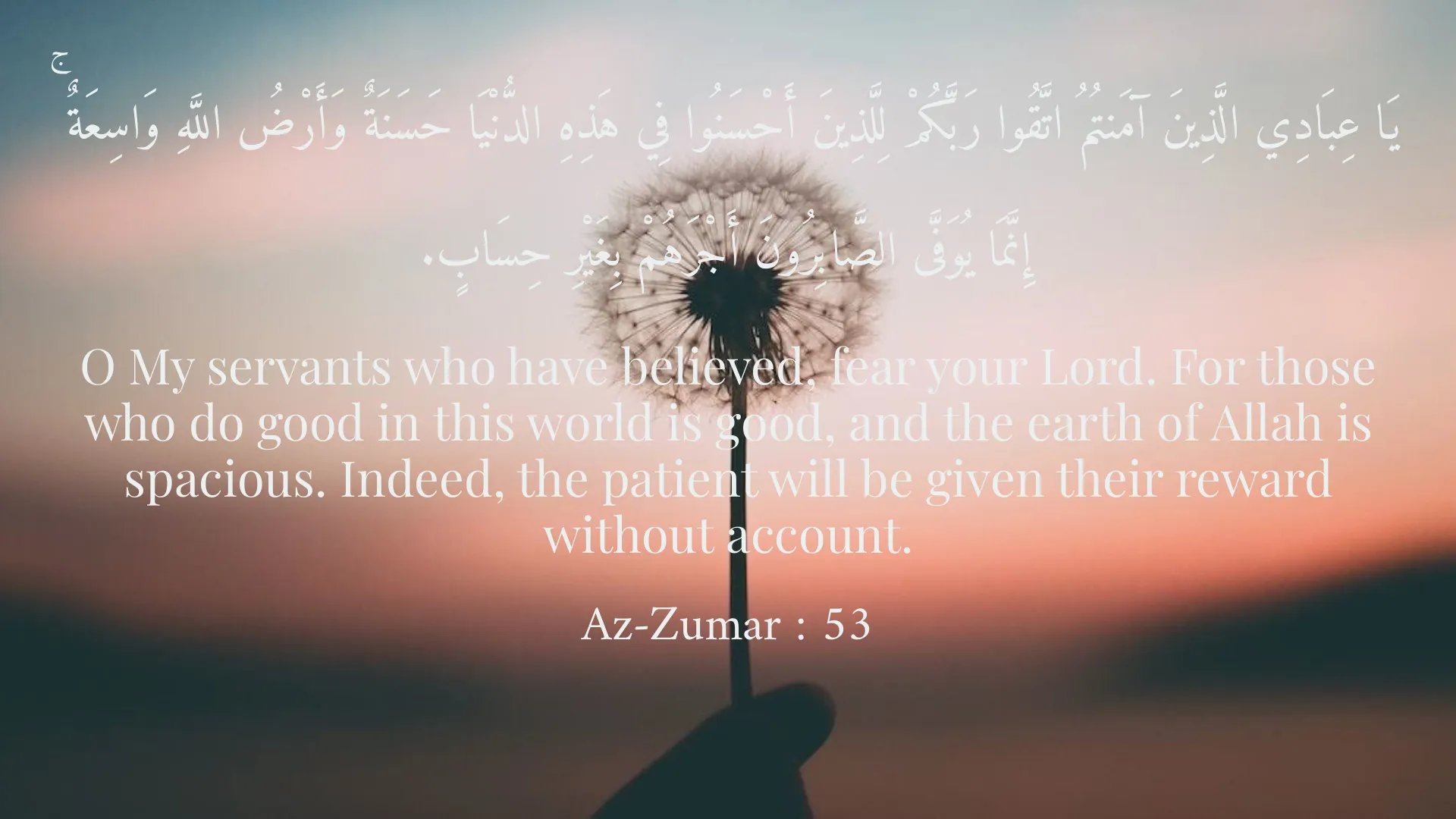
يَا عِبَادِي الَّذِينَ آمَنتُمُ اتَّقُوا رَبَّكُمْ لِلَّذِينَ أَحْسَنُوا فِي هَذِهِ الدُّنْيَا حَسَنَةٌ وَأَرْضُ اللَّهِ وَاسِعَةٌ ۚ إِنَّمَا يُوَفَّى الصَّابِرُونَ أَجْرَهُمْ بِغَيْرِ حِسَابٍ.
O My servants who have believed, fear your Lord. For those who do good in this world is good, and the earth of Allah is spacious. Indeed, the patient will be given their reward without account.
Az-Zumar : 53
لَا يُكَلِّفُ اللَّهُ نَفْسًا إِلَّا وُسْعَهَا.
Allah does not burden a soul beyond that it can bear.
Al-Baqarah : 286
Short Story
One day, a young man named Mehdi sat in a corner and reflected on his life. He was saddened by his sins, but at the same time, he remembered the divine verses and decided to return to Allah. As he began to do good deeds and had a pure intention in his heart, he gradually experienced successes and found peace in his life.