Quranic Answer
The question of why good people leave this world earlier than expected is one that resonates with many of us. It strikes at the heart of our understanding of life, death, and the often unpredictable nature of existence. Throughout history, the question of mortality has confounded philosophers, theologians, and ordinary individuals alike. In various cultures and religions, death is viewed not just as an end but as a transition, a closing of one chapter in the great story of life. The Holy Quran offers profound insights into this issue, reminding us that life and death are fundamentally under Allah's command. It asserts that the timings of our lives are predetermined, and only Allah has knowledge of when our life will come to an end. In Surah Al-Imran, verse 185, we find a powerful reminder of our mortality: 'Every soul will taste death, and you will only be given your full compensation on the Day of Resurrection. So whoever is driven away from the Fire and admitted to Paradise has certainly succeeded. And what is the worldly life except the enjoyment of delusion.' This verse serves as a poignant reminder that death is an inescapable reality for all humans, regardless of their character or actions during their lifetime. The implications of this verse are profound. Firstly, it highlights the universality of mortality. No matter how virtuous a person may be, they are still subject to the same fate as everyone else. It suggests that while we strive to lead good lives, our ultimate judgment and fate lie in the hands of Allah. This serves as a humbling reminder that our deeds, while important, are not the sole determinant of how long we may live. One might wonder why good people, who lead virtuous lives filled with kindness and compassion, sometimes depart this world earlier than one would expect. There are myriad reasons for this reality. For instance, health issues, accidents, and environmental factors are just a few of the many variables that can lead to premature death. Furthermore, this world is filled with unpredictability. Life can change in an instant, and even those who seem to be in the best of health can find themselves facing unexpected challenges. The unpredictability of life further emphasizes the importance of cherishing every moment we have. However, it is crucial that we do not view the early passing of good individuals as a discouragement. Instead, their lives and the qualities they embodied can serve as inspiration for us to live with purpose and integrity. The early departure of virtuous individuals should encourage us to reflect on how we can emulate their positive qualities. The impact a good person has on the lives of those around them often continues long after they have departed. Their kindness, generosity, and wisdom become a legacy that others can aspire to. Moreover, the Quran provides additional insights into the nature of life and purpose. In Surah Al-Mu'minun, verse 115, Allah poses a thought-provoking question: 'Did you think that We created you without purpose and that you would not be returned to Us?' This verse emphasizes the concept that life is imbued with purpose; every human being is created with a specific goal and destiny in mind. It leads us to consider the significance of our actions and the mark we leave on the world. Being a good person is not merely about avoiding wrongdoing or adhering to a set of moral guidelines. Rather, it involves actively seeking to do good for others, spreading compassion, and making a positive impact on those around us. The idea that good deeds can extend beyond a person's life resonates deeply. A kind act, a helping hand, or a word of encouragement can ripple through the lives of many, creating a legacy that embodies the essence of what it means to live well. While it might be disheartening to see good individuals leave our world prematurely, their lives serve as a reminder that every moment is precious. Instead of becoming mired in the sadness of loss, we should strive to honor their memory by embodying their values and principles in our own lives. This could mean volunteering our time for charitable causes, advocating for those who are less fortunate, or simply being more kind and considerate to those around us. Ultimately, the Quran helps us to understand that life is a temporary journey. Our time on this earth is fleeting, and each of us has a unique path to walk. Goodness and virtue are not guarantees of longevity; rather, they are choices we make that shape the world around us. Our legacy is determined not by the number of years we live, but by the quality of our existence and our commitment to making a positive difference. In conclusion, the question of why good people leave this world too soon is complex and layered. The teachings of the Holy Quran remind us of the transient nature of life and the importance of living purposefully. Instead of viewing death as an end, we should see it as a transition, inspiring us to deepen our commitment to kindness, compassion, and love in our own lives. Although we may not always understand the reasons behind the early departure of good souls, we can take solace in the reminder that every life, regardless of its length, can have a lasting impact. Therefore, let us strive to emulate the virtues of those who have come before us and work together to create a more compassionate and loving world.
Related Verses
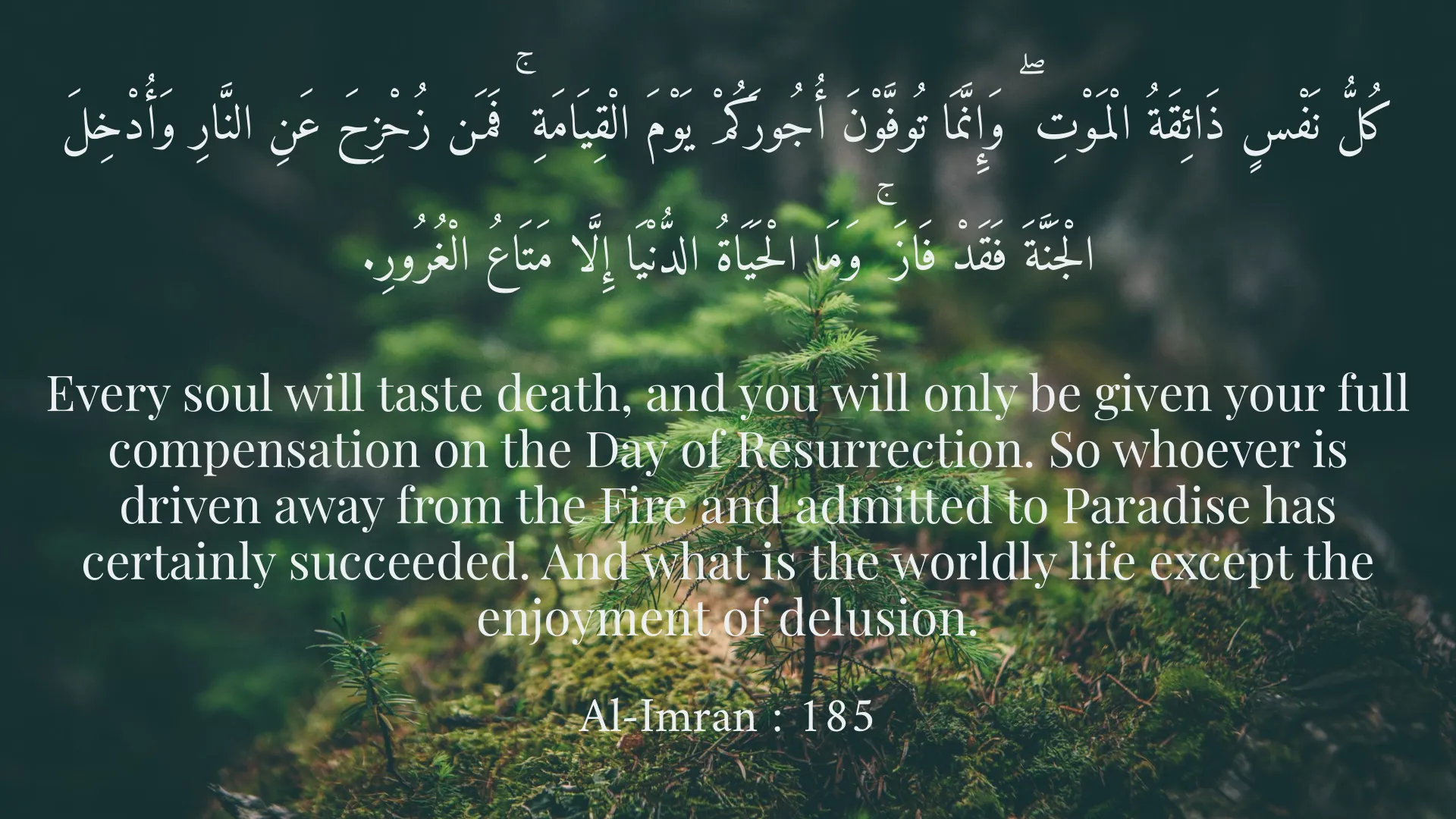
كُلُّ نَفْسٍ ذَائِقَةُ الْمَوْتِ ۖ وَإِنَّمَا تُوفَّوْنَ أُجُورَكُمْ يَوْمَ الْقِيَامَةِ ۚ فَمَن زُحْزِحَ عَنِ النَّارِ وَأُدْخِلَ الْجَنَّةَ فَقَدْ فَازَ ۚ وَمَا الْحَيَاةُ الدُّنْيَا إِلَّا مَتَاعُ الْغُرُورِ.
Every soul will taste death, and you will only be given your full compensation on the Day of Resurrection. So whoever is driven away from the Fire and admitted to Paradise has certainly succeeded. And what is the worldly life except the enjoyment of delusion.
Al-Imran : 185
أَحَسِبْتُمْ أَنَّا خَلَقْنَاكُمْ عَبَثًا وَأَنَّكُمْ إِلَيْنَا لَا تُرْجَعُونَ؟
Did you think that We created you without purpose and that you would not be returned to Us?
Al-Mu'minun : 115
Short Story
Once upon a time, a righteous man was sitting with his children, teaching them how to draw positive energy from life. He told them that life is short, and while we are here, we must make the best of it. His children listened carefully to his words and wished in their hearts that he would always stay with them, but he smiled and told them that everyone leaves one day, and what matters is how we live.