Quranic Answer
The question of why good words sometimes fail to have an impact is a profound one, deeply rooted in human nature and spiritual dynamics. The Holy Quran, with its profound wisdom, offers comprehensive insights into this phenomenon, often attributing the lack of effect not to the message itself, but to the internal state and receptivity of the listener. This perspective teaches us that the impact of words is a two-way process, contingent on both the speaker's delivery and the hearer's readiness. One of the primary reasons highlighted in the Quran is the concept of "sealed hearts" or "hardened hearts." In several verses, Allah states that due to persistent denial and rebellion, some individuals' hearts are sealed or veiled, preventing them from comprehending truth. For instance, in Surah Al-Baqarah, verse 7, it is stated: "Allah has set a seal upon their hearts and upon their hearing, and over their vision is a veil. And for them is a great punishment." This sealing of hearts is a consequence of their own choices and their unwavering insistence on falsehood. When individuals repeatedly ignore clear signs and persist in misguidance, they gradually lose the capacity to perceive and accept truth. Their hearts become like barren, rocky land where, no matter how good the seeds are sown, nothing sprouts. This psychological state signifies a loss of the ability to discern right from wrong, rendering them incapable of receiving and processing constructive messages. Their spiritual faculties become dulled, making them impervious to even the most eloquent and truthful exhortations. This isn't an arbitrary act by Allah, but a natural consequence of their persistent rejection, a divine law that governs the spiritual decay of those who willfully turn away from guidance, preferring their own desires over divine truth. Another significant impediment is "arrogance and pride." Some individuals, due to their conceit and self-importance, are unwilling to accept the truth, even if they recognize it. Satan, Iblis, serves as a prime example of this arrogance; despite his knowledge and recognition of truth, he refused to prostrate before Adam, defying divine command (Surah Sad, verses 74-75). When someone considers themselves superior to others or believes they already possess all knowledge, there remains no room for new insights or influence from others' words. Such individuals, even upon hearing beneficial advice, might attribute it to the speaker's ignorance or weakness, thus preventing the good words from ever penetrating their essence. Pride is a formidable barrier on the path to guidance and truth acceptance, as a proud person often believes they need no guidance and can find the right path independently. This self-sufficiency, born of hubris, blinds them to external wisdom, no matter how profound, trapping them in a cycle of self-deception and error. "Following whims and worldly desires" (hawa) also constitutes a major obstacle to the effectiveness of truthful discourse. In Surah Al-Furqan, verse 43, the Quran asks: "Have you seen he who takes his god his [own] desire? Then would you be a guardian over him?" When a person becomes enslaved by their carnal desires and prioritizes fleeting worldly pleasures over truth and eternal salvation, they develop no receptive ear for admonition. Their heart is preoccupied with things that contradict the word of truth, causing any good counsel to enter one ear and exit the other. They are unwilling to abandon their passions for the sake of embracing truth. This internal conflict between desires and divine guidance often leads to a conscious or subconscious rejection of anything that threatens their preferred way of life, regardless of its inherent goodness or wisdom. Such individuals prioritize immediate gratification, effectively silencing the inner voice of conscience and external calls to righteousness. "Heedlessness and inattention" (ghaflah) are further impediments. Many people become so engrossed in their daily lives that they remain oblivious to the greater, deeper truths about their existence and the universe. They might cling to material pursuits and worldly amusements, leaving no room for contemplation of profound and guiding messages. The Quran highlights this in Surah Ar-Rum, verse 7: "They know only what is apparent of the worldly life, while they are of the Hereafter heedless." This heedlessness causes them to miss the true meaning of even the best words or to not attach due importance to them. Their focus is solely on the transient, immediate world, leading them to disregard spiritual warnings or philosophical insights that speak of a broader reality. They are spiritually slumbering, requiring a significant jolt rather than gentle words to awaken them. "Hypocrisy and double-dealing" (nifaq) present another barrier. Hypocrites are individuals who outwardly profess faith and listen to truth, but inwardly deny it and even mock it. Their hearts are diseased, and instead of healing, their ailment only increases. In Surah Al-Baqarah, verses 8-10, we read: "And among the people are some who say, 'We believe in Allah and the Last Day,' but they are not believers. They [think to] deceive Allah and those who believe, but they deceive not except themselves and perceive [it] not. In their hearts is a disease, so Allah has increased their disease; and for them is a painful punishment because they [habitually] used to lie." Due to their internal insincerity, this group never benefits from truthful discourse. Their outward acceptance is a mere facade, behind which lies rejection and enmity, making them impenetrable to genuine spiritual influence, as their primary goal is not guidance but manipulation or self-preservation through deceit. Another crucial point emphasized by the Quran is "Divine Will and Decree." Prophets and divine envoys were mandated to convey the message of truth, but ultimate guidance and its effectiveness rest solely with Allah. In Surah Al-Qasas, verse 56, it states: "Indeed, [O Muhammad], you do not guide whom you like, but Allah guides whom He wills. And He is most knowing of the [rightly] guided." This verse illustrates that even Prophet Muhammad (peace be upon him), who conveyed the most comprehensive and excellent words, could not guide everyone. This doesn't imply that Allah arbitrarily denies guidance; rather, divine guidance is based on individuals' merits and internal readiness. One with a ready and receptive heart is illuminated by divine guidance, while one who has closed their heart to truth remains deprived of this light. Thus, the speaker's effort must always be accompanied by hope and reliance on Allah, for hearts are in His hands. Therefore, the speaker's duty is to convey the truth with wisdom and insight and should not despair over the immediate lack of impact. Sometimes, a good word might not have an immediate effect but may show its influence over time, as circumstances or the listener's spiritual state changes, much like a seed that falls on infertile ground but later sprouts with rain. Perseverance, sincerity in speech, and good intentions are crucial qualities for the speaker. The speaker's faith and sincerity also lend credibility and light to their words, though this light shines only on receptive hearts. In conclusion, the effectiveness of good words is like sunlight; the light constantly shines, and its nature does not change, but the degree of absorption by different objects varies. Some objects reflect light, some absorb it, and some show no reaction at all. Human hearts are similar; some are ready to receive the light of truth, some resist, and some are completely closed and dark. Here, the role of the speaker (who must convey the message with wisdom and patience) and the role of the listener (who must open their heart to receive) complement each other, alongside divine will, for good words to truly be impactful. The primary responsibility for accepting or rejecting truth ultimately rests with the individual listener, who must open their heart to receive it.
Related Verses
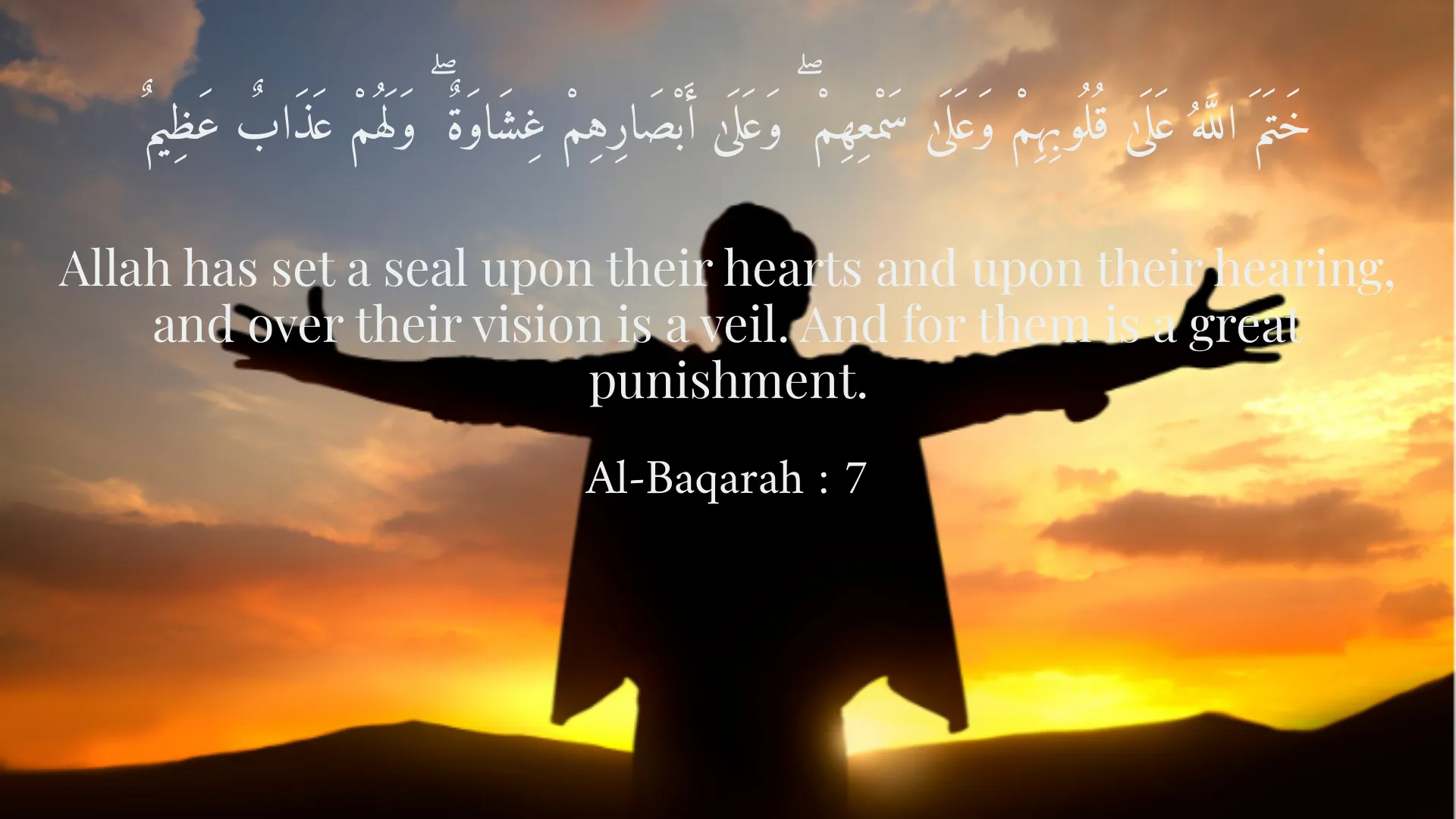
خَتَمَ اللَّهُ عَلَىٰ قُلُوبِهِمْ وَعَلَىٰ سَمْعِهِمْ ۖ وَعَلَىٰ أَبْصَارِهِمْ غِشَاوَةٌ ۖ وَلَهُمْ عَذَابٌ عَظِيمٌ
Allah has set a seal upon their hearts and upon their hearing, and over their vision is a veil. And for them is a great punishment.
Al-Baqarah : 7
وَلَقَدْ ذَرَأْنَا لِجَهَنَّمَ كَثِيرًا مِّنَ الْجِنِّ وَالْإِنسِ ۖ لَهُمْ قُلُوبٌ لَّا يَفْقَهُونَ بِهَا وَلَهُمْ أَعْيُنٌ لَّا يُبْصِرُونَ بِهَا وَلَهُمْ آذَانٌ لَّا يَسْمَعُونَ بِهَا ۚ أُولَٰئِكَ كَالْأَنْعَامِ بَلْ هُمْ أَضَلُّ ۚ أُولَٰئِكَ هُمُ الْغَافِلُونَ
And We have certainly created for Hell many of the jinn and mankind. They have hearts with which they do not understand, and they have eyes with which they do not see, and they have ears with which they do not hear. Those are like livestock; rather, they are more astray. It is they who are the heedless.
Al-A'raf : 179
إِنَّكَ لَا تَهْدِي مَنْ أَحْبَبْتَ وَلَٰكِنَّ اللَّهَ يَهْدِي مَن يَشَاءُ ۚ وَهُوَ أَعْلَمُ بِالْمُهْتَدِينَ
Indeed, [O Muhammad], you do not guide whom you like, but Allah guides whom He wills. And He is most knowing of the [rightly] guided.
Al-Qasas : 56
أَرَأَيْتَ مَنِ اتَّخَذَ إِلَٰهَهُ هَوَاهُ أَفَأَنتَ تَكُونُ عَلَيْهِ وَكِيلًا
Have you seen he who takes his god his [own] desire? Then would you be a guardian over him?
Al-Furqan : 43
إِنَّكَ لَا تُسْمِعُ الْمَوْتَىٰ وَلَا تُسْمِعُ الصُّمَّ الدُّعَاءَ إِذَا وَلَّوْا مُدْبِرِينَ
Indeed, you will not make the dead hear, nor will you make the deaf hear the call when they turn their backs and flee.
An-Naml : 80
Short Story
One day, in the court of a king, a wise scholar, renowned for his knowledge and eloquence, was imparting advice. He spoke words so sweet and profound that they could soften stone. Those present in the assembly were deeply moved by his discourse, tears flowing from their eyes, all but one courtier who continuously chuckled, showing no sign of being affected. The king was astonished by his demeanor and asked, "O courtier, what has happened to you that you are not quenched by this sea of wisdom, nor do you benefit from these pearls?" The courtier replied indifferently, "O King, however good and timely the words of a wise man may be, what good are they if the listener's ear is deaf and his heart is weak at its foundation? It is like rain falling on rocky ground; though it is divine mercy, it produces nothing but mud. If a heart is not ready to receive wisdom, thousands of pieces of wisdom poured upon it will have no effect." The king, hearing this reply, was both saddened and understood the truth: sometimes the problem is not with the words, but with a heart that has closed its gates to truth.