Quranic Answer
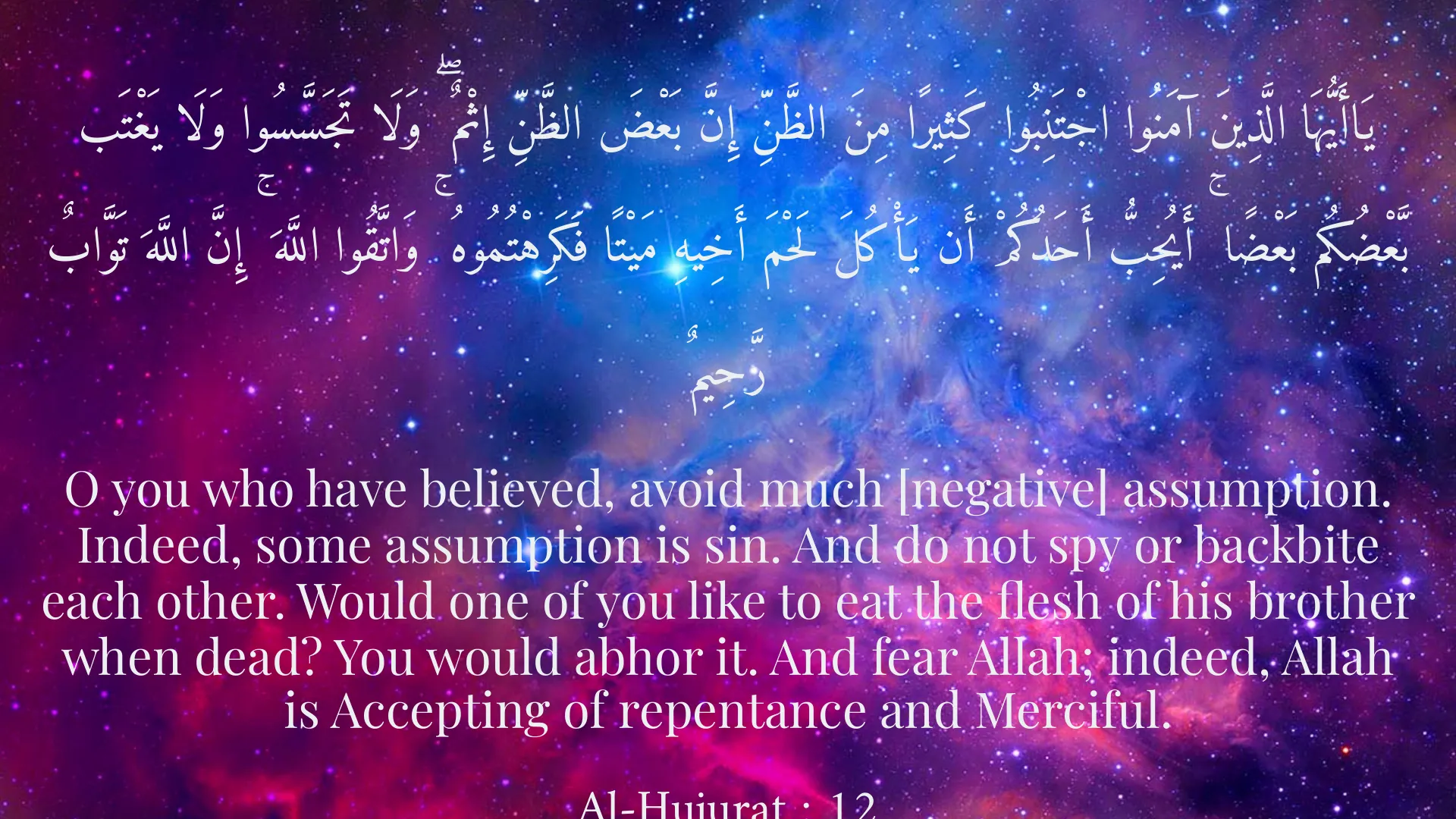
In the teachings of the Holy Quran, the matter of judging and making pronouncements about others holds significant importance, with explicit warnings against engaging in such behavior. The Quran emphasizes the fundamental truth that only Allah possesses the absolute and ultimate right to judge, as He alone is aware of all manifest and hidden matters, and He knows the intentions and inner realities of all beings. Humans, with their limited knowledge, inherent biases, and imperfect understanding of others' true circumstances and motivations, can never render a truly just and complete judgment. Therefore, constant engagement in judging others is not only an undesirable act in the sight of God but also stems from internal human weaknesses and satanic whispers, both of which the Quran addresses in detail. One of the most significant reasons the Quran identifies as the root of this undesirable behavior is 'negative assumption' or suspicion towards others. In Surah Al-Hujurat, verse 12, Almighty Allah explicitly states: "O you who have believed, avoid much [negative] assumption. Indeed, some assumption is sin. And do not spy or backbite each other. Would one of you like to eat the flesh of his brother when dead? You would abhor it. And fear Allah; indeed, Allah is Accepting of repentance and Merciful." This verse clearly shows that the root of many judgments lies in baseless assumptions and suspicions that form in the human mind. These negative assumptions pave the way for spying on others' lives and subsequently backbiting and speaking ill of them, all three of which directly lead to unhealthy judgments. The analogy of backbiting to eating the flesh of one's dead brother illustrates the ultimate repugnance and ugliness of this act in Allah's sight, an act that disregards human dignity and respect. Another reason is 'arrogance' and a sense of superiority that compels a person to view themselves as better than others and to seek out their faults. In Surah Al-Hujurat, verse 11, Allah says: "O you who have believed, let not a people ridicule [another] people; perhaps they may be better than them; nor let women ridicule [other] women; perhaps they may be better than them. And do not insult one another and do not call each other by [offensive] nicknames. Wretched is the name of disobedience after [one's] faith. And whoever does not repent - then it is those who are the wrongdoers." This verse directly addresses the root of demeaning and mocking judgments, warning that we can never know the true worth of individuals in the sight of Allah. It is entirely possible that someone who appears insignificant to us might be more beloved and virtuous in the eyes of Allah. Such judgments indicate arrogance and pride, which divert a person from the path of servitude and humility. In Surah Luqman, verse 18, there is also advice to avoid arrogance and self-admiration: "And do not turn your cheek in contempt toward people or walk through the earth exultantly. Indeed, Allah does not like those who are self-deluded and boastful." Arrogance is a significant barrier to spiritual growth, and an arrogant person is more prone to judging and finding fault with others to conceal their own weaknesses or to elevate themselves. Furthermore, the whispers of Satan (Iblis) play a crucial role in leading humans towards unjust judgments. Satan consistently seeks to create discord and enmity among believers, and one of his tools is encouraging suspicion, fault-finding, and ultimately, incorrect judgments. If a person becomes heedless of Allah and does not practice piety (taqwa), they easily fall into the trap of these whispers, and their mind, instead of focusing on self-correction, becomes preoccupied with scrutinizing and judging others. Instead of judging others, the Holy Quran advises believers to focus on self-improvement, address their own shortcomings, and always remember that everyone's return is to Allah, and He alone will meticulously examine deeds and intentions on the Day of Judgment. The purpose of these recommendations is to create a society based on mercy, empathy, mutual respect, and forgiveness, where individuals are engaged in building up and helping one another rather than tearing each other down. This avoidance of judgment not only contributes to an individual's psychological and spiritual well-being but also strengthens social relations and reinforces brotherhood and sisterhood within the believing community. Ultimately, not judging others is a sign of humility, God-consciousness, and respect for others' privacy, all of which are emphasized moral virtues in the Quran.
Related Verses
يَاأَيُّهَا الَّذِينَ آمَنُوا اجْتَنِبُوا كَثِيرًا مِنَ الظَّنِّ إِنَّ بَعْضَ الظَّنِّ إِثْمٌ ۖ وَلَا تَجَسَّسُوا وَلَا یَغْتَب بَّعْضُکُم بَعْضًا ۚ أَیُحِبُّ أَحَدُکُمْ أَن یَأْکُلَ لَحْمَ أَخِیهِ مَیْتًا فَکَرِهْتُمُوهُ ۚ وَاتَّقُوا اللَّهَ ۚ إِنَّ اللَّهَ تَوَّابٌ رَّحِیمٌ
O you who have believed, avoid much [negative] assumption. Indeed, some assumption is sin. And do not spy or backbite each other. Would one of you like to eat the flesh of his brother when dead? You would abhor it. And fear Allah; indeed, Allah is Accepting of repentance and Merciful.
Al-Hujurat : 12
یَاأَیُّهَا الَّذِینَ آمَنُوا لَا یَسْخَرْ قَوْمٌ مِنْ قَوْمٍ عَسَىٰ أَن یَکُونُوا خَیْرًا مِّنْهُمْ وَلَا نِسَاءٌ مِّن نِّسَاءٍ عَسَىٰ أَن یَکُنَّ خَیْرًا مِّنْهُنَّ ۖ وَلَا تَلْمِزُوا أَنفُسَکُمْ وَلَا تَنَابَزُوا بِالْأَلْقَابِ ۖ بِئْسَ الِاسْمُ الْفُسُوقُ بَعْدَ الْإِیمَانِ ۚ وَمَن لَّمْ یَتُبْ فَأُولَٰئِکَ هُمُ الظَّالِمُونَ
O you who have believed, let not a people ridicule [another] people; perhaps they may be better than them; nor let women ridicule [other] women; perhaps they may be better than them. And do not insult one another and do not call each other by [offensive] nicknames. Wretched is the name of disobedience after [one's] faith. And whoever does not repent - then it is those who are the wrongdoers.
Al-Hujurat : 11
وَلَا تُصَعِّرْ خَدَّکَ لِلنَّاسِ وَلَا تَمْشِ فِی الْأَرْضِ مَرَحًا ۖ إِنَّ اللَّهَ لَا یُحِبُّ کُلَّ مُخْتَالٍ فَخُورٍ
And do not turn your cheek in contempt toward people or walk through the earth exultantly. Indeed, Allah does not like those who are self-deluded and boastful.
Luqman : 18
Short Story
It is narrated that there was a worshipper who was constantly engaged in devotion and always considered himself superior to others. One day, he passed by a man who was notorious among people for committing a sin. The worshipper looked at the man with arrogance and contempt, becoming agitated that he had to witness such a sinner. The sinful man, sensing the worshipper's gaze, turned to the sky with a broken heart and a trembling voice, saying: "My Lord! Forgive this worshipper for his pride, and forgive me for my sin." That very night, the worshipper dreamt that a voice told him: "We have forgiven that sinful man for his humility, and we have rendered all your deeds ineffective due to your pride and contempt." This sweet story by Saadi reminds us that ultimate judgment belongs only to God, and we should not distance ourselves from divine mercy through judgment and arrogance, for sometimes a broken heart is better than a thousand insincere acts of worship.