Quranic Answer
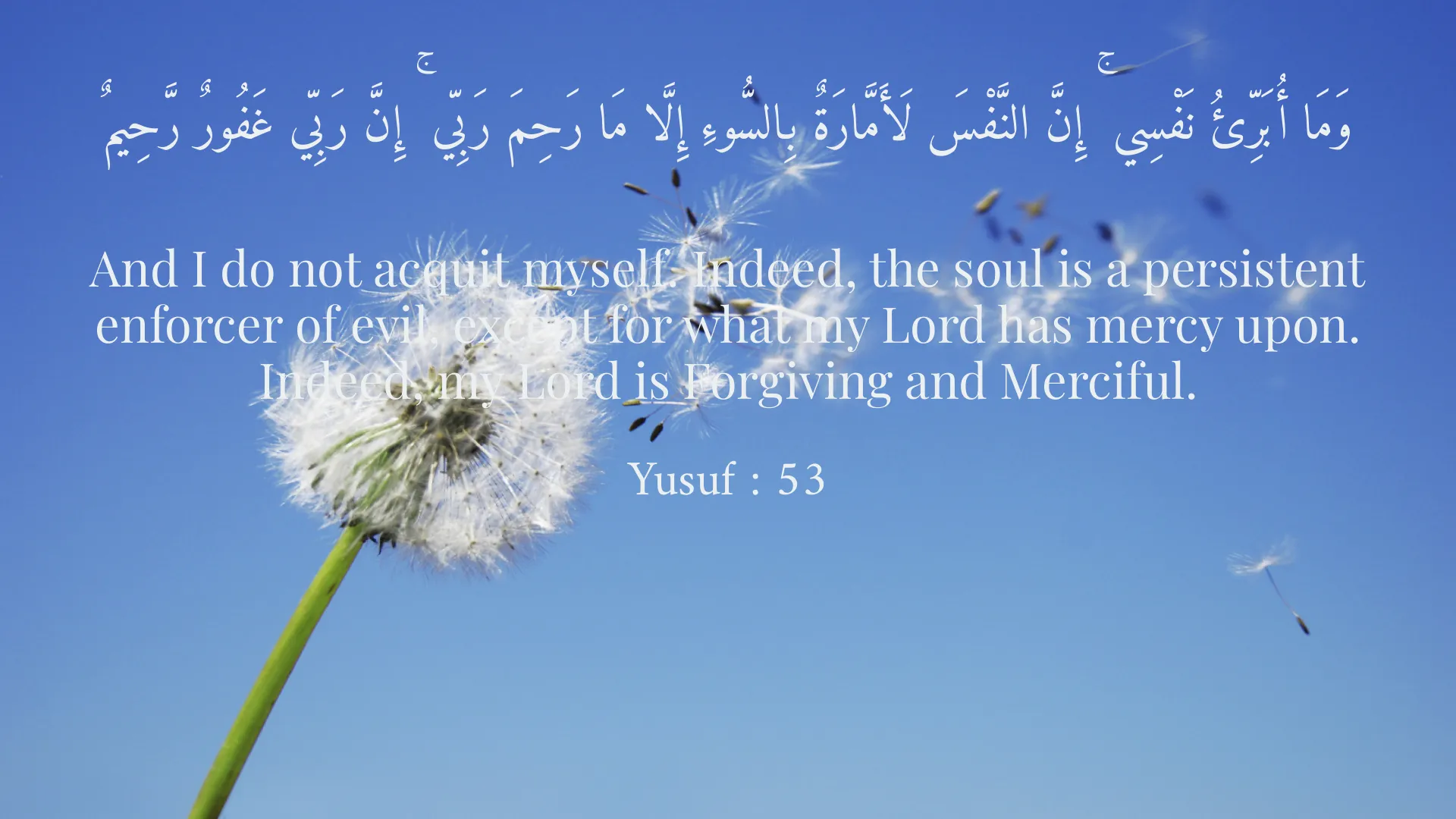
The question posed delves into one of the most profound and complex issues regarding human nature and its relationship with the Divine. The Holy Quran, with its deep insights, addresses this question from various perspectives. Firstly, it is crucial to understand that Allah created humans with free will and choice. This freedom of choice is the cornerstone of the divine test. Humans can choose the path of guidance and obedience or incline towards deviation and sin. But why do we succumb to sin even when we know it is wrong? One of the most significant reasons is the existence of the 'Nafs al-Ammara' (the commanding self) within human beings. The Nafs al-Ammara is a part of the human soul that inclines one towards desires, instincts, and worldly cravings. The Quran states in Surah Yusuf, verse 53: "And I do not acquit myself. Indeed, the soul is a persistent enforcer of evil, except for what my Lord has mercy upon. Indeed, my Lord is Forgiving and Merciful." This verse explicitly points to the soul's inherent inclination towards evil. If this inclination is not controlled by strong faith and piety, it can lead a person to commit sins. Secondly, a very powerful factor is the whispers and temptations of Satan. Satan, the sworn enemy of humanity, vowed from the very beginning of Adam's creation to mislead humans. He employs various tactics to make sin appear appealing, diminish its consequences, and transform the hope for divine mercy and forgiveness into a tool for rationalizing wrongdoing. The Quran refers to Satan's role in numerous verses, including Surah Al-A'raf, verse 27, where it states: "O children of Adam, let not Satan tempt you as he removed your parents from Paradise." Satan exploits human weaknesses, such as greed, arrogance, lust, and anger, to infiltrate and chooses moments of heedlessness and weak faith for his temptations. Another significant factor is the love for this worldly life and its fleeting pleasures. Humans naturally gravitate towards wealth, status, beauty, and worldly enjoyments. If this inclination exceeds its bounds and transforms into 'Hubb ad-Dunya' (love of the world), it can make one oblivious to eternal values and lead them to commit sins in pursuit of these temporary pleasures. The Quran mentions in Surah Ali 'Imran, verse 14: "Beautified for people is the love of desires – of women and sons, heaped-up sums of gold and silver, fine branded horses, and cattle and tilled land. That is the enjoyment of worldly life, but Allah has with Him the best return." This verse illustrates how the allure of worldly beauty can lead to heedlessness of ultimate reality. Weakness of faith and heedlessness of Allah are among the primary roots of committing sins. When a person's faith weakens, and the remembrance of Allah, the Day of Judgment, and accountability fades, the inner barrier against sin becomes fragile. At the moment of sin, an individual might forget that Allah is observing their actions and that they will one day be held accountable. The Quran repeatedly emphasizes the importance of 'Dhikr' (remembrance of Allah) for maintaining piety. In Surah Taha, verse 124, it states: "And whoever turns away from My remembrance – indeed, for him is a restricted life, and We will gather him on the Day of Resurrection blind." This highlights the severe consequences of forgetting one's Creator. Sometimes, ignorance and a lack of complete awareness of the consequences of sin can also lead to its commission. An individual might generally know that an action is wrong but fail to grasp the full extent of its evil, its corrupting dimensions, and its worldly and otherworldly repercussions. This ignorance can stem from a lack of effort to acquire religious knowledge or negligence in understanding divine commands. In such cases, education and spiritual nurturing play a crucial role. Furthermore, a person might mistakenly rely on Allah's vast mercy, assuming that even grave sins will be forgiven without genuine repentance. While Allah's mercy is indeed boundless, this mercy is conditional upon sincere repentance and remorse. Relying on mercy without repentance is a form of self-deception, which Satan tempts one with. Surah Az-Zumar, verse 53 states: "Say, 'O My servants who have transgressed against themselves [by sinning], do not despair of the mercy of Allah. Indeed, Allah forgives all sins. Indeed, it is He who is the Forgiving, the Merciful.'" This verse, while inviting hope, also implies the necessity of turning back and repenting. Ultimately, it is an individual's choice, despite knowing right from wrong, which path they choose. Islam provides solutions to combat these inclinations: strengthening faith through worship, contemplation of divine verses, purification of the soul (Tazkiyah), seeking refuge in Allah from Satan's evil, and seeking forgiveness and repenting after every transgression. This path is challenging, but its outcome is peace in this world and eternal bliss in the Hereafter. Humans must constantly strive in their internal struggle against the 'Nafs' and Satanic temptations to overcome the inclination towards sin and attain closeness to Allah. This inner struggle is an inseparable part of human perfection and spiritual growth, which is highly significant in the Quranic worldview. Therefore, understanding that humans, by their own choice and influenced by various factors, turn to sin, but at the same time, the opportunity for repentance and return is available to them, is key to comprehending this phenomenon.
Related Verses
وَمَا أُبَرِّئُ نَفْسِي ۚ إِنَّ النَّفْسَ لَأَمَّارَةٌ بِالسُّوءِ إِلَّا مَا رَحِمَ رَبِّي ۚ إِنَّ رَبِّي غَفُورٌ رَّحِيمٌ
And I do not acquit myself. Indeed, the soul is a persistent enforcer of evil, except for what my Lord has mercy upon. Indeed, my Lord is Forgiving and Merciful.
Yusuf : 53
يَا بَنِي آدَمَ لَا يَفْتِنَنَّكُمُ الشَّيْطَانُ كَمَا أَخْرَجَ أَبَوَيْكُم مِّنَ الْجَنَّةِ
O children of Adam, let not Satan tempt you as he removed your parents from Paradise.
Al-A'raf : 27
قُلْ يَا عِبَادِيَ الَّذِينَ أَسْرَفُوا عَلَىٰ أَنفُسِهِمْ لَا تَقْنَطُوا مِن رَّحْمَةِ اللَّهِ ۚ إِنَّ اللَّهَ يَغْفِرُ الذُّنُوبَ جَمِيعًا ۚ إِنَّهُ هُوَ الْغَفُورُ الرَّحِيمُ
Say, 'O My servants who have transgressed against themselves [by sinning], do not despair of the mercy of Allah. Indeed, Allah forgives all sins. Indeed, it is He who is the Forgiving, the Merciful.'
Az-Zumar : 53
Short Story
In Saadi's Gulistan, it is narrated that a just king had a wise vizier. One day, the vizier was seeking a solution for one of the king's companions who, despite knowing the dire consequences of his bad habit, could not give it up. The vizier recounted: "One day, I saw a wealthy man sitting by a well, groaning from thirst. He held a cup of water in his hand, but instead of drinking, he was dropping his gold coins, one by one, into the well! He knew he would die if he did not drink, yet greed and covetousness would not leave him. When asked why he did so, he replied: 'The sweetness of these coins has so captivated my heart that I have forgotten the bitterness of death.'" Upon hearing this tale, the king understood how the fleeting pleasures of this world can blind a person to the ruinous consequences of their actions, even if they are aware of them. This story reminds us that sometimes, temptations and undesirable habits, despite being known as wrong, drag a person towards destruction, much like the gold coins in the thirsty man's hand. Only the remembrance of God and strong will can free one from this snare.