Quranic Answer
The human need for love is deeply rooted in our creation and innate nature, and it is considered a vital necessity from various perspectives – divine, psychological, and social. The Holy Quran elucidates this need in a subtle yet powerful manner. As beings created by Allah, breathed into with His spirit, humans possess infinite capacities for connection, belonging, and affection. These capacities are not merely emotional; they encompass spiritual, mental, and even physical dimensions of our existence, giving meaning to our lives. The first and highest manifestation of love is the affection a human being should harbor for their Creator. Allah Almighty Himself is the infinite source of love, frequently described in the Quran with attributes like "Al-Wadud" (The Loving, The Most Affectionate), "Ar-Rahman" (The Most Merciful), and "Ar-Rahim" (The Especially Merciful). It is this divine love that encompasses the universe and imbues existence with meaning. By virtue of their divine nature (fitra), humans inherently seek connection to this source of love. The need for love of Allah is the deepest spiritual and emotional need of humanity, providing a sense of peace, purpose, and absolute security. This love saves individuals from emptiness and bewilderment, giving direction to their lives. Without this transcendent love, even if a person possesses all worldly blessings, they will still feel a void and incompleteness. The Quran places great emphasis on this type of love, considering it a criterion for faith and piety. Obedience to Allah and His Messenger is the practical manifestation of this love, and its reward is divine affection and pleasure. This spiritual love forms the foundation for all human relationships and is the source of stability and steadfastness in individual and social life. Beyond the love for God, the Quran also emphasizes the necessity and importance of love in human relationships. The family, as the fundamental unit of society, holds a special place for the manifestation of love. In Surah Ar-Rum, verse 21, the Holy Quran refers to "Mawaddah (affection) and Rahmah (mercy/compassion)" as signs of Allah's power in creating spouses. Mawaddah signifies deep love and friendship, while Rahmah denotes kindness and sympathy. These two pillars are essential for a successful and lasting marital relationship. For their spiritual and emotional growth and flourishing, humans require companionship and empathy. Marriage is the natural response to this innate need, where two individuals live together in love and kindness, finding tranquility and perpetuating humanity. This loving relationship is not limited to physical aspects but encompasses emotional support, mutual respect, understanding, acceptance, and companionship through life's journey. Children also grow and develop healthy personalities within an environment of parental love and affection. An environment devoid of love would be cold, harsh, and insecure, potentially inflicting irreparable harm on individuals' souls and minds. The love between parents and children, and vice versa, is one of the strongest human bonds, also emphasized in the Quran, with kindness to parents being among the most important divine commands. Furthermore, humans require love and empathy at the societal level. The Quran refers to believers as brothers and sisters, inviting them to maintain bonds of brotherhood and cooperation. This social love manifests as empathy for the needy, assistance for the oppressed, forgiveness of others' mistakes, and mutual support for each other's rights. Humans are social beings, and without healthy, love-based connections, they cannot achieve true happiness and perfection. The feeling of belonging to a community, receiving emotional support from others, and the ability to express empathy and compassion are fundamental psychological needs. Societies governed by love and kindness are dynamic, healthy, and progressive. Conversely, the absence of love and the dominance of malice and enmity lead to social disintegration and the destruction of human values. Love is not merely an emotion but a driving force that propels humanity towards goodness. It is love that motivates individuals to sacrifice for others, show selflessness, and walk the path of truth and justice. Patience in the face of difficulties, benevolence towards creation, and steadfastness in religion all stem from deep affection. Therefore, love is not only an individual need but a societal imperative for the survival and progress of humankind. By loving others, humans truly achieve their perfection and understand the true meaning of life. These bonds begin with the love for the Creator, continue with love for family, and then extend to society, each complementing the other and being interconnected. Without this network of affection and belonging, humans would be unable to experience a complete and meaningful life and would fall into despair and isolation.
Related Verses
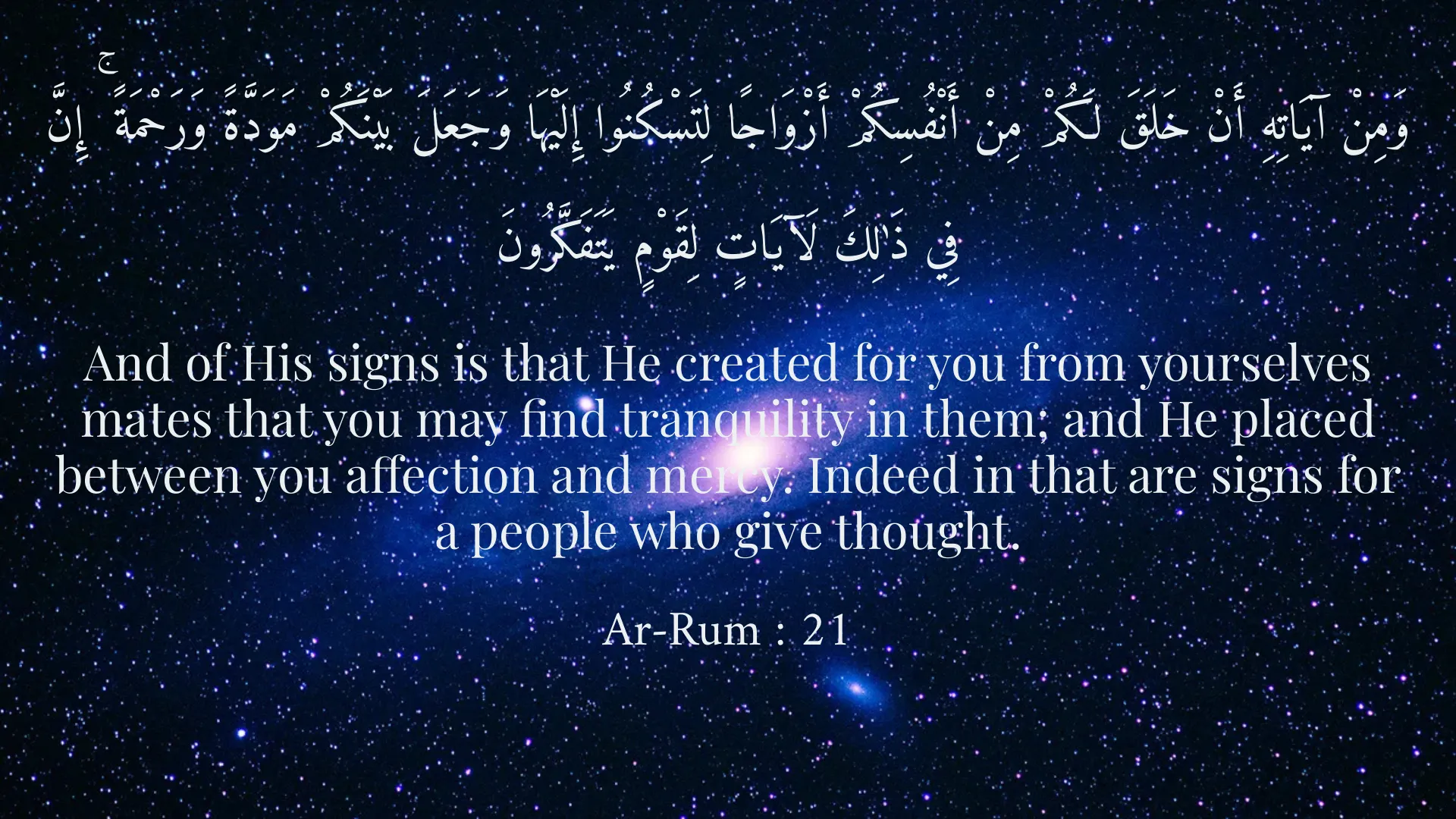
وَمِنْ آيَاتِهِ أَنْ خَلَقَ لَكُمْ مِنْ أَنْفُسِكُمْ أَزْوَاجًا لِتَسْكُنُوا إِلَيْهَا وَجَعَلَ بَيْنَكُمْ مَوَدَّةً وَرَحْمَةً ۚ إِنَّ فِي ذَٰلِكَ لَآيَاتٍ لِقَوْمٍ يَتَفَكَّرُونَ
And of His signs is that He created for you from yourselves mates that you may find tranquility in them; and He placed between you affection and mercy. Indeed in that are signs for a people who give thought.
Ar-Rum : 21
قُلْ إِن كُنتُمْ تُحِبُّونَ اللَّهَ فَاتَّبِعُونِي يُحْبِبْكُمُ اللَّهُ وَيَغْفِرْ لَكُمْ ذُنُوبَكُمْ ۗ وَاللَّهُ غَفُورٌ رَّحِيمٌ
Say, [O Muhammad], 'If you should love Allah, then follow me; Allah will love you and forgive you your sins. And Allah is Forgiving and Merciful.'
Al-Imran : 31
إِنَّمَا الْمُؤْمِنُونَ إِخْوَةٌ فَأَصْلِحُوا بَيْنَ أَخَوَيْكُمْ ۚ وَاتَّقُوا اللَّهَ لَعَلَّكُمْ تُرْحَمُونَ
The believers are none but brothers, so make reconciliation between your two brothers and fear Allah that you may receive mercy.
Al-Hujurat : 10
Short Story
In Saadi's Gulistan, it is narrated that an old and devout man had secluded himself for years, avoiding people. One day he was asked, 'Why have you chosen this solitude and distanced yourself from people? Have you been harmed by them?' The devout man sighed and said, 'Neither have I been harmed, nor am I disgusted by them. But the truth is, every human finds peace and solace in the company of their fellow human beings. Although solitude purifies the soul, a heart without a companion is like a garden without water, which will wither sooner or later. Just as a flower needs sunlight and drops of water, so too does the heart need the warmth of friendship and love to blossom.' They asked, 'Then why have you chosen solitude?' He replied, 'Because I thought that in solitude, the heart would be closer to God. But now I see that God Himself has placed affection and mercy among His servants, and the love for creation is a window to the love of the Creator.'