Quranic Answer
This is a deeply human and profound question that many believers encounter throughout their lives. Feelings of doubt and uncertainty regarding divine mercy and forgiveness can stem from various factors: the burden of past sins, satanic whispers, or even an insufficient understanding of the infinitely merciful nature of the Lord. However, the Holy Quran, the word of Allah Almighty, is replete with verses that unequivocally emphasize the vastness and boundlessness of God's mercy and forgiveness, dispelling any despair and hopelessness from the believer's heart. One of the primary reasons a person might doubt God's forgiveness relates to a distorted perception they sometimes hold of themselves and their sins. Individuals might at times imagine their sins to be so great and numerous that forgiveness seems impossible. Yet, in numerous Quranic verses, Allah describes Himself as “Al-Ghafur” (The All-Forgiving), “Ar-Rahim” (The Especially Merciful), “At-Tawwab” (The Acceptor of Repentance), and “Wasi'ul-Maghfirah” (Possessor of Vast Forgiveness). These divine attributes demonstrate that God's forgiveness is boundless, and no sin—no matter how great—can ever be greater than the ocean of His mercy, unless a person deliberately and arrogantly closes the door to return upon themselves. The Quran, with remarkable clarity and tenderness, calls upon servants to repent and return to God. In Surah Az-Zumar, verse 53, Allah says: “Say, 'O My servants who have transgressed against themselves [by sinning], do not despair of the mercy of Allah. Indeed, Allah forgives all sins. Indeed, it is He who is the Forgiving, the Merciful.'” This verse is one of the most hopeful verses in the Quran, explicitly stating that no sinner should ever despair of God's mercy. The phrase “forgives all sins” (yaghfiru adh-dhunūba jamīʿan), with its absolute emphasis, indicates the unlimited expanse of divine forgiveness. This promise encompasses all sins, minor and major, provided that sincere (nasuh) repentance is offered, accompanied by a firm resolve to abandon sin and rectify past wrongs. Another factor contributing to doubt is satanic whispers. Satan, the sworn enemy of humanity, constantly strives to divert people from the path of truth and divine mercy. One of his cunning tactics is to instill despair and hopelessness in the hearts of believers. He whispers to humans that their sins are so numerous that there is no way back, or that God will never forgive them. However, the Holy Quran warns us to be aware of Satan's schemes. Recognizing these temptations and seeking refuge in Allah from the accursed Satan can build a strong barrier against such doubts. The primary condition for benefiting from this expansive mercy is sincere repentance and a heartfelt return to God. Repentance (Tawbah) is not merely uttering “Astaghfirullah” (I seek forgiveness from Allah); rather, it is an inner transformation and a resolute determination to abandon sin, regret past actions, and strive to compensate for past transgressions. In Surah An-Nisa, verse 110, we read: “And whoever does evil or wrongs himself then seeks forgiveness of Allah will find Allah Forgiving and Merciful.” This verse shows that the door of divine mercy is always open, and whenever a person sincerely turns back to Him, they will find a response of mercy and forgiveness. Furthermore, Allah not only forgives the sins of those who repent but, in some cases, transforms them into good deeds. In Surah Al-Furqan, verse 70, He says: “Except for those who repent, believe and do righteous deeds; for those, Allah will change their evil deeds into good ones. And ever is Allah Forgiving and Merciful.” This exemplifies the utmost generosity and forgiveness of Allah, who not only erases sin but converts it into virtue. This verse should eliminate any doubt concerning God's forgiveness. To overcome doubt in divine forgiveness, several practical steps can be taken: 1. Deeper understanding of Allah's Names and Attributes: Studying and reflecting on the meanings of Al-Asma al-Husna (the Most Beautiful Names) such as “Ar-Rahman,” “Ar-Rahim,” “Al-Ghafur,” “At-Tawwab,” “Al-Wahhab,” and “Al-Haleem” can deepen one's comprehension of the vastness of God's mercy and forgiveness. 2. Sincere and frequent repentance (Tawbah Nasuhah): Genuine regret for sins, firm resolve to abandon them, compensating for violated rights (Huquq al-Nas), and continuous seeking of forgiveness (Istighfar) are the primary means of attaining divine forgiveness. 3. Performing righteous deeds: Good deeds erase bad ones. Performing prayers, fasting, giving charity, helping those in need, and exhibiting good morals not only draw one closer to God but also diminish the negative effects of sins. 4. Seeking refuge in Allah from satanic whispers: Continuously reciting “A'udhu billahi minash-shaytanir-rajeem” (I seek refuge in Allah from the accursed Satan) and supplicating for the removal of temptations. 5. Associating with believers and increasing religious knowledge: Spending time with those who possess strong hope and faith, and studying authentic religious texts and resources, can help strengthen certainty and dispel doubts and ambiguities. In summary, doubt in God's forgiveness stems from an insufficient understanding of His infinite greatness and mercy. The Holy Quran, through its explicit and numerous promises, invalidates this doubt and keeps the path of hope and return open for all servants, even the greatest sinners. One should never despair of Allah's mercy, for despair itself is a grave sin. The doors of repentance and divine forgiveness remain open until the last moments of a person's life; one only needs to return to Him with a regretful heart and a firm resolve to find His boundless ocean of mercy flowing upon them. This truth brings peace to the heart and smooths the path of return.
Related Verses
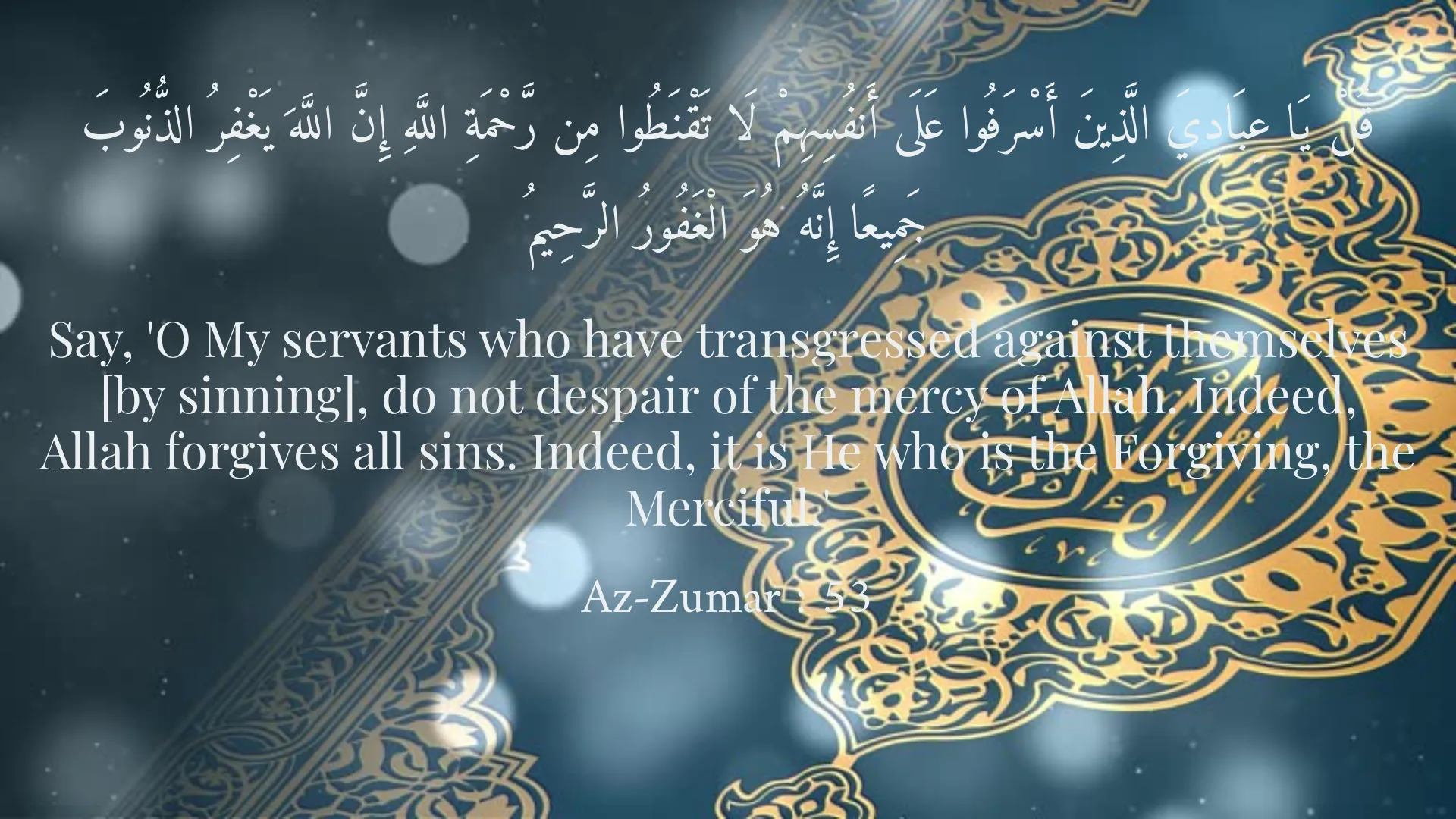
قُلْ يَا عِبَادِيَ الَّذِينَ أَسْرَفُوا عَلَى أَنفُسِهِمْ لَا تَقْنَطُوا مِن رَّحْمَةِ اللَّهِ إِنَّ اللَّهَ يَغْفِرُ الذُّنُوبَ جَمِيعًا إِنَّهُ هُوَ الْغَفُورُ الرَّحِيمُ
Say, 'O My servants who have transgressed against themselves [by sinning], do not despair of the mercy of Allah. Indeed, Allah forgives all sins. Indeed, it is He who is the Forgiving, the Merciful.'
Az-Zumar : 53
وَمَن يَعْمَلْ سُوءًا أَوْ يَظْلِمْ نَفْسَهُ ثُمَّ يَسْتَغْفِرِ اللَّهَ يَجِدِ اللَّهَ غَفُورًا رَّحِيمًا
And whoever does evil or wrongs himself then seeks forgiveness of Allah will find Allah Forgiving and Merciful.
An-Nisa : 110
إِلَّا مَن تَابَ وَآمَنَ وَعَمِلَ عَمَلًا صَالِحًا فَأُولَئِكَ يُبَدِّلُ اللَّهُ سَيِّئَاتِهِمْ حَسَنَاتٍ ۗ وَكَانَ اللَّهُ غَفُورًا رَّحِيمًا
Except for those who repent, believe and do righteous deeds; for those, Allah will change their evil deeds into good ones. And ever is Allah Forgiving and Merciful.
Al-Furqan : 70
Short Story
There was once a king who apprehended a man who had been engaged in rebellion and banditry for many years. The bandit was deeply remorseful for his deeds and fearful of the vastness of his sins. The king asked him, 'Why did you oppress the people so much?' The bandit, trembling, replied, 'O King! My sins are so numerous that I hold no hope of forgiveness from your court of justice.' The wise king smiled and said, 'O servant of God, my forgiveness is far greater than your errors, and the ocean of my pardon is vaster than your mountain of sins. Whenever a servant turns to me with genuine remorse and repentance, I too shall meet him with mercy and forgiveness. Go, for I have forgiven you, on the condition that from now on you pursue nothing but the path of righteousness and learn from your past mistakes.' The bandit wept at the king's kindness and vowed to spend the rest of his life on the right path.