Quranic Answer
The feeling of fearing God's silence or unresponsiveness is a deeply human experience that many individuals encounter on their spiritual journey. This feeling often arises when one prays, hopes, or awaits a sign of divine help and presence, but seemingly receives nothing. In the face of problems, illnesses, loss of loved ones, or even moments of existential confusion and doubt, a person might feel that God has abandoned them or that their prayers are unheard. However, to understand this feeling more profoundly and how to address it, we must turn to the enlightening teachings of the Holy Quran. The Quran never speaks of 'God's silence' in terms of absence or not hearing; on the contrary, it continuously emphasizes God's infinite presence, boundless knowledge, and His hearing of all prayers and whispers. One of the most fundamental Quranic concepts that dispels this fear is the awareness of the truth that Almighty God is always present and observing our conditions. The Holy Quran clearly states that God is closer to us than our jugular vein, and nothing is hidden from His knowledge. In Surah Qaf (50:16), we read: "And We have already created man and know what his soul whispers to him, and We are closer to him than [his] jugular vein." This verse alone is sufficient to negate any idea of God's silence or distance. He not only hears our overt prayers but is also aware of every thought, every whisper, and every hidden feeling deep within our beings. So, if God is always present and hearing, why do we sometimes feel that our prayers are unanswered or that we are met with silence? The Quran also addresses this issue. One of the significant answers relates to divine wisdom. Almighty God acts based on His infinite wisdom and expediency, and His responses are not always in accordance with our desires and expectations. Sometimes, the answer to a prayer is in its delay, because the opportune time has not yet arrived, or the desired answer takes a different form than what we imagine. God might withhold something from us that we perceive as good, but is in reality harmful, or conversely, grant us something that initially seems undesirable but contains immense good. Surah Al-Baqarah (2:216) states: "But perhaps you hate a thing and it is good for you; and perhaps you love a thing and it is bad for you. And Allah Knows, while you know not." This verse indicates that our limited understanding of good and bad might cause us to interpret a response that divine wisdom has intended for us as 'silence' or 'no answer.' Furthermore, the Quran teaches us that life is a stage for trials and tribulations. Calamities, hardships, and moments of waiting are all part of this divine test. God tests humans with fear, hunger, and loss of wealth and lives (Al-Baqarah 2:155). It is during these moments that one's faith is put to the test. The feeling of God's 'silence' in such circumstances can be an opportunity for the growth of patience, reliance (tawakkul), and an increase in the heartfelt connection with the Creator. Surah Al-Baqarah (2:153) says: "O you who have believed, seek help through patience and prayer. Indeed, Allah is with the patient." This verse reminds us that in difficult moments and in response to feelings of loneliness, taking refuge in patience and prayer is what brings us closer to God and assures us that He never abandons the patient. Another crucial point is the nature of Du'a (supplication) in Islam. Du'a is not merely a request for needs, but an act of worship and submission itself. When we supplicate, we are directly communicating with the Creator of the universe; we call upon Him, acknowledge our weakness before His infinite power, and show our hope and reliance on Him. Even if the apparent outcome of our prayer is not as desired, the act itself holds immense spiritual reward and leads to divine proximity. Imam Sadiq (AS) said: "Allah, the Exalted, loves the prayer of a believer whose request He delays, so that he insists on supplicating." This narration indicates that persistence in Du'a, even without immediate answers, is a sign of steadfast faith and reliance that is pleasing to God. To overcome this fear of silence, there are practical steps rooted in Quranic teachings: 1. Strengthening certainty in divine presence: Constantly remember that God is always near and never heedless. Recite and reflect upon verses related to God's knowledge and omnipresence. 2. Patience and Reliance (Tawakkul): Understand that God's answer might come at a time we don't expect or in a form that our understanding is incomplete. Tawakkul means complete trust in divine management and wisdom. 3. Increasing Dhikr (remembrance of God): True peace of heart is found in the remembrance of God. "Unquestionably, by the remembrance of Allah hearts are assured" (Ar-Ra'd 13:28). Dhikr removes veils between us and God and strengthens the feeling of closeness. 4. Contemplation on the signs in the horizons and within ourselves: Observing God's creation and the order governing the universe reveals signs of His power, wisdom, and mercy, increasing our certainty in His presence and management. 5. Self-improvement and mending the relationship with God: Sometimes, the feeling of distance results from our negligence of religious duties or committing sins. Repentance (Tawbah) and turning back to God are the first steps to repair this relationship and remove the veils. 6. Seeking insight: Ask God to open our eyes to His wisdom and signs so that we may see and understand His answers in various forms. Ultimately, the fear of God's silence can be a point of spiritual transformation and growth. This fear is an invitation to deepen our understanding of the relationship with God, practice patience, and increase reliance. The Quran assures us that God never abandons His servants, and He is always Hearing, Seeing, and Knowing, even when we, at the peak of despair or anticipation, experience 'silence.' This apparent silence is not a sign of absence, but perhaps an opportunity to hear our inner voice and perceive the hidden divine wisdoms.
Related Verses
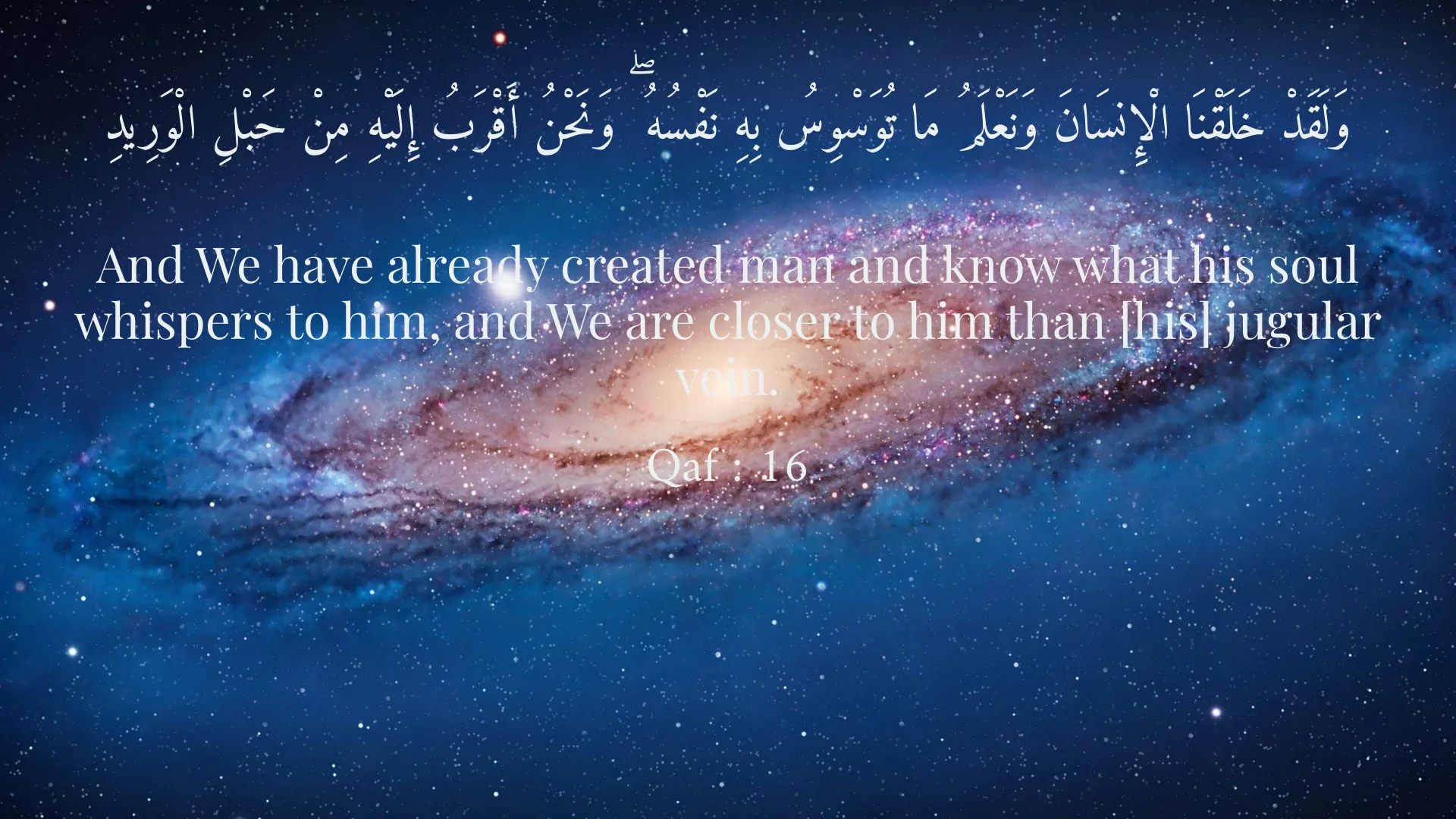
وَلَقَدْ خَلَقْنَا الْإِنسَانَ وَنَعْلَمُ مَا تُوَسْوِسُ بِهِ نَفْسُهُ ۖ وَنَحْنُ أَقْرَبُ إِلَيْهِ مِنْ حَبْلِ الْوَرِيدِ
And We have already created man and know what his soul whispers to him, and We are closer to him than [his] jugular vein.
Qaf : 16
يَا أَيُّهَا الَّذِينَ آمَنُوا اسْتَعِينُوا بِالصَّبْرِ وَالصَّلَاةِ ۚ إِنَّ اللَّهَ مَعَ الصَّابِرِينَ
O you who have believed, seek help through patience and prayer. Indeed, Allah is with the patient.
Al-Baqarah : 153
كُتِبَ عَلَيْكُمُ الْقِتَالُ وَهُوَ كُرْهٌ لَّكُمْ ۖ وَعَسَىٰ أَن تَكْرَهُوا شَيْئًا وَهُوَ خَيْرٌ لَّكُمْ ۖ وَعَسَىٰ أَن تُحِبُّوا شَيْئًا وَهُوَ شَرٌّ لَّكُمْ ۗ وَاللَّهُ يَعْلَمُ وَأَنتُمْ لَا تَعْلَمُونَ
Fighting has been enjoined upon you while it is hateful to you. But perhaps you hate a thing and it is good for you; and perhaps you love a thing and it is bad for you. And Allah Knows, while you know not.
Al-Baqarah : 216
Short Story
In Saadi's Golestan, it is narrated that a dervish, despite years of worship and asceticism, never attained what he desired and thought his prayers went unanswered. One day, in utter despair, he went to the desert with a broken heart. On his way, he came across a well where a thirsty bird was perched on the edge, unable to reach the water. The dervish felt pity for the bird and, with great effort, picked up a stone and threw it into the well so the water level rose, and the bird drank its fill. At that very moment, a voice echoed in the dervish's ear: "O Our servant, for years you saw yourself pursuing us, while We wished you to pursue others. When you forgot your own sorrow and sought to quench the thirst of a bird, We fulfilled your need." The dervish understood that sometimes apparent silence is the call of wisdom, and the answer to prayer lies elsewhere: in benevolence, in patience, and in opening one's heart to others beyond oneself.