Quranic Answer
The profound question, "Why do I feel empty at the peak of blessings?" necessitates a deep exploration into the human psyche and a thorough examination of the teachings of the Holy Quran. The Quran, as a book of guidance and light, repeatedly touches upon the nature of worldly life, the purpose of human creation, and the role of blessings. The feeling of emptiness, even when one is surrounded by abundance and comfort, is a common phenomenon that, from a Quranic perspective, is entirely comprehensible. This feeling is often indicative of a deeper deficit, a spiritual void that cannot be filled by any amount of material wealth, worldly status, or fleeting pleasures. The Holy Quran explicitly states that the primary purpose of human creation is the worship and recognition of the Lord. In Surah Adh-Dhariyat, verse 56, Allah declares: "And I did not create the jinn and mankind except to worship Me." This foundational verse illustrates that our existence has a divine purpose. If individuals lose sight of this fundamental objective, they will inevitably experience a sense of emptiness and meaninglessness, even after attaining all their worldly aspirations. Material blessings and opportunities are merely means to achieve this divine purpose, not the end in themselves. If one mistakenly perceives them as the ultimate goal, true contentment and peace will remain perpetually out of reach. This points to a profound truth: the human soul, unlike the body, is not of a material nature and cannot be satiated by material things. The needs of the soul are of connection, love, knowledge, and divine purpose, which can only be fulfilled through a relationship with the Creator. Thus, the more one becomes engrossed in materialism and distances oneself from their spiritual dimension, the emptier they will feel, even if they possess the treasures of the world. One of the primary reasons for this emptiness is the neglect of Dhikr, or the remembrance of Allah. The Quran places immense emphasis on the remembrance of God and the tranquility that stems from it. In Surah Ar-Ra'd, verse 28, Allah states: "Those who have believed and whose hearts are assured by the remembrance of Allah. Unquestionably, by the remembrance of Allah hearts are assured." This verse clearly articulates that the fundamental source of inner peace and satisfaction lies not in the accumulation of wealth or worldly delights, but in a profound heart connection with the Creator. When a person finds themselves at the pinnacle of blessings but neglects the remembrance of Allah, their heart becomes disconnected from its true source of peace, leading to the pervasive feeling of emptiness. This void is, in essence, a cry from the soul, signaling its urgent need for spiritual nourishment and reconnection, and warning the individual that they are straying from the right path. The remembrance of Allah is not limited to merely uttering His name; it encompasses a continuous awareness of His presence, reflection on His verses, acting upon His commands, and sincere worship. This constant divine presence in the heart grants insight, ensuring that one does not lose sight of the ultimate destination amidst worldly distractions and understands that everything is transient except His essence. The Quran also highlights the fleeting and transient nature of worldly life. In Surah Al-Hadid, verse 20, Allah describes the state of this world as follows: "Know that the life of this world is only play and amusement, pomp and mutual boasting in the accumulation of wealth and children - like the example of a rain whose [resulting] plant growth pleases the disbelievers; then it dries and you see it [become] yellow; then it becomes [scattered] debris. And in the Hereafter is severe punishment and forgiveness from Allah and approval. And what is the life of this world except the enjoyment of delusion." This verse serves as a crucial reminder that although worldly blessings may appear beautiful and enticing, they are inherently unstable and cannot serve as a permanent source of happiness and tranquility. Clinging to them and setting them as the ultimate aspirations inevitably leads to disappointment and emptiness, because nothing in this transient world can fill the eternal void within the human spirit. This Quranic perspective helps individuals break free from the bondage of greed and covetousness, realizing that true stability and peace lie only in connection with the Absolute Truth. Furthermore, in numerous Quranic verses, blessings are presented as a means of testing humanity. Allah bestows blessings upon us to observe how grateful we will be and how we will utilize these gifts in ways that are pleasing to Him. If these blessings lead to arrogance, forgetfulness of God, or injustice and oppression, they bring no peace; rather, they can become a source of distress and punishment. True gratitude is expressed not only through words but also through actions – by using blessings for good, for the welfare of society, and for helping others. When blessings are used solely for personal gratification and further accumulation, they intensify the sense of meaninglessness and emptiness. This emptiness can be a warning to re-evaluate how blessings are used and to direct them towards higher, more spiritual goals. Islam teaches us that every blessing carries a responsibility, and true perfection lies in giving and sacrifice. The path out of this feeling of emptiness involves returning to Allah and renewing one's connection with Him. This return encompasses strengthening one's faith, performing acts of worship with sincere presence of heart, contemplating Divine verses and the signs of His power in the universe, and serving God's creation. Engaging in charitable acts, assisting the needy, and sharing from what Allah has bestowed upon us can bring a profound sense of purpose and inner satisfaction. These actions nourish the human soul, liberating it from the shackles of materialism. The Quran repeatedly emphasizes the importance of spending in the way of Allah and helping others, describing it as a source of growth and blessings. Engaging in spiritual and social activities not only benefits others but also provides the individual with a sense of worth and meaning, freeing them from the cage that materialism has built. Ultimately, feeling empty at the peak of blessings is a divine wake-up call. This feeling indicates that our soul transcends material possessions and has deeper needs that can only be met through connection with the Creator of the universe and living a life aligned with His pleasure. These moments offer an invaluable opportunity for introspection, reassessment of priorities, and recalibration of life's compass towards absolute truth. With this approach, worldly blessings are not obstacles to true happiness but can become powerful tools for achieving true perfection and lasting peace. It is crucial to remember that this world is the cultivation ground for the Hereafter, and whatever we sow here, we will reap in the next abode. If we sow the seeds of nihilism and attachment to the fleeting, our harvest will be nothing but regret and emptiness. But if we sow the seeds of faith, righteous deeds, gratitude, and service to creation, our harvest will be divine contentment and eternal peace. Therefore, this feeling of emptiness is a warning and an invitation to spirituality and the discovery of life's true meaning, reminding us that every human heart is a divine treasure illuminated only by the light of Allah's remembrance.
Related Verses
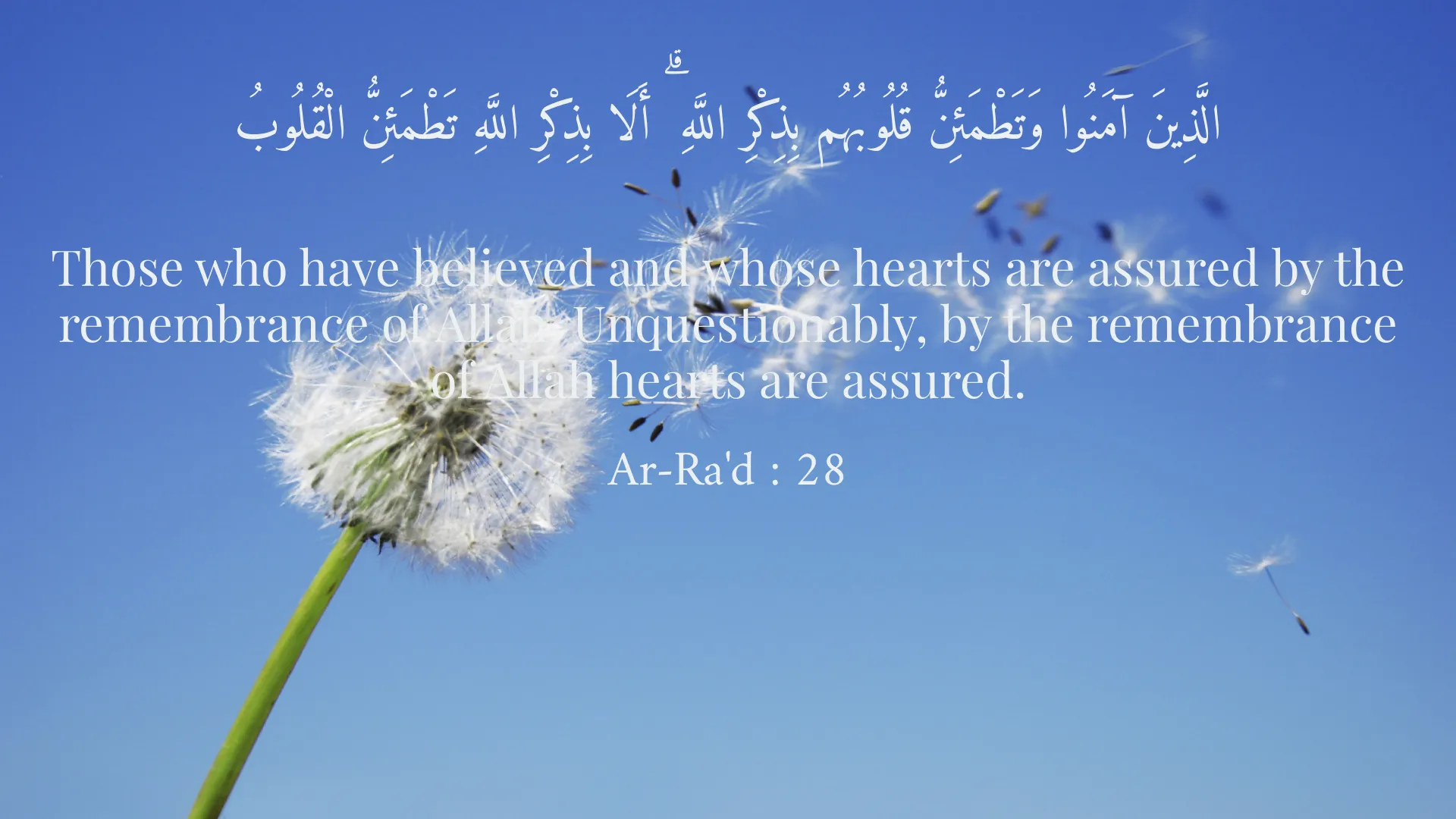
الَّذِينَ آمَنُوا وَتَطْمَئِنُّ قُلُوبُهُم بِذِكْرِ اللَّهِ ۗ أَلَا بِذِكْرِ اللَّهِ تَطْمَئِنُّ الْقُلُوبُ
Those who have believed and whose hearts are assured by the remembrance of Allah. Unquestionably, by the remembrance of Allah hearts are assured.
Ar-Ra'd : 28
وَمَا خَلَقْتُ الْجِنَّ وَالْإِنسَ إِلَّا لِيَعْبُدُونِ
And I did not create the jinn and mankind except to worship Me.
Adh-Dhariyat : 56
اعْلَمُوا أَنَّمَا الْحَيَاةُ الدُّنْيَا لَعِبٌ وَلَهْوٌ وَزِينَةٌ وَتَفَاخُرٌ بَيْنَكُمْ وَتَكَاتُرٌ فِي الْأَمْوَالِ وَالْأَوْلَادِ ۖ كَمَثَلِ غَيْثٍ أَعْجَبَ الْكُفَّارَ نَبَاتُهُ ثُمَّ يَهِيجُ فَتَرَاهُ مُصْفَرًّا ثُمَّ يَكُونُ حُطَامًا ۖ وَفِي الْآخِرَةِ عَذَابٌ شَدِيدٌ وَمَغْفِرَةٌ مِّنَ اللَّهِ وَرِضْوَانٌ ۚ وَمَا الْحَيَاةُ الدُّنْيَا إِلَّا مَتَاعُ الْغُرُورِ
Know that the life of this world is only play and amusement, pomp and mutual boasting in the accumulation of wealth and children - like the example of a rain whose [resulting] plant growth pleases the disbelievers; then it dries and you see it [become] yellow; then it becomes [scattered] debris. And in the Hereafter is severe punishment and forgiveness from Allah and approval. And what is the life of this world except the enjoyment of delusion.
Al-Hadid : 20
Short Story
It is narrated that once there was a wealthy and powerful king who was always worried and restless, despite all his treasures and armies. He met a poor dervish who lived peacefully in a desert hut, possessing nothing but inner tranquility. The king asked the dervish, "How is it that I, with all this kingdom, am restless, and you, with nothing, are at peace?" The dervish, with a kind smile, replied: "Because you accumulate, and I let go. You fear losing what you have, and I have nothing to lose." This beautiful story from Saadi's Gulistan illustrates that true happiness and peace lie not in the abundance of external blessings, but in the richness of the soul and a heart free from worldly attachments, and that true serenity is found in contentment and freedom from material bondage.