Quranic Answer
The feeling of not being 'enough' for God is a profound and common sentiment that many believers encounter on their spiritual journey. This feeling sometimes stems from a sincere desire to achieve perfection in worship and obedience, and at other times from a sense of guilt over mistakes and shortcomings. However, the Quranic perspective on this feeling offers a completely different viewpoint. It emphasizes Allah's vast mercy, His wisdom in creating humanity with both weakness and strength, and His appreciation for sincerity and continuous effort rather than an unattainable human perfection. Firstly, we must always remember the boundless mercy of Allah Almighty, which encompasses all things. Allah (SWT) is 'Ar-Rahman, Ar-Raheem' (The Most Merciful, The Most Compassionate) and 'Al-Ghaffar, Al-Wadood' (The All-Forgiving, The Most Loving). These Divine attributes signify that Allah loves His servants, desires goodness for them, and is always ready to accept their repentance and forgive their sins, no matter how great. The feeling of inadequacy can sometimes be a trap from Shaytan (Satan) to make a person despair of their Lord's mercy, thereby halting their pursuit of closeness to Allah. But the Quran explicitly calls us not to despair of Allah's mercy; instead, it invites us to return to Him with all our sins and deficiencies. Allah says in Surah Az-Zumar (Verse 53): 'Say, "O My servants who have transgressed against themselves [by sinning], do not despair of the mercy of Allah. Indeed, Allah forgives all sins. Indeed, it is He who is the Forgiving, the Merciful."' This noble verse serves as a direct call to every soul burdened by its sins, proclaiming that the door of forgiveness is wide open. The magnitude or number of sins does not matter; what matters is the sincerity of repentance and returning to Allah. Allah does not need the 'perfection' of our deeds as much as He needs the sincerity of our hearts and our turning towards Him. He knows our human weakness, and for this reason, He has opened the door of repentance and seeking forgiveness for us. Secondly, understanding the nature of humanity as depicted in the Holy Quran helps us overcome this feeling. Allah created humanity in the best of forms, but He also created us with weakness and a propensity for error and forgetfulness. We are not angels who never err; rather, we are humans who strive, make mistakes, repent, and return. Allah knows this perfectly well. This human nature is part of the divine wisdom in creation. The Quran clarifies that Allah does not burden a soul beyond its capacity. He says in Surah Al-Baqarah (Verse 286): 'Allah does not burden a soul beyond its capacity. It will have [the consequence of] what it has gained, and it will bear [the consequence of] what it has earned.' This means that Allah does not ask us to do what we are unable to do, nor does He hold us accountable for what is beyond our strength. Therefore, the feeling that you are not 'enough' might stem from setting unrealistic standards for yourself, standards that may not even align with what Allah asks of you. Allah desires from us effort, sincerity, and repentance when we err, not an absolute perfection that only He possesses. Thirdly, the process of repentance (Tawbah) and returning to Allah is a continuous journey, not a one-time event. Islam is built upon the idea of continuous spiritual development and gradual improvement. Every time we make a mistake, we learn a lesson, and we open a new door for repentance and returning to Allah. Allah loves those who repent and those who purify themselves. Allah says in Surah An-Nisa (Verse 110): 'And whoever does evil or wrongs himself but then seeks forgiveness of Allah will find Allah Forgiving and Merciful.' This verse teaches us that the path to forgiveness is paved and clear. Simply seeking forgiveness with sincerity is enough to find Allah Forgiving and Merciful. This confirms that Allah values sincere turning to Him and remorse more than He values any 'perfect' deeds that a person might perceive in themselves. The feeling of inadequacy should be a motivator for improvement, not a reason for despair or stopping the effort. The more we feel deficient, the more it reminds us of our profound need for Allah and the extent of His generosity and mercy. So, how can we overcome this feeling? 1. Focus on Allah's Mercy: Instead of dwelling on your mistakes, focus on the vastness of Allah's mercy. Whenever you feel despair, remember the verses of mercy and forgiveness. 2. Do what you can with sincerity: Do not demand perfection from yourself. Perform acts of worship and good deeds to the best of your ability with the sincerest intentions, and rely on Allah for the rest. Allah looks at intention and sincerity more than quantity or magnitude. 3. Repent continuously: Make repentance a part of your daily routine. Seek Allah's forgiveness constantly, even if you don't feel you've committed a major sin. Istighfar (seeking forgiveness) purifies the heart and strengthens one's relationship with Allah. 4. Seek Allah's help: Rely on Allah in all your affairs. Ask for His assistance in obeying Him and in overcoming your weaknesses. 5. Remember the value of effort, not just results: Allah does not hold you accountable solely for the final outcomes, but for the effort you exert to please Him. Mistakes are part of the learning journey. In conclusion, your feeling of not being 'enough' for Allah is, in fact, an invitation to reflect on the greatness of Allah and His mercy. Allah Almighty does not need our worship; rather, we are the ones who need Him. He is Al-Ghani (The Self-Sufficient), Al-Hamid (The Praiseworthy), and we are poor in need of Him. Our worth comes not from our perfection, but from our faith in Him, the sincerity of our turning to Him, our acknowledgment of our human weakness, and then seeking His help and forgiveness. Be confident that you are 'enough' in Allah's eyes when you strive towards Him with a sound heart, even if your steps falter. He loves those who repent and those who purify themselves, and this includes everyone who errs and then sincerely returns to Him. The important thing is to continue on the path, no matter the stumbles, and to be certain that Allah is with you, closer to you than your jugular vein, and His mercy precedes His wrath.
Related Verses
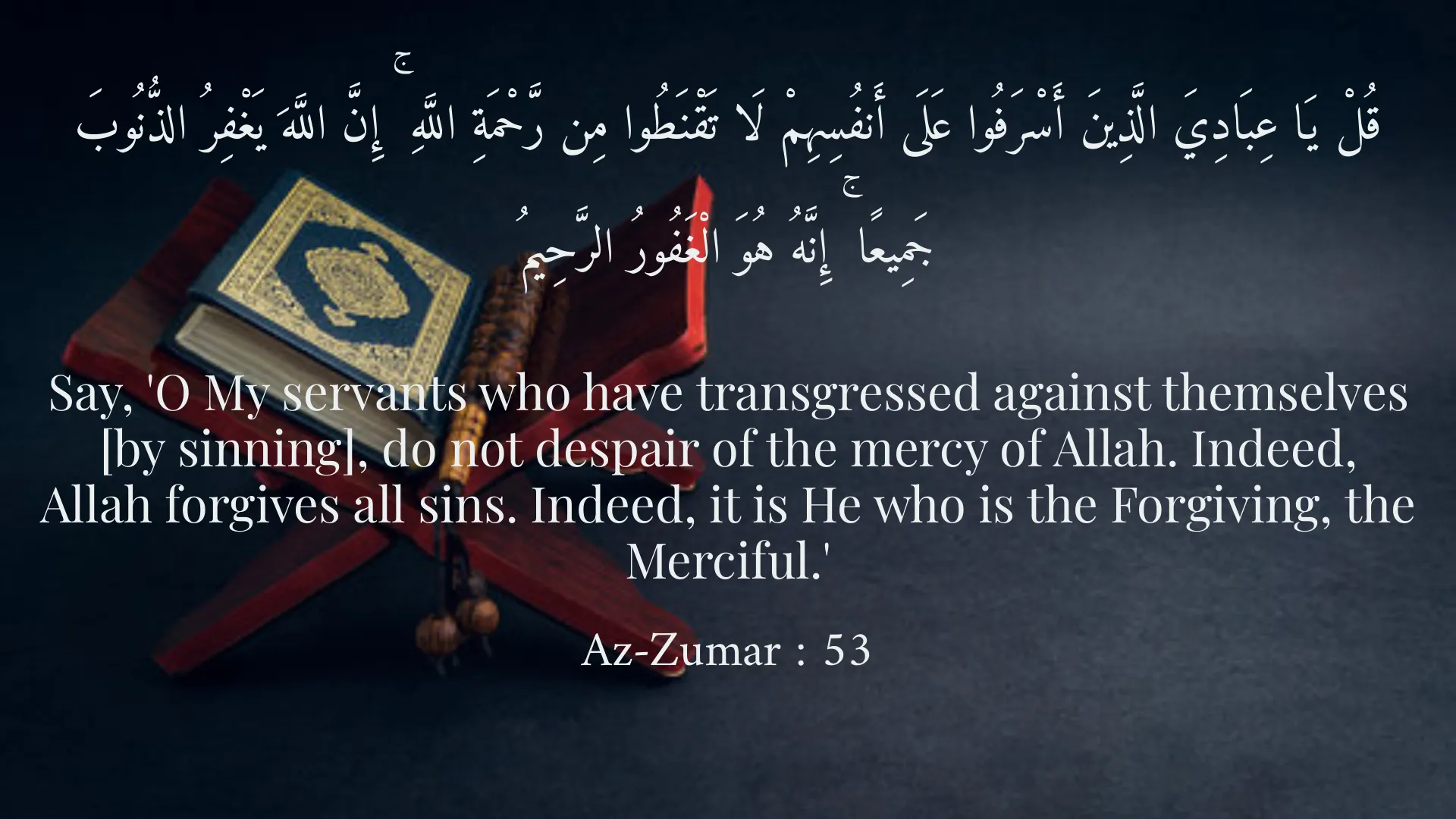
قُلْ يَا عِبَادِيَ الَّذِينَ أَسْرَفُوا عَلَى أَنفُسِهِمْ لَا تَقْنَطُوا مِن رَّحْمَةِ اللَّهِ ۚ إِنَّ اللَّهَ يَغْفِرُ الذُّنُوبَ جَمِيعًا ۚ إِنَّهُ هُوَ الْغَفُورُ الرَّحِيمُ
Say, 'O My servants who have transgressed against themselves [by sinning], do not despair of the mercy of Allah. Indeed, Allah forgives all sins. Indeed, it is He who is the Forgiving, the Merciful.'
Az-Zumar : 53
وَمَن يَعْمَلْ سُوءًا أَوْ يَظْلِمْ نَفْسَهُ ثُمَّ يَسْتَغْفِرِ اللَّهَ يَجِدِ اللَّهَ غَفُورًا رَّحِيمًا
And whoever does evil or wrongs himself but then seeks forgiveness of Allah will find Allah Forgiving and Merciful.
An-Nisa : 110
لَا يُكَلِّفُ اللَّهُ نَفْسًا إِلَّا وُسْعَهَا ۚ لَهَا مَا كَسَبَتْ وَعَلَيْهَا مَا اكْتَسَبَتْ ۗ
Allah does not burden a soul beyond its capacity. It will have [the consequence of] what it has gained, and it will bear [the consequence of] what it has earned.
Al-Baqarah : 286
Short Story
In times past, there lived a devout and pious man who, despite his abundant worship and good deeds, always harbored a nagging doubt in his heart: 'Am I truly enough for my Lord? Are my devotions worthy of His exalted status?' One day, troubled, he approached a wise old man and revealed his inner secret. The elder smiled gently and recounted: 'There once was a poor cobbler whose hands were calloused from work and whose clothes were worn. He spent his days mending shoes and his nights in humble supplication, his heart filled with remorse for his shortcomings. He would say to himself, 'O Lord, I am but a speck of dust, and my deeds are so meager! How can I ever be enough for Your boundless majesty?' A wealthy merchant, known for his grand charities and outward piety, once scoffed at the cobbler's simple prayers. But in a dream, a voice came to the cobbler: 'The sincere whisper of this cobbler, born of his humility and reliance, ascends higher than the loudest proclamations of that merchant. For Allah looks at the heart, not merely the outward magnitude of deeds. He desires not your perfection, but your sincere turning to Him.' The cobbler awoke from this dream, and though his humility remained, a profound peace filled his being, for he understood that his very feeling of inadequacy was what had opened the door to boundless Divine mercy.