Quranic Answer
The feeling of "others being ahead" is a common human experience, especially in an era dominated by social media where curated images of success and progress are constantly displayed. It can lead to feelings of inadequacy, envy, and despair. However, from an Islamic and Quranic perspective, this feeling needs to be carefully examined and reframed. The Holy Quran offers profound insights that can help us navigate these emotions, reminding us of the true nature of life, success, and divine wisdom. First and foremost, the Quran teaches us that Allah (SWT) distributes provisions and ranks among people according to His infinite wisdom and design. This is not arbitrary, but purposeful, as highlighted in Surah Az-Zukhruf (43:32): "Is it they who distribute the mercy of your Lord? It is We who have apportioned among them their livelihood in the life of this world and have raised some of them above others in degrees [of rank] that they may employ one another in services. But the mercy of your Lord is better than whatever they accumulate." This verse clearly states that it is Allah who determines the distribution of wealth, status, and opportunities. Some are given more, and some less, for various reasons: to test gratitude, patience, humility, and interdependence. The person who has more is tested on how they use their blessings, whether they are grateful, humble, and charitable. The person who has less is tested on their patience, trust in Allah, and contentment. Therefore, seeing others "ahead" is merely observing a part of Allah's divine plan for their test, which is distinct from your own. True "aheadness" is not about material possessions or worldly status. The Quran constantly reminds us of the ephemeral and deceptive nature of worldly life. Surah Al-Hadid (57:20) provides a vivid metaphor: "Know that the life of this world is only play and amusement, an adornment and boasting among yourselves, and competition in [worldly] multiplication of wealth and children - like the example of a rain whose [resulting] plant growth pleases the tillers; then it dries and you see it [become] yellow; then it becomes [scattered] debris. And in the Hereafter is severe punishment and forgiveness from Allah and approval. And what is the worldly life except the enjoyment of delusion." This powerful verse unequivocally states that worldly pursuits, including competition for wealth, status, and family, are transient and ultimately fleeting. They are like a plant that flourishes briefly and then withers away. The feeling of being "behind" often stems from this very competition, a race for things that have no lasting value. True success, according to this verse, lies in seeking Allah's forgiveness and approval in the Hereafter. Furthermore, the Quran emphasizes that the real and everlasting life is in the Hereafter, not in this transient world. Surah Al-Ankabut (29:64) says: "And this worldly life is not but amusement and diversion. But indeed, the home of the Hereafter - that is the [true] life, if only they knew." This perspective shifts our focus from temporal gains to eternal rewards. If someone appears "ahead" in worldly terms, it means little in the grand scheme of the Hereafter. Our energy and efforts should be directed towards accumulating good deeds that will benefit us on the Day of Judgment, rather than lamenting over what others possess in this temporary abode. Each individual's journey and test are unique, and comparison distracts us from our own purpose and accountability before Allah. Instead of comparing ourselves with others in worldly aspects, Islam encourages us to cultivate contentment (qana'ah) and gratitude (shukr). When we focus on the countless blessings Allah has bestowed upon us, no matter how small they may seem, we naturally feel more satisfied and less prone to envy. The Prophet Muhammad (PBUH) taught us to look at those who are less fortunate in worldly matters to appreciate our own blessings, and to look at those who are more righteous in spiritual matters to inspire us to do better. This wise counsel helps us redirect our comparative gaze from material possessions to spiritual growth. By embracing gratitude, we open ourselves to more blessings and find peace in Allah's decree. The feeling of being "behind" can also be a whisper from Shaytan, designed to create discontent, ingratitude, and to divert us from our spiritual path. The antidote is to strengthen our connection with Allah through prayer, remembrance (dhikr), and reflection on the Quran. When we immerse ourselves in the remembrance of Allah, our hearts find tranquility, as stated in Surah Ar-Ra'd (13:28): "Unquestionably, by the remembrance of Allah hearts are assured." This spiritual fortification helps us resist the urge to compare and focus on our personal journey of pleasing our Creator. In essence, the Quran teaches us that our true competition should be with ourselves – striving to be a better Muslim today than we were yesterday, to improve our character, our worship, and our good deeds. It is a competition in righteousness, not in material accumulation. The divine wisdom behind different provisions and life circumstances is a test for everyone. By understanding this, we can release the burden of comparison, embrace contentment, and focus our energies on what truly matters: preparing for the eternal life by seeking Allah's pleasure and fulfilling our individual purpose on Earth. This perspective brings immense peace and allows us to appreciate the unique path Allah has laid out for each of us. Remember, Allah knows what is best for us, and His plans are always perfect. Trust in His wisdom, be grateful for your blessings, and strive in His way. This is the ultimate "aheadness."
Related Verses
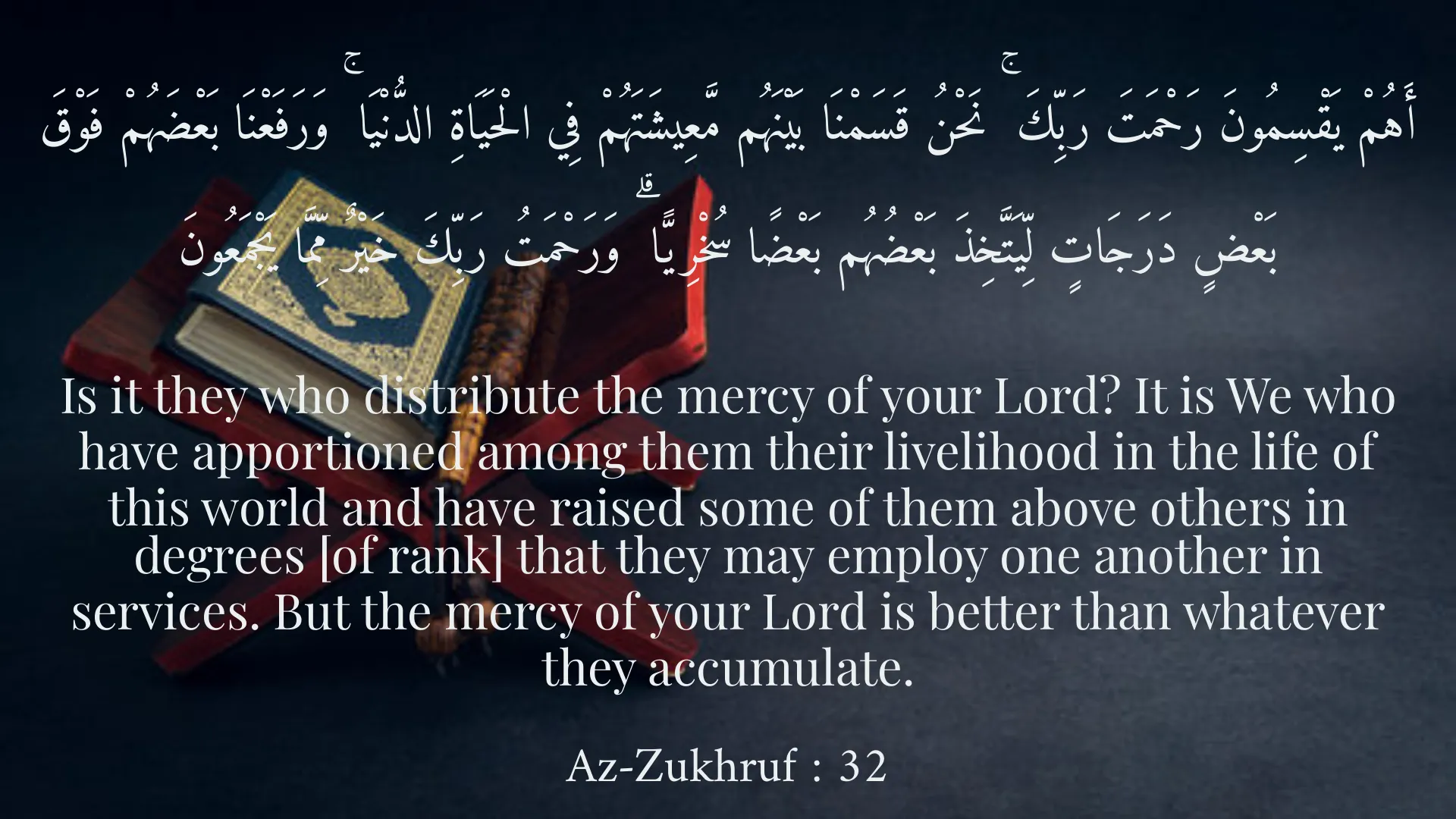
أَهُمْ يَقْسِمُونَ رَحْمَتَ رَبِّكَ ۚ نَحْنُ قَسَمْنَا بَيْنَهُم مَّعِيشَتَهُمْ فِي الْحَيَاةِ الدُّنْيَا ۚ وَرَفَعْنَا بَعْضَهُمْ فَوْقَ بَعْضٍ دَرَجَاتٍ لِّيَتَّخِذَ بَعْضُهُم بَعْضًا سُخْرِيًّا ۗ وَرَحْمَتُ رَبِّكَ خَيْرٌ مِّمَّا يَجْمَعُونَ
Is it they who distribute the mercy of your Lord? It is We who have apportioned among them their livelihood in the life of this world and have raised some of them above others in degrees [of rank] that they may employ one another in services. But the mercy of your Lord is better than whatever they accumulate.
Az-Zukhruf : 32
اعْلَمُوا أَنَّمَا الْحَيَاةُ الدُّنْيَا لَعِبٌ وَلَهْوٌ وَزِينَةٌ وَتَفَاخُرٌ بَيْنَكُمْ وَتَكَاثُرٌ فِي الْأَمْوَالِ وَالْأَوْلَادِ ۖ كَمَثَلِ غَيْثٍ أَعْجَبَ الْكُفَّارَ نَبَاتُهُ ثُمَّ يَهِيجُ فَتَرَاهُ مُصْفَرًّا ثُمَّ يَكُونُ حُطَامًا ۚ وَفِي الْآخِرَةِ عَذَابٌ شَدِيدٌ وَمَغْفِرَةٌ مِّنَ اللَّهِ وَرِضْوَانٌ ۚ وَمَا الْحَيَاةُ الدُّنْيَا إِلَّا مَتَاعُ الْغُرُورِ
Know that the life of this world is only play and amusement, an adornment and boasting among yourselves, and competition in [worldly] multiplication of wealth and children - like the example of a rain whose [resulting] plant growth pleases the tillers; then it dries and you see it [become] yellow; then it becomes [scattered] debris. And in the Hereafter is severe punishment and forgiveness from Allah and approval. And what is the worldly life except the enjoyment of delusion.
Al-Hadid : 20
وَمَا هَٰذِهِ الْحَيَاةُ الدُّنْيَا إِلَّا لَهْوٌ وَلَعِبٌ ۚ وَإِنَّ الدَّارَ الْآخِرَةَ لَهِيَ الْحَيَوَانُ ۚ لَوْ كَانُوا يَعْلَمُونَ
And this worldly life is not but amusement and diversion. But indeed, the home of the Hereafter - that is the [true] life, if only they knew.
Al-Ankabut : 64
Short Story
One day, a king with vast armies and abundant wealth was constantly restless due to worries about his kingdom's security. He saw a dervish sleeping peacefully under a tree, possessing nothing but a patched cloak. The king asked, 'O dervish, how can you sleep so peacefully, while I, with all my kingdom, cannot find a moment of rest?' The dervish replied, 'Your Majesty, my kingdom is within me, and it is secure. Your kingdom is outside you, and it requires constant guarding. My wealth is contentment, which no thief can steal, nor any enemy destroy. Your wealth is external, and thus your worry is external.' The king, reflecting on these words, found some peace in the dervish's wisdom and ceased his fruitless comparisons.