Quranic Answer
Feeling disheartened or sad, even after achieving significant worldly successes, is an experience many people encounter. This phenomenon, which might seem paradoxical at first glance, has deep roots in the Quran's understanding of human existence, the purpose of life, and the true nature of happiness. The Holy Quran, with its unparalleled insight, demonstrates that material and worldly achievements, however valuable they may seem, cannot by themselves fill the spiritual voids and deep needs of the human heart, nor can they bring about true contentment. This feeling of sadness can be a sign that the human heart and soul yearn for something beyond material accomplishments; something that can only be attained through a connection with the source of all existence, Allah Almighty. One of the most significant reasons the Quran puts forth for this kind of sadness is the fleeting and transient nature of this world and its possessions. In Surah Al-Hadid, verse 20, Allah beautifully describes the life of this world: “Know that the life of this world is only play and amusement, pomp and mutual boasting among you, and rivalry in respect of wealth and children, like the likeness of vegetation after rain, whose growth is pleasing to the tillers; then it withers and you see it yellowing; then it becomes straw. And in the Hereafter there is severe punishment and forgiveness from Allah and [His] approval. And what is the life of this world except the enjoyment of delusion.” This verse clearly states that all we consider success in this world – from wealth and children to fame and status – is like a plant that, after growing and flourishing, eventually turns yellow and withers. Relying on such fleeting achievements for eternal peace is like building a house on shifting sands. Excessive attachment to these matters, when one realizes their impermanence, leads to a feeling of emptiness and despair. The Quran also emphasizes that for true tranquility, the human heart needs the remembrance of Allah. In Surah Ar-Ra'd, verse 28, it states: “Those who have believed and whose hearts are assured by the remembrance of Allah. Unquestionably, by the remembrance of Allah hearts are assured.” This verse reveals a fundamental truth: inner peace and true happiness are found not in accumulating wealth, acquiring status, or gaining the admiration of others, but in a deep and sincere connection with the Creator of existence. When a person distances themselves from this source of peace, even if outwardly at the peak of success, they feel an inner deficiency and sadness. This sadness is, in fact, a warning signal from the human nature, inviting one to return to Allah and find true peace in devotion and remembrance of Him. Furthermore, worldly successes can lead to heedlessness and arrogance. When a person reaches the pinnacle of success and everything goes according to their wishes, they might forget that all these blessings come from Allah and consider themselves the sole owner of these achievements. This arrogance and heedlessness create a veil between them and Allah, preventing feelings of gratitude and humility, which are themselves sources of inner peace and contentment. The Quran, in Surah Al-Fajr, verses 15 and 16, criticizes this misguided perspective: “As for man, when his Lord tries him and [thus] is generous to him and favors him, he says, 'My Lord has honored me.' But when He tries him and restricts his provision, he says, 'My Lord has humiliated me.'” These verses show that humans often perceive success as a sign of honor and failure as a sign of humiliation, whereas both are divine tests, and our attitude towards them determines our inner feelings. The Quranic solution to overcome this sadness is, first and foremost, a change in perspective regarding the concept of success and happiness. True happiness lies in understanding one's main purpose in life: worshiping Allah and preparing for the Hereafter. This insight helps one to view worldly successes as tools to achieve higher goals, not as the ultimate purpose. Consequently, although one strives for worldly matters, their heart does not become attached to them. Also, dedicating oneself to acts of worship such as prayer, reciting the Quran, remembrance (dhikr), and supplication, as well as serving fellow human beings and doing good deeds, are all ways to strengthen the connection with Allah and fill spiritual voids. Giving charity and helping those in need, zakat and sadaqa, not only give a person inner satisfaction but also free them from the bondage of worldly possessions and grant them peace. Practicing gratitude for blessings, even the smallest ones, can also shift one's perspective and divert attention from what is lacking or impermanent. Ultimately, the Quran teaches us that worldly life is an opportunity for growth and trial. Sadness after success can be a sign that Allah intends to elevate us to a higher level of awareness and spirituality. This feeling is an opportunity for introspection and a re-evaluation of priorities. By accepting the truth that lasting peace and contentment are found only in proximity to Allah, and not in worldly achievements, we can transform sadness into a bridge to true happiness. This path illuminates the heart, gives meaning to life, and frees one from the prison of material expectations.
Related Verses
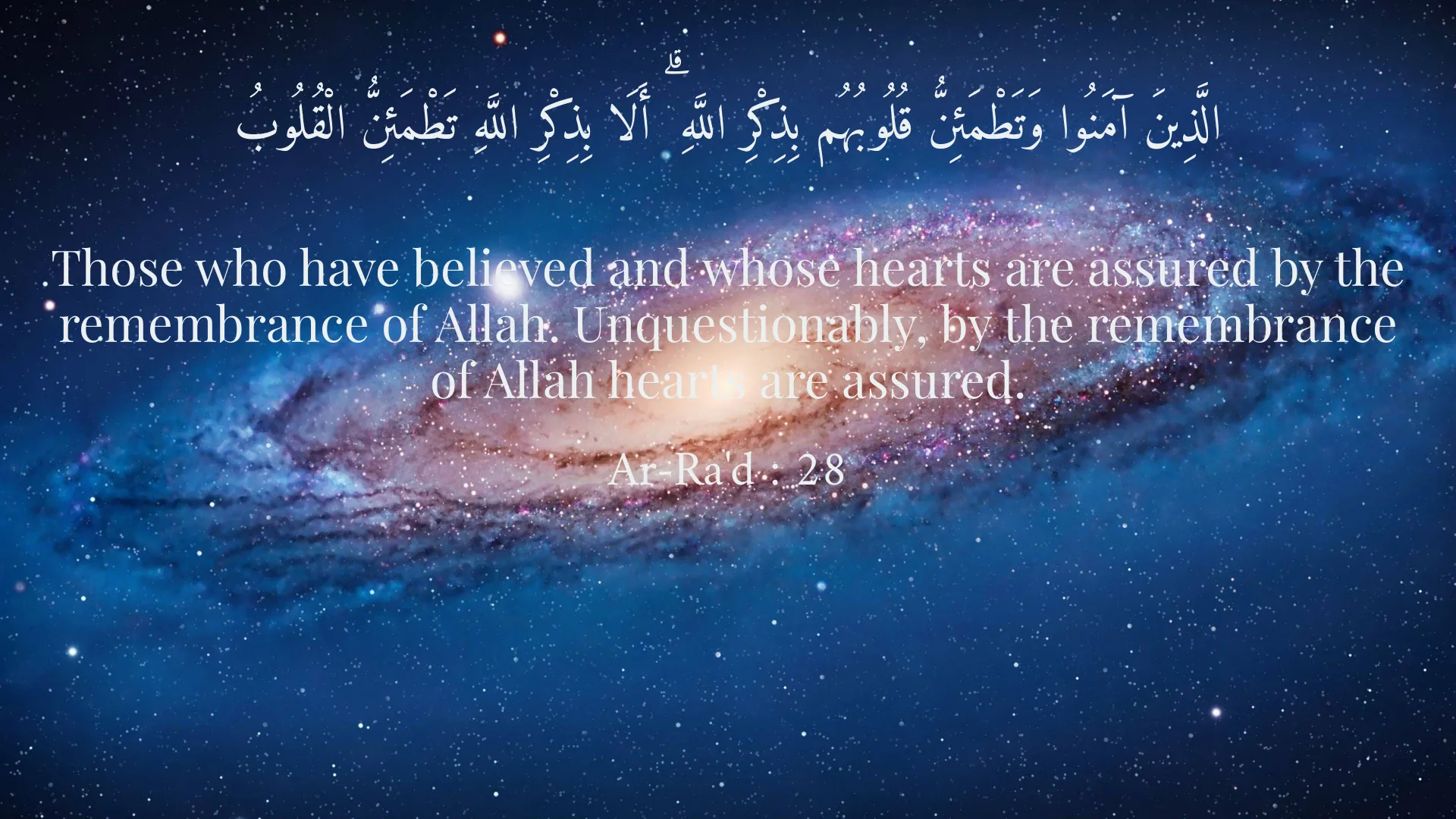
الَّذِينَ آمَنُوا وَتَطْمَئِنُّ قُلُوبُهُم بِذِكْرِ اللَّهِ ۗ أَلَا بِذِكْرِ اللَّهِ تَطْمَئِنُّ الْقُلُوبُ
Those who have believed and whose hearts are assured by the remembrance of Allah. Unquestionably, by the remembrance of Allah hearts are assured.
Ar-Ra'd : 28
اعْلَمُوا أَنَّمَا الْحَيَاةُ الدُّنْيَا لَعِبٌ وَلَهْوٌ وَزِينَةٌ وَتَفَاخُرٌ بَيْنَكُمْ وَتَكَاثُرٌ فِي الْأَمْوَالِ وَالْأَوْلَادِ ۖ كَمَثَلِ غَيْثٍ أَعْجَبَ الْكُفَّارَ نَبَاتُهُ ثُمَّ يَهِيجُ فَتَرَاهُ مُصْفَرًّا ثُمَّ يَكُونُ حُطَامًا ۖ وَفِي الْآخِرَةِ عَذَابٌ شَدِيدٌ وَمَغْفِرَةٌ مِّنَ اللَّهِ وَرِضْوَانٌ ۚ وَمَا الْحَيَاةُ الدُّنْيَا إِلَّا مَتَاعُ الْغُرُورِ
Know that the life of this world is only play and amusement, pomp and mutual boasting among you, and rivalry in respect of wealth and children, like the likeness of vegetation after rain, whose growth is pleasing to the tillers; then it withers and you see it yellowing; then it becomes straw. And in the Hereafter there is severe punishment and forgiveness from Allah and [His] approval. And what is the life of this world except the enjoyment of delusion.
Al-Hadid : 20
بَلْ تُؤْثِرُونَ الْحَيَاةَ الدُّنْيَا
But you prefer the worldly life,
Al-A'la : 16
وَالْآخِرَةُ خَيْرٌ وَأَبْقَىٰ
While the Hereafter is better and more lasting.
Al-A'la : 17
Short Story
It is narrated that there was a king, exceedingly wealthy and glorious, yet he carried a hidden sorrow in his heart and found no joy in anything. One day, while passing through the market, he saw a dervish sitting under a tree with a piece of dry bread and a jug of water, utterly joyful and laughing. The king, astonished, asked him, "O Dervish, what is it that makes you so joyful amidst such poverty, while I, with all my wealth and power, am always sad?" The dervish smiled and replied, "O King, you have entrusted your heart to treasures that you fear losing at any moment, while I have entrusted my heart to a treasure that neither thief can steal nor fire consume. You seek peace in the accumulation of worldly things, and I have found peace in detachment from the world. The heart's tranquility is not in possessions, but in being unattached to anything save the True Beloved." The king was deeply moved by the dervish's words and thereafter strove to occupy his heart with the remembrance of God instead of worldly matters, and consequently found true peace.