Quranic Answer
The feeling of having a scary image of religion etched in one's mind is a common phenomenon that many individuals encounter throughout their lives. This feeling often arises not from the inherent nature and essence of religion itself, but rather from external factors, misinterpretations, unpleasant experiences, or the improper actions of certain individuals and groups who claim to represent religion. The Holy Quran, which is the pure and primary source of Islam, presents a completely different picture from what might have been ingrained in some people's minds as a scary religion. In reality, the message of the Quran is entirely about mercy, peace, justice, and ease, not hardship and fear. One of the main reasons for the formation of this image is the extremist behaviors and violent actions of certain groups who, in the name of religion, commit acts that bear no resemblance to the core teachings of Islam. The Quran explicitly condemns violence, the killing of innocents, and compulsion in religion. Allah Almighty, in numerous verses, introduces Himself as "Ar-Rahman" (The Most Gracious) and "Ar-Rahim" (The Most Merciful); attributes that appear at the beginning of nearly every surah of the Quran, signifying the essence of divine mercy. The religion of Islam is built upon love, compassion, and the spread of peace and goodness. Prophet Muhammad (PBUH) was sent as "a mercy to the worlds" (Surah Al-Anbiya: 107), which itself indicates the universal and humanitarian nature of his mission. Religion has never been a means of spreading terror or imposing beliefs by force. The famous verse, "There shall be no compulsion in [acceptance of] the religion" (Surah Al-Baqarah: 256), clearly states that faith is based on human freedom and choice, and no one can be forced into religious observance. This verse lays the foundation for freedom of belief in Islam, negating any form of coercion or compulsion. Another factor that can contribute to this perception is incorrect and rigid interpretations of religious texts. Some individuals or movements, instead of focusing on the lenient, merciful, and balanced spirit of religion, concentrate solely on punitive aspects, strict rules, and minor jurisprudential details, which can lead to discouragement and fear. However, the Quran emphasizes ease and the removal of hardship: "Allah intends for you ease and does not intend for you hardship" (Surah Al-Baqarah: 185). This verse shows that the purpose of divine commands is to facilitate human life and guide humanity towards perfection, not to impose heavy and unbearable burdens. Sometimes, personal experiences with religious people or communities also contribute to this perception. If an individual encounters people who bear the name of religion but are not ethical, fair, or kind themselves, or if they encounter rules that seem unjust or oppressive (even if there might be a correct understanding that negates such perceptions), they might conclude that religion itself is scary or unpleasant. However, it must be noted that the actions of individuals do not represent the entirety of religion. Religion, on one hand, is a guide for life, and on the other, a set of ethical and behavioral principles that help humans achieve success in this world and the hereafter. The Holy Quran is full of teachings about justice, kindness, peace, benevolence, honesty, fulfilling covenants, and respecting others. The ultimate goal of religion is to guide humanity towards light, purity, and tranquility. Fear of Allah in the Quran refers to the fear of divine wrath due to disobedience and transgression of divine limits. This fear leads a person towards piety (avoiding sin and striving for God's pleasure) and self-correction. This is a constructive and elevating fear that deters individuals from sins and guides them towards acquiring virtues and perfections, rather than a paralyzing fear that hinders growth and peace. This type of fear is, in fact, a profound humility and reverence for divine majesty, accompanied by love and hope. A believer is always in a state of balance between fear (khawf) and hope (raja'); on one hand, they are apprehensive of divine punishment, and on the other, they place their hope in His mercy and forgiveness. To overcome this scary image, the primary solution is to acquire deep and correct knowledge from the primary sources of religion, namely the Holy Quran. Studying and reflecting upon the verses of the Quran with an open and inquisitive mind can resolve many misunderstandings. Consulting knowledgeable and balanced scholars who have a comprehensive understanding of religion can also be helpful. Religion, in its essence, is not frightening; rather, it is a refuge and a source of peace and psychological security for humanity. When one truly understands the essence of religion and sees how it guides them towards purity, goodness, and benevolence, that scary image dissipates and is replaced by a vision of mercy, guidance, and tranquility.
Related Verses
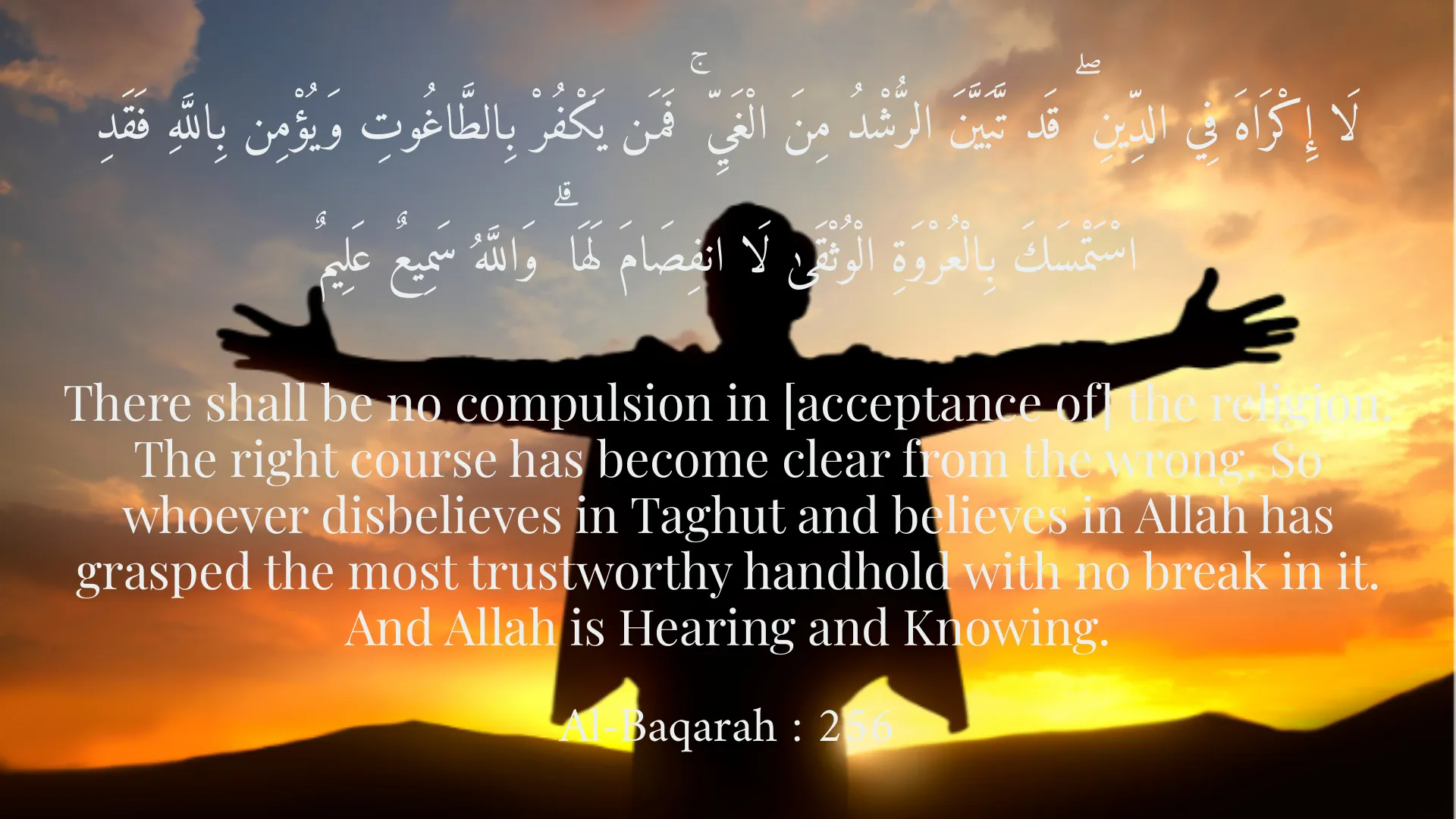
لَا إِكْرَاهَ فِي الدِّينِ ۖ قَد تَّبَيَّنَ الرُّشْدُ مِنَ الْغَيِّ ۚ فَمَن يَكْفُرْ بِالطَّاغُوتِ وَيُؤْمِن بِاللَّهِ فَقَدِ اسْتَمْسَكَ بِالْعُرْوَةِ الْوُثْقَىٰ لَا انفِصَامَ لَهَا ۗ وَاللَّهُ سَمِيعٌ عَلِيمٌ
There shall be no compulsion in [acceptance of] the religion. The right course has become clear from the wrong. So whoever disbelieves in Taghut and believes in Allah has grasped the most trustworthy handhold with no break in it. And Allah is Hearing and Knowing.
Al-Baqarah : 256
شَهْرُ رَمَضَانَ الَّذِي أُنزِلَ فِيهِ الْقُرْآنُ هُدًى لِّلنَّاسِ وَبَيِّنَاتٍ مِّنَ الْهُدَىٰ وَالْفُرْقَانِ ۚ فَمَن شَهِدَ مِنكُمُ الشَّهْرَ فَلْيَصُمْهُ ۖ وَمَن كَانَ مَرِيضًا أَوْ عَلَىٰ سَفَرٍ فَعِدَّةٌ مِّنْ أَيَّامٍ أُخَرَ ۗ يُرِيدُ اللَّهُ بِكُمُ الْيُسْرَ وَلَا يُرِيدُ بِكُمُ الْعُسْرَ وَلِتُكْمِلُوا الْعِدَّةَ وَلِتُكَبِّرُوا اللَّهَ عَلَىٰ مَا هَدَاكُمْ وَلَعَلَّكُمْ تَشْكُرُونَ
The month of Ramadhan [is that] in which was revealed the Qur'an, a guidance for the people and clear proofs of guidance and criterion. So whoever sights [the new moon of] the month, let him fast it; and whoever is ill or on a journey - then an equal number of other days. Allah intends for you ease and does not intend for you hardship and [wants] for you to complete the period and to glorify Allah for that [to] which He has guided you; and perhaps you will be grateful.
Al-Baqarah : 185
وَمَا أَرْسَلْنَاكَ إِلَّا رَحْمَةً لِّلْعَالَمِينَ
And We have not sent you, [O Muhammad], except as a mercy to the worlds.
Al-Anbiya : 107
Short Story
It is said that a judge of his time was so strict and stern in his judgments that anyone who appeared before his court, even if innocent, would tremble with fear and dread of his presence. People whispered behind his back, saying, "This judge sees justice through fear and intimidation, ruling with the whip of threats." One day, a wise scholar said to him, "O Judge! The path of justice is opened not by intimidation, but by enlightenment and compassion. What good is it for people to fear you, and not injustice and error? Fear of God opens the way to light and piety, not fear of His servant who is also fallible." The judge paused for a moment and pondered, realizing that perhaps his harsh demeanor and stern appearance had not only failed to make religion amiable but had instead created a frightening image of it. He understood that the essence of religion is love and mercy, not harshness and terror.