Quranic Answer
The feeling of lacking peace despite performing acts of worship is a common and profound experience that many sincere believers encounter. From the perspective of the Holy Quran, true peace (sakinah) is more than just the outward performance of rituals; it is the outcome of a deep, sincere, and comprehensive connection with the Almighty, encompassing all aspects of a person's life. The Quran teaches us that worship is not merely a set of actions, but a way of life and a state of heart rooted in knowledge, trust, and submission to God. If this inner peace is absent, it might indicate that our connection with God has not yet reached its desired depth and breadth, or that there are obstacles on this path that need to be identified and removed. One of the most crucial Quranic verses in this regard is Surah Ar-Ra'd, verse 28, which states: "Those who have believed and whose hearts are assured by the remembrance of Allah. Unquestionably, by the remembrance of Allah hearts are assured." This verse provides us with the key: true peace of heart is achieved not merely through performing rituals, but through "Dhikr Allah" (remembrance of Allah). Dhikr Allah is not just about repeating specific phrases or supplications; it signifies the continuous presence of God in one's consciousness and conscience. This presence includes remembering His power, mercy, wisdom, and justice at every moment of life. When a person acknowledges God's presence and reliance on Him in every decision, challenge, and blessing, their heart finds peace. Perhaps our worship has only reached the level of fulfilling an obligation, but has not yet evolved into "heartfelt remembrance" and "constant presence." When the heart is constantly mindful of God, worldly worries, fears, and anxieties diminish, as one realizes that everything that happens is within the divine decree and wisdom. In addition to dhikr, the Quran emphasizes piety (Taqwa) and righteous deeds (Amal Salih) as foundations of peace. Surah An-Nahl, verse 97, states: "Whoever does righteousness, whether male or female, while he is a believer - We will surely cause him to live a good life, and We will surely give them their reward [in the Hereafter] according to the best of what they used to do." The "good life" (Hayat Tayyibah) is essentially that inner peace and contentment that arises from aligning with the divine nature and obeying His commands. This implies that merely performing prayers and fasting is not enough; rather, all dimensions of our lives – from relationships with others, business dealings, ethics, and how we face problems – must also be based on Quranic principles and the Sunnah of the Prophet (PBUH). If we commit sins, violate the rights of others, or act unjustly in our relationships, these factors can strip us of peace, even if we perform our outward acts of worship. The human heart is the abode of God, and sins are like pollutants that contaminate this abode, preventing the entry of divine light and tranquility. Reliance on Allah (Tawakkul) and patience (Sabr) also play vital roles in attaining peace. Many anxieties stem from worrying about the future, fearing failure, or regretting the past. The Quran teaches believers to exert effort and then entrust their affairs to God (Tawakkul). In Surah At-Talaq, verse 3, we read: "And whoever relies upon Allah - then He is sufficient for him." This reliance lifts the heavy burden of worries from a person's shoulders, connecting them to an inexhaustible source of power and wisdom. Furthermore, patience in the face of calamities and challenges, and gratitude for blessings, are two essential pillars of peace. Surah Al-Baqarah, verses 155-157, beautifully explains that trials are a part of life, and the reward for the patient is divine guidance, mercy, and forgiveness, all of which lead to inner peace. Perhaps our lack of peace stems from despair in the face of difficulties or ingratitude for what we have. Moreover, sincerity (Ikhlas) in worship is paramount. If worship is performed for show, to gain others' attention, or merely out of habit, it will lack spiritual essence and cannot bring true peace. Peace comes from the deep understanding that all our actions are solely for the pleasure of God. Additionally, sometimes, a lack of peace may stem from psychological or mental health issues that require attention and even professional help. Islam never discourages seeking expert assistance for physical and mental well-being; rather, it encourages it. Ultimately, peace is a divine gift bestowed upon prepared and pure hearts; hearts that are constantly mindful of God, fulfill their duties, trust in Him, are patient in adversity, grateful for blessings, avoid sins, and repent. This path is a continuous journey towards the "Nafs Al-Mutmainnah" (the contented soul) mentioned in Surah Al-Fajr, verses 27-30: "O contented soul, Return to your Lord, well-pleased and pleasing [to Him], And enter among My [righteous] servants And enter My Paradise." This peace is the ultimate goal of a believing life.
Related Verses
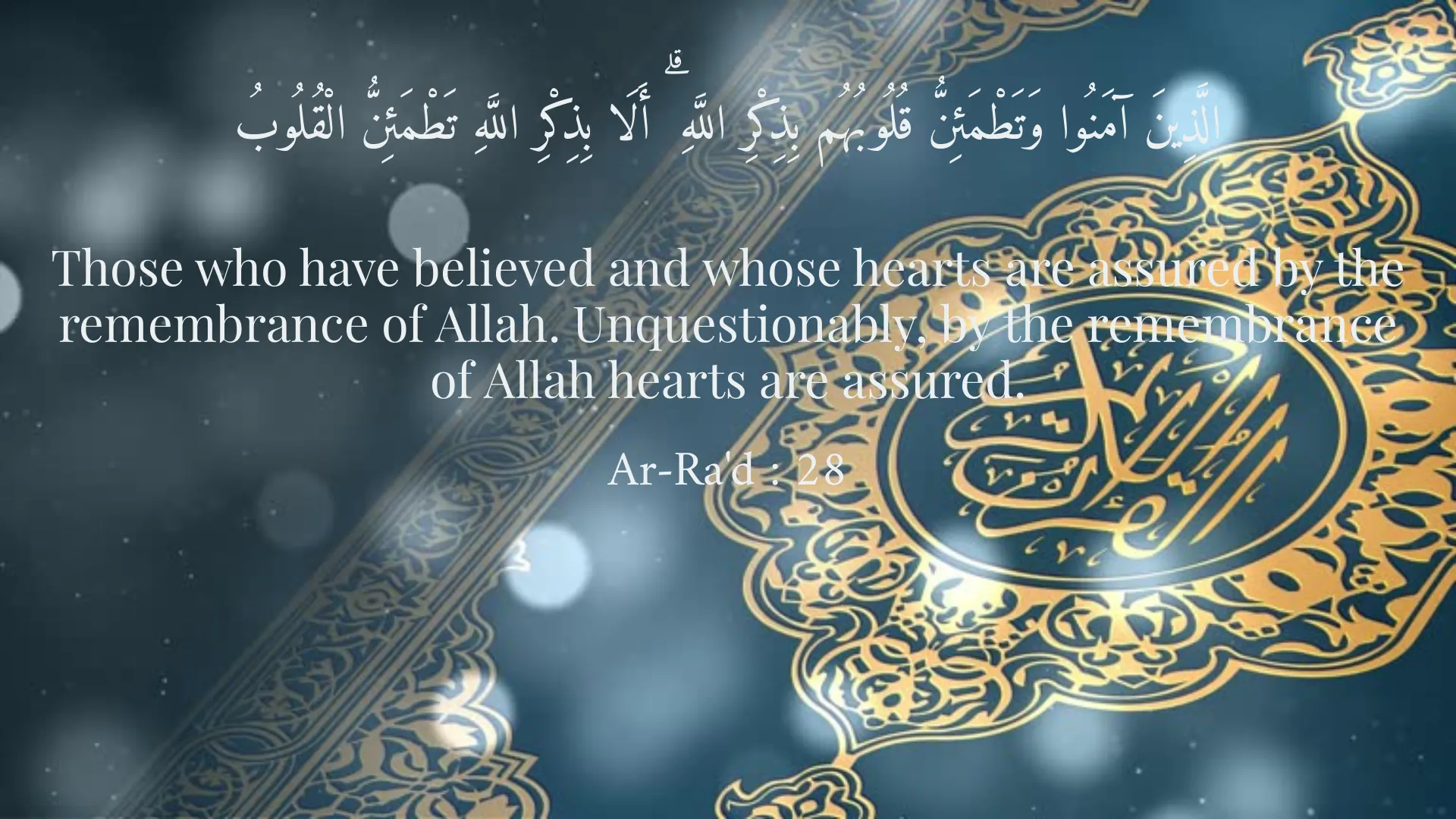
الَّذِينَ آمَنُوا وَتَطْمَئِنُّ قُلُوبُهُم بِذِكْرِ اللَّهِ ۗ أَلَا بِذِكْرِ اللَّهِ تَطْمَئِنُّ الْقُلُوبُ
Those who have believed and whose hearts are assured by the remembrance of Allah. Unquestionably, by the remembrance of Allah hearts are assured.
Ar-Ra'd : 28
مَنْ عَمِلَ صَالِحًا مِّن ذَكَرٍ أَوْ أُنثَىٰ وَهُوَ مُؤْمِنٌ فَلَنُحْيِيَنَّهُ حَيَاةً طَيِّبَةً ۖ وَلَنَجْزِيَنَّهُمْ أَجْرَهُم بِأَحْسَنِ مَا كَانُوا يَعْمَلُونَ
Whoever does righteousness, whether male or female, while he is a believer - We will surely cause him to live a good life, and We will surely give them their reward [in the Hereafter] according to the best of what they used to do.
An-Nahl : 97
وَمَن يَتَوَكَّلْ عَلَى اللَّهِ فَهُوَ حَسْبُهُ ۚ إِنَّ اللَّهَ بَالِغُ أَمْرِهِ ۚ قَدْ جَعَلَ اللَّهُ لِكُلِّ شَيْءٍ قَدْرًا
And whoever relies upon Allah - then He is sufficient for him. Indeed, Allah will accomplish His purpose. Allah has already set for everything a [decreed] extent.
At-Talaq : 3
يَا أَيَّتُهَا النَّفْسُ الْمُطْمَئِنَّةُ
O contented soul,
Al-Fajr : 27
ارْجِعِي إِلَىٰ رَبِّكِ رَاضِيَةً مَّرْضِيَّةً
Return to your Lord, well-pleased and pleasing [to Him],
Al-Fajr : 28
فَادْخُلِي فِي عِبَادِي
And enter among My [righteous] servants
Al-Fajr : 29
وَادْخُلِي جَنَّتِي
And enter My Paradise.
Al-Fajr : 30
Short Story
It is narrated that one day, a wealthy man approached a sage and said, "O Sheikh, I pray, fast, and give charity, yet I find no peace in my heart and am always worried about worldly matters." The sage smiled and said, "My dear young man, you are watering yourself from the outside, but your roots are dry. Have you ever seen a tree whose branches are washed with water, yet its roots remain dry in the soil and bear no fruit? Peace comes from internal watering; from detaching your heart from worldly attachments and connecting it to the remembrance of the Truth. When your heart finds peace, then you will taste the sweet fruit of worship." The man understood that worship is not merely external, but a continuous, heartfelt connection with the Creator, from which true tranquility flows.