Quranic Answer
The question you've posed, "Why do I not feel good when I do a good deed?" is a profound and thought-provoking one, delving into the subtle aspects of the human soul and its relationship with righteous actions. Firstly, we must acknowledge that human emotions, especially in response to our actions, can be complex, variable, and sometimes unexpected. While the Holy Quran does not directly address the specific feeling of "not feeling good" after a good deed, it lays down fundamental principles that significantly help us understand this phenomenon and how to navigate it. These principles primarily focus on intention, sincerity, and the ultimate purpose of performing righteous deeds, and understanding them can lead to replacing fleeting emotions with a deeper, more enduring tranquility. The Importance of Sincere Intention (Ikhlas) in Action: The foundation and essence of every good deed in Islam is pure intention (Niyyah). The Quran repeatedly emphasizes that our actions should be solely for the sake of gaining Allah's pleasure. The primary goal of doing good should not be to gain people's admiration, achieve fame, obtain immediate material rewards, or even merely an immediate "good feeling" internally. In Surah Al-Bayyinah, verse 5, Allah clearly states: "And they were not commanded except to worship Allah, [being] sincere to Him in religion, inclining to truth, and to establish prayer and to give zakah. And that is the correct religion." This verse explicitly indicates that the central pivot of worship and righteous deeds is sincerity (Ikhlas). If our intention is pure and for Allah, the outcome of the deed – whether worldly or otherworldly – rests with Allah, and our feelings should not be the primary criterion for the success, acceptance, or value of the deed. Sometimes, the absence of a good feeling might be a sign that our subconscious mind was seeking a reward other than divine pleasure, or perhaps it reminds us not to rely on transient feelings, but rather to focus on the enduring principles Allah has set for us. Avoiding Ostentation (Riya') and Seeking Fame (Sum'ah), and Their Impact on Peace: Another key concept in the Quran is the avoidance of Riya' (showing off one's actions to gain people's attention) and Sum'ah (performing deeds to be heard of and gain fame). These are detrimental to good deeds and can nullify their reward, and even deprive a person of true inner peace. In Surah Al-Baqarah, verse 264, Allah says: "O you who have believed, do not invalidate your charities with reminders [of it] or [other] injury, like one who spends his wealth [only] to be seen by the people and does not believe in Allah and the Last Day. His example is like that of a smooth stone upon which is dust and is hit by a downpour that leaves it bare. They are unable [to keep] anything of what they earned. And Allah does not guide the disbelieving people." This verse illustrates that even a great good deed like giving charity, if accompanied by the intention of Riya', becomes ineffective. When an action is done solely to be seen by people, dependence on their reactions is inevitable; if the reaction is positive, a good feeling might arise, but if it is absent or negative, a bad feeling will follow. Therefore, if you don't feel good after a good deed, perhaps this is an inner warning to review your intention and ensure that your action is solely for Allah. When we don't expect worldly praise or an immediate good feeling, the absence of it does not disappoint or grieve us, because we are looking towards a true and more lasting reward. The True Reward is with Allah and Its Nature: The Quran teaches us that the true reward for righteous deeds is with Allah, and this reward may not manifest as an immediate and fleeting feeling, but rather as deep inner peace, unseen blessings in life, or most importantly, rewards in the Hereafter. In Surah Al-Insan, verse 9, we read: "We feed you only for the countenance of Allah. We wish not from you reward or [even] gratitude." This verse exemplifies the peak of sincerity and selflessness in performing good deeds. When a person performs an action for Allah without any expectation, not even the expectation of a personal good feeling or thanks from people, this is the epitome of servitude and submission. The real and lasting good feeling is the tranquility that comes from Allah's satisfaction, not from the satisfaction of the ego or transient desires. This tranquility might not appear immediately after the act, but it becomes firmly established within a person over time with increased piety and strengthened certainty and reliance on Allah's promises. This inner peace is far deeper and more enduring than any momentary pleasant feeling. Potential Reasons for Not Feeling Good and Quranic Solutions: Several reasons can lead to the absence of a good feeling after performing a good deed, often stemming from a misunderstanding of intention or reward: 1. Expectation of Immediate and Material Reward: Sometimes, we unconsciously expect to see an immediate reward or positive effect in our lives or emotions after a good deed. When this doesn't happen, we become disheartened. 2. Insufficient Sincerity of Intention: There might be an underlying trace of Riya', self-display, or seeking people's attention and praise in the depths of our intention, which prevents true tranquility and spiritual enjoyment from emerging. 3. Hidden Divine Rewards: Divine rewards are not always material or tangible; many manifest as spiritual blessings, warding off calamities, easing affairs, or inner peace, which might not be immediately perceptible. 4. Divine Test: Allah might test His servants to gauge their sincerity and steadfastness in doing good, even if there is no immediate sense of satisfaction. These tests are meant to elevate one's level of faith and piety. 5. Other Sins and Neglect of Obligations: Sometimes, the burden of other sins or neglect of other divine obligations can create a veil, preventing the spiritual delight of a good deed from being perceived. 6. Mental/Physical Health Issues: Occasionally, the absence of good feelings stems from mental, psychological, or physical health issues that are unrelated to the nature of the good deed itself and require professional attention and treatment. To address this challenge, the Quran offers practical and spiritual solutions: * Review Your Intention: Before any action, purify your intention for Allah. Imagine that no one but Allah sees your deed, and no reward other than His pleasure matters to you. * Patience and Perseverance: Be patient in doing good deeds and do not expect immediate worldly rewards or fleeting emotions. The primary and lasting reward is in the Hereafter. * Reflect on Verses of Divine Reward: Pay more attention to Quranic verses about the rewards in the Hereafter and the greatness of deeds done purely for Allah. This reflection helps shift your focus from worldly outcomes to lasting, otherworldly benefits. * Self-Purification and Struggle Against the Nafs: Strive against your ego, which tends to seek recognition, praise, and immediate gratification, and train it to seek only Allah's pleasure. * Reliance on Allah (Tawakkul): Entrust the outcome of your actions to Allah, and be confident that Allah has prepared the best reward for sincere deeds and does not let any righteous action go to waste. True peace lies in reliance and submission to Divine will. Ultimately, it is important to continue your path in doing good, even if you don't experience an immediate good feeling. The value of an action lies in its sincerity and its closeness to Allah, not in our fleeting and variable emotions. True tranquility is found in complete submission to the Divine will and doing what He has commanded. This tranquility, which results from obedience and trust in the Lord, is far deeper and more enduring than any good feeling derived from worldly affirmation or reward, and it brings forth a contented and reassured heart.
Related Verses
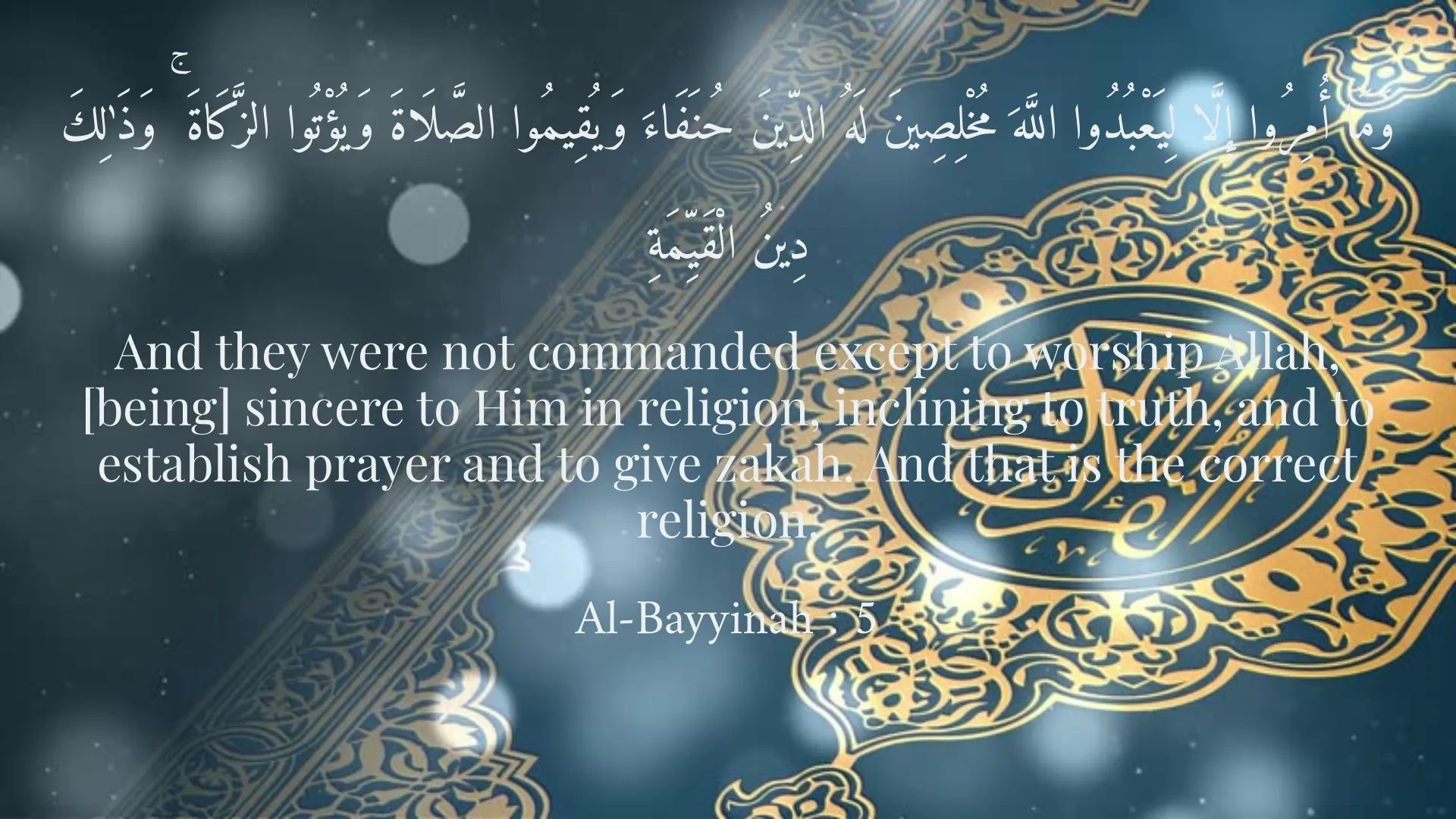
وَمَا أُمِرُوا إِلَّا لِيَعْبُدُوا اللَّهَ مُخْلِصِينَ لَهُ الدِّينَ حُنَفَاءَ وَيُقِيمُوا الصَّلَاةَ وَيُؤْتُوا الزَّكَاةَ ۚ وَذَٰلِكَ دِينُ الْقَيِّمَةِ
And they were not commanded except to worship Allah, [being] sincere to Him in religion, inclining to truth, and to establish prayer and to give zakah. And that is the correct religion.
Al-Bayyinah : 5
يَا أَيُّهَا الَّذِينَ آمَنُوا لَا تُبْطِلُوا صَدَقَاتِكُم بِالْمَنِّ وَالْأَذَىٰ كَالَّذِي يُنفِقُ مَالَهُ رِئَاءَ النَّاسِ وَلَا يُؤْمِنُ بِاللَّهِ وَالْيَوْمِ الْآخِرِ ۖ فَمَثَلُهُ كَمَثَلِ صَفْوَانٍ عَلَيْهِ تُرَابٌ فَأَصَابَهُ وَابِلٌ فَتَرَكَهُ صَلْدًا ۖ لَّا يَقْدِرُونَ عَلَىٰ شَيْءٍ مِّمَّا كَسَبُوا ۗ وَاللَّهُ لَا يَهْدِي الْقَوْمَ الْكَافِرِينَ
O you who have believed, do not invalidate your charities with reminders [of it] or [other] injury, like one who spends his wealth [only] to be seen by the people and does not believe in Allah and the Last Day. His example is like that of a smooth stone upon which is dust and is hit by a downpour that leaves it bare. They are unable [to keep] anything of what they earned. And Allah does not guide the disbelieving people.
Al-Baqarah : 264
إِنَّمَا نُطْعِمُكُمْ لِوَجْهِ اللَّهِ لَا نُرِيدُ مِنكُمْ جَزَاءً وَلَا شُكُورًا
[Saying], "We feed you only for the countenance of Allah. We wish not from you reward or [even] gratitude."
Al-Insan : 9
Short Story
It is narrated that in a certain land, there lived two neighbors: one a dervish with an illuminated heart, and the other a wealthy man seeking fame. Whenever the wealthy man performed a good deed, he sought the praise and gratitude of people. If no one applauded him, he would feel disheartened and regret his action, for he expected a reward other than inner satisfaction. However, the dervish, far from the eyes of people, whenever he did good and extended a helping hand to the needy, would retreat to a corner and ponder only on the pleasure of the Lord. He awaited neither thanks nor praise. When asked, "Why, with all your benevolence, do you never seek commendation from anyone, and despite seemingly receiving no worldly reward or recognition from people, you still do good with zeal?" He replied, "I seek the fruit that grows in the garden of divine pleasure, not the withered leaf that rots on the branch of human praise. The 'good feeling' you seek is like the fragrance of a flower, which quickly fades; but the peace of heart that comes from sincerity is like the root of a tree, which remains firm deep in the soil and yields everlasting fruit. I am content with seeing the face of the Beloved, not with hearing the voices of strangers." And so it was that the dervish, despite apparent hardships, had a heart full of tranquility and tasted the true flavor of contentment, while the wealthy man, despite all his outwardly good deeds, remained restless within and never tasted the true essence of peace.