Quranic Answer
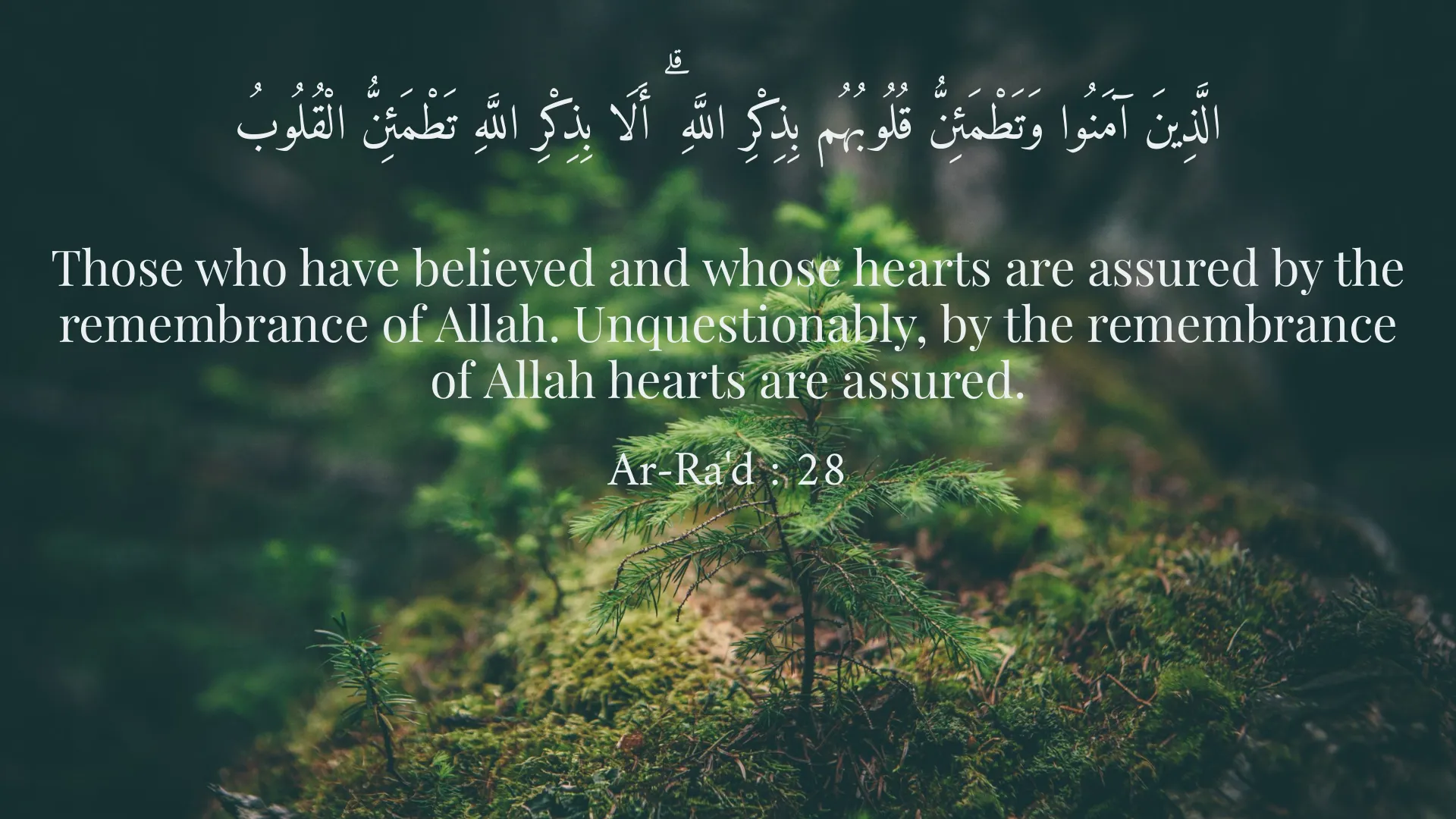
The question you've raised is one of humanity's deepest and most frequently pondered inquiries, rooted in the human quest for well-being and tranquility. Many of us assume that if we merely refrain from major sins, peace and happiness will automatically ensue. While this notion contains a partial truth, it is not the complete picture. The Holy Quran offers a more comprehensive and profound perspective on the concept of peace, extending beyond the mere avoidance of outward transgressions. True peace, referred to in the Quran by terms such as 'Sakina' (tranquility), is a state of inner assurance, profound contentment, and freedom from anxiety, deeply intertwined with the quality of one's relationship with the Almighty, one's understanding of existence, and the disposition of one's heart and soul. The first and perhaps most crucial source of peace, according to the Quran, is 'Dhikr Allah' – the remembrance of God. In Surah Ar-Ra'd, verse 28, Allah Almighty states: 'Those who have believed and whose hearts are assured by the remembrance of Allah. Unquestionably, by the remembrance of Allah hearts are assured.' This verse explicitly declares that inner peace is attained not merely by refraining from sin, but by the constant presence of God's remembrance in the heart. The remembrance of God is not limited to mere verbal glorification or recitation; it encompasses deep contemplation of divine majesty and power, sincere presence in prayer (Salah), recitation and profound reflection upon the verses of the Quran, gratitude for blessings, and observing divine favors in all aspects of life. When an individual recognizes God's constant presence and supervision, and truly believes in His power and wisdom, their heart will remain tranquil even in the face of difficulties and hardships. A lack of God's remembrance, or heedlessness (ghaflah), even if not accompanied by overt sins, can deprive the heart of light and tranquility, leading to anxiety and distress. The second vital factor that the Quran introduces for attaining peace is 'Tawakkul' – complete reliance upon and trust in Allah. Worldly life is inherently a series of trials and tribulations. People often worry about the future, fear for their sustenance, or grieve over what they have lost. These anxieties, even if the individual has not committed any sin, can strip them of their peace. The Quran, in multiple verses, including Surah At-Talaq, verse 3, declares: 'And whoever relies upon Allah – He is sufficient for him.' Tawakkul means that an individual exerts their utmost effort in the right direction but then entrusts the outcome to God, trusting in His wisdom and divine plan. When one understands that the reins of all affairs are in the hands of a Merciful and Wise Creator who knows what is best for His servants, worldly concerns can no longer overwhelm them. A lack of Tawakkul, even amidst good deeds, can lead to mental preoccupations and a deficiency of peace. Furthermore, the Quran emphasizes the importance of 'Sabr' (patience) and 'Salah' (prayer) as two powerful tools for achieving tranquility and overcoming challenges. In Surah Al-Baqarah, verse 153, we read: 'O you who have believed, seek help through patience and prayer. Indeed, Allah is with the patient.' Sabr implies enduring hardships, resisting temptations, and not being hasty in fulfilling desires. When a person adopts patience, despair and impetuosity depart from them, leading to inner peace. Salah, or prayer, is not merely a religious obligation but the pinnacle of a servant's connection with their Lord and the ascension of the believer. In prayer, one is liberated from worldly concerns and connects with the infinite source of tranquility. Even if someone does not commit sins, if they fail to adequately utilize these two essential wings (patience and prayer with sincere devotion), they may lose their peace when faced with life's storms. Another reason for the absence of peace can be 'excessive attachment to the worldly life' (Dunya). The Quran describes worldly life as fleeting and transient, and considers intense attachment to it as a primary cause of distress and sorrow. In Surah Al-Hadid, verse 23, it is stated: 'So that you may not grieve over what has escaped you nor exult [arrogantly] over what He has given you. And Allah does not like every self-deluded and boastful person.' When a person's heart becomes overly attached to wealth, status, beauty, or any other worldly possession, the slightest change in these attachments can lead to anxiety and agitation. Even if these attachments are not accompanied by sin, the very act of attachment disturbs peace. True tranquility is attained when the human heart becomes free from such attachments and relies solely on God. Finally, genuine peace is contingent upon the 'purification of the heart' from hidden moral vices. Sometimes, an individual may not commit overt sins, but their heart is afflicted with qualities such as envy (hasad), malice (kina), arrogance (kibr), stinginess (bukhl), greed (hirs), or self-admiration (ujub). These inner vices, like chronic diseases, slowly erode one's peace. The Quran emphasizes the importance of a 'Qalb-e-Saleem' (a sound and pure heart). Inner rectification and self-purification are continuous processes that require self-awareness, introspection, self-accountability, and persistent effort to acquire virtuous qualities. Even if a person appears outwardly righteous, but inwardly suffers from these spiritual ailments, it is unlikely that they will taste true peace. Therefore, peace is a divine gift bestowed upon hearts that are not only pure from sin but also assured by the remembrance of God, tranquil through reliance on Him, fortified by patience and prayer, liberated from worldly attachments, and purified from hidden spiritual diseases. This journey is continuous, requiring daily effort and self-improvement to attain that desired and lasting 'Sakina'.
Related Verses
الَّذِينَ آمَنُوا وَتَطْمَئِنُّ قُلُوبُهُم بِذِكْرِ اللَّهِ ۗ أَلَا بِذِكْرِ اللَّهِ تَطْمَئِنُّ الْقُلُوبُ
Those who have believed and whose hearts are assured by the remembrance of Allah. Unquestionably, by the remembrance of Allah hearts are assured.
Ar-Ra'd : 28
يَا أَيُّهَا الَّذِينَ آمَنُوا اسْتَعِينُوا بِالصَّبْرِ وَالصَّلَاةِ ۚ إِنَّ اللَّهَ مَعَ الصَّابِرِينَ
O you who have believed, seek help through patience and prayer. Indeed, Allah is with the patient.
Al-Baqarah : 153
وَمَن يَتَوَكَّلْ عَلَى اللَّهِ فَهُوَ حَسْبُهُ ۚ إِنَّ اللَّهَ بَالِغُ أَمْرِهِ ۚ قَدْ جَعَلَ اللَّهُ لِكُلِّ شَيْءٍ قَدْرًا
And whoever relies upon Allah – He is sufficient for him. Indeed, Allah will accomplish His purpose. Allah has already set for everything a [decreed] extent.
At-Talaq : 3
Short Story
It is narrated in Saadi's Gulistan that a king asked his viziers, 'Why is it that despite all my glory, grandeur, and wealth, I sometimes lack peace and my heart remains restless? Yet, I see a poor man sitting on the ground, and despite his poverty, he is smiling and at ease.' One of the wise men present replied, 'O King! Peace is not found in treasuries full of gold, nor on the royal throne. That poor man has emptied his heart of worldly desires and is content with lawful sustenance and divine decree. He knows that whatever exists is from God, and whatever does not exist is also by His wisdom. But you are still attached to things that might be lost, and you worry about things that have not yet come to pass. True peace depends on the heart's submission to the will of the Lord and freedom from the chains of worldly attachment, not merely from refraining from sin.' The king took heed of this advice and strove to free his heart from worldly attachments, thus tasting the true essence of peace.