Quranic Answer
The question you've posed is one of the deepest and most fundamental inquiries any human being might face on their spiritual journey. It's an inherent human tendency that amidst the complexities and demands of daily life, our minds might become heedless of the Creator of the universe. The Holy Quran beautifully and meticulously addresses this phenomenon, offering solutions to overcome it. The concept of 'ghaflah' (heedlessness or forgetfulness) in the Quran doesn't signify disbelief, but rather an inattentiveness and unawareness of one's existential truth and ultimate purpose in life. This is precisely the state that causes a person to drift away from the remembrance of God. One of the primary reasons for this heedlessness is the allure and attractions of worldly life (dunya). The Quran repeatedly warns humanity not to let the fleeting pleasures and embellishments of this transient world distract them from their true purpose of creation and the remembrance of their Lord. Wealth, children, status, entertainment, and daily pursuits can all become tools for forgetfulness if a person's heart becomes excessively attached to them, making them their top priority. In Surah Al-Munafiqun, verse 9, Allah Almighty explicitly states: "O you who have believed, let not your wealth and your children divert you from remembrance of Allah. And whoever does that - then those are the losers." This verse clearly indicates that excessive attachment to worldly affairs is a major obstacle on the path to remembering God. Another reason is the role of Satan's whispers. Satan is a clear enemy to humanity and constantly strives to divert people from the right path and the remembrance of God. He beautifies sins, exaggerates the allure of fleeting worldly pleasures, instills fear of the future, or tempts with prolonged hopes, thereby preoccupying individuals so they neglect dhikr (remembrance) and attention to God. The Quran, in several verses, points to Satan's deceptions and warns believers to be vigilant against his whispers. He attempts to erase the remembrance of God from the human heart and push individuals towards forgetfulness. The hardening of the heart is also a reason mentioned in the Quran. Repeated sins, staying away from gatherings of remembrance and knowledge, and a lack of contemplation on divine verses and signs of God's power in creation can make a person's heart hard and unyielding. A hardened heart no longer readily accepts divine light and the remembrance of God. In Surah Az-Zumar, verse 22, Allah says: "Is one whose breast Allah has expanded for Islam and he is upon a light from his Lord like one whose heart is hardened? So woe to those whose hearts are hardened against the remembrance of Allah. Those are in clear error." This verse signifies that hardness of heart is a great impediment to the remembrance of God. The consequences of heedlessness from God's remembrance are also elucidated in the Quran. Whoever turns away from the remembrance of God will have a difficult and constricted life, and will be resurrected blind on the Day of Judgment. This difficulty and constriction do not necessarily mean a lack of material possessions, but rather an absence of inner peace, a feeling of emptiness, bewilderment, and a lack of blessings in life. It is the remembrance of God that brings peace to hearts and shows the right path. If this peace is taken away from a person, they will not feel happy, even with all material amenities. To overcome this forgetfulness and strengthen the remembrance of God in one's life, the Quran offers practical solutions: The first and most important step is conscious 'determination' and will. One must commit to constant remembrance. 'Dhikr Kathir' (abundant remembrance) is one of the key recommendations in the Quran. This remembrance can include reciting the Quran, performing the five daily prayers with presence of heart, supplication (dua), glorifications (tasbihat), and anything that reminds a person of God's greatness and mercy. Second, 'reflection and contemplation' on the cosmic and internal signs of God – meaning, God's signs in creation and within one's own being. Every glance at nature, every thought about the complexity of creation, can be a doorway to remembering God. Third, 'associating with the righteous' and those who themselves are people of remembrance. Being in the company of such individuals guides one towards goodness and the remembrance of God, protecting against heedlessness. In Surah Al-Kahf, verse 28, Allah says: "And keep yourself patient [by being] with those who call upon their Lord by night and day, desiring His countenance. And let not your eyes pass beyond them, desiring the adornments of the worldly life, and do not obey one whose heart We have made heedless of Our remembrance and who follows his own desire and whose affair has been [a matter of] excess." This verse emphasizes the importance of accompanying those who remember God and avoiding the heedless. Fourth, 'continuous repentance and seeking forgiveness' (Istighfar). Cleansing the heart from the defilements of sin paves the way for divine light and the remembrance of God. Fifth, 'increasing knowledge and understanding' of God and religious teachings. The deeper a person's knowledge, the greater their love and longing for the remembrance of God. Remember, this is a journey that requires steadfastness and perseverance. God is always ready to accept repentant and guided servants, and with conscious effort, we can make God's presence more vibrant in every moment of our lives and experience true peace.
Related Verses
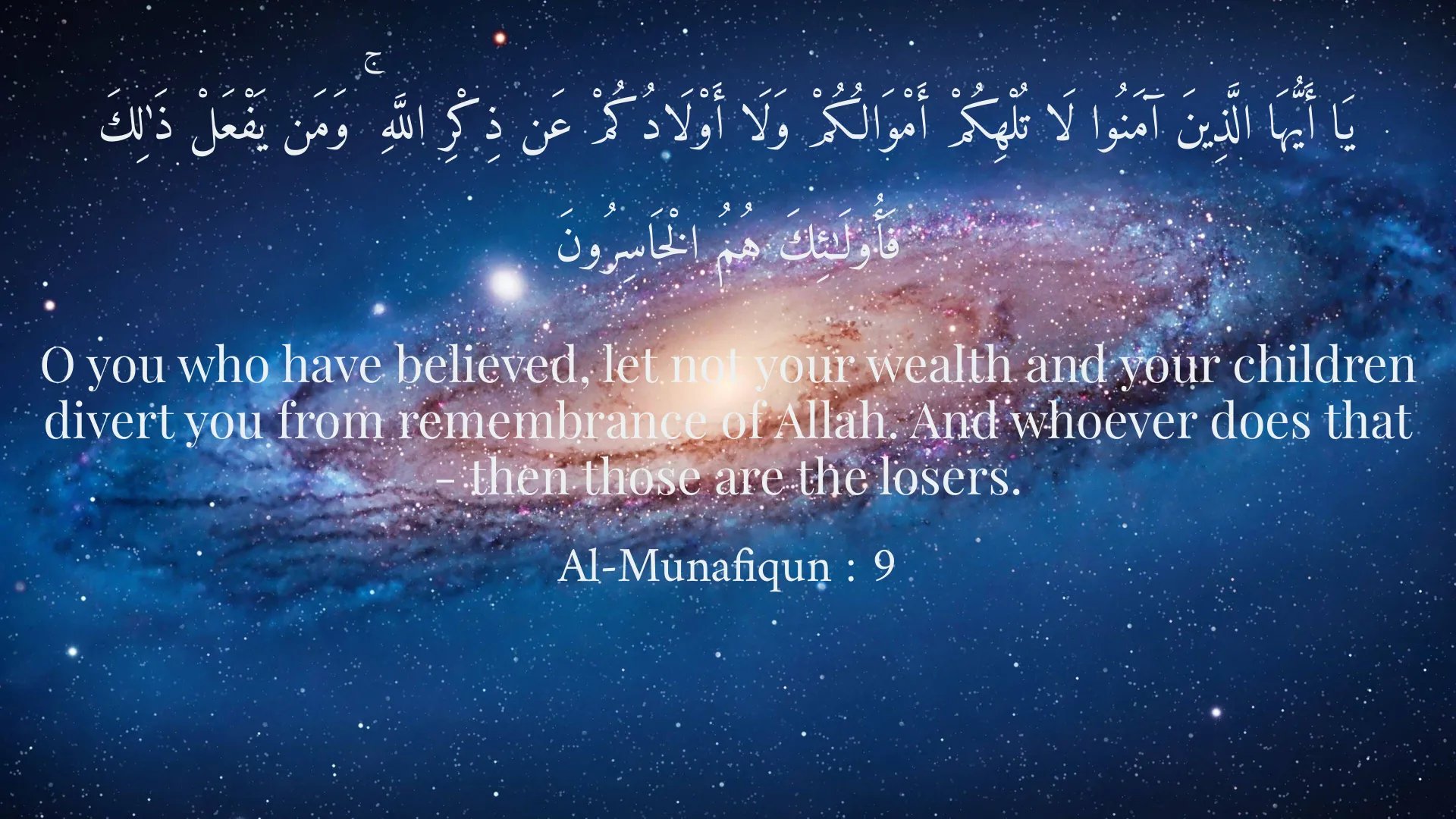
يَا أَيُّهَا الَّذِينَ آمَنُوا لَا تُلْهِكُمْ أَمْوَالُكُمْ وَلَا أَوْلَادُكُمْ عَن ذِكْرِ اللَّهِ ۚ وَمَن يَفْعَلْ ذَٰلِكَ فَأُولَٰئِكَ هُمُ الْخَاسِرُونَ
O you who have believed, let not your wealth and your children divert you from remembrance of Allah. And whoever does that - then those are the losers.
Al-Munafiqun : 9
وَمَنْ أَعْرَضَ عَن ذِكْرِي فَإِنَّ لَهُ مَعِيشَةً ضَنكًا وَنَحْشُرُهُ يَوْمَ الْقِيَامَةِ أَعْمَىٰ
And whoever turns away from My remembrance - indeed, he will have a difficult life, and We will gather him on the Day of Resurrection blind.
Taha : 124
وَاصْبِرْ نَفْسَكَ مَعَ الَّذِينَ يَدْعُونَ رَبَّهُم بِالْغَدَاةِ وَالْعَشِيِّ يُرِيدُونَ وَجْهَهُ ۖ وَلَا تَعْدُ عَيْنَاكَ عَنْهُمْ تُرِيدُ زِينَةَ الْحَيَاةِ الدُّنْيَا ۖ وَلَا تُطِعْ مَنْ أَغْفَلْنَا قَلْبَهُ عَن ذِكْرِنَا وَاتَّبَعَ هَوَاهُ وَكَانَ أَمْرُهُ فُرُطًا
And keep yourself patient [by being] with those who call upon their Lord by night and day, desiring His countenance. And let not your eyes pass beyond them, desiring the adornments of the worldly life, and do not obey one whose heart We have made heedless of Our remembrance and who follows his own desire and whose affair has been [a matter of] excess.
Al-Kahf : 28
Short Story
Once upon a time, in the city of Shiraz, there lived a wealthy merchant whose entire being was devoted to his business and accumulating wealth. His days were so consumed by his work that he barely found time for prayer or the remembrance of God. From dawn till dusk, he was in the bazaar, and nights were spent immersed in accounts. One day, a wise and elderly dervish passed by his shop. The merchant, out of custom, offered him a seat. The dervish sat with a kind smile and asked, "O sagacious merchant, do you know where the true treasure lies?" The merchant proudly gestured to his shop filled with goods. The dervish replied, "These are all transient. I know of a treasure that neither thief can steal, nor fire can burn, nor flood can destroy; that treasure is the peace of heart, which comes from the remembrance and obedience of God. You strive so much to acquire worldly wealth, which is fleeting, so why do you not dedicate time to acquire a treasure that is eternal and never perishes?" The dervish's words resonated with the merchant. He pondered deeply, and from that day forward, alongside his efforts for livelihood, he dedicated a portion of his time to the remembrance of God and worship. It wasn't long before the merchant realized a profound peace flowed within him that no wealth could purchase, and his life became more blessed.