Quranic Answer
The feeling of shying away or being disinclined to ponder deeply upon certain verses of the Holy Quran is an experience many sincere seekers of truth may encounter. This is not necessarily a sign of absolute weakness in faith, but rather a reflection of the complexities of the human soul and the challenges inherent in the path of self-purification. The Quran is the word of God; a word that not only guides but also sometimes serves as a mirror, revealing our imperfections and shortcomings. When a verse conflicts with our personal inclinations, long-held habits, or even misconceptions, we might unconsciously resist it or shy away from deep engagement with it. This avoidance can stem from several Quranic and psychological factors, which we will explore in detail. One of the primary reasons for this resistance is rooted in the nature of the human self (An-Nafs al-Ammara bi'l-Su'), which is prone to evil. The human soul naturally inclines towards comfort, immediate pleasures, and avoidance of responsibilities and challenges. The Holy Quran, as divine guidance, frequently calls humanity towards self-purification, sacrifice, forgiveness, combating personal desires, and accepting responsibilities towards the Creator and creation. These calls, which sometimes contradict human selfish desires, can lead to an internal resistance. For instance, verses that mandate paying zakat, refraining from backbiting, controlling anger, or adhering to divine limits in social and individual relations, might seem heavy and unpleasant to a soul accustomed to materialism, unrestrained speech, or absolute freedom. This perceived heaviness does not originate from the verse itself, but from the soul's inclination to maintain the status quo and avoid change. The Quran came for the purification of the soul (Tazkiyat an-Nafs), and this purification cannot be achieved without overcoming obstacles and challenges. This initial resistance is a sign of an internal struggle that, if accompanied by awareness and perseverance, can lead to spiritual growth and elevation. In this journey, humans are in a constant struggle between worldly desires and the divine call, and this struggle sometimes manifests as avoidance of verses that challenge these desires. Secondly, the whisperings of the accursed Satan (Wasawis ash-Shaytan) play a significant role. Satan constantly strives to divert humanity from the path of truth and to deter them from pondering and acting upon the Quran. He tries to sow doubts in the human heart or exaggerate the difficulties of acting upon the verses, thereby discouraging a deep connection with the divine word. When a verse speaks of Hellfire, divine punishment, or the necessity of struggling against one's ego (Jihad al-Nafs) or in the way of Allah, Satan might portray it as terrifying and overwhelming, causing one to shy away. He can also instill a sense of futility or irrelevance of certain verses to daily life, preventing us from reflecting on them. These satanic ploys, if not recognized with insight and awareness, can be a serious barrier to understanding and acting upon the Quran. Seeking refuge in Allah from his evil whisperings (as taught in the concluding verses of Surah An-Nas) and strengthening one's faith are key to counteracting this factor. Thirdly, the love of worldly life (Dunya) and its attachments is a major factor. The Holy Quran repeatedly warns humanity against the deceptive allure of this transient life and emphasizes the importance of the Hereafter and divine rewards. If a person becomes engrossed in worldly pleasures and glitter, and their heart becomes attached to wealth, status, worldly children, or positions, then verses that call them to abandon these attachments or to sacrifice them for Allah's sake will feel heavy and disagreeable. Surah At-Tawbah, verse 24, clearly states this: if your fathers, your sons, your brothers, your wives, your relatives, the wealth you have acquired, the commerce in which you fear decline, and the dwellings in which you delight are more beloved to you than Allah and His Messenger and striving in His cause, then wait for Allah's command. This verse indicates that prioritizing the worldly life over the Hereafter can prevent a person from fully accepting divine commands and lead them to shy away from verses that challenge this incorrect prioritization. Fourthly, fear of responsibility and confronting one's own truth is another reason. The Quran is a book that unveils the existential truths of humanity, the purpose of creation, and their destiny. Verses that speak of human responsibilities towards God, society, and even oneself, or verses that explicitly describe the consequences of sins and the outcomes of actions in this world and the Hereafter, might be heavy and even frightening for an individual who does not wish to confront their own existential truth and responsibilities. This fear of accepting responsibility can lead to avoiding contemplation of these verses, as pondering them implies accepting a heavier burden of responsibility and the necessity of changing one's lifestyle. For some, ignorance or feigning ignorance is a way to escape this heavy burden. However, the Quran explicitly invites to reflection and remembrance. Fifth, a lack of deep understanding (Tadabbur) and superficiality can also cause this avoidance. Sometimes, the problem is not with the verse itself, but with our incomplete or superficial understanding of it. Without consulting authentic interpretations (tafsir), understanding the reasons for revelation (Asbab an-Nuzul), and grasping the overall message of the Quran, some verses, especially the ambiguous ones (mutashabihat) or those that seem difficult at first glance, might appear obscure or even unpleasant to us. Verse 47:24, which asks, “Then do they not reflect upon the Quran, or are there locks upon [their] hearts?” clearly points to the importance of contemplation and removing the locks from the heart. Insufficient contemplation can lead to misunderstanding and consequently, shying away from those verses. With deeper thought and reflection, many ambiguities are resolved, and the hidden wisdom within the verses becomes manifest. To overcome this state, several Quranic remedies exist: 1. Seeking refuge in Allah from Satan: Before beginning recitation and contemplation, ask Allah to protect you from Satan's whisperings. 2. Deep and continuous contemplation (Tadabbur): Approach the Quran with an open heart and mind, not just with the tongue. Strive to understand the meaning and message of the verses, and seek help from authentic commentaries. 3. Self-purification (Tazkiyat an-Nafs) and combating selfish desires: The purer the soul becomes and the less attached it is to worldly matters, the easier it will be to accept the divine word. 4. Supplication (Du'a) and seeking Allah's help: Ask Allah to open your heart to understand and accept His verses. 5. Reflecting on the Quran's purpose and mercy: Remember that the Quran is a book of guidance, mercy, and healing, not just a list of do's and don'ts. With this approach, even verses that seem difficult will transform into sources of growth and perfection. Ultimately, this initial shying away or resistance can be the starting point of a deeper journey into understanding the Quran. This internal struggle is an opportunity for better self-knowledge and purification of the heart from obstacles. The more we strive on the path of self-purification and closeness to Allah, the more the locks of the heart will open, and the light of divine verses will illuminate our hearts and souls, transforming that initial difficulty into tranquility and assurance.
Related Verses
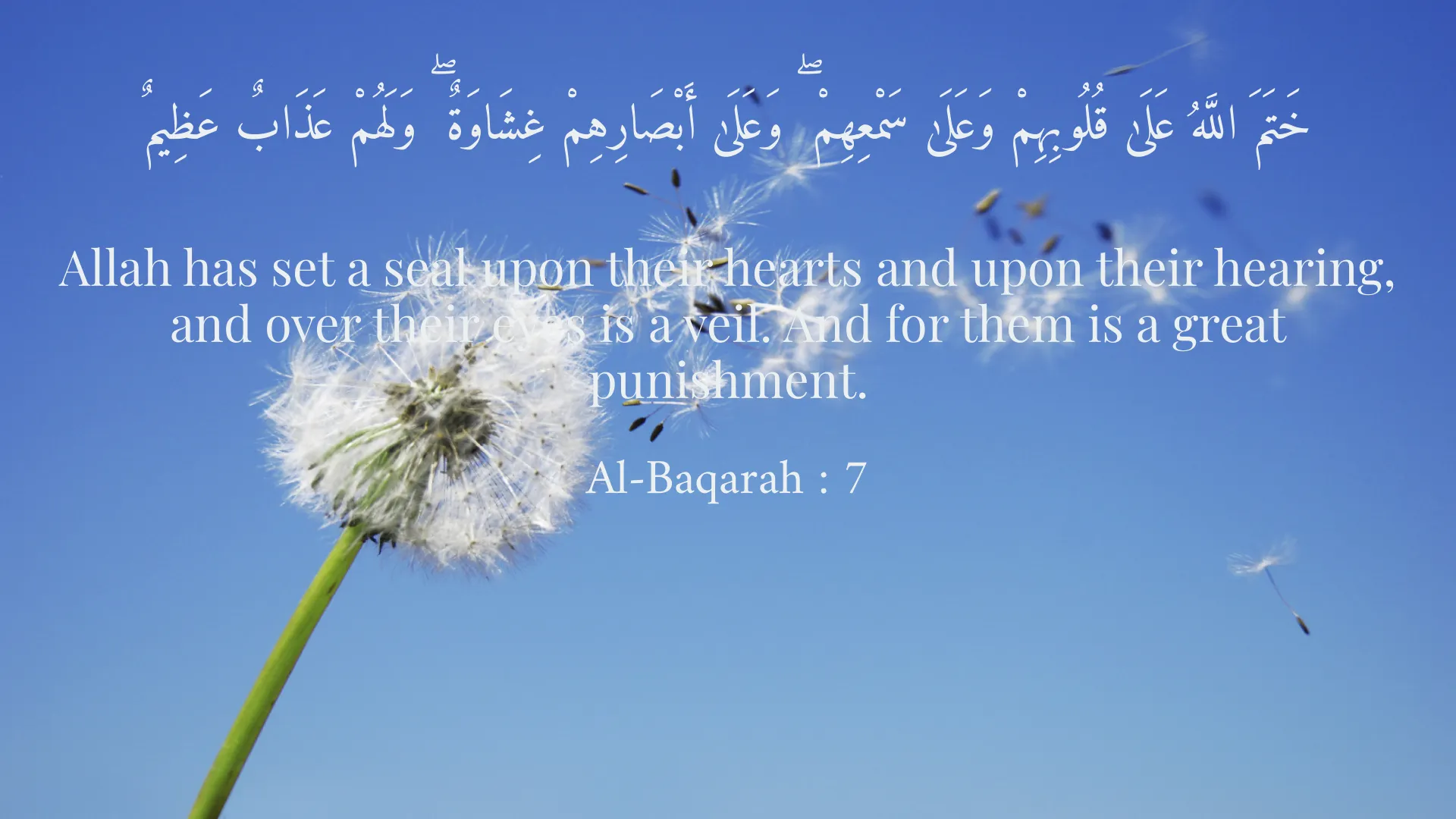
خَتَمَ اللَّهُ عَلَىٰ قُلُوبِهِمْ وَعَلَىٰ سَمْعِهِمْ ۖ وَعَلَىٰ أَبْصَارِهِمْ غِشَاوَةٌ ۖ وَلَهُمْ عَذَابٌ عَظِيمٌ
Allah has set a seal upon their hearts and upon their hearing, and over their eyes is a veil. And for them is a great punishment.
Al-Baqarah : 7
أَفَلَا يَتَدَبَّرُونَ الْقُرْآنَ أَمْ عَلَىٰ قُلُوبٍ أَقْفَالُهَا
Then do they not reflect upon the Quran, or are there locks upon [their] hearts?
Muhammad : 24
قُلْ إِن كَانَ آبَاؤُكُمْ وَأَبْنَاؤُكُمْ وَإِخْوَانُكُمْ وَأَزْوَاجُكُمْ وَعَشِيرَتُكُمْ وَأَمْوَالٌ اقْتَرَفْتُمُوهَا وَتِجَارَةٌ تَخْشَوْنَ كَسَادَهَا وَمَسَاكِنُ تَرْضَوْنَهَا أَحَبَّ إِلَيْكُمْ مِّنَ اللَّهِ وَرَسُولِهِ وَجِهَادٍ فِي سَبِيلِهِ فَتَرَبَّصُوا حَتَّى يَأْتِيَ اللَّهُ بِأَمْرِهِ ۗ وَاللَّهُ لَا يَهْدِي الْقَوْمَ الْفَاسِقِينَ
Say, [O Muhammad], 'If your fathers, your sons, your brothers, your wives, your relatives, wealth which you have obtained, commerce wherein you fear decline, and dwellings with which you are pleased are more beloved to you than Allah and His Messenger and jihad in His cause, then wait until Allah executes His command. And Allah does not guide the defiantly disobedient people.'
At-Tawbah : 24
Short Story
Once, a dervish approached a wise master, expressing his distress that whenever he tried to ponder divine words, some passages made his heart uneasy, and he would turn away from them. The master instructed him: 'Every night, cleave a hard stone with your bare hands.' The dervish initially resisted, saying, 'O Master, this is an arduous and useless task!' But the master gently replied, 'Do as I say, and in the end, you shall see.' The dervish, with reluctance and weariness, began working on the stone each night. Days turned into weeks, and he continued with groans and disinclination, convinced his labor was futile. Yet, one night, amidst his struggle, a cool drop of water suddenly sprang forth from the heart of the stone! Astonished by this event, the dervish returned to his master with renewed eagerness. The master smiled and said, 'O dervish, within every hardship, a hidden treasure lies. You shied away from the difficulty of this task, yet this very effort and perseverance unveiled a profound truth. Divine verses are likewise; sometimes their outer appearance seems difficult, and the soul recoils from them, but within their depths flow springs of wisdom, tranquility, and divine light that only become manifest through earnest effort, steadfastness, and deep contemplation from the core of one's being. This initial difficulty is but the door to an ocean of knowledge, requiring the key of patience and endeavor.'