Quranic Answer
The feeling of despising oneself or having low self-esteem is a profound human experience that can stem from various sources. While the Holy Quran does not directly use the term 'despising oneself,' it comprehensively addresses concepts that explain this feeling and offers potent remedies to overcome it. The roots of this emotion can be traced through several dimensions of Quranic teachings, and its cure can also be found within these same divine instructions. One of the primary causes is an awareness of personal shortcomings and sins. Humans, by nature, are prone to making mistakes, and when one becomes conscious of their deeds or feels they have fallen short of moral and divine standards, they may experience a form of self-reproach and disgust. This feeling, if guided appropriately, can be an indication of 'An-Nafs al-Lawwamah' (the self-reproaching soul), which the Quran swears by in Surah Al-Qiyamah: 'And I swear by the self-reproaching soul' (Surah Al-Qiyamah, Verse 2). An-Nafs al-Lawwamah represents the awakened conscience that reprimands a person for their errors. If this self-reproach is constructive, it can propel the individual towards repentance and rectification. However, if it becomes excessive and coupled with despair, it can lead to deep self-loathing, preventing one from moving towards salvation. Another significant factor that can fuel this feeling is satanic whispers (waswas). Satan constantly strives to divert humanity from the path of righteousness, and one of his primary tools is to instill despair and a sense of worthlessness. He attempts to exaggerate a person's mistakes and past, making them lose hope in divine mercy and pushing them towards hopelessness and self-despise. The Quran repeatedly mentions Satan's role in tempting humans and warns believers not to be heedless of his cunning. If one falls prey to these whispers and deems themselves unworthy of forgiveness and mercy, they will gradually come to despise themselves and lose the capacity for self-improvement. This is precisely contrary to Quranic teachings, which call humanity to repentance and hope in Allah's boundless mercy. To counter these negative emotions, the Holy Quran offers extremely powerful solutions. The first and most crucial remedy is repentance (Tawbah) and turning back to Allah. Allah unequivocally states in the Quran that no sin is too great to be forgiven, provided that repentance is sincere. In Surah Az-Zumar, Verse 53, Allah says: 'Say, 'O My servants who have transgressed against themselves [by sinning], do not despair of the mercy of Allah. Indeed, Allah forgives all sins. Indeed, it is He who is the Forgiving, the Merciful.'' This verse opens a gateway of hope for those who despise themselves due to their sins, assuring them that even the greatest transgressions are forgivable with sincere repentance. This hope in divine mercy is the primary driving force for exiting the abyss of despair and self-loathing. Remembrance of Allah (Dhikr) is another solution presented by the Quran for calming hearts and dispelling negative thoughts. In Surah Ar-Ra'd, Verse 28, it states: 'Those who have believed and whose hearts are assured by the remembrance of Allah. Unquestionably, by the remembrance of Allah hearts are assured.' When a person is constantly engaged in the remembrance of Allah, their heart becomes filled with tranquility, leaving no room for satanic whispers and negative self-talk. Dhikr helps individuals find their true worth not in worldly successes or failures, but in their servitude to and closeness with their Lord. This shift in perspective fundamentally transforms one's view of themselves, imparting a sense of worthiness and purpose. Performing good deeds (Amal Salih) also plays a vital role in strengthening self-esteem and overcoming self-despise. When an individual serves others, observes divine and human rights, and walks the path of righteousness, they experience an inner satisfaction that gradually replaces feelings of self-despise. These righteous actions foster self-improvement and help one learn from past mistakes, striving to become a better person. Allah grants great rewards to those who do good, which itself is an incentive to continue on the path of virtue and conquer negative emotions. Finally, the Quran teaches us not to despair of Allah's mercy. Despairing of Allah's mercy is a grave sin in itself, committed only by disbelievers. As stated in Surah Yusuf, Verse 87: '...and do not despair of the mercy of Allah. Indeed, no one despairs of the mercy of Allah except the disbelieving people.' This hopeful message is a lifeline for anyone trapped in the throes of self-despise. Knowing that your Lord offers you a chance to return and that your past sins, however great, are insignificant compared to the ocean of His mercy, empowers you to accept yourself, strive for improvement, and embark on a new life with hope for a better future. Thus, self-despise can serve as a warning sign to return to Allah and find true peace under His servitude. This Quranic perspective offers a path to freedom from the heavy burden of undue self-reproach and leads to constructive, positive self-acceptance.
Related Verses
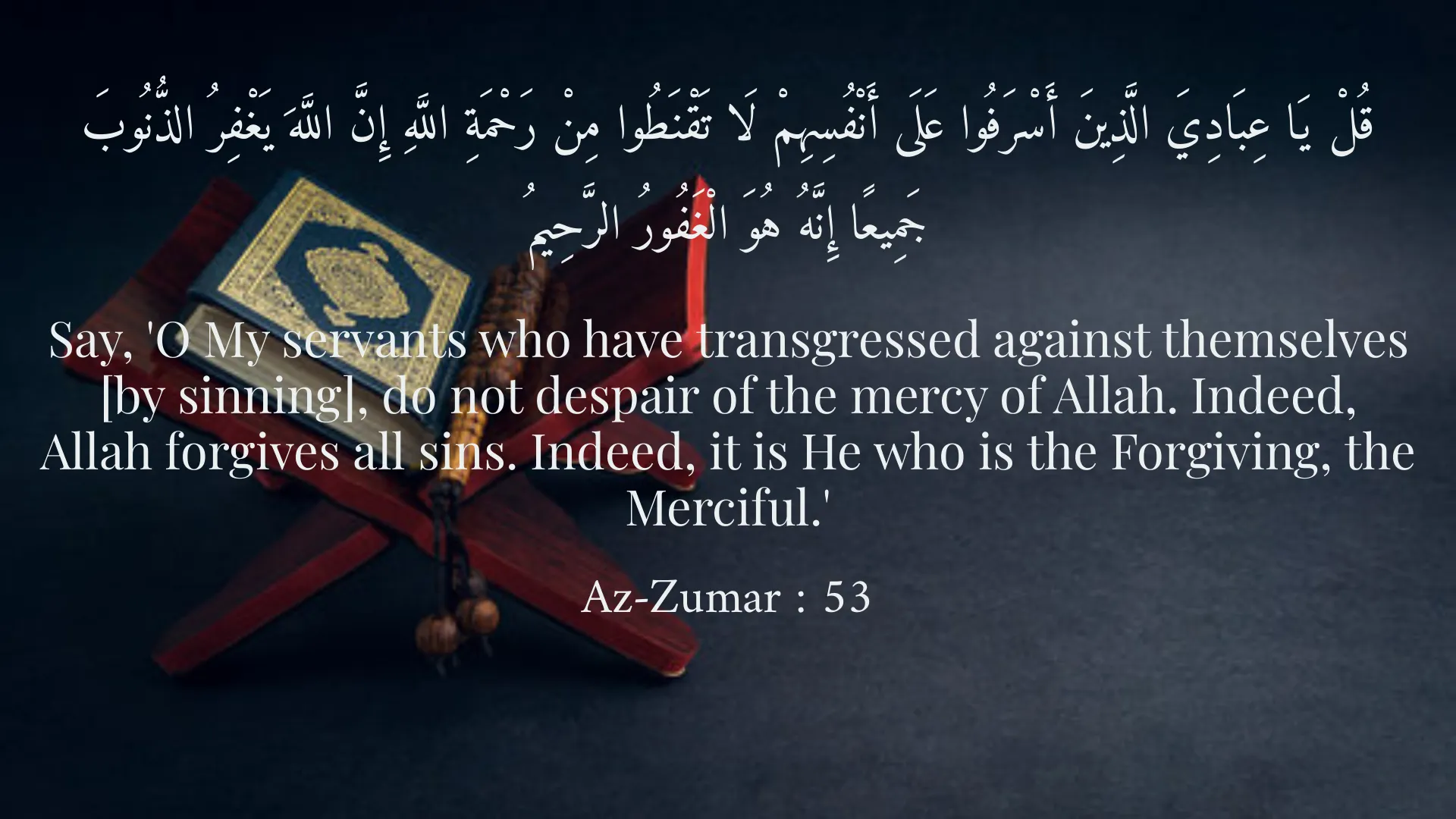
قُلْ يَا عِبَادِيَ الَّذِينَ أَسْرَفُوا عَلَى أَنْفُسِهِمْ لَا تَقْنَطُوا مِنْ رَحْمَةِ اللَّهِ إِنَّ اللَّهَ يَغْفِرُ الذُّنُوبَ جَمِيعًا إِنَّهُ هُوَ الْغَفُورُ الرَّحِيمُ
Say, 'O My servants who have transgressed against themselves [by sinning], do not despair of the mercy of Allah. Indeed, Allah forgives all sins. Indeed, it is He who is the Forgiving, the Merciful.'
Az-Zumar : 53
وَلَا أُقْسِمُ بِالنَّفْسِ اللَّوَّامَةِ
And I swear by the self-reproaching soul [i.e., conscience].
Al-Qiyamah : 2
يَا بَنِيَّ اذْهَبُوا فَتَحَسَّسُوا مِنْ يُوسُفَ وَأَخِيهِ وَلَا تَيْأَسُوا مِنْ رَوْحِ اللَّهِ إِنَّهُ لَا يَيْأَسُ مِنْ رَوْحِ اللَّهِ إِلَّا الْقَوْمُ الْكَافِرُونَ
O my sons, go and find out about Yusuf and his brother and do not despair of the mercy of Allah. Indeed, no one despairs of the mercy of Allah except the disbelieving people.'
Yusuf : 87
Short Story
It is narrated that a pious man, named Hakim, whenever he reflected upon his deeds and perceived his shortcomings, his heart would ache and he would despise himself. One day, he wept in his solitude, tormented by his inner whispers. A wise elder, learning of his state, said to Hakim: 'My son, do not let past wrongs and present errors afflict your soul. If a door of repentance is open, why would you not pass through it and walk towards light? I have heard the story of a king who suffered from his own arrogance and deemed himself unworthy of divine mercy. But a wise minister told him: 'O King, if Allah did not forgive sins, then who would remain to be forgiven? Repentance is an ocean of mercy that cleanses impurities.' The king found solace in these words, and with humility and remorse, returned to Allah, and then he saw that he no longer despised himself, but had fallen in love with servitude. O Hakim, you too cease blaming yourself, hasten towards divine mercy, for that compassion is superior to any flaw and heals broken hearts.' Hakim found peace in the elder's words and, with an illuminated heart, engaged in the remembrance of Allah and repentance, realizing that true self-acceptance lies in the shadow of divine mercy.