Quranic Answer
“Why do I sometimes feel a sense of meaninglessness in life?” This is a profound question that many individuals grapple with at various points in their lives. This feeling of emptiness, disorientation, and lack of purpose can be deeply unsettling. From the perspective of the Holy Quran, human life is not meaningless; rather, it is purposeful and filled with ultimate objectives. The Quran explicitly states that everything in existence has been created with divine wisdom, and humanity is no exception. A sense of meaninglessness often arises when an individual becomes heedless of this truth and loses connection with their Creator and the primary purpose of their existence, or becomes oblivious to the deeper dimensions of being. This bewilderment is, in fact, a sign – a sign that the human soul yearns for something greater than worldly material possessions. The Holy Quran clearly articulates the fundamental purpose of the creation of both jinn and mankind in a lucid verse: “And I did not create the jinn and mankind except to worship Me” (Adh-Dhariyat: 56). This noble verse informs us that the very essence of our being is nothing but the worship and servitude of Allah. However, worship in the Quranic sense is not merely confined to performing rituals and formal acts of devotion. Instead, it encompasses a life where all its dimensions – from social and economic interactions to personal and spiritual endeavors – are aligned with divine pleasure and based on His teachings. When a person deviates from this sublime purpose of creation or forgets it, it is natural for them to experience confusion and emptiness. A life without a divine compass is akin to a rudderless ship adrift in a vast ocean, lacking direction and bound to feel lost. Humanity is inherently a seeking being, searching for meaning, and if this meaning is not found in its true source, which is the connection with the Creator, then searching for it elsewhere will ultimately lead to a dead end and failure. This emptiness is, in essence, the soul’s cry to return to its original source. One of the significant reasons for feeling meaningless, according to the Quran, is an excessive preoccupation with worldly life and a forgetfulness of the Hereafter. The Quran repeatedly emphasizes that worldly life is transient and fleeting and should not distract individuals from their ultimate purpose. In Surah Al-A'la, verses 16 and 17, it states: “But you prefer the worldly life, while the Hereafter is better and more enduring.” When all of a person's efforts are directed towards accumulating wealth, gaining fame, or pursuing fleeting worldly pleasures, and they forget that these are merely tools to achieve spiritual perfection and divine satisfaction, they will inevitably experience a void and emptiness after some time. This feeling stems from the ephemeral nature of the world; no matter how much one achieves their worldly desires, they remain insatiable, and this insatiability leads to despair and meaninglessness. The human heart is created in such a way that it only finds tranquility through connection with the Infinite; anything less than the Infinite cannot quench its thirst or provide lasting peace. This is precisely what causes individuals, despite abundant material achievements, to continue feeling empty and dissatisfied. The Quranic solution for overcoming this feeling primarily lies in returning to “Dhikr Allah” – the remembrance of God. The Holy Quran explicitly states that true tranquility is found only through the remembrance of Allah: “Those who have believed and whose hearts are assured by the remembrance of Allah. Unquestionably, by the remembrance of Allah hearts are assured” (Ar-Ra'd: 28). The remembrance of God is not merely the repetition of words; rather, it involves a constant awareness of His presence, His power, His mercy, and the purposeful nature of creation. When an individual fills their heart with the remembrance of God, there remains no room for emptiness or meaninglessness. This remembrance provides deeper insight into the events of life and guides one on the right path. Dhikr encompasses not only prayer and Quran recitation but also, in every moment of life, mindfulness and awareness of divine blessings and trials. This presence of heart fills life with gratitude and meaning, adding depth to it. Furthermore, the Quran emphasizes the significance of patience and prayer as two powerful tools for overcoming difficulties and finding meaning. In Surah Al-Baqarah, verse 153, it states: “O you who have believed, seek help through patience and prayer. Indeed, Allah is with the patient.” Patience helps individuals to endure hardships and adversities in life and to avoid despair and hopelessness. This perspective, that every difficulty can lead to growth and closeness to God, gives meaning to tribulations. Prayer, on the other hand, is a direct and unmediated connection with the Creator, nourishing the human spirit, awakening it from heedlessness, and keeping the sense of purpose alive. When a person humbly stands before their Lord, they comprehend the grandeur of existence and their place within it, and this understanding bestows upon them meaning and direction. These two pillars, patience and prayer, not only prevent spiritual collapse but also provide strong foundations for building a purposeful and meaningful life. Moreover, helping others and performing righteous deeds are crucial aspects of imparting meaning to life from a Quranic perspective. Islam is not an individualistic religion; it profoundly emphasizes the importance of community and the rights of others. Assisting the needy, establishing justice, being truthful in dealings, and any good deed performed for the sake of Allah and for the benefit of creation, not only carry otherworldly rewards but also bring meaning and joy to one's life in this world. The Quran, in numerous verses, highlights the importance of righteous deeds, often associating them with faith. Someone who is solely concerned with themselves and neglects society and others will sooner or later experience isolation and meaninglessness. Conversely, one who extends a helping hand to others and alleviates their burdens through good deeds effectively finds their existential meaning in serving the Creator and His creation. This sense of connection and positive impact brings with it the deepest levels of inner contentment and fulfillment, and the feeling of being useful and part of a larger whole is itself a great deterrent to meaninglessness. Finally, understanding that worldly life is a field of trial and test also helps individuals to escape the feeling of meaninglessness. The Quran in Surah Al-Mulk, verse 2, states: “He who created death and life to test you [as to] which of you is best in deed.” When an individual realizes that every moment of their life is an opportunity to earn merit in this divine test, no moment will feel meaningless or purposeless. Even hardships and challenges transform into opportunities for growth, patience, and drawing closer to God. This perspective grants an eternal and stable outlook, in comparison to which the fleeting problems of the world fade, replaced by motivation and hope. Thus, meaninglessness often results from a detachment from these divine compasses and a forgetfulness of life's sublime and eternal purpose. By returning to Allah, strengthening one's spiritual connection, and focusing on good deeds, this feeling can be transformed into profound peace and satisfaction. This path not only restores meaning to human life but also prepares one for a more enduring and beautiful existence in the Hereafter, giving purpose and direction to one's being.
Related Verses
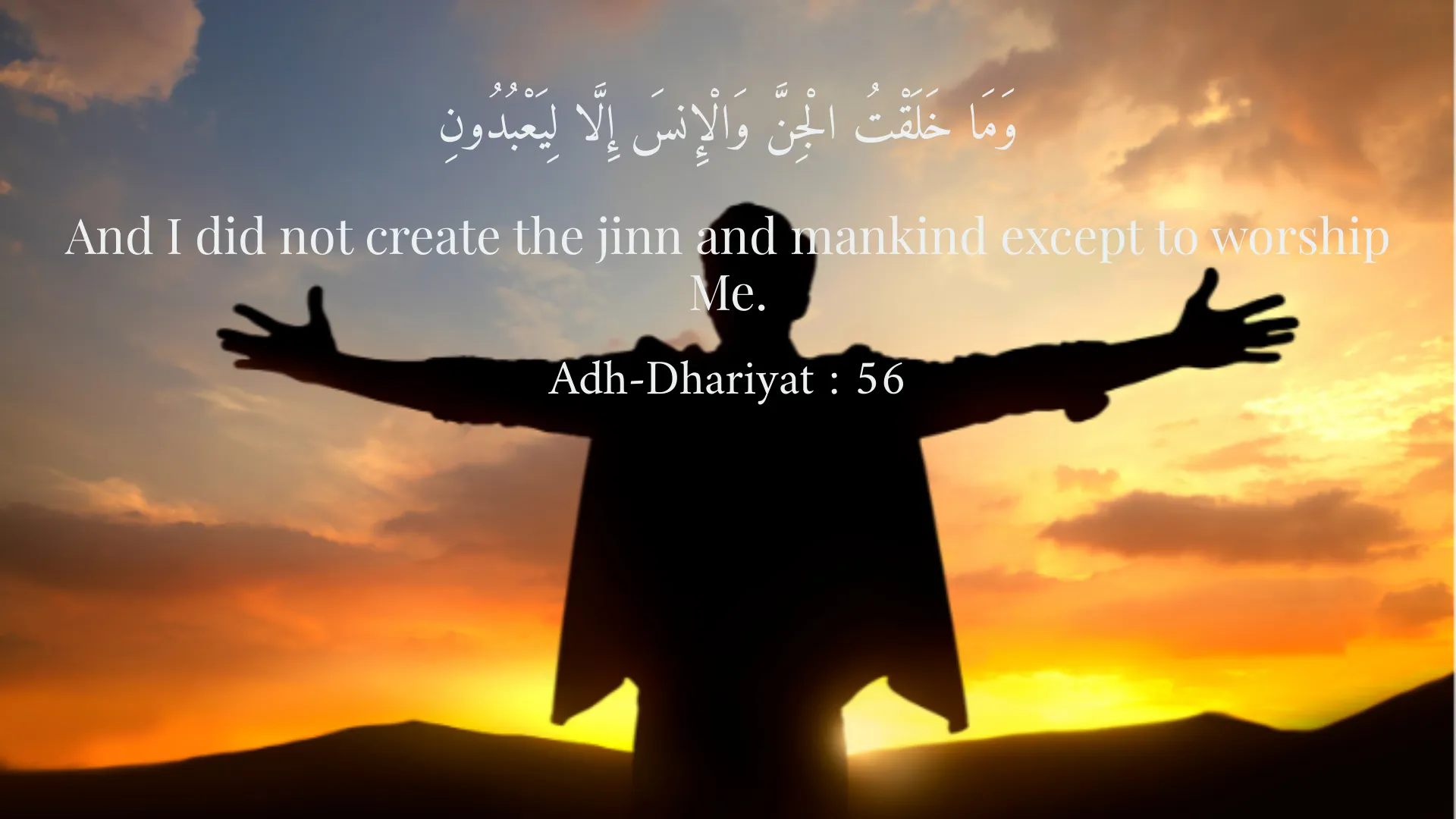
وَمَا خَلَقْتُ الْجِنَّ وَالْإِنسَ إِلَّا لِيَعْبُدُونِ
And I did not create the jinn and mankind except to worship Me.
Adh-Dhariyat : 56
الَّذِينَ آمَنُوا وَتَطْمَئِنُّ قُلُوبُهُم بِذِكْرِ اللَّهِ ۗ أَلَا بِذِكْرِ اللَّهِ تَطْمَئِنُّ الْقُلُوبُ
Those who have believed and whose hearts are assured by the remembrance of Allah. Unquestionably, by the remembrance of Allah hearts are assured.
Ar-Ra'd : 28
بَلْ تُؤْثِرُونَ الْحَيَاةَ الدُّنْيَا
But you prefer the worldly life,
Al-A'la : 16
وَالْآخِرَةُ خَيْرٌ وَأَبْقَىٰ
while the Hereafter is better and more enduring.
Al-A'la : 17
Short Story
They say that in ancient times, there was a merchant who was exceedingly successful in worldly affairs and had amassed immense wealth. He attained everything he desired, from power and status to boundless riches, yet despite all this, he had restless nights and felt a constant longing during the day. Each day, he yearned more and more for something lost that he couldn't identify. He grew tired of extravagant feasts and found no joy in his vast fortune. One day, during a journey, he came across a secluded ascetic who, in a small hut, with a piece of dry bread and a cup of water, possessed a tranquility as if he held the kingship of the entire world in his hand. The merchant asked him, 'O man of God, I have everything, yet I have nothing. What do you possess that brings you such joy and makes your heart so assured?' The ascetic smiled kindly and said, 'What you lack, and I possess, is a heart that has detached itself from worldly desires and found peace in the remembrance of God. You sought to accumulate, while I sought to diminish attachments. Every time you attained something, you still yearned for something else, and your heart remained restless, because you tied your heart to transient things. I tied my heart to the Everlasting, and desired nothing but Him, so I became independent of everything else and found tranquility. The comfort of the world lies in letting go of attachments, not in accumulating them.' The merchant heard these words, and a revolution occurred within his heart. From then on, he turned away from worldly pursuits and set his heart on the eternal abode, striving in the servitude of the Almighty, until he was freed from that distress and meaninglessness and tasted the true flavor of peace.