Quranic Answer
Feeling aimless or lost in life is an experience many people encounter at different stages. This feeling can stem from various factors, including confusion about priorities, getting caught in daily routines, or failing to find a deeper meaning for existence. However, the Holy Quran, a book of guidance and light, offers a clear and profound answer to this question, reminding us that our life in this world has a sublime purpose and a divine meaning. If we align ourselves with it, we will never feel aimless. This divine scripture, with a comprehensive view of existence and humanity's place within it, outlines the path to true tranquility and purpose. The Quran explicitly states the primary purpose of creating humans and jinn in a profound verse: "And I did not create the jinn and mankind except to worship Me." (Surah Adh-Dhariyat, 51:56). This foundational verse teaches us that the ultimate goal of our existence is to worship our Lord. However, "worship" in this context extends far beyond mere religious rituals. In the Quranic view, worship is a comprehensive way of life that includes all good deeds, pure intentions, service to creation, and striving to establish justice and goodness on Earth. When a person conducts all aspects of their life—from work and livelihood to social interactions and even rest—with the intention of seeking divine closeness and His pleasure, every moment of their life transforms into a sublime act of worship. Consequently, they find a deep sense of purpose and direction. Aimlessness often arises when individuals limit their goals solely to worldly and transient matters: accumulating wealth, status, fame, or fleeting pleasures, which even after achievement, may fail to fill their spiritual void. Furthermore, the Holy Quran emphasizes the transient and deceptive nature of worldly life, and this understanding helps individuals redefine their priorities and avoid becoming engrossed in trivial matters. In Surah Al-An'am, verse 32, we read: "And what is the worldly life except amusement and diversion? But the home of the Hereafter is best for those who fear Allah. Then will you not reason?" This verse reminds us that what we perceive in this world is merely a temporary and superficial part of the truth. If all our concerns and efforts are directed towards this "amusement and diversion," it is natural to feel emptiness and aimlessness after a while, because the nature of worldly affairs is impermanence and inadequacy to satisfy the human soul's endless thirst. In contrast, the Quran identifies true happiness and lasting purpose in focusing on the Hereafter and practicing piety (taqwa). Prioritizing the Hereafter does not mean neglecting this world; rather, it means proper valuation and prioritization: using this world as a field to cultivate for the Hereafter, performing deeds that bring eternal rewards. This approach imbues human life with boundless depth and meaning. Ultimately, the Quran presents the path to inner peace and finding one's way through "Dhikrullah" (remembrance of Allah). Surah Ar-Ra'd, verse 28, states: "Those who have believed and whose hearts are assured by the remembrance of Allah. Unquestionably, by the remembrance of Allah hearts are assured." This verse serves as a healing balm for feelings of anxiety, worry, and aimlessness. The remembrance of Allah is not merely the repetition of divine names; it encompasses reflection on divine verses, prayer, supplication, recitation of the Quran, and always being mindful of His presence and oversight in all aspects of life. When a person is continuously and consciously connected with their Creator, their heart is illuminated, their path becomes clear, and they are saved from disorientation. The remembrance of Allah is a compass that shows the correct direction in the turbulent ocean of life, transforming the feeling of "aimlessness" into "divine purposefulness." Therefore, to overcome feelings of aimlessness, the Quranic solution is to deepen one's relationship with Allah, redefine the purpose of life based on servitude and preparation for the Hereafter, and consistently engage in His remembrance, so that the heart finds tranquility and the path of life is illuminated by divine guidance.
Related Verses
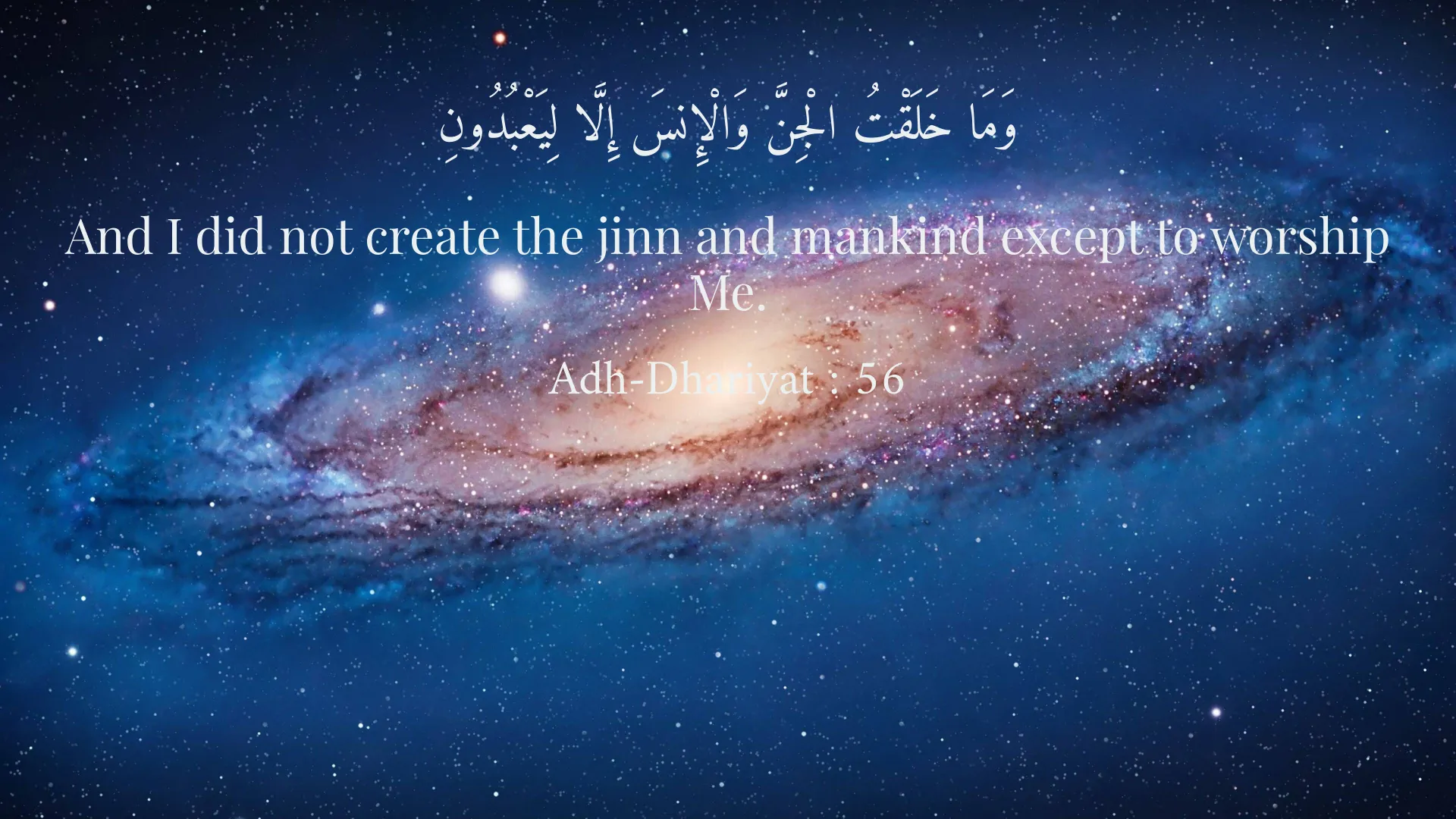
وَمَا خَلَقْتُ الْجِنَّ وَالْإِنسَ إِلَّا لِيَعْبُدُونِ
And I did not create the jinn and mankind except to worship Me.
Adh-Dhariyat : 56
وَمَا الْحَيَاةُ الدُّنْيَا إِلَّا لَعِبٌ وَلَهْوٌ ۖ وَلَلدَّارُ الْآخِرَةُ خَيْرٌ لِّلَّذِينَ يَتَّقُونَ ۗ أَفَلَا تَعْقِلُونَ
And what is the worldly life except amusement and diversion? But the home of the Hereafter is best for those who fear Allah. Then will you not reason?
Al-An'am : 32
الَّذِينَ آمَنُوا وَتَطْمَئِنُّ قُلُوبُهُم بِذِكْرِ اللَّهِ ۗ أَلَا بِذِكْرِ اللَّهِ تَطْمَئِنُّ الْقُلُوبُ
Those who have believed and whose hearts are assured by the remembrance of Allah. Unquestionably, by the remembrance of Allah hearts are assured.
Ar-Ra'd : 28
Short Story
It is narrated that a wealthy man, despite his tall palaces and abundant treasures, was always discontent and aimless. The more he accumulated, the emptier he felt, asking himself: "What is all this effort for? What is my purpose in this life?" One day, he saw an ascetic dervish, with torn clothes and a serene face, sitting under a tree, smiling from the heart. The wealthy man asked in astonishment: "O Dervish, you have neither wealth nor status, how can you be so carefree and happy, while I, with all these blessings, am in constant anxiety?" The dervish replied with a warm smile: "O man, you have tied your heart to the world and what is in it, and the more you gain from it, the greater your anxiety of losing it. But I have entrusted my heart to the Creator of the world. Your aim is to possess, and my aim is to attain His pleasure. What you seek is perishable, but what I have found is eternal." The wealthy man was shaken by these words, reflected within himself, and realized that true peace and purpose lie in connecting with the inexhaustible source of existence and transcending worldly attachments.