Quranic Answer
At times, along life's winding path, an individual may stumble, make mistakes, or even commit sins that burden them with regret and shame. This feeling of shame can become so profound and paralyzing that one might even feel embarrassed to speak to their Lord. Perhaps they imagine they no longer deserve to communicate with the Creator of the universe, or they might believe their sins are so vast and numerous that there is no room left for hope in divine forgiveness. This feeling, while natural and a sign of an awakened conscience, should never be allowed to become a barrier to drawing near to the source of mercy and peace. The Holy Quran, with its tone full of love, hope, and invitation, challenges these misconceptions and shows a clear path towards returning to and re-establishing a continuous connection with Almighty God. The first and most crucial point to consider when addressing this question is the infinite and indescribable nature of Allah's mercy. Almighty God introduces Himself in the Quran with numerous attributes, many of which emphasize His boundless mercy, forgiveness, compassion, the covering of sins, and unconditional love for His servants. The Divine Names (Asma al-Husna) such as 'Ar-Rahman' (The Most Gracious), 'Ar-Rahim' (The Most Merciful), 'Al-Ghafur' (The All-Forgiving), 'At-Tawwab' (The Ever-Returning, The Acceptor of Repentance), 'Al-Afu' (The Pardoner), and 'Al-Wadud' (The Most Loving) are just a few of His names that all point to the truth that Allah is, even beyond what we can imagine, immensely forgiving and deeply loving towards His servants. Verse 53 of Surah Az-Zumar is a verse that explicitly and with utmost tenderness commands all humanity, even those who have committed grave sins and transgressed against their souls, never to despair of Allah's mercy: "Qul ya 'ibadiyalladhina asrafu 'ala anfusihim la taqnatu min rahmatillah; innal laaha yaghfiruz zunuba jamee'a; innahu Huwal Ghafoorur Raheem" (Say, 'O My servants who have transgressed against themselves [by sinning], do not despair of the mercy of Allah. Indeed, Allah forgives all sins. Indeed, it is He who is the Forgiving, the Merciful.'). This verse not only grants permission for hope but, through the tender address 'O My servants,' it calls out to sinners with affection and reassurance, affirming that the door of repentance and return is perpetually open. Shame and embarrassment over one's past should never become a barrier to seeking Allah's boundless mercy. Indeed, such feelings, if they lead to despair, can be a subtle trap set by Shaytan (Satan) to distance individuals from their Lord and plunge them into hopelessness, whereas hope in God is the believer's greatest weapon against despair. Secondly, Allah describes Himself in the Quran as being incredibly close to His servants and promises to respond to their supplications directly and with utmost attention. In Surah Al-Baqarah (2:186), it is stated: "Wa idha sa’alaka ‘ibadi ‘anni fa inni qarib; ujibu da’watad da’i idha da’ani fal yastajibu li wal yu’minu bi la’allahum yarshudoon" (And when My servants ask you, [O Muhammad], concerning Me – indeed I am near. I respond to the invocation of the supplicant when he calls upon Me. So let them respond to Me [by obedience] and believe in Me that they may be [rightly] guided). This verse unequivocally states that there is no barrier to communicating with Allah, and He is so near that no intermediary or special intercessor is needed. The feeling of shame in speaking to God often stems from a misunderstanding of this divine proximity and readiness to listen. Allah is not displeased by our turning to Him; on the contrary, He rejoices in our return and delights in our sincere repentance. He does not wait for us to be perfect or sinless before we can speak to Him; rather, He knows our weaknesses, our needs, our fears, and even our sins, and despite all these, He invites us to turn to Him to lighten our burdens and restore peace to our hearts. He accepts us as we are, with all our imperfections and mistakes. Thirdly, repentance (Tawbah) and seeking forgiveness (Istighfar) in Islam are processes of purifying the soul and returning to the divine nature, not merely punitive acts. Allah is 'At-Tawwab,' meaning He is the Oft-Returning, the one who constantly accepts repentance and provides endless, countless opportunities for His servants to return. The purpose of repentance is not merely the remission of sin but the restoration and strengthening of one's relationship with Allah and a fresh start with a purified heart and renewed resolve. Shame felt when contemplating speaking to God, though perhaps unpleasant in the moment, is actually a sign of remorse and regret, which is the very first step on the path of repentance and returning to Him. However, this shame must not transform into despair. Instead, it should be channeled into a powerful motivation to turn towards Allah, confess one's sins (in solitude with Him), seek His sincere forgiveness, and resolve not to repeat the transgression. Even if a sin has been committed repeatedly, the door of divine mercy does not close. It is narrated from Imam Al-Baqir (peace be upon him) that Allah the Exalted says: "Whenever My servant commits a sin, if he repents and turns back to Me, I forgive him." This affirms that repentance, even if repeated and due to human weakness, is always accepted, as long as it comes from the depths of the heart. Fourthly, the Quran emphasizes that Allah is fully aware of what is in the hearts, and nothing remains hidden from Him. "Wa Rabbuka ya’lamu ma tukinnu sudooruhum wa ma yu’linoon" (And your Lord knows what their chests conceal and what they declare) (Surah Al-Qasas, 28:69). This means that even if you feel too ashamed to articulate your sins directly and in detail in your prayers, or if you cannot find the right words, Allah is aware of your innermost intentions, your hidden tears, the depth of your remorse, and your yearning for purification. He does not require a formal 'confession' in the traditional sense (as found in some other religions); rather, your sincerity and purity of intention in turning to Him are what truly matter. Communication with Allah does not require eloquent words, flawless phrases, or an unblemished tone; a whisper from the depths of your heart, a sigh of remorse, a tear of regret, or even a silence filled with sorrow and hope, is sufficient for Him. He understands the language of hearts and knows what passes in the hidden chambers of the heart before a single word is uttered. In conclusion, while the feeling of shame in speaking to God might initially be an indicator of an awakened conscience and sincere regret, it must not be allowed to become a permanent barrier to maintaining a vital connection with the Creator. Allah does not turn away from sinners; rather, He awaits their return with open and infinite arms. He desires His servants to seek refuge in Him in every state, even at their weakest, most erring, and most sinful moments. It is this trust and reliance on His infinite mercy that can dissolve the feeling of shame and pave the way for inner peace. Dialogue with Allah is not merely about expressing needs or seeking forgiveness; it is a unique opportunity to unburden oneself of the psychological weight of sins, find inner peace, and strengthen one's spirit. This dialogue is a deep and two-way relationship where the servant acknowledges their weakness and need, and Allah reveals His infinite power, boundless forgiveness, and unparalleled love. Therefore, instead of allowing shame to distance you from this sacred and vital relationship, use it as a bridge to deepen your connection with the Most Forgiving and Most Merciful Companion. Whenever this feeling overwhelms you, remember that Allah's mercy precedes His wrath, and He eagerly awaits your return. He is 'At-Tawwab' and 'Ar-Rahim,' and He will never leave you alone in any state, even in your darkest moments. Your conversation with Him, even if hesitant and tinged with shame, is more valuable than silence and despair. Our Lord not only listens to our words but is also present in our silence, healing broken hearts and showing the path to salvation.
Related Verses
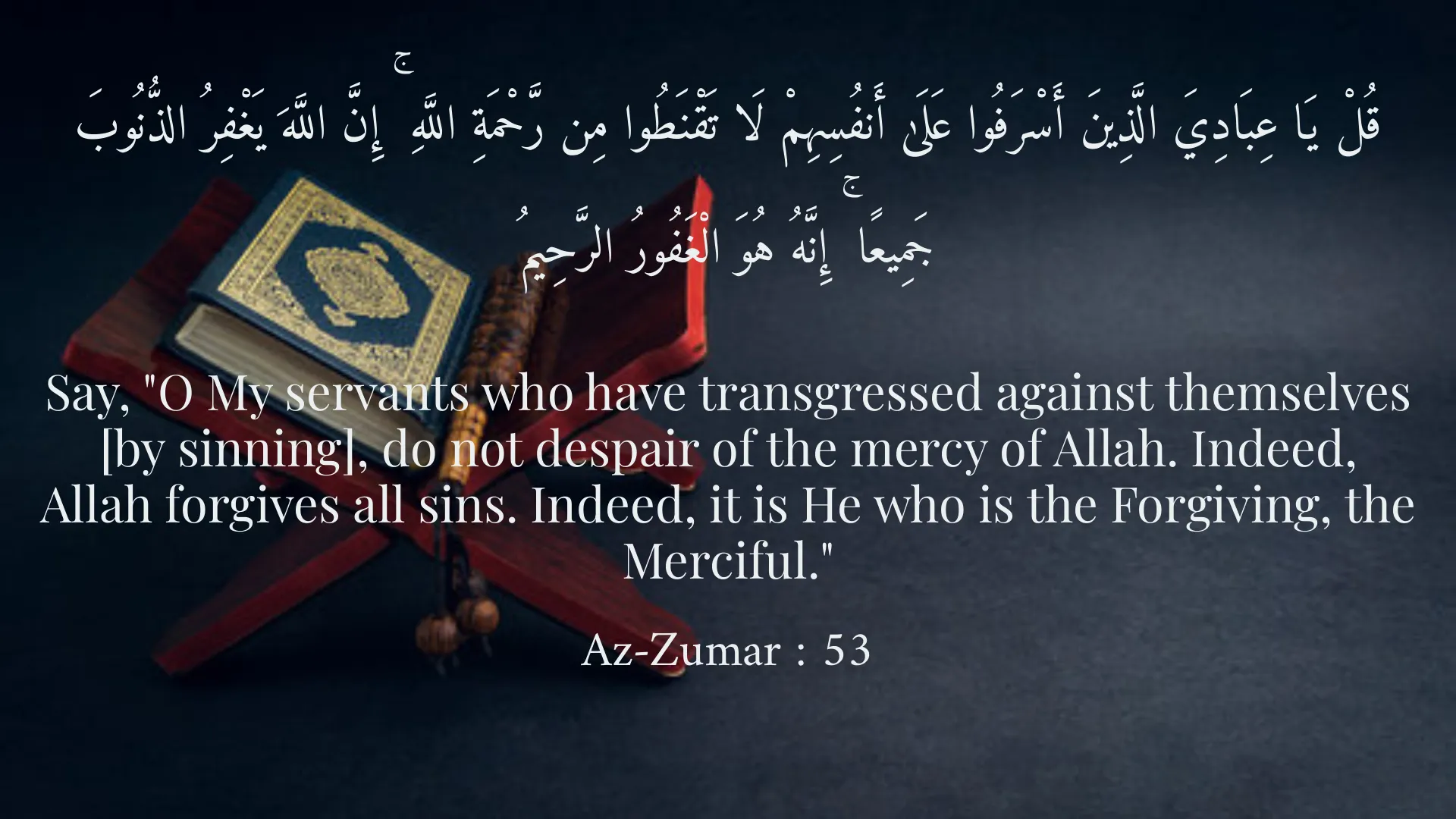
قُلْ يَا عِبَادِيَ الَّذِينَ أَسْرَفُوا عَلَىٰ أَنفُسِهِمْ لَا تَقْنَطُوا مِن رَّحْمَةِ اللَّهِ ۚ إِنَّ اللَّهَ يَغْفِرُ الذُّنُوبَ جَمِيعًا ۚ إِنَّهُ هُوَ الْغَفُورُ الرَّحِيمُ
Say, "O My servants who have transgressed against themselves [by sinning], do not despair of the mercy of Allah. Indeed, Allah forgives all sins. Indeed, it is He who is the Forgiving, the Merciful."
Az-Zumar : 53
وَإِذَا سَأَلَكَ عِبَادِي عَنِّي فَإِنِّي قَرِيبٌ ۖ أُجِيبُ دَعْوَةَ الدَّاعِ إِذَا دَعَانِ ۖ فَلْيَسْتَجِيبُوا لِي وَلْيُؤْمِنُوا بِي لَعَلَّهُمْ يَرْشُدُونَ
And when My servants ask you, [O Muhammad], concerning Me - indeed I am near. I respond to the invocation of the supplicant when he calls upon Me. So let them respond to Me [by obedience] and believe in Me that they may be [rightly] guided.
Al-Baqarah : 186
وَرَبُّكَ يَعْلَمُ مَا تُكِنُّ صُدُورُهُمْ وَمَا يُعْلِنُونَ
And your Lord knows what their chests conceal and what they declare.
Al-Qasas : 69
Short Story
In ancient times, there lived a merchant named Fereydoon, renowned for his good reputation and piety. However, one day, swayed by temptation, he made a grave mistake and committed a sin that filled him with deep remorse. From that moment on, Fereydoon found no peace. Whenever he wished to raise his hands in prayer and speak to his Lord, a heavy burden of shame would overcome him, and his tongue would stammer. He believed he was no longer worthy to approach the threshold of the Beloved with such a sin. One day, with a heart full of despair, he went to the wise elder of the city and recounted his state. The elder smiled and said, "O Fereydoon! Your story is like that of one who, fearing a flood, throws himself into the sea! Are you distancing yourself from the source of forgiveness out of shame for a sin? Have you not heard that Allah has said: 'Who forgives sins except Allah?' His ocean of mercy is as vast as the heavens and the earth, and a single drop of a servant's sin cannot pollute it. Whenever shame overcomes you, remember that this very feeling is a sign that your heart is still alive and turning towards the Truth. Rise, and with this very shame, with this very weakness, and with this very broken heart, turn to His doorstep. He does not await your perfection, but your return." Fereydoon was awakened by the elder's words. With the same shame, but with new hope, he prostrated himself and began to supplicate. He realized that Allah is far more forgiving than to push away His servant due to shame; rather, this very shame could be a bridge to closer proximity. From then on, Fereydoon was constantly in dialogue with God, and peace returned to his heart.