Quranic Answer
The feeling of emptiness is a profoundly human experience, transcending cultures, ages, and material circumstances. It's a sensation that can creep in despite outward success, wealth, or robust social connections, prompting a deep introspection. From the perspective of the Holy Quran, the ultimate guide and beacon for humanity, this sense of hollowness often signals a spiritual void, a disconnection from one's true purpose, or an imbalance in life's priorities. The Quran, with its profound wisdom, not only diagnoses the root causes of such feelings but also offers timeless and comprehensive remedies, guiding individuals towards a life rich in meaning, tranquility, and genuine contentment. At its core, as articulated by the Quran, the most fundamental reason for feelings of emptiness stems from a detachment or heedlessness concerning Allah, the Creator and Sustainer of all existence. Our souls are inherently predisposed to recognize, yearn for, and connect with their Originator. When this vital connection is weakened or severed, a profound sense of hollowness can set in, irrespective of one's material possessions, social standing, or worldly achievements. Allah unequivocally states in Surah Ar-Ra'd (13:28): “الَّذِينَ آمَنُوا وَتَطْمَئِنُّ قُلُوبُهُم بِذِكْرِ اللَّهِ ۗ أَلَا بِذِكْرِ اللَّهِ تَطْمَئِنُّ الْقُلُوبُ” (Those who have believed and whose hearts are assured by the remembrance of Allah. Unquestionably, by the remembrance of Allah hearts are assured.). This pivotal verse unveils a foundational truth: true tranquility and profound contentment are not found in external factors but in the inner peace derived from continuously remembering and being mindful of Allah. When we neglect our prayers (Salat), the recitation of the Quran, fervent supplications (Dua), or a general awareness of Allah in our daily lives, our hearts can become restless, agitated, and ultimately, feel empty. The transient world, with all its glitter and allure, possesses no capacity to fill a spiritual void; only the divine light and connection can truly illuminate and satisfy the depths of the soul. This continuous mindfulness ensures that in every circumstance, an individual possesses a stable and firm anchor, protecting them from life's turbulent storms and imbuing every moment with a deeper, more profound significance. Neglecting this spiritual dimension is akin to a body starving for nourishment, eventually succumbing to weakness and hunger; the soul too draws its sustenance from the remembrance of Allah. A second significant factor contributing to this pervasive feeling of emptiness is a lack of clarity or a complete loss of one's ultimate purpose in life. The Quran clearly delineates the grand purpose behind human creation. In Surah Adh-Dhariyat (51:56), Allah declares: “وَمَا خَلَقْتُ الْجِنَّ وَالْإِنسَ إِلَّا لِيَعْبُدُونِ” (And I did not create the jinn and mankind except to worship Me.). This verse profoundly defines our fundamental raison d'être: to worship Allah. However, worship in Islam is far from being merely ritualistic; it encompasses every facet of life – from sincere intention in one's work, compassionate treatment of others, diligent pursuit of knowledge, to active striving for justice and righteousness. When an individual loses sight of this overarching divine purpose and lives solely for transient worldly gains, fleeting pleasures, or superficial ambitions, their life can easily become devoid of deeper meaning and genuine satisfaction. The relentless pursuit of material wealth, societal status, or ephemeral desires, without integrating them into the larger framework of serving Allah, frequently leads to an inner void once these temporary goals are achieved, or even if they remain frustratingly elusive. The Quran teaches us that true success, everlasting joy, and profound contentment are discovered in fulfilling our divinely appointed role as Allah's vicegerents on Earth, striving for His pleasure, and diligently preparing for the eternal life in the Hereafter. Every action, from the most mundane to the most monumental, when undertaken with a sincere divine intention and aimed at gaining Allah's pleasure, transforms into an act of worship, thereby imbuing life with profound significance and banishing the specter of emptiness. The third contributing factor, extensively highlighted in the Quran, is the deceptive allure of worldly life (Dunya) and the subsequent neglect of the Hereafter (Akhirah). While legitimate material comforts and lawful enjoyment of worldly blessings are permissible and even encouraged within Islamic teachings, making them the sole or ultimate aim of one's existence is sternly cautioned against. Surah Al-Kahf (18:46) beautifully articulates this balance: “الْمَالُ وَالْبَنُونَ زِينَةُ الْحَيَاةِ الدُّنْيَا ۖ وَالْبَاقِيَاتُ الصَّالِحَاتُ خَيْرٌ عِندَ رَبِّكَ ثَوَابًا وَخَيْرٌ أَمَلًا” (Wealth and children are the adornment of the worldly life. But the enduring good deeds are better to your Lord for reward and better for [one's] hope.). This verse eloquently illustrates that while wealth and progeny are indeed embellishments of this transient life, they are ultimately temporary and fleeting. What truly endures and brings lasting spiritual benefit are “Al-Baqiyat As-Salihat” – the enduring righteous deeds. When individuals incessantly chase after material possessions, fleeting fame, superficial accolades, or shallow relationships, they often discover that these acquisitions, even when attained, fail to bring lasting joy or genuine fulfillment. On the contrary, they can lead to an overwhelming sense of exhaustion, disillusionment, and profound emptiness, as the human soul inherently yearns for something far more profound, meaningful, and eternal. The constant, insatiable pursuit of "more" in the material realm, without a strong spiritual anchor, is a well-trodden path to perpetual dissatisfaction. The world, from an Islamic perspective, is a bridge to cross, not a destination to settle in. The more one becomes emotionally attached to it, the heavier its attachments and burdens become, leading to anxiety and an emptying of the soul's authentic content. The Holy Quran, however, does not merely diagnose the problem of emptiness; it offers clear, practical, and potent solutions for transcending it: 1. Increased Remembrance of Allah (Dhikrullah): As profoundly emphasized in Surah Ar-Ra'd (13:28), conscious and consistent remembrance of Allah through regular prayers (Salat), diligent recitation of the Quran, heartfelt supplications (Dua), glorification (Tasbeeh), and deep contemplation of His majestic creation is paramount. Performing the five daily prayers provides a structured and direct connection with the Divine throughout the day, grounding the soul and constantly reminding it of its ultimate purpose. Reciting the Quran allows the sacred words of Allah to permeate and purify the heart, bringing forth divine guidance, profound solace, and spiritual healing. Dhikr purifies the heart and establishes Allah's constant presence in one's life. 2. Aligning Life with Divine Purpose: Gaining a clear understanding that our primary purpose is to worship Allah, and subsequently aligning all our actions, intentions, and pursuits with this sublime objective, fundamentally transforms everyday life into acts of profound worship. This encompasses striving for excellence and integrity in our work, treating others with utmost justice and compassion, demonstrating kindness to family, engaging in voluntary charity (Sadaqa), and diligently seeking beneficial knowledge – all undertaken with the singular intention of pleasing Allah. This holistic and integrated approach imbues every aspect of life with deep, abiding meaning. 3. Prioritizing the Hereafter (Akhirah) over Worldly Life (Dunya): While living fully and responsibly in this world, cultivating a balanced perspective that keenly recognizes the transient nature of worldly life and the eternal nature of the Hereafter brings profound spiritual equilibrium. This does not advocate for abandoning the world but rather for utilizing it as a means to achieve ultimate success and felicity in the Hereafter. Investing in “Al-Baqiyat As-Salihat” – acts of kindness, profound compassion, genuine generosity, and unwavering justice – generates lasting spiritual wealth and an inner contentment that worldly possessions can never provide. 4. Seeking Help through Patience (Sabr) and Prayer (Salat): In moments of distress, confusion, or the pervasive feeling of emptiness, the Quran consistently advises believers to seek strength and solace through patience and prayer (Surah Al-Baqarah 2:153). These spiritual disciplines provide immense inner strength, resilience, and establish a direct, uninterrupted line of communication with Allah, allowing individuals to unburden their hearts and find profound comfort in His unwavering promises. Prayer, as the pillar of faith and the believer's ascension, serves as a sanctuary for tranquility and an intimate dialogue with the Creator. 5. Fostering Community and Connection (Ummah): Islam profoundly emphasizes the paramount importance of community (Ummah). Actively engaging with fellow Muslims, participating regularly in communal prayers, extending help to those in need, and nurturing healthy, supportive relationships can powerfully counteract feelings of isolation, loneliness, and emptiness. Serving Allah's creation is in itself a profound form of worship that fills the heart with meaning, purpose, and spiritual gratification. In conclusion, the feeling of emptiness, from a Quranic perspective, serves as a crucial spiritual signpost, urging us to deeply re-evaluate our sacred connection with Allah and our life's ultimate purpose. It is a divine invitation to turn inwards, to meticulously re-establish and strengthen our bond with the Divine through consistent remembrance, fervent prayer, and righteous deeds. It compels us to re-calibrate our priorities, shifting our focus from the fleeting allure of the world towards the enduring tranquility and profound contentment found in Allah's boundless closeness. By embarking on this transformative journey, the spiritual void can be gloriously filled with divine light, lasting peace, and an undeniable sense of profound meaning. The Quran resoundingly assures us that hearts find their ultimate and unwavering solace only in the remembrance of their benevolent Creator.
Related Verses
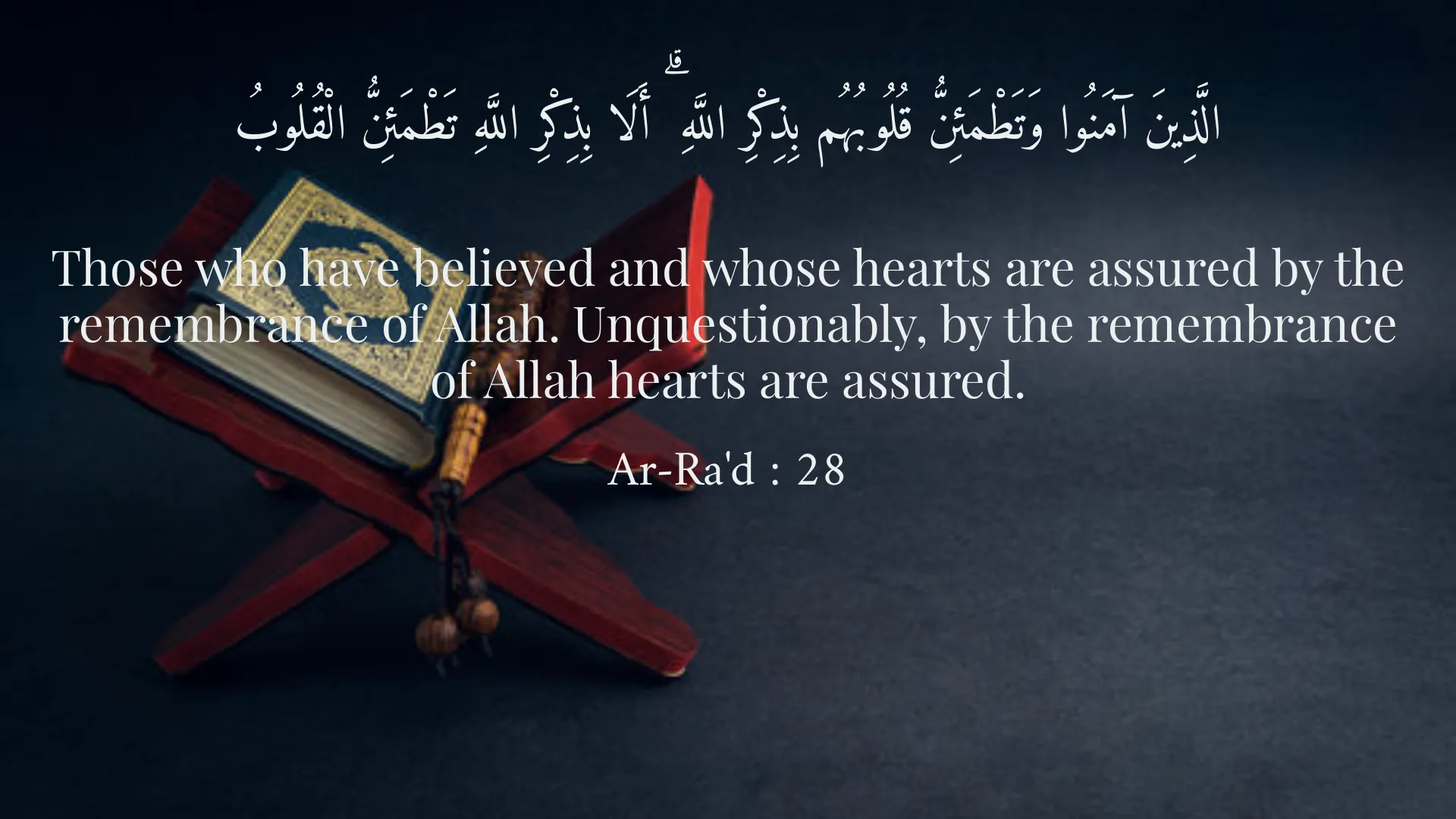
الَّذِينَ آمَنُوا وَتَطْمَئِنُّ قُلُوبُهُم بِذِكْرِ اللَّهِ ۗ أَلَا بِذِكْرِ اللَّهِ تَطْمَئِنُّ الْقُلُوبُ
Those who have believed and whose hearts are assured by the remembrance of Allah. Unquestionably, by the remembrance of Allah hearts are assured.
Ar-Ra'd : 28
وَمَا خَلَقْتُ الْجِنَّ وَالْإِنسَ إِلَّا لِيَعْبُدُونِ
And I did not create the jinn and mankind except to worship Me.
Adh-Dhariyat : 56
الْمَالُ وَالْبَنُونَ زِينَةُ الْحَيَاةِ الدُّنْيَا ۖ وَالْبَاقِيَاتُ الصَّالِحَاتُ خَيْرٌ عِندَ رَبِّكَ ثَوَابًا وَخَيْرٌ أَمَلًا
Wealth and children are the adornment of the worldly life. But the enduring good deeds are better to your Lord for reward and better for [one's] hope.
Al-Kahf : 46
Short Story
It is said that there was once a wealthy king who possessed every treasure imaginable, yet he constantly felt an emptiness in his heart. One day, he encountered a dervish clad in worn garments, whose face shone with joy and whose tongue was eloquent in the remembrance of God. The king asked him, 'O man of God, with all my blessings and wealth, I find no peace, and my heart feels heavy. What is it that makes you, in your poverty, so joyful?' The dervish smiled and replied, 'O King, your treasures cannot fill your heart, for they are transient. But I have cultivated my heart with the remembrance of the Beloved, and what is cultivated with His remembrance fears no emptiness. When the heart is filled with the remembrance of Truth, there remains no room for sorrow.' The king took heed of his words and understood that the heart's disquiet stems from heedlessness of the Beloved, not from a lack of wealth.