Quranic Answer
The question of why one might experience a lack of enthusiasm or even boredom despite increasing acts of worship is a deeply reflective one, resonating with many individuals on their spiritual journeys. The Holy Quran, while not explicitly using the term "boredom" in relation to spiritual acts, offers profound and timeless guidance on the essence, purpose, and conditions necessary for worship to remain a vibrant, living connection rather than a sterile routine. These divine insights can illuminate the path to overcoming such feelings and fostering a more profound relationship with the Creator. Fundamentally, the Quran establishes that the primary objective of worship is the remembrance of Allah (Dhikrullah) and the establishment of a conscious, heartfelt connection with Him. In Surah Taha, verse 14, Allah states: “وَأَقِمِ الصَّلَاةَ لِذِكْرِي” (And establish prayer for My remembrance). This foundational verse teaches us that prayer, in its truest form, transcends mere physical movements or spoken words. It is an act of deep contemplation, a conscious recognition of Allah's presence, majesty, and bounties, and a reaffirmation of one's submission and gratitude. When the act of worship is reduced to a mechanical ritual, devoid of this conscious remembrance and connection, it naturally loses its spiritual vitality and can lead to feelings of dryness or disinterest. The "boredom" often signals a disconnect between the outward action and the inner state of the heart. Moreover, the Quran places significant emphasis on the internal state of humility (khushu') and sincerity (ikhlas) during worship. In Surah Al-Baqarah, verse 45, Allah says: “وَاسْتَعِينُوا بِالصَّبْرِ وَالصَّلَاةِ ۚ وَإِنَّهَا لَكَبِيرَةٌ إِلَّا عَلَى الْخَاشِعِينَ” (And seek help through patience and prayer, and indeed, it is difficult except for the humbly submissive [to Allah]). This powerful verse reveals that prayer, despite its inherent beauty and benefit, can feel arduous or burdensome if performed without genuine humility and a receptive heart. The term "khashi'in" refers to those whose hearts are soft, attentive, and fully engaged in their devotion. When worship is performed out of mere obligation, routine, or even as a display, rather than from a place of heartfelt submission and longing for Allah, it loses its spiritual efficacy and can become a source of fatigue. True worship is meant to be a refuge, a source of strength, and a profound solace, not a heavy chore. The divine assurance of tranquility through remembrance is another crucial point in the Quran. In Surah Ar-Ra'd, verse 28, Allah declares: “الَّذِينَ آمَنُوا وَتَطْمَئِنُّ قُلُوبُهُم بِذِكْرِ اللَّهِ ۗ أَلَا بِذِكْرِ اللَّهِ تَطْمَئِنُّ الْقُلُوبُ” (Those who have believed and whose hearts are assured by the remembrance of Allah. Unquestionably, by the remembrance of Allah hearts are assured). If feelings of restlessness or boredom creep into our worship, it serves as a gentle reminder that our hearts may not be fully immersed in this remembrance. It is an invitation to pause, reflect, and seek a deeper understanding of the words we utter and the actions we perform. Engaging intellectually and emotionally with the meaning of the Quran, pondering Allah's attributes, and reflecting on His countless blessings can transform worship from a routine into a deeply enriching experience that fills the heart with peace and contentment. Furthermore, the wisdom of Islam, as reflected in the Quran and Sunnah, promotes a balanced approach to all aspects of life. While increasing worship is highly commendable, the faith also advocates against spiritual extremism that can lead to burnout or neglect of other essential duties. The Prophet Muhammad (peace be upon him) himself cautioned against over-exertion that could lead to spiritual exhaustion. A holistic spiritual life encompasses not only ritual worship but also seeking knowledge, serving humanity, maintaining family ties, upholding justice, and ensuring adequate rest and self-care. When our spiritual practice becomes all-consuming to the point of imbalance, it can inadvertently diminish the joy and focus required for deep devotion. A well-rounded life ensures that our spiritual practices remain vibrant, sustainable, and genuinely fulfilling. To mitigate feelings of ennui or a lack of zest in worship, the Quran implicitly guides us towards several remedies: 1. Renewing Intention (Niyyah): Consistently bringing conscious awareness to the intention behind each act of worship – performing it purely for Allah's pleasure, out of love, gratitude, and sincere submission – can transform a mere habit into a profound act of devotion. 2. Seeking Deeper Understanding: Investing time in learning the meanings of Quranic verses, prophetic supplications, and the underlying wisdom of Islamic rituals can elevate worship from rote recitation to meaningful dialogue with the Divine. 3. Prioritizing Quality: While quantity of worship is good, its quality is paramount. A prayer performed with genuine khushu' and full presence of heart, even if shorter, yields far greater spiritual benefit than a longer one performed mechanically. 4. Diversifying Spiritual Practices: Engaging in various forms of remembrance (dhikr), thoughtful recitation of the Quran, heartfelt supplication (du'a), acts of charity, contemplation of Allah's creation, and pursuit of beneficial knowledge can refresh spiritual energy and prevent monotony. 5. Self-Reflection and Repentance: Sometimes, feelings of spiritual dryness can signal underlying sins or a need for spiritual renewal. Regular self-reflection, seeking forgiveness (istighfar), and renewing one's commitment to Allah can cleanse the heart and rekindle enthusiasm. 6. Patience and Consistency: Spiritual growth is a continuous journey with its peaks and valleys. Maintaining patience, perseverance, and consistency in worship, even during challenging phases, is key. Such feelings are not failures but opportunities for deeper introspection and growth. In summary, experiencing a lack of enthusiasm during worship, even when increasing its volume, serves as an invaluable invitation to shift focus from the outward performance to the inward transformation. The Holy Quran consistently guides us towards a worship that is a living, conscious connection with Allah, deeply rooted in sincere remembrance, profound humility, and an earnest quest for inner tranquility. By embracing these Quranic principles, we can transcend mere routine, turning potential boredom into a source of enduring spiritual joy, profound peace, and an ever-deepening bond with our benevolent Creator.
Related Verses
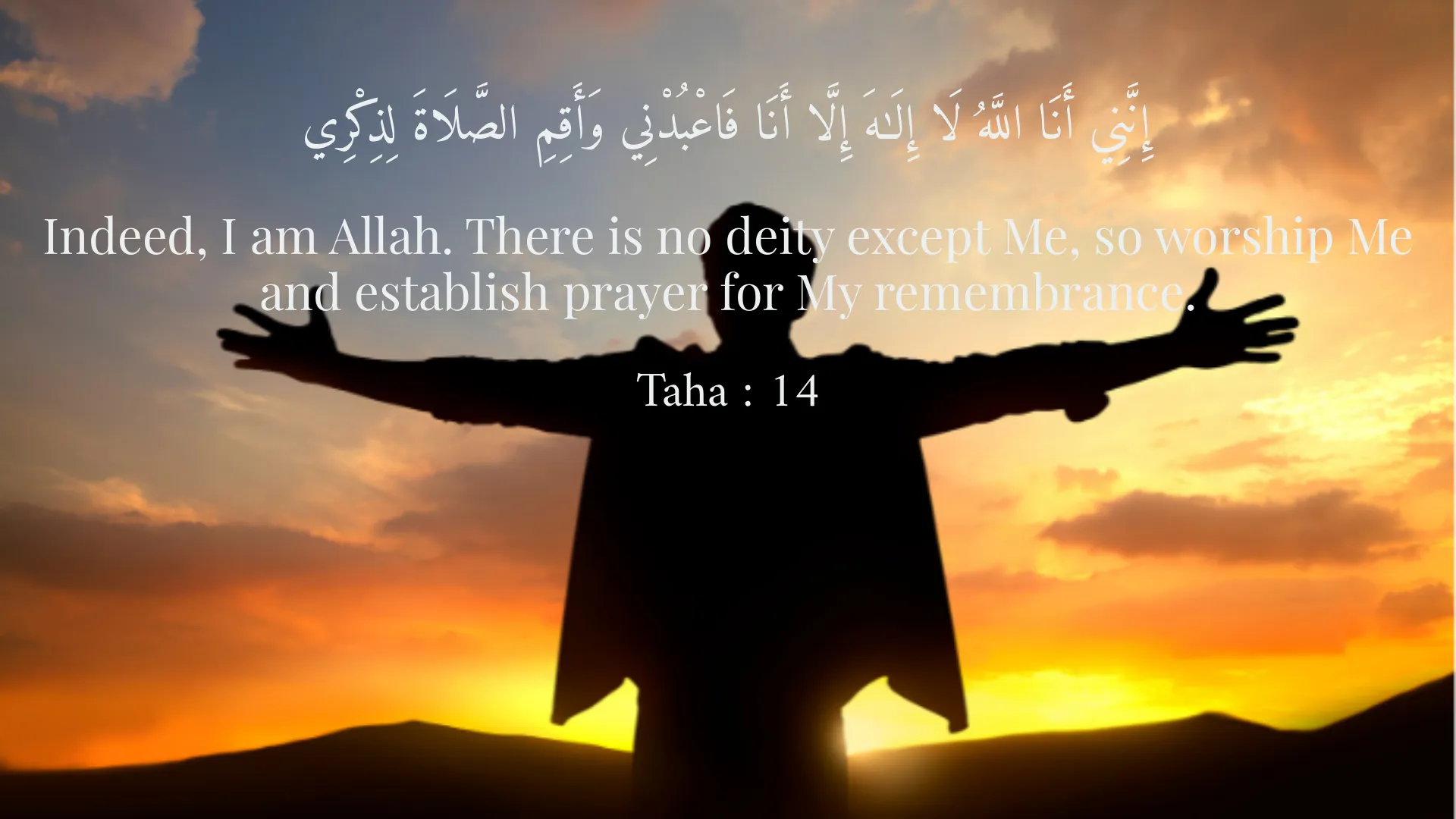
إِنَّنِي أَنَا اللَّهُ لَا إِلَٰهَ إِلَّا أَنَا فَاعْبُدْنِي وَأَقِمِ الصَّلَاةَ لِذِكْرِي
Indeed, I am Allah. There is no deity except Me, so worship Me and establish prayer for My remembrance.
Taha : 14
وَاسْتَعِينُوا بِالصَّبْرِ وَالصَّلَاةِ ۚ وَإِنَّهَا لَكَبِيرَةٌ إِلَّا عَلَى الْخَاشِعِينَ
And seek help through patience and prayer, and indeed, it is difficult except for the humbly submissive [to Allah].
Al-Baqarah : 45
الَّذِينَ آمَنُوا وَتَطْمَئِنُّ قُلُوبُهُم بِذِكْرِ اللَّهِ ۗ أَلَا بِذِكْرِ اللَّهِ تَطْمَئِنُّ الْقُلُوبُ
Those who have believed and whose hearts are assured by the remembrance of Allah. Unquestionably, by the remembrance of Allah hearts are assured.
Ar-Ra'd : 28
Short Story
One day, a devout dervish engaged in extensive worship, fasting throughout the days and spending nights in prayer. Yet, despite all his efforts, he found no peace or sweetness in his heart, and at times, he felt weary of these practices. He shared his condition with a wise elder. The elder smiled and said, "O dervish, you are sowing seeds, but on dry, lifeless ground. Worship without presence of heart is like a body without a soul. I recall a wise man who was asked, 'Which worship is best?' He replied, 'That which springs from the heart and is intended purely for proximity to the Truth, even if it be little.' Have you not seen that a single drop of rain is sweeter to a thirsty person than a flood to one who is satiated? Do not increase worship so much that you become weary; rather, increase its quality so that you may rejoice. Revive your heart with the meanings of Quranic verses and, in every prostration and bowing, envision yourself before the majesty of the Lord. Then you will see that your least worship brings the greatest joy and tranquility to your soul." The dervish took the elder's counsel to heart. From that day, instead of adding to the number of his prostrations, he focused on their quality and the presence of his heart. Before long, a sea of tranquility surged within him.