Quranic Answer
Feeling unmotivated towards good deeds and acts of worship is a common, yet challenging, human experience that many believers encounter throughout their lives. This state, sometimes referred to as 'futur' or spiritual lethargy, has multiple causes and remedies from the perspective of the Holy Quran, which can help us identify this lack of motivation and overcome it. The Quran, as a guide for all aspects of human life, pays close attention to the spiritual and psychological intricacies of human beings, offering pathways to achieve inner peace and spiritual vitality. One of the most significant reasons the Quran points to is the whispers of Satan. Satan is the overt enemy of humanity and constantly strives to divert people from the path of truth and goodness. In Surah Al-Baqarah, verse 268, Allah states: "Satan promises you poverty and enjoins upon you immorality, but Allah promises you forgiveness from Him and bounty. And Allah is all-Encompassing and Knowing." This verse illustrates how Satan discourages individuals from performing good deeds by instilling fear of worldly consequences or by beautifying sins and idleness. These whispers can manifest as feelings of tiredness, boredom, or procrastination regarding virtuous actions. Another reason is excessive attachment to worldly life and heedlessness of the Hereafter. The Holy Quran repeatedly warns humanity against being enchanted by the glitter of this world and forgetting the primary purpose of their creation. In Surah Al-Hadid, verse 20, we read: "Know that the life of this world is only play and amusement, pomp and mutual boasting among you, and rivalry in respect of wealth and children. [It is] like the example of a rain whose [resulting] plant growth pleases the disbelievers; then it dries and you see it turned yellow; then it becomes [scattered] debris. And in the Hereafter is severe punishment and forgiveness from Allah and approval. And what is the life of this world except the enjoyment of delusion." This verse likens worldly life to play, amusement, and vanity, which ultimately perishes. When a person dedicates all their concerns and efforts to this world, their motivation for deeds related to the Hereafter and benevolent actions decreases, as they perceive the rewards of the afterlife as distant and intangible. Furthermore, heedlessness itself – forgetting the remembrance of Allah and the true purpose of life – can be a significant factor in demotivation. In Surah Al-A'raf, verse 179, the Quran describes those who have hearts but do not understand with them, eyes but do not see with them, and ears but do not hear with them (meaning they are heedless) as astray and like cattle, or even more astray. Heedlessness creates a veil over the heart, preventing the perception of spiritual pleasure and the motivation to engage in good deeds. The Quran provides numerous practical and spiritual remedies to combat this demotivation. One of the most fundamental is the continuous remembrance of Allah (Dhikr). In Surah Ar-Ra'd, verse 28, it is stated: "Those who have believed and whose hearts are assured by the remembrance of Allah. Unquestionably, by the remembrance of Allah hearts are assured." The remembrance of Allah not only brings tranquility but also provides the necessary motivation and energy for acts of worship and good deeds. When a person constantly perceives themselves in the presence of Allah, they are less likely to fall into lethargy. Patience (Sabr) and prayer (Salah) are also presented as two main pillars for seeking Allah's help. In Surah Al-Baqarah, verse 153, we read: "O you who have believed, seek help through patience and prayer. Indeed, Allah is with the patient." Prayer is a direct connection with the Creator and strengthens one's spiritual energy. Patience means steadfastness on the path of truth and resilience against difficulties and temptations; this patience includes enduring acts of obedience and refraining from sins. Reflection and contemplation on divine verses and the signs of Allah's power in creation are other factors that can increase human motivation. When a person comprehends the grandeur of existence and Allah's wisdom, their eagerness and desire for servitude and good deeds grow. Additionally, continuous repentance (Tawbah) and seeking forgiveness cleanse the heart from the rust of sins, opening the way for divine blessings and increased motivation. Finally, the Quran emphasizes the necessity of jihad al-nafs (striving against one's inner self) and combating negative internal desires. In Surah Al-Ankabut, verse 69, we read: "And those who strive for Us – We will surely guide them to Our ways. And indeed, Allah is with the doers of good." This striving includes efforts to overcome laziness, lethargy, and demotivation. With continuous resolve and effort, one can overcome this state and taste the sweet pleasure of performing good deeds and drawing closer to Allah. Therefore, if we sometimes feel unmotivated towards goodness, we should look within ourselves, identify the causes, and rely on the teachings of the Holy Quran, seeking help through the remembrance of Allah, patience, prayer, and repentance, to regain our zeal for serving the Creator and His creation. This path is an ongoing journey that requires continuous attention and effort.
Related Verses
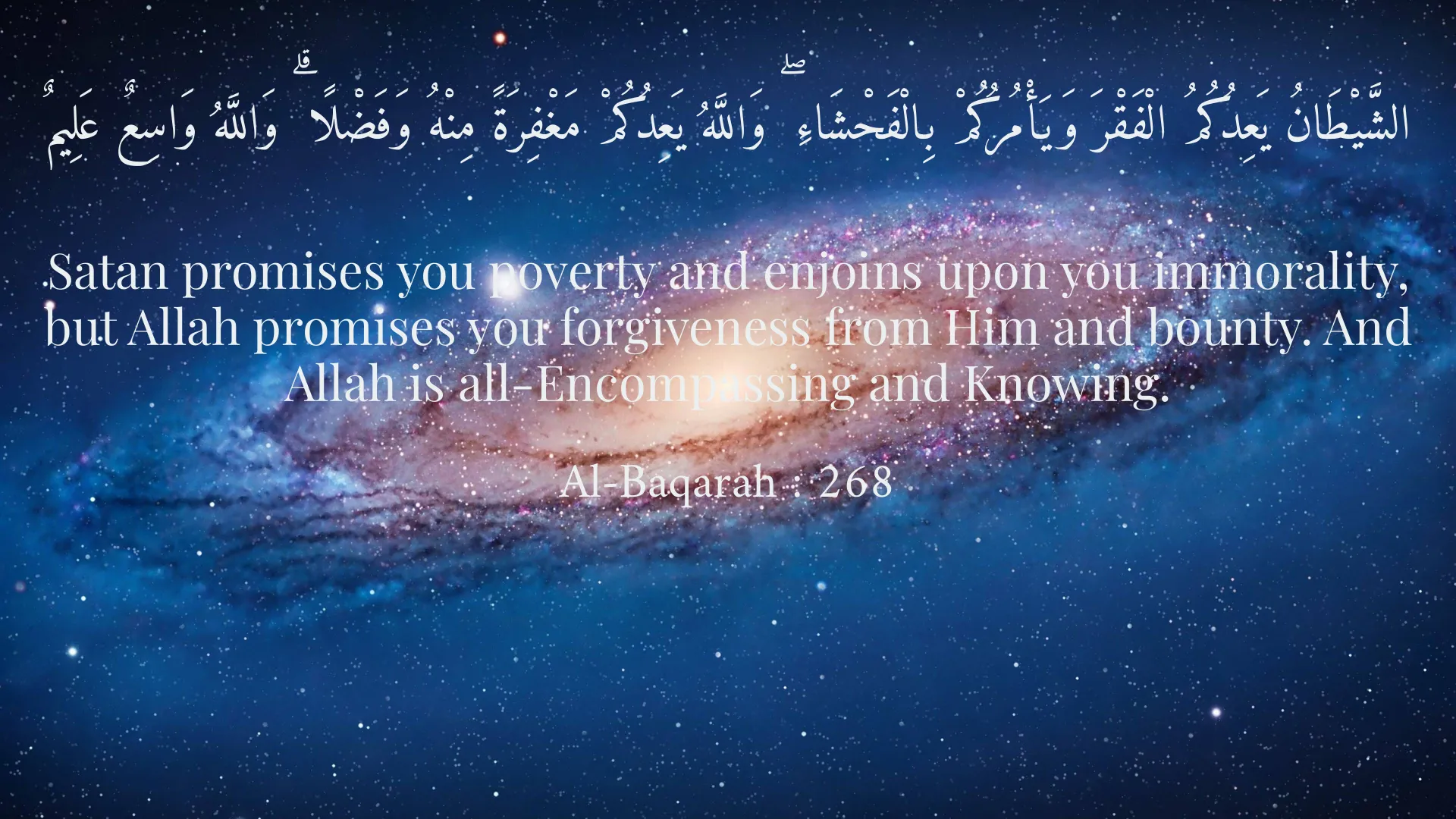
الشَّيْطَانُ يَعِدُكُمُ الْفَقْرَ وَيَأْمُرُكُمْ بِالْفَحْشَاءِ ۖ وَاللَّهُ يَعِدُكُمْ مَغْفِرَةً مِنْهُ وَفَضْلًا ۗ وَاللَّهُ وَاسِعٌ عَلِيمٌ
Satan promises you poverty and enjoins upon you immorality, but Allah promises you forgiveness from Him and bounty. And Allah is all-Encompassing and Knowing.
Al-Baqarah : 268
الَّذِينَ آمَنُوا وَتَطْمَئِنُّ قُلُوبُهُمْ بِذِكْرِ اللَّهِ ۗ أَلَا بِذِكْرِ اللَّهِ تَطْمَئِنُّ الْقُلُوبُ
Those who have believed and whose hearts are assured by the remembrance of Allah. Unquestionably, by the remembrance of Allah hearts are assured.
Ar-Ra'd : 28
يَا أَيُّهَا الَّذِينَ آمَنُوا اسْتَعِينُوا بِالصَّبْرِ وَالصَّلَاةِ ۚ إِنَّ اللَّهَ مَعَ الصَّابِرِينَ
O you who have believed, seek help through patience and prayer. Indeed, Allah is with the patient.
Al-Baqarah : 153
وَالَّذِينَ جَاهَدُوا فِينَا لَنَهْدِيَنَّهُمْ سُبُلَنَا ۚ وَإِنَّ اللَّهَ لَمَعَ الْمُحْسِنِينَ
And those who strive for Us – We will surely guide them to Our ways. And indeed, Allah is with the doers of good.
Al-Ankabut : 69
Short Story
It is narrated that in ancient times, in a city full of blessings, lived a man named Farhad, who had a pure heart and good intentions, yet sometimes laziness would overcome him, preventing him from performing good deeds. One day, he approached a wise sage and complained about his condition. The sage, with a kind smile, said: "O Farhad! Do not imagine that stagnant water remains clear and pleasant. Just as water spoils and smells foul, so too does the heart, if it does not flow in the path of goodness and effort, it becomes turbid, and motivation departs from it." The sage continued: "Have you ever seen a bird that does not use its wings and yet hopes to fly?" Farhad shook his head. The sage said: "Then rise and spread the wings of determination and remembrance of God. Every good deed that begins with His remembrance is like a hidden seed planted in the heart's soil, transforming into a fruitful tree whose shade is peace and whose fruit is sweet. Even the smallest step on the path of goodness illuminates the heart and brings light to life." Upon hearing these words, Farhad's heart brightened, and he understood that motivation is like a fire that must be constantly fueled by the logs of remembrance and good deeds. From then on, whenever he felt lethargic, he recalled the sage's words and, through the remembrance of God and even a small effort, he dispelled his lack of motivation and tasted the sweetness of fulfilling his duty and helping creation. Indeed, "Whoever detaches his heart from the world and turns towards the Truth will find peace."