Quranic Answer
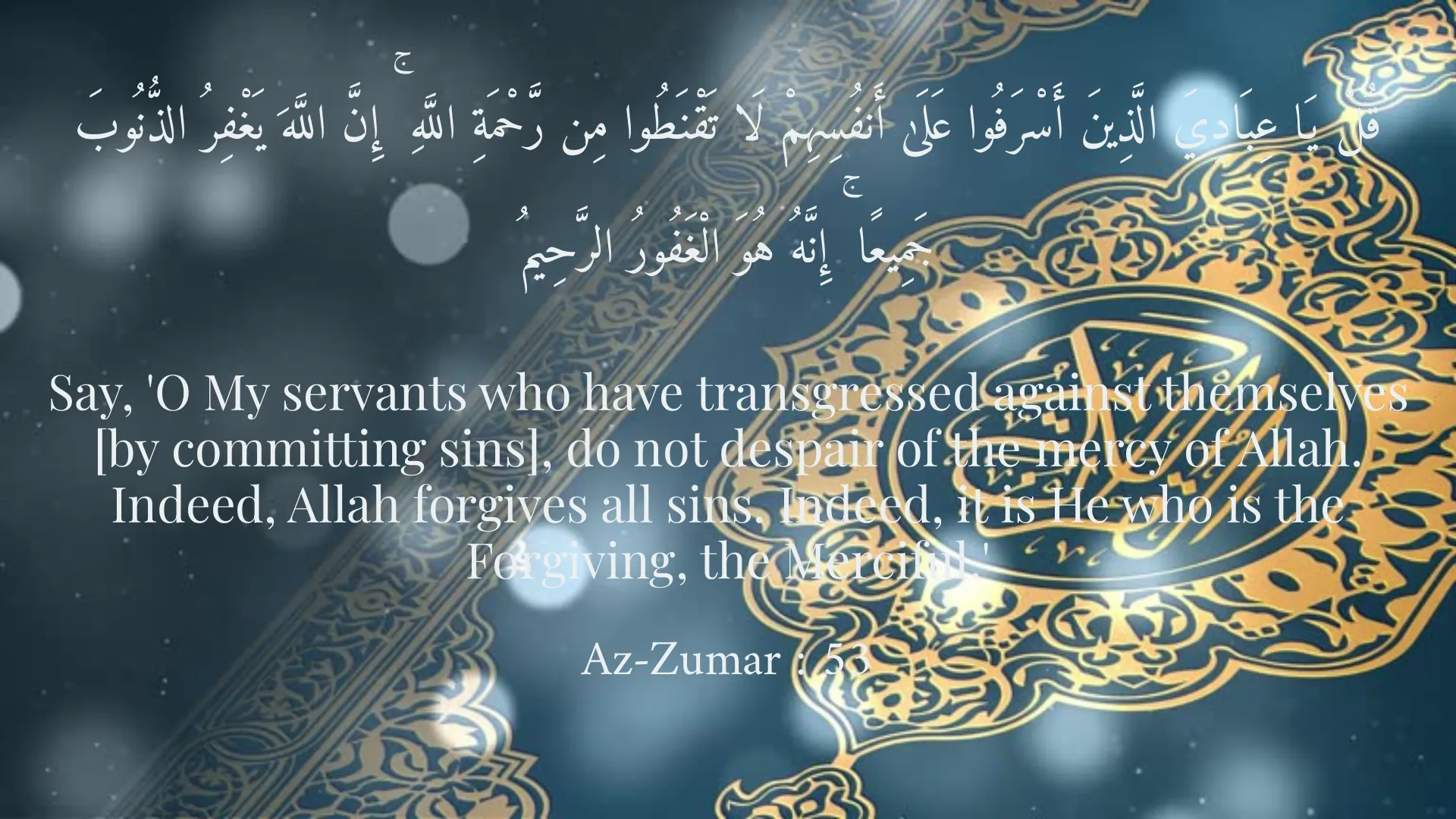
Feeling unworthy of God's love is a common human experience, often stemming from past mistakes, sins, personal shortcomings, or even the whispers of Satan. These feelings can lead an individual to despair and distance themselves from the boundless mercy of God. However, a deep contemplation of the teachings of the Holy Quran reveals that this perspective contradicts the very essence of divine mercy and forgiveness, which is manifest in numerous verses. Allah introduces Himself in the Quran with attributes such as 'Ar-Rahman' (The Most Gracious) and 'Ar-Rahim' (The Most Merciful), indicating the comprehensiveness and depth of His love and compassion. One of the most crucial verses in the Quran that directly addresses this feeling of despair is Surah Az-Zumar (39:53): "Say, 'O My servants who have transgressed against themselves [by committing sins], do not despair of the mercy of Allah. Indeed, Allah forgives all sins. Indeed, it is He who is the Forgiving, the Merciful.'" This verse serves as a beacon of light for despairing hearts and a divine guarantee of forgiveness, even for those who have committed grave sins. The phrase "do not despair of the mercy of Allah" explicitly forbids hopelessness and emphasizes that Allah's mercy is limitless and all-encompassing. The feeling of unworthiness sometimes arises from a perfectionist and unrealistic view of oneself. Humans are inherently fallible; making mistakes is a part of the human condition. Allah created us with these weaknesses so that we would have the capacity for repentance, returning to Him, and continuous self-improvement. The goal of life is not to achieve absolute sinlessness but to strive for closeness to Allah and constant rectification. Allah loves those who constantly repent and turn back to Him, as stated in Surah Al-Baqarah (2:222): "Indeed, Allah loves those who are constantly repentant and loves those who purify themselves." This verse demonstrates that divine love is not conditional on being flawless, but rather on the heart's inclination to return and purify itself. Furthermore, this feeling of hopelessness can sometimes originate from satanic whispers. Satan constantly tries to divert humanity from the straight path, and one of his most effective methods is to inject despair and hopelessness regarding divine mercy. He endeavors to convince individuals that their sins are too great to ever be forgiven, or that they are too impure to be worthy of Allah's love and favor. In Surah An-Nas (114:4-5), Allah seeks refuge for us from "the evil of the retreating whisperer - who whispers [evil] into the breasts of mankind." Combating these negative thoughts is part of the greater jihad (struggle against the self), which requires strengthening faith and relying on Allah. Allah is so close to humanity that nothing can remove an individual from the sphere of His divine mercy unless they consciously turn away from it. In Surah Qaf (50:16), we read: "And We have already created man and know what his soul whispers to him, and We are closer to him than [his] jugular vein." This closeness signifies Allah's complete awareness of our inner states and His readiness to accept us, even when we feel distant. He not only forgives our sins but also rewards sincere repentance and transforms evil deeds into good ones, as mentioned in Surah Al-Furqan (25:70): "Except for those who repent, believe, and do righteous deeds - for them Allah will change their evil deeds into good ones. And Allah is ever Forgiving and Merciful." This verse illustrates the profound depth of divine mercy and generosity, where even sins can be transformed into good deeds. To overcome this feeling of despair and unworthiness, it is essential to focus on several points: First, gaining a deeper understanding of Allah's attributes, especially His mercy and forgiveness. Second, trusting in Allah's promises of forgiveness for those who repent. Third, performing righteous deeds and striving to compensate for mistakes, as good deeds erase bad ones. Fourth, consistently engaging in remembrance (Dhikr) and supplication (Du'a), for the remembrance of Allah brings peace to hearts and strengthens our connection with the ultimate source of love. Fifth, actively resisting despair and satanic whispers, and reminding oneself that Allah's mercy is vaster than anything else. Never forget that Allah is far more merciful than we can imagine, and the door of His mercy is always open to His servants, even if they have erred a thousand times. All that is required is to return to Him with a repentant heart and hope for His forgiveness to experience His boundless and eternal love. This act of returning and seeking help is itself a sign of faith and divine guidance that has led you back to Him. Therefore, never consider yourself inherently unworthy of His love, but rather, always consider yourself in need of His love and cling to that hope, for He never deprives His servants of His mercy.
Related Verses
قُلْ يَا عِبَادِيَ الَّذِينَ أَسْرَفُوا عَلَىٰ أَنفُسِهِمْ لَا تَقْنَطُوا مِن رَّحْمَةِ اللَّهِ ۚ إِنَّ اللَّهَ يَغْفِرُ الذُّنُوبَ جَمِيعًا ۚ إِنَّهُ هُوَ الْغَفُورُ الرَّحِيمُ
Say, 'O My servants who have transgressed against themselves [by committing sins], do not despair of the mercy of Allah. Indeed, Allah forgives all sins. Indeed, it is He who is the Forgiving, the Merciful.'
Az-Zumar : 53
إِنَّ اللَّهَ يُحِبُّ التَّوَّابِينَ وَيُحِبُّ الْمُتَطَهِّرِينَ
Indeed, Allah loves those who are constantly repentant and loves those who purify themselves.
Al-Baqarah : 222
وَلَقَدْ خَلَقْنَا الْإِنسَانَ وَنَعْلَمُ مَا تُوَسْوِسُ بِهِ نَفْسُهُ ۖ وَنَحْنُ أَقْرَبُ إِلَيْهِ مِنْ حَبْلِ الْوَرِيدِ
And We have already created man and know what his soul whispers to him, and We are closer to him than [his] jugular vein.
Qaf : 16
Short Story
They say there was a man, heartbroken and laden with sins, who considered himself unworthy of any grace or kindness due to his numerous transgressions. One day, alone, he was whispering to his Lord, but each time he intended to pray, an inner voice held him back, saying: "Where are you, and where is the station of Divine love? You, who have committed so many sins!" Nights he went to sleep with the thought that perhaps the door of God's mercy was closed to him. Until one night, he dreamt he stood in a lush garden before a magnificent gate of light. Each step he took towards it, a voice whispered in his ear, "Go back! You are not worthy to enter this presence." Suddenly, a sweet breeze blew, and he heard a comforting, serene voice say: "O My servant! Even if you break a hundred times and fall, rise again and step forward, for the door of My mercy is never closed to My servants." The man awoke, his heart filled with hope and peace. He realized that the feeling of despair had been nothing but a whisper, and that Divine mercy was vaster than all his sins. So, with a confident heart and sincere repentance, he returned to his Lord and tasted His boundless love.