Quranic Answer
This is a profound and honest question that many individuals, even genuinely devout ones, might encounter at various points in their lives. At first glance, religiosity appears as a path to tranquility, meaning, and spiritual elevation. So, why might this path sometimes bring feelings of fatigue and boredom? To find an answer, we must delve deeper into the teachings of the Holy Quran and understand how to comprehend and overcome this feeling. The first and most crucial point is that Almighty Allah, in the Holy Quran, presents religion as something easy and convenient (yusra), not difficult or burdensome (usra). In Surah Al-Baqarah, verse 185, it states: "Allah intends for you ease and does not intend for you hardship." This foundational verse indicates that the essence of religion is built upon human nature and ease. Therefore, if we experience fatigue, the issue might lie in our understanding or practice, not in the essence of religion itself. One of the primary reasons religiosity might seem tiresome is a misunderstanding of the concepts of "worship" and "religiosity." Often, we reduce worship merely to performing a series of rituals and external acts: praying, fasting, performing Hajj. While these are incredibly significant pillars of faith, religiosity is not limited to these actions. True religiosity is a comprehensive way of life that permeates all aspects of human existence—from inner intentions and thoughts to social interactions, work, family, and even leisure. If our perception of religion is reduced solely to a set of "do's and don'ts" and "duties" performed without deep understanding and heartfelt connection, it is natural for feelings of boredom and weariness to emerge. Worship, servitude, and living according to divine teachings should, in fact, be a source of peace and vitality. The Quran, in Surah Ar-Ra'd, verse 28, states: "Unquestionably, by the remembrance of Allah hearts are assured." This assurance is the antithesis of fatigue and boredom. If the remembrance of Allah diminishes in our lives, our hearts will inevitably suffer from anxiety and apathy. Another reason is a lack of sincerity and impure intentions. Sometimes, our religious acts are influenced by external factors such as showing off, gaining social status, or even fear of hell and hope for heaven, performed without inner love and enthusiasm. When the intention is not purely for the sake of Allah's pleasure, the act transforms into a heavy burden. The Holy Quran repeatedly emphasizes sincerity (ikhlas). The Prophet Muhammad (peace be upon him) also said, "Indeed, actions are by intentions." When our intention is merely to fulfill a duty rather than to establish a profound connection with the Creator, weariness is a natural outcome. The human self (nafs) also plays a significant role in this feeling of fatigue. The nafs constantly gravitates towards comfort, immediate pleasures, and escaping responsibilities. Religiosity necessitates jihad al-nafs—the struggle against irrational inner desires, laziness, temptations, and bad habits. This struggle, in itself, can seem difficult and overwhelming. However, the Quran repeatedly indicates that this striving is for one's own benefit, and its rewards return to oneself. In Surah Al-Ankabut, verse 6, it says: "And whoever strives only strives for [the benefit of] himself. Indeed, Allah is free from need of the worlds." While this struggle may appear difficult on the surface, its result is growth, elevation, and the attainment of lasting peace. If we fail to see this struggle as an opportunity for growth and merely perceive it as an obligation, feelings of fatigue and ineffectiveness will arise. Another contributing factor is the lack of deep understanding of the philosophy behind divine rulings and wisdom. When individuals are unaware of the wisdom behind religious acts, performing them becomes a mechanical process devoid of spirit and meaning. For instance, prayer is not merely movements and recitations; it is an opportunity for the soul's ascension and direct communion with God. Fasting is not just abstaining from food and drink; it is a training for piety, self-purification, and empathy with the deprived. Without this deep understanding, prayer can become a heavy burden, and fasting an aimless hunger and thirst. Studying and pondering the Quran, the Sunnah of the Prophet (PBUH), and the teachings of the Ahl al-Bayt can enhance this understanding and unveil hidden wisdoms. Furthermore, our environment and surroundings can be influential. Sometimes, associating with negative, indifferent individuals, or those who portray religion in a dry and spiritless manner, can reinforce feelings of weariness. Conversely, companionship with believing, sincere, and vibrant individuals whose spiritual light is evident can be energizing and boost motivation. The Quran emphasizes the importance of associating with the righteous. Another crucial point the Quran addresses is the consequences of turning away from the remembrance of Allah. In Surah Taha, verse 124, it states: "And whoever turns away from My remembrance - indeed, he will have a difficult life, and We will gather him on the Day of Resurrection blind." This "difficult life" (ma'ishatan danka) can be precisely that feeling of fatigue, meaninglessness, and emptiness that sometimes infiltrates the hearts of those far from the remembrance of Allah or those who have become weary of the path of religion. True religiosity is the solution to escape this hardship and enter into a "good life" (hayatan tayyibah). To overcome this feeling of weariness, the Quran and Sunnah offer practical solutions: 1. Sincerity of Intention (Ikhlas): Perform every act of worship solely for the pleasure of Allah and with the intention of drawing closer to Him. 2. Pondering the Quran (Tadabbur): Read the divine verses with contemplation, not just recitation. Strive to understand their meaning and message and act upon them. The Quran is a book of life, not merely a sacred text. 3. Increasing Knowledge (Ma'rifah): Study the philosophy of religious rulings, the conduct of the infallible (Ma'sumeen), and the truths of religion to deepen your faith. 4. Renewing Heartfelt Connection: Endeavor to perform prayers and other acts of worship with presence of heart (khushu), as if you are conversing directly with Allah. 5. Gradual Growth: Religiosity is a journey, not a destination. It is not necessary for everything to be perfect from the start. Progress step by step and find joy in small achievements. 6. Accepting Fluctuations: Faith, like human morale, has its ups and downs. Sometimes we have more enthusiasm, sometimes less. The important thing is not to abandon our duties during periods of low spirits and not to cut off our connection. 7. Companionship with the Righteous: Associating with faithful and pious individuals whose lives exemplify practical religiosity can be inspiring. 8. Prayer and Seeking Help from Allah (Du'a and Isti'anah): Ask Allah to let you taste the sweetness of faith and to keep you steadfast on the path of servitude. Ultimately, feeling weary of religiosity can be a warning sign—a signal to reassess our approach, intention, and understanding of religion. Religion is a path to true perfection and peace, and it should never become a heavy burden. By returning to Quranic principles, deepening our knowledge, and being sincere in our intentions, we can once again taste the sweetness of faith and continue the journey of servitude with enthusiasm and vitality. This path is an infinitely beautiful journey where the further we advance, the more new discoveries and profound joys we will experience, ultimately achieving the "good life" promised in the Quran. Let us remember that Allah is too Merciful to intend anything but good and ease for us.
Related Verses
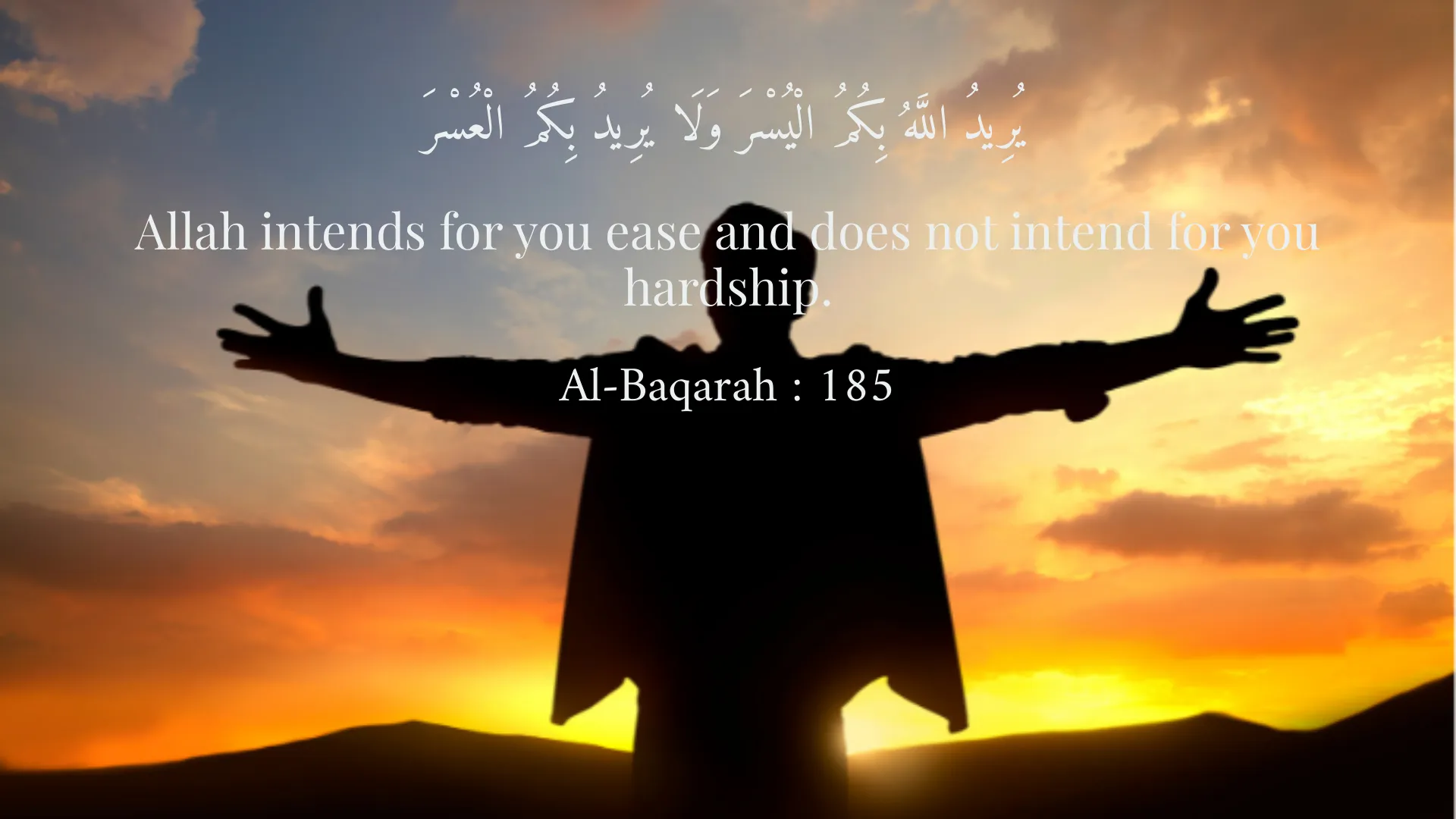
يُرِيدُ اللَّهُ بِكُمُ الْيُسْرَ وَلَا يُرِيدُ بِكُمُ الْعُسْرَ
Allah intends for you ease and does not intend for you hardship.
Al-Baqarah : 185
الَّذِينَ آمَنُوا وَتَطْمَئِنُّ قُلُوبُهُم بِذِكْرِ اللَّهِ ۗ أَلَا بِذِكْرِ اللَّهِ تَطْمَئِنُّ الْقُلُوبُ
Those who have believed and whose hearts are assured by the remembrance of Allah. Unquestionably, by the remembrance of Allah hearts are assured.
Ar-Ra'd : 28
وَمَنْ أَعْرَضَ عَن ذِكْرِی فَإِنَّ لَهُ مَعِیشَةً ضَنكًا وَنَحْشُرُهُ یَوْمَ الْقِیَامَةِ أَعْمَىٰ
And whoever turns away from My remembrance - indeed, he will have a difficult life, and We will gather him on the Day of Resurrection blind.
Taha : 124
Short Story
From Saadi’s Bustan and Golestan, many stories and anecdotes can be found that relate to the state of the heart, the sincerity of intention, and the impact of one's perspective on the difficulty or ease of matters. Although Saadi does not directly address "fatigue from religiosity," his wisdom regarding purity and hypocrisy, and the difference between outward appearance and inner reality, can be illuminating. One day, a dervish was wandering through the alleys and bazaars, constantly uttering the remembrance of God. His appearance was exceedingly humble and ascetic, wearing patched garments and having disheveled hair. People would see him and say, "What an extraordinary man this dervish is! How can he, with all this hardship and asceticism, remain steadfast on the path of God every day?" Some praised him, while others, in their hearts, considered him a tiresome and melancholic person, as he was perpetually engaged in remembrance and shunned worldly appearances. One day, a wealthy man, who owned a luxurious house and led a dazzling life, saw the dervish. The wealthy man pondered: "With all my wealth, servants, and retinue, I sometimes feel weary of my life, and nothing brings me joy. But how is it that this dervish, despite all his poverty and asceticism, seems perpetually joyful and serene? Does his religiosity not tire him?" After some time, the wealthy man decided to approach the dervish and ask him the secret of his tranquility. He went to the dervish and said, "O devout sage, it astonishes me that despite all your struggles and hardships in the way of God, you never tire of servitude. But I, who am immersed in luxury and blessings, sometimes feel weary of my days and daily tasks, and find no pleasure in them. What is the secret of your state that you never taste the flavor of fatigue?" The dervish smiled and said, "O brother, you assume that I do not tire of servitude? Rather, this fatigue is a torment that overtakes a person due to ignorance and heedlessness. When you perform worldly tasks with worldly intentions, and attach your heart to them, whatever you do, if it does not reach its goal or fails, it will weary and disappoint you. But everything I do, from remembrance and prayer to eating bread and sleeping, I do for God, and my intention is Him. And since the intention is for Him, and He Himself is Rich and Independent, then any deed performed with His intention brings neither fatigue nor regret." The dervish continued: "My example and yours is like that of two potters, both making clay pots. One, with the intention of gaining worldly wealth, makes pots to sell and profit. If the market is dull, or his pot breaks, his heart breaks, and he becomes weary. But the other, if he makes pots with the intention of serving people, or even with the intention of creating beauty for God, if his pot breaks, his heart does not break. For his intention was beyond that pot and was tied to the satisfaction of the Truth. Fatigue comes from tying our intention to a material outcome or a worldly expectation." Saadi, in another anecdote, says: "Whoever has no pure intention in his work, will reap nothing but toil and regret." The dervish's words also conveyed this meaning. He added: "My friend, weariness on the path of religion arises when one views duties and acts of worship as a burden on their shoulders, rather than as a launching pad for their soul. When you sit in the mosque and pray, do not think that you have removed a burden from your shoulders, but rather imagine that you have spread your wings for flight. If the intention is pure and the heart present, then every remembrance and every prostration will bring not fatigue, but immense joy. I do not tire, because in every moment, it is as if I am conversing with and meeting my Beloved. And does anyone ever tire of meeting their Beloved?" The wealthy man was deeply moved by the dervish's words. He understood that the problem was not in the quantity of actions, but in the quality of intention and presence of heart. He returned home and tried to incorporate the intention of drawing closer to God into all aspects of his life, even in his business and managing his wealth. Gradually, he felt that his life was freed from its former boredom and aimlessness and had found a deeper meaning. He no longer felt weary of his wealth or his tasks, because he saw every action as a bridge leading to divine satisfaction. This anecdote from Saadi teaches us that the key to overcoming inner fatigue, whether in worldly or religious matters, lies in changing our perspective and purifying our intentions. When the heart is surrendered to the Truth, every hardship becomes easy, and every difficulty becomes sweet. And this is the very concept of ease in religion that the Holy Quran refers to.