Quranic Answer
Feeling tired or weary of a devout life is an experience that can affect many individuals, even sincere believers. This feeling does not necessarily indicate a weakness in faith; rather, it can serve as an opportunity for introspection, reassessment, and strengthening one's connection with God. The Holy Quran, with its profound insights into human nature and psychology, points to subtle aspects that can reveal the roots of this weariness and offer solutions to overcome it. One of the most significant reasons highlighted by the Quran is excessive worldly greed and forgetting the primary purpose of creation. In Surah Al-Hadid, verse 20, Allah states: "Know that the life of this world is only play and amusement and adornment and boasting among yourselves and competition in increase of wealth and children - like the example of a rain whose [resulting] plant growth pleases the tillers; then it dries and you see it [become] yellow; then it becomes [scattered] debris. And in the Hereafter is severe punishment and forgiveness from Allah and approval. And what is the life of this world except the enjoyment of delusion." This verse clearly illustrates that when a person's primary focus shifts to accumulating worldly possessions, seeking fame, engaging in material competitions, and pursuing fleeting pleasures, their heart gradually becomes devoid of spirituality, and a sense of emptiness and fatigue overwhelms them. A devout life, built upon principles of piety, contentment, and purpose-driven living for the Hereafter, stands in contrast to this worldly orientation. An individual whose heart is attached to the world may find it tiring to bear the apparent hardships of religion and to abstain from forbidden pleasures. This weariness is, in essence, a warning signal calling the person back to the right path and away from the delusions of worldly life. The second factor is insufficient attention to 'Dhikr Allah,' or the remembrance of God. In Surah Ar-Ra'd, verse 28, we read: "Those who believe and whose hearts find reassurance in the remembrance of Allah. Unquestionably, by the remembrance of Allah hearts are assured." When a person becomes heedless of God's remembrance, their heart experiences anxiety and turmoil. A devout life is not merely a collection of outward actions and rituals; it is a state of mindfulness and a continuous connection with the Divine. Prayer, Quranic recitation, supplication, and contemplation of divine verses are all means to remember God and bring tranquility to the heart. If this remembrance and heartfelt connection weaken, acts of worship can become burdensome duties, and the human spirit fails to find joy in them, leading to weariness and disillusionment. In other words, the quality of worship is more important than its quantity; if worship is not accompanied by sincerity and love, it will soon become tiresome. A third reason can be divine tests and trials. In Surah Al-Ankabut, verse 2, Allah asks: "Do people think that they will be left alone because they say, 'We believe,' and will not be tested?" A devout life is full of divine examinations and tribulations. Sometimes these tests manifest as economic hardships, illnesses, loss of loved ones, or social pressures. These trials can seem difficult and overwhelming for the believer, leading them towards fatigue and despair. However, the Quran emphasizes that these tests are meant to gauge the sincerity of faith and to elevate the ranks of believers. If one fails to understand the wisdom behind these trials and does not practice patience and reliance on God, they might grow weary of the burden of faith. In such circumstances, seeking help through patience and prayer (as stated in Surah Al-Baqarah, verse 153: "O you who have believed, seek help through patience and prayer. Indeed, Allah is with the patient.") can provide solace and strength. A fourth factor could be a lack of sincerity and the presence of 'Riya' (show-off) in one's actions. When good deeds are performed to gain others' attention or worldly prestige, rather than for the pleasure of Allah, spiritual enjoyment gradually diminishes. This not only leads to fatigue and disappointment but also negates the spiritual reward of the action. One must always purify their intention and remember that only Allah is worthy of all worship and praise. The fifth point is a misunderstanding of the concept of 'Jihad al-Nafs' (struggle against one's self). A devout life is a continuous effort to overcome the temptations of the commanding self (nafs al-ammarah) and Satan. Satan constantly tries to deviate humans from the right path by creating temptations and beautifying sins, preventing them from performing acts of worship. This inner struggle can sometimes be very taxing and lead to fatigue. However, this jihad is essential for spiritual growth and development, and its reward is immense. To overcome this weariness, the Quran offers practical solutions: strengthening the bond with the Quran through recitation, contemplation (tadabbur), and acting upon its teachings, as the Quran itself is described as a 'healing and mercy' for believers (Surah Al-Isra, verse 82); persistent remembrance and glorification of God (Dhikr and Tasbih); renewing intentions and purifying actions solely for divine pleasure; contemplating death and the Hereafter and the insignificance of worldly life compared to divine majesty; and seeking righteous companions who can support one on the path of truth. Furthermore, maintaining a balanced perspective on life and avoiding extremism in both religious and worldly matters is crucial. Islam is a religion of balance and moderation, discouraging excess in any field. Ultimately, fatigue from a devout life can be a sign that our soul needs replenishment and a deeper connection with the source of tranquility, the Almighty God. It is an opportunity to return to one's innate nature (fitra), renew the covenant with the Creator, and find true joy in servitude and closeness to God. This spiritual journey requires patience, perseverance, and seeking help from Allah. Whenever we feel such weariness, we should interpret it as an invitation from our soul to pause, reassess our path, and take steps with greater awareness and love towards the Divine.
Related Verses
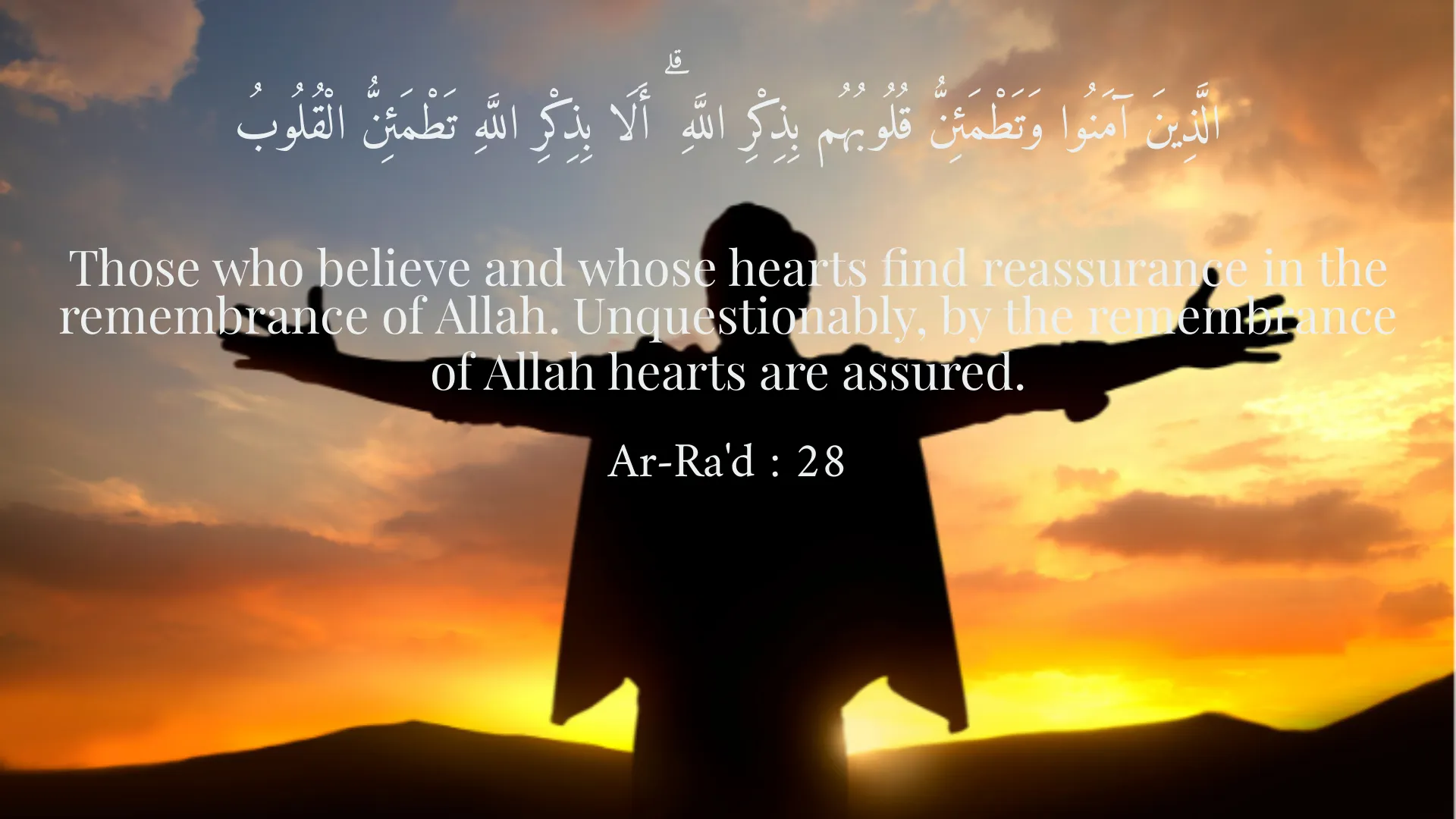
الَّذِينَ آمَنُوا وَتَطْمَئِنُّ قُلُوبُهُم بِذِكْرِ اللَّهِ ۗ أَلَا بِذِكْرِ اللَّهِ تَطْمَئِنُّ الْقُلُوبُ
Those who believe and whose hearts find reassurance in the remembrance of Allah. Unquestionably, by the remembrance of Allah hearts are assured.
Ar-Ra'd : 28
أَحَسِبَ النَّاسُ أَن يُتْرَكُوا أَن يَقُولُوا آمَنَّا وَهُمْ لَا يُفْتَنُونَ
Do people think that they will be left alone because they say, 'We believe,' and will not be tested?
Al-Ankabut : 2
اعْلَمُوا أَنَّمَا الْحَيَاةُ الدُّنْيَا لَعِبٌ وَلَهْوٌ وَزِينَةٌ وَتَفَاخُرٌ بَيْنَكُمْ وَتَكَاثُرٌ فِي الْأَمْوَالِ وَالْأَوْلَادِ ۖ كَمَثَلِ غَيْثٍ أَعْجَبَ الْكُفَّارَ نَبَاتُهُ ثُمَّ يَهِيجُ فَتَرَاهُ مُصْفَرًّا ثُمَّ يَكُونُ حُطَامًا ۚ وَفِي الْآخِرَةِ عَذَابٌ شَدِيدٌ وَمَغْفِرَةٌ مِّنَ اللَّهِ وَرِضْوَانٌ ۚ وَمَا الْحَيَاةُ الدُّنْيَا إِلَّا مَتَاعُ الْغُرُورِ
Know that the life of this world is only play and amusement and adornment and boasting among yourselves and competition in increase of wealth and children - like the example of a rain whose [resulting] plant growth pleases the tillers; then it dries and you see it [become] yellow; then it becomes [scattered] debris. And in the Hereafter is severe punishment and forgiveness from Allah and approval. And what is the life of this world except the enjoyment of delusion.
Al-Hadid : 20
Short Story
It is narrated that a king once asked a wise man, 'Why is it that dervishes, despite having nothing, are so light-hearted and peaceful, while we, who possess kingdoms and wealth, are always sad and troubled?' The wise man replied, 'O King, peace of heart lies in detachment. Dervishes are free from the bonds of this world and have not tied their hearts to any wealth, so they have no sorrow from not having or losing. But you, who have surrendered your heart to kingship and wealth, are always afraid of losing it or having it diminish. This fear makes you tired and troubled.' The king pondered and realized that the root of weariness is not in having little, but in desiring much and being attached to the world.