Quranic Answer
The feeling of self-hatred is a profound and sometimes painful experience that many individuals encounter throughout their lives. From the perspective of the Holy Quran and Islamic teachings, this emotion can stem from various roots, and understanding these roots is a fundamental step toward overcoming it. The Quran portrays humans as complex beings with both sublime spiritual capabilities and the potential for error and missteps. This inner struggle is an inherent part of the human spiritual journey in this world. One of the primary reasons for self-hatred can be attributed to sins, mistakes, and shortcomings committed against oneself or others. The awakened human conscience, after committing an unseemly act, reproaches the individual. This state is described in the Quran as the 'Nafs al-Lawwamah' (the self-reproaching soul) in Surah Al-Qiyamah, verse 2. This soul serves as a powerful motivator for repentance and a return to God. However, if this self-reproach becomes excessive and devolves into despair and hopelessness in divine mercy, it can lead to self-hatred. The Quran strictly prohibits despair, as despairing of God's mercy is considered an even greater sin than the initial transgression. Allah states in Surah Az-Zumar, verse 53: “Say, 'O My servants who have transgressed against themselves [by sinning], do not despair of the mercy of Allah. Indeed, Allah forgives all sins. Indeed, it is He who is the Forgiving, the Merciful.'” This verse opens a vast gate of hope for every sinner, assuring them that returning to God, even after committing major sins, is always possible. Another reason that can lead to self-hatred is the whispers and temptations of Satan (Shaytan). Satan constantly strives to divert humans from the righteous path and push them towards despair and futility. By perpetually reminding individuals of past mistakes and exaggerating their flaws, he attempts to make them lose hope in God's mercy and drown them in a whirlpool of self-blame. The Quran warns believers that Satan is a clear enemy of humanity and that one must be wary of his insidious temptations. Indeed, the feeling of self-hatred when confronted with mistakes, if devoid of hope for correction and repentance, can be a direct result of these satanic whispers, aiming to deter individuals from striving for self-improvement and closeness to Allah. Furthermore, in some cases, self-hatred can arise from an inadequate understanding of the inherent dignity and honor that God has bestowed upon humanity. The Quran states: “And We have certainly honored the children of Adam” (Surah Al-Isra, verse 70). And in another place: “We have certainly created man in the best of stature” (Surah At-Tin, verse 4). These verses remind us that humans are created with a pure innate nature (fitra) and an unparalleled capacity for growth and perfection. Disregarding this divine honor and becoming consumed by imperfections and shortcomings can lead to feelings of worthlessness and ultimately self-hatred. Understanding the truth that every individual, despite their mistakes, is still a valued creation of God and has the opportunity for redemption and growth, can be the starting point for liberation from this feeling. The Quranic solution to overcoming self-hatred primarily involves seeking refuge in God’s boundless mercy through sincere repentance (Tawbah Nasuh) and seeking forgiveness (Istighfar). True repentance is not merely regret, but a firm resolve to abandon sin and rectify past wrongs. Allah repeatedly emphasizes in the Quran that He is the Acceptor of repentance and the Most Merciful. This repentance not only forgives sins but also brings about inner transformation and peace of heart. Secondly, it involves constantly recalling the greatness and compassion of God, and that He loves and forgives His servants far more than we can imagine. Thirdly, focus on self-improvement and good deeds instead of dwelling on the past. Instead of futile self-blame, one should channel their energy into building a better future and performing actions that bring God’s pleasure. Fourthly, cultivating gratitude for divine blessings and focusing on the positive aspects of one’s being. Every human possesses unique talents and abilities bestowed by God. Paying attention to these and expressing gratitude for them can reinforce a sense of self-worth. Fifthly, avoiding inappropriate comparisons with others, which often lead to feelings of inadequacy. Everyone has their unique path, and the true measure of success is piety and righteous deeds, not material or superficial achievements. Finally, it should be remembered that Allah even swears by the 'Nafs al-Lawwamah,' the self-reproaching soul, indicating that even this part of human existence that criticizes them has a divine function for awakening and growth. Thus, guided by the Quran, one can transform these negative emotions into self-improvement and proximity to the Divine, achieving true inner peace.
Related Verses
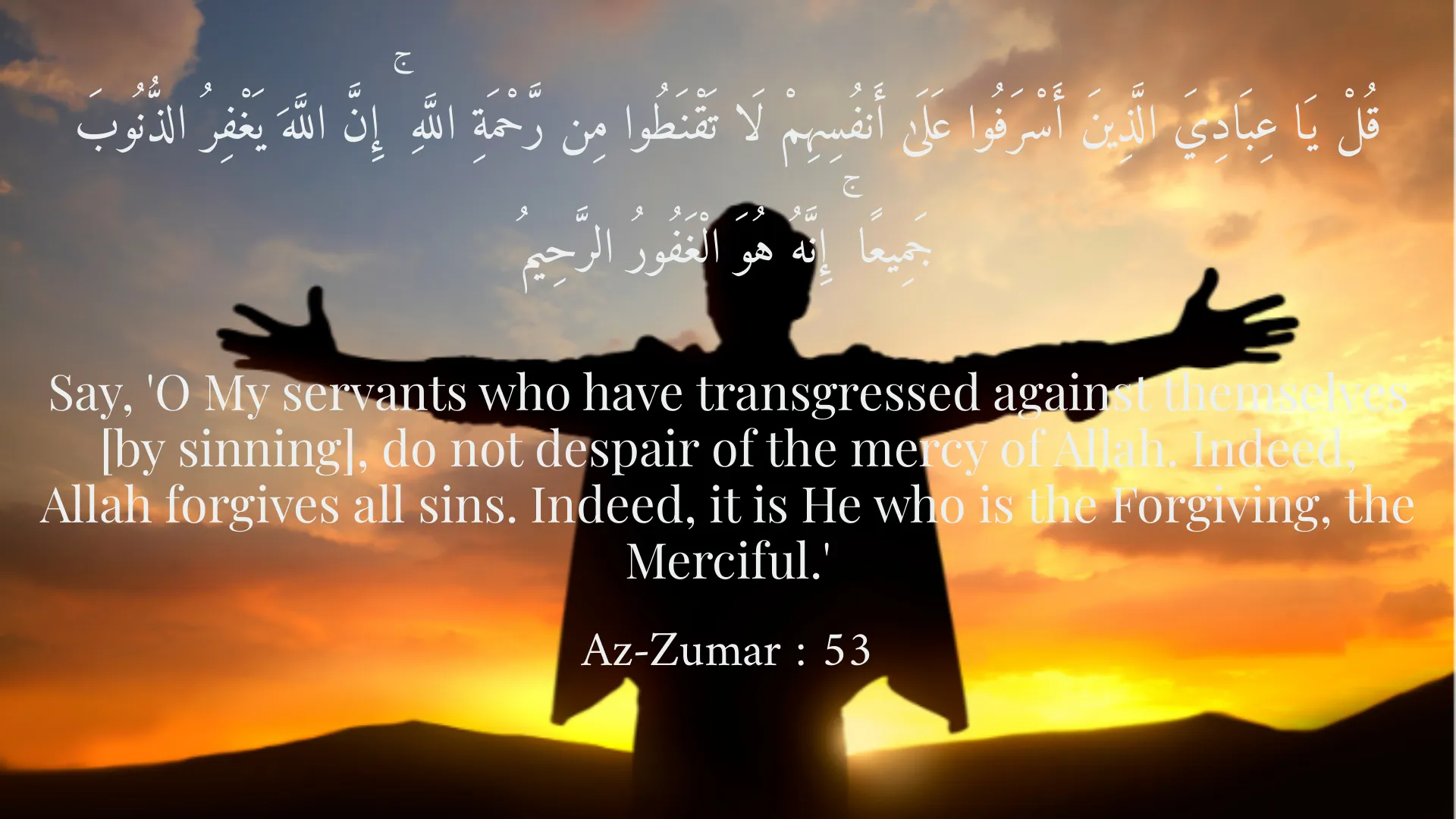
قُلْ يَا عِبَادِيَ الَّذِينَ أَسْرَفُوا عَلَىٰ أَنفُسِهِمْ لَا تَقْنَطُوا مِن رَّحْمَةِ اللَّهِ ۚ إِنَّ اللَّهَ يَغْفِرُ الذُّنُوبَ جَمِيعًا ۚ إِنَّهُ هُوَ الْغَفُورُ الرَّحِيمُ
Say, 'O My servants who have transgressed against themselves [by sinning], do not despair of the mercy of Allah. Indeed, Allah forgives all sins. Indeed, it is He who is the Forgiving, the Merciful.'
Az-Zumar : 53
وَلَا أُقْسِمُ بِالنَّفْسِ اللَّوَّامَةِ
And [I swear] by the self-reproaching soul [to be sure about the resurrection].
Al-Qiyamah : 2
لَقَدْ خَلَقْنَا الْإِنسَانَ فِي أَحْسَنِ تَقْوِيمٍ
We have certainly created man in the best of stature.
At-Tin : 4
وَمَن يَعْمَلْ سُوءًا أَوْ يَظْلِمْ نَفْسَهُ ثُمَّ يَسْتَغْفِرِ اللَّهَ يَجِدِ اللَّهَ غَفُورًا رَّحِيمًا
And whoever does a wrong or wrongs himself but then seeks forgiveness of Allah will find Allah Forgiving and Merciful.
An-Nisa : 110
Short Story
It is narrated that one day, a man named Farid was so regretful of his past deeds that he would reproach himself daily and grow weary of himself. His face was gloomy, and a smile had long departed from his lips. One day, he met a wise man and confessed his state. The wise man kindly told him, "O Farid, does the sun shine with the same splendor every day, even if a heavy rain fell last night?" Farid replied, "Yes, O wise one." The wise man continued, "Then you too are human, and God has created you with a light from Himself. Every sin is like a passing cloud, and every repentance is like a morning breeze that disperses the clouds. So instead of reproaching the past, do not deprive yourself of God's mercy, hoping for a better tomorrow, and polish the mirror of your heart with the water of repentance. Know that the forgiveness and kindness of the Truth are greater than the sins of His servants." Upon hearing these words, Farid, as if awakened from slumber, shed tears and decided to begin a new life with hope and effort, vowing never to hate himself again.