Quranic Answer
The sensation of God's presence during moments of sorrow and grief is a profound and common experience that many individuals encounter throughout their lives. This phenomenon does not imply God's absence during joyous times but rather indicates a shift in our spiritual state and perception of reality. The Holy Quran beautifully highlights that God is always present and observing His servants' conditions. However, in times of ease and abundance, humans may become heedless of their Lord due to immersion in worldly pleasures and daily preoccupations. Conversely, when calamity, hardship, or sorrow befalls a person, the veils of heedlessness are lifted, and one realizes their inherent weakness and helplessness. It is in these moments that, instinctively, one extends their hand in need towards an eternal power, and it is here that one feels God's presence with their entire being. One of the primary reasons for this feeling is the nature of trials and tribulations in worldly life. The Quran repeatedly states that life is a test for humanity to gauge one's patience, faith, and reliance on God. Calamities and sorrows serve as tools for purifying the soul, reminding us, and returning us to our Lord. These difficulties cause individuals to detach from material possessions, realize the transient nature of the world, and redirect their focus towards the eternal and everlasting, which is God. Such periods offer an opportunity for spiritual growth and strengthening one's relationship with God, as prayers and supplications are uttered with greater sincerity and urgency, and one perceives oneself as truly dependent on the Divine Threshold. In such circumstances, a person finds themselves enclosed by problems, and when despairing of all other avenues, they find their only true refuge and shelter in God, turning to Him. This seeking of refuge creates a stronger and deeper connection with the Lord, which might be less felt during times of ease. The Holy Quran emphasizes that God is not only with us in sorrows but is present at every moment and in every place. "And We are closer to him than [his] jugular vein" (Qaf, 50:16) clearly expresses God's infinite closeness to humanity, even closer than one's jugular vein. This signifies that God's presence is never interrupted; rather, it is our perception that varies in intensity under different circumstances. In essence, sorrows act as a catalyst, pulling us out of heedlessness and prompting us to reflect on our own existence and that of the Creator. When a person is at the peak of joy, they might indulge in fleeting pleasures instead of offering gratitude and remembering God, remaining oblivious to the true source of blessings. However, in grief and sorrow, the inherent human sense of need and destitution awakens, guiding one back to their origin and ultimate destination: God. This experience also demonstrates divine mercy and grace. Even within the darkest sorrows, there is a light of hope and connection to God. This aligns with "For indeed, with hardship [will be] ease. Indeed, with hardship [will be] ease" (Ash-Sharh, 94:5-6), a promise from God. With every difficulty, there is relief and ease. This promise brings comfort to the hearts of believers and reminds them that every darkness is followed by light. Feeling God's presence in sorrows helps individuals cope with problems, remain patient, and stay hopeful for the future. This feeling is not merely a psychological reaction to crisis but an opportunity for inner transformation and growth in faith. Therefore, one should not fear sorrows but rather view them as a gateway to a deeper understanding of God and a stronger bond with Him. By practicing remembrance (dhikr), prayer (dua), and gratitude in all states, we can clearly feel this presence not only in sorrows but also in joys and ordinary moments of life, maintaining a continuous and unbreakable connection with the Creator, enriching our lives with meaning and tranquility.
Related Verses
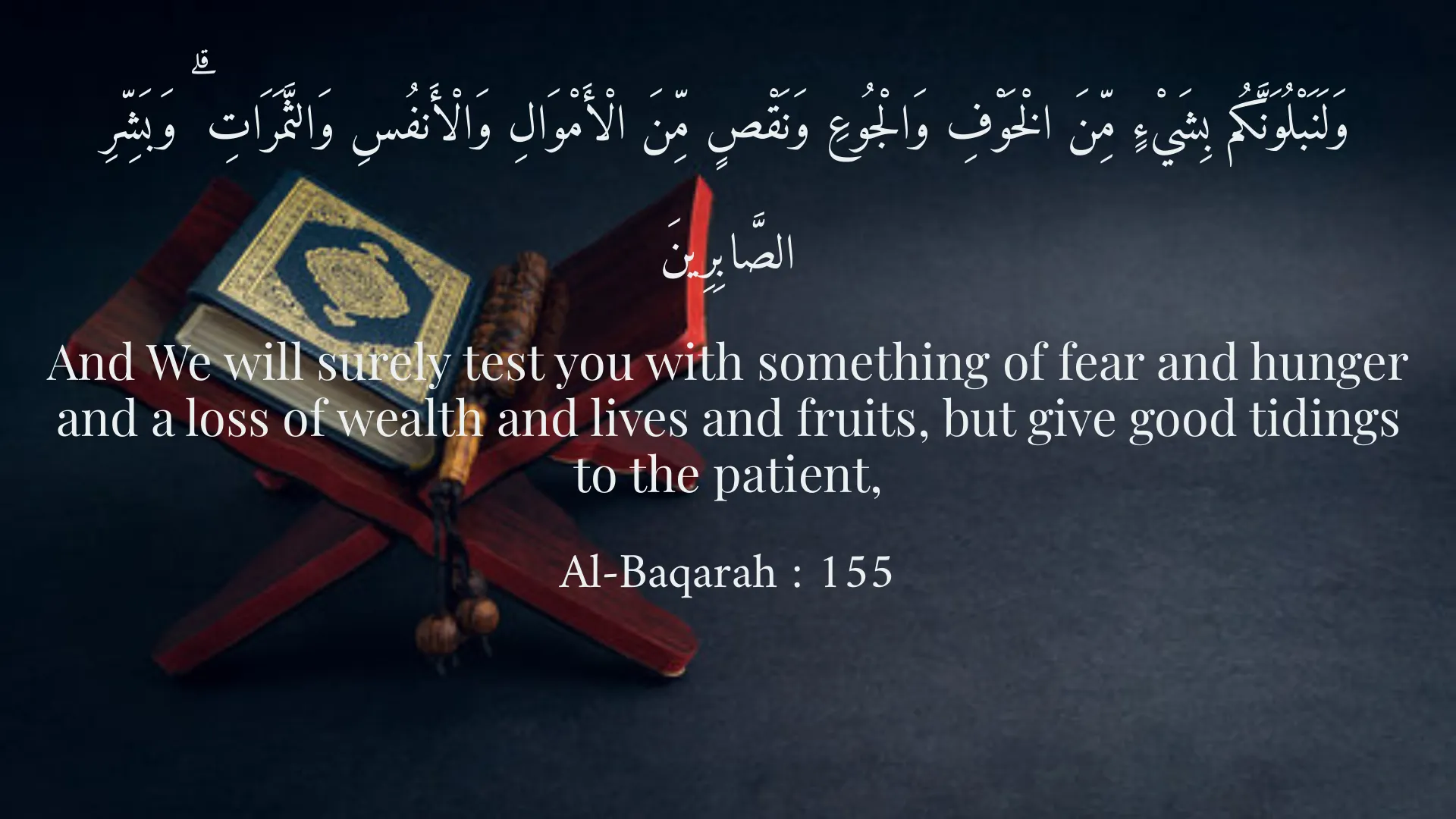
وَلَنَبْلُوَنَّكُم بِشَيْءٍ مِّنَ الْخَوْفِ وَالْجُوعِ وَنَقْصٍ مِّنَ الْأَمْوَالِ وَالْأَنفُسِ وَالثَّمَرَاتِ ۗ وَبَشِّرِ الصَّابِرِينَ
And We will surely test you with something of fear and hunger and a loss of wealth and lives and fruits, but give good tidings to the patient,
Al-Baqarah : 155
الَّذِينَ إِذَا أَصَابَتْهُم مُّصِيبَةٌ قَالُوا إِنَّا لِلَّهِ وَإِنَّا إِلَيْهِ رَاجِعُونَ
Who, when disaster strikes them, say, "Indeed we belong to Allah, and indeed to Him we will return."
Al-Baqarah : 156
وَإِذَا مَسَّ الْإِنسَانَ الضُّرُّ دَعَانَا لِجَنبِهِ أَوْ قَاعِدًا أَوْ قَائِمًا فَلَمَّا كَشَفْنَا عَنْهُ ضُرَّهُ مَرَّ كَأَن لَّمْ يَدْعُنَا إِلَىٰ ضُرٍّ مَّسَّهُ ۚ كَذَٰلِكَ زُيِّنَ لِلْمُسْرِفِينَ مَا كَانُوا يَعْمَلُونَ
And when adversity touches man, he calls upon Us, lying on his side or sitting or standing; but when We remove his adversity from him, he continues [his way] as if he had never called upon Us concerning an adversity that touched him. Thus was made fair-seeming to the transgressors that which they were doing.
Yunus : 12
Short Story
It is narrated that in ancient times, there was a wealthy but heedless merchant who, during his days of prosperity, seldom remembered God and was mostly engrossed in worldly luxuries. One day, his ships sank in a fierce storm at sea, and he lost all his possessions. In that state of distress and helplessness, he sat in a corner, shedding tears uncontrollably, calling upon God with all his heart, and seeking His help. A dervish passing by, seeing his condition, smiled and said: "O brother, I saw you in many prosperous days, but never did you remember God with such sincerity. It seems the sea washed your heart clean from the impurity of heedlessness, so you might know your Lord as He deserves to be known." The merchant was struck by the dervish's words and understood that sometimes hardships lift the veil from heedless eyes, allowing one to see the truth more clearly and return to their Lord.