Quranic Answer
The feeling of regret after performing a benevolent act is a peculiar emotion that many of us may have experienced. This unpleasant feeling often stems from our expectations regarding the outcomes of our good deeds or the reactions of others, whereas the true nature of benevolence in the Quranic tradition transcends these worldly expectations. The Holy Quran consistently calls upon believers to do good, show kindness (Ihsan), and spend in the way of Allah. Alongside these exhortations, it provides precise guidance on how these good deeds can bear the best fruits, both in this world and the Hereafter, and be free from any regret or sorrow. The primary root of regretting benevolence usually lies in our 'intention' (niyyah). If our intention in helping others is to gain approval, gratitude, fame, or even to receive a favor in return in the future, it is natural for disappointment and regret to surface when these expectations are not met. The Quran repeatedly emphasizes 'Ikhlas' (sincerity) in all actions; that is, performing every deed solely for the pleasure of Allah, without seeking reward or praise from human beings. When our intention is purely for Allah, the reactions or non-reactions of people, their gratitude or ingratitude, can no longer affect our hearts or cause us to feel regret. This is because our main reward is expected not from the creation, but from the Creator, and He never fails in giving recompense. Quranic verses explicitly address this issue. For instance, in Surah Al-Baqarah, verse 264, Allah states: “O you who have believed, do not invalidate your charities with reminders [of it] or injury as does one who spends his wealth [only] to be seen by the people and does not believe in Allah and the Last Day…” This verse clearly warns that reminding someone of a favor we have done for them (Mann) or causing them harm can nullify the reward of that good deed. Our regret is also a form of internal 'Mann,' arising from not receiving 'what we expected.' This verse illustrates that if our good deed is done for show or with the expectation of gratitude from people, it is like a seed planted on a rock that is washed away by a small rain (in this case, the non-fulfillment of our expectations), leaving no trace. In contrast, verse 262 of the same Surah says: “Those who spend their wealth in the way of Allah and then do not follow up what they have spent with reminders [of it] or [other] injury - they will have their reward with their Lord, and there will be no fear concerning them, nor will they grieve.” This verse serves as a healing prescription for freeing oneself from regret. It promises that if benevolence is without 'Mann' or harm, not only will there be a great reward from Allah, but also no fear or sorrow (including regret) will ever touch them. Another reason for regret might be a misunderstanding of the truth that the benefit of goodness and benevolence primarily returns to us, not necessarily through the very person we helped. In Surah Al-Baqarah, verse 272, we read: “…And whatever good you [believers] spend - it is for yourselves, and you do not spend except seeking the countenance of Allah. And whatever you spend of good - it will be fully repaid to you, and you will not be wronged.” This verse beautifully expresses that every good deed we perform, its benefit and blessing ultimately return to us. This return can manifest as inner peace, ease in affairs, protection from calamities, increase in sustenance, and above all, reward in the Hereafter. When we grasp this profound Quranic perspective, we will no longer need external validation, and the feeling of regret will be replaced by certainty and divine contentment. Furthermore, we must not ignore the whispers of Satan (waswas). Satan is always lurking, seeking to nullify people's good deeds or weaken their motivations. Instilling regret after a benevolent act is one of his ploys to discourage individuals from continuing on the path of goodness. He tries to demoralize us by exaggerating ingratitude or downplaying the impact of a good deed. Countering these temptations requires strengthening faith, trusting in Allah, and remembering the endless divine rewards. Ultimately, to be free from this feeling of regret, we must constantly re-evaluate our intentions. Is our benevolence truly for Allah? Do we expect a return or gratitude? If the answer is yes, we must strive to purify our intentions. We must know that the most valuable reward is that which comes from the Lord of the worlds, and He grants the righteous a full and boundless reward. Patience (sabr) is also crucial on this path. Perhaps the good we do today will bear fruit much later and in an unexpected way. By trusting in Allah and believing in His promises, we can cleanse our hearts of any regret and experience the true joy of benevolence.
Related Verses
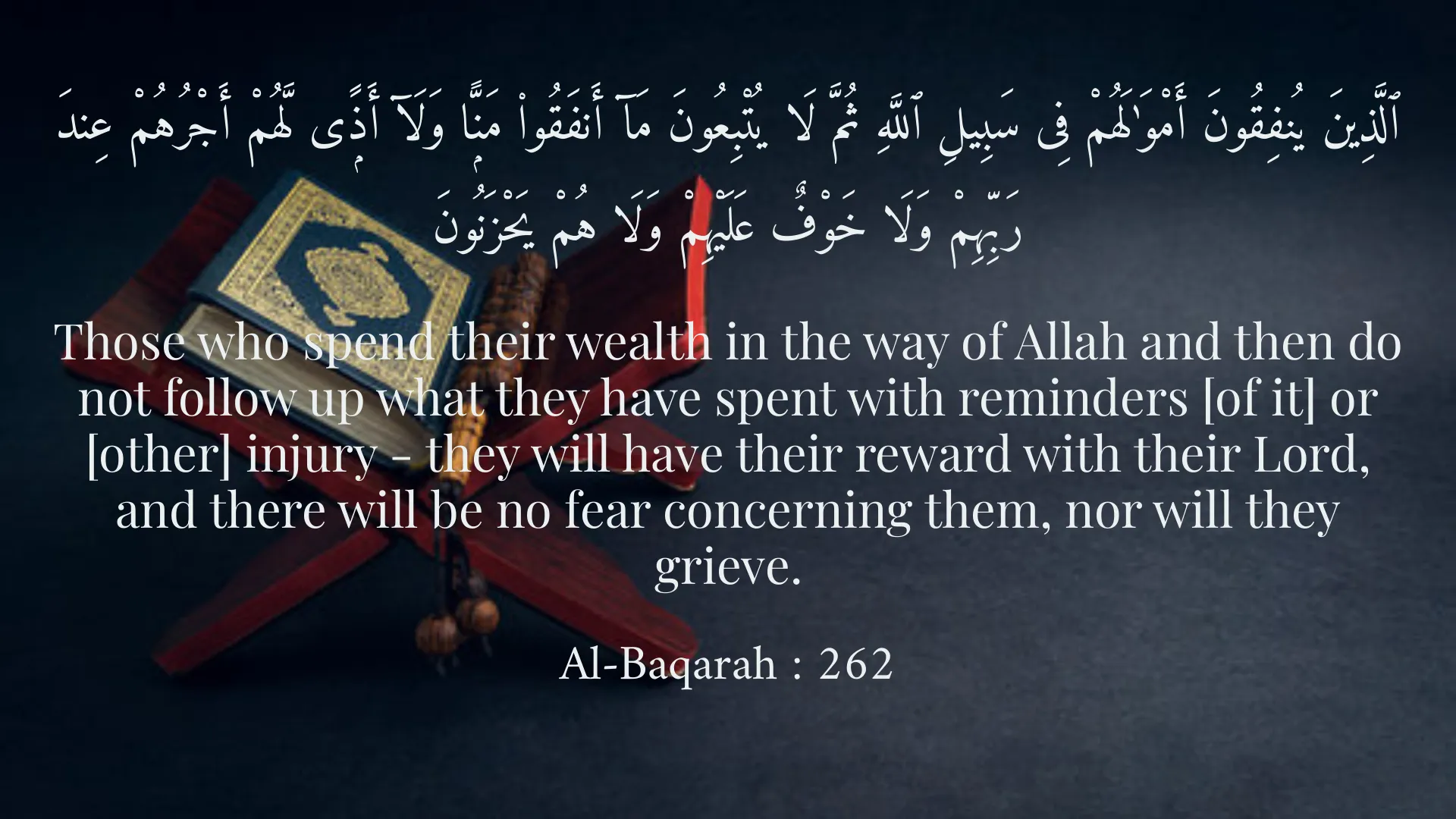
ٱلَّذِينَ يُنفِقُونَ أَمْوَٰلَهُمْ فِى سَبِيلِ ٱللَّهِ ثُمَّ لَا يُتْبِعُونَ مَآ أَنفَقُوا۟ مَنًّۭا وَلَآ أَذًۭى لَّهُمْ أَجْرُهُمْ عِندَ رَبِّهِمْ وَلَا خَوْفٌ عَلَيْهِمْ وَلَا هُمْ يَحْزَنُونَ
Those who spend their wealth in the way of Allah and then do not follow up what they have spent with reminders [of it] or [other] injury - they will have their reward with their Lord, and there will be no fear concerning them, nor will they grieve.
Al-Baqarah : 262
يَٰٓأَيُّهَا ٱلَّذِينَ ءَامَنُوا۟ لَا تُبْطِلُوا۟ صَدَقَٰتِكُم بِٱلْمَنِّ وَٱلْأَذَىٰ كَٱلَّذِى يُنفِقُ مَالَهُۥ رِئَآءَ ٱلنَّاسِ وَلَا يُؤْمِنُ بِٱللَّهِ وَٱلْيَوْمِ ٱلْءَاخِرِ ۖ فَمَثَلُهُۥ كَمَثَلِ صَفْوَانٍ عَلَيْهِ تُرَابٌ فَأَصَابَهُۥ وَابِلٌ فَتَرَكَهُۥ صَلْدًۭا ۖ لَّا يَقْدِرُونَ عَلَىٰ شَىْءٍ مِّمَّا كَسَبُوا۟ ۗ وَٱللَّهُ لَا يَهْدِى ٱلْقَوْمَ ٱلْكَٰفِرِينَ
O you who have believed, do not invalidate your charities with reminders [of it] or injury as does one who spends his wealth [only] to be seen by the people and does not believe in Allah and the Last Day. His example is like that of a [hard] rock upon which is dust and then a heavy rain strikes it, leaving it bare. They are unable [to keep] anything of what they earned. And Allah does not guide the disbelieving people.
Al-Baqarah : 264
لَّيْسَ عَلَيْكَ هُدَىٰهُمْ وَلَٰكِنَّ ٱللَّهَ يَهْدِى مَن يَشَآءُ ۗ وَمَا تُنفِقُوا۟ مِنْ خَيْرٍ فَلِأَنفُسِكُمْ ۚ وَمَا تُنفِقُونَ إِلَّا ٱبْتِغَآءَ وَجْهِ ٱللَّهِ ۚ وَمَا تُنفِقُوا۟ مِنْ خَيْرٍ يُوَفَّ إِلَيْكُمْ وَأَنتُمْ لَا تُظْلَمُونَ
Not upon you, [O Muhammad], is their guidance, but Allah guides whom He wills. And whatever good you [believers] spend - it is for yourselves, and you do not spend except seeking the countenance of Allah. And whatever you spend of good - it will be fully repaid to you, and you will not be wronged.
Al-Baqarah : 272
Short Story
It is narrated that a benevolent man always helped the needy and never expected praise from anyone. One day, he gave substantial help to a destitute man, but the man did not even utter a word of thanks and passed by coldly. The benevolent man thought to himself, "What was the point of this? I exerted myself and received nothing but ingratitude." That night, he dreamt that a wise elder appeared to him and said: "O noble youth, if you seek gratitude, do not seek it from people, for they soon forget. True gratitude and immense reward lie with the Generous One who never forgets and loves the benevolent. Did you give for Allah, or for the admiration of creation?" The benevolent man awoke, regretting his error, and from then on, he performed acts of kindness solely for the pleasure of the Truth. He never regretted his actions again, for he found a profound peace in his heart that no ingratitude could ever diminish.