Quranic Answer
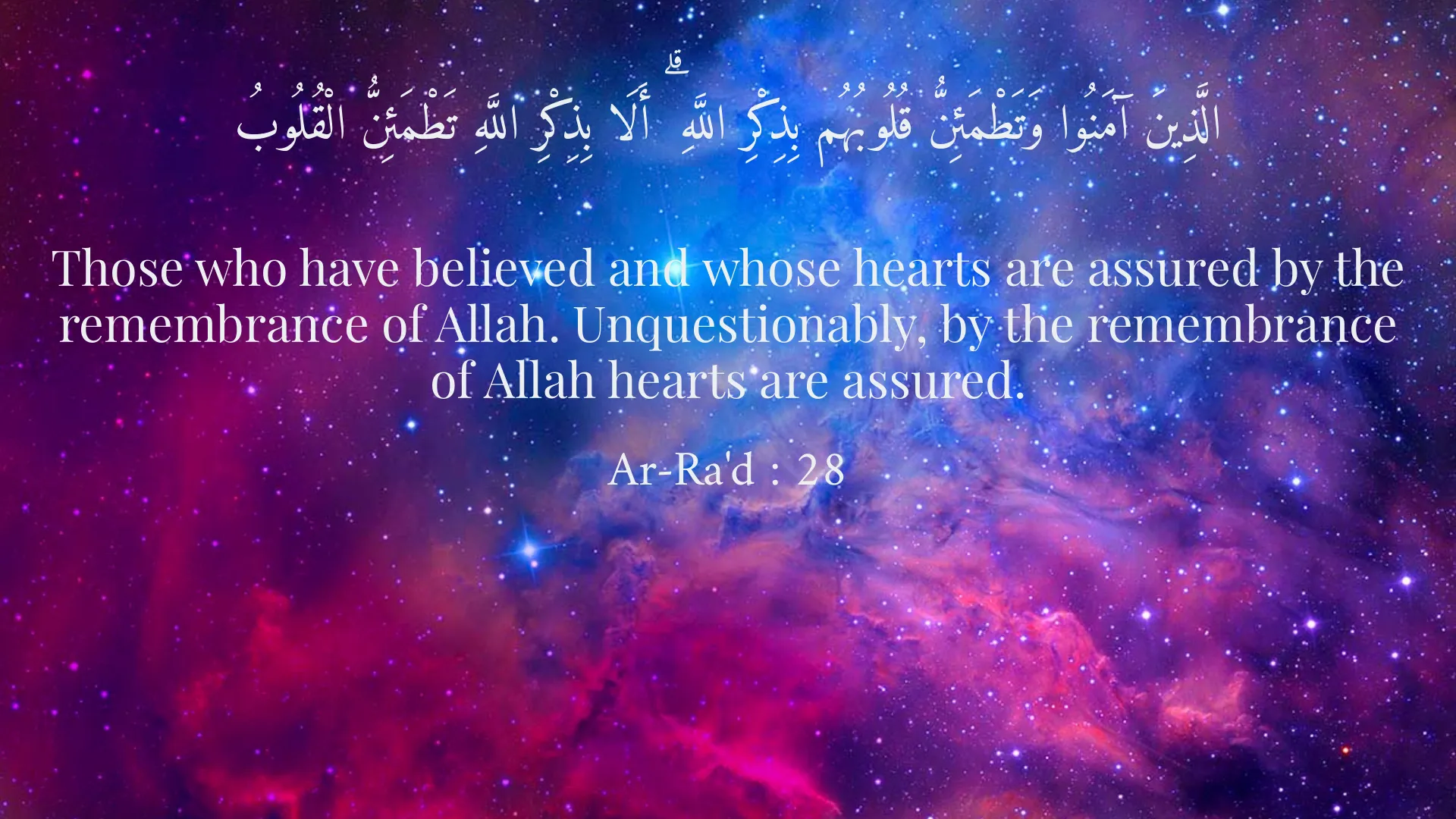
Your question about wanting to distance yourself from everyone is a deeply human and common feeling that many individuals experience at various points in their lives. This feeling is not necessarily negative; rather, it can be a sign of a profound need for tranquility, introspection, and inner renewal. While the Holy Quran does not directly use the phrase "distancing oneself from everyone," it provides principles and guidelines that interpret this inclination within a spiritual and constructive framework, offering healthy ways to respond to it. One of the aspects the Quran emphasizes is the concept of "khalwa" (solitude) and "tafakkur" (contemplation). Before the revelation descended upon him, Prophet Muhammad (PBUH) spent considerable time in seclusion and worship in the Cave of Hira. This retreat was not merely to escape the clamor of society at that time but also provided an opportunity for a deeper connection with the Creator and preparation for the profound divine mission. This example illustrates that sometimes, stepping away from a noisy environment and entering a more serene space can aid spiritual growth and clarity of thought. This period of "khalwa" is an opportunity for self-assessment, evaluating one's life path, and strengthening one's bond with Allah. In essence, this type of distancing is not an escape from reality but an immersion into a deeper existential and spiritual reality. This seclusion can involve dedicating more time to personal prayers, reciting the Quran with reflection, or simply sitting in silence and pondering the grandeur of creation and humanity's place within it. This helps individuals detach from the onslaught of external information and stimuli, allowing them to listen to their inner voice and innate nature (fitra). The Quran strongly emphasizes the importance of "dhikr" (remembrance of Allah). In Surah Ar-Ra'd, verse 28, Allah states: "Those who have believed and whose hearts are assured by the remembrance of Allah. Unquestionably, by the remembrance of Allah hearts are assured." Sometimes, the inclination towards solitude and distancing oneself from others arises from a profound need for this tranquility; a tranquility often elusive amidst the hustle and bustle of daily life and noisy social interactions. In such moments, an individual instinctively seeks a space where they can, without distraction, engage in the remembrance of Allah, perform prayers (Salat), recite the Quran, and ultimately attain inner peace. This type of solitude is not a negative, isolationist withdrawal but a "constructive retreat" that helps individuals regenerate their spiritual energy and return to social life with renewed vigor. This self-purification and recovery of inner energy are essential for any effective external activity and any positive interaction with others. Just as a gardener sometimes needs solitude and focus to tend to the roots of plants, so too does a human being need such retreats to nourish and cultivate their soul. Furthermore, the Quran teaches us to avoid environments and associations that negatively impact our soul and mind. In Surah Al-Furqan, verse 72, it states: "And [they are] those who do not testify to falsehood, and when they pass near ill speech, they pass by with dignity." At times, exhaustion from "ill speech," backbiting, futile arguments, or negative environments leads a person to desire distance from them. This distancing is a form of "self-protection"; safeguarding one's spiritual and moral well-being against environmental pollutants and negative energies. This does not mean cutting off all ties but rather consciously selecting interactions and maintaining boundaries that prevent negative energies from entering one's inner sanctuary. This approach is not only supported in Islam but is also recommended in modern psychology as "setting boundaries" for mental health preservation. When you feel that social interactions are draining you or leading you towards unethical paths, a temporary and wise retreat is a Quranic solution to preserve inner purity and peace. It is crucial to distinguish between "constructive distancing" and "harmful isolation." Islam is a religion of community, emphasizing reciprocal human rights and the importance of the "Ummah" (community). Complete and permanent isolation that leads to severing family ties, abandoning social responsibilities, and escaping from problems is not endorsed by the Quran. The Prophet Muhammad (PBUH) said, "A believer who mixes with people and is patient with their harms is better than a believer who does not mix with people and is not patient with their harms." Therefore, the inclination to distance oneself should be temporary and purposeful: for renewal, contemplation, deeper worship, or self-protection from harm. This distancing, instead of turning into permanent reclusion, should help the individual achieve "balance" in life; a balance between solitude and social engagement, between spiritual needs and social responsibilities. This balance is the foundation of a healthy and Islamic life. In other words, this inclination can be a sign that you need to delve deeper into your inner world, listen to the voice of your innate nature (fitra), and renew your covenant with your Creator. In this state, temporary distancing from worldly clamor and preoccupations is not a weakness but an opportunity to strengthen the spirit, clarify thoughts, and regain inner peace. This opportunity allows you to return to social interactions with a clearer vision and a calmer heart, continuing your relationships with better quality. This process is akin to a soldier retreating to regroup forces to return to the field with greater strength, or like retreating to recharge spiritual and moral batteries. Ultimately, the Quran teaches us to be active in society while also maintaining space for self-purification and connection with the Creator, and it is this balance that ensures well-being in both this world and the Hereafter. This feeling reminds us that humans are not only social beings but also spiritual beings who need space to breathe and connect deeply with the source of existence.
Related Verses
الَّذِينَ آمَنُوا وَتَطْمَئِنُّ قُلُوبُهُم بِذِكْرِ اللَّهِ ۗ أَلَا بِذِكْرِ اللَّهِ تَطْمَئِنُّ الْقُلُوبُ
Those who have believed and whose hearts are assured by the remembrance of Allah. Unquestionably, by the remembrance of Allah hearts are assured.
Ar-Ra'd : 28
وَالَّذِينَ لَا يَشْهَدُونَ الزُّورَ وَإِذَا مَرُّوا بِاللَّغْوِ مَرُّوا كِرَامًا
And [they are] those who do not testify to falsehood, and when they pass near ill speech, they pass by with dignity.
Al-Furqan : 72
وَاذْكُرِ اسْمَ رَبِّكَ وَتَبَتَّلْ إِلَيْهِ تَبْتِيلًا
And remember the name of your Lord and devote yourself to Him with [complete] devotion.
Al-Muzzammil : 8
Short Story
In Saadi's Golestan, it is recounted that there was a dervish who grew weary of the city's clamor and people's idle talk. He found a secluded corner in the heart of a garden and there devoted himself to worship and contemplation. His friends came to visit him and asked, "O Sheikh, why have you withdrawn from our company and chosen a corner of solitude?" The dervish smiled and said, "I am not distancing myself from you, but rather drawing closer to myself. In the market's hustle and bustling gatherings, the ear of the heart becomes deaf and the eye of insight blind. I wish, in this solitude, to hear the voice of truth and see the light of knowledge. Whenever my soul finds peace and my heart is filled with divine light, then I will return to you with firmer steps and a more abundant heart." His friends left him and went their way, and the dervish returned to his solitude, enjoying the peace he had found. This tale illustrates that sometimes, distancing oneself is a way to draw closer to oneself and to God.