Quranic Answer
The feeling that one's good deeds seem ineffective, or that efforts in doing good and kindness do not yield immediate results, is a common and profoundly human experience faced by many believers throughout their lives. This sensation can arise from not observing immediate or tangible worldly outcomes, or when an individual encounters continuous challenges and obstacles despite striving diligently in good deeds. From the perspective of the Holy Quran, this experience warrants contemplation and self-reflection, and its answer lies in a deeper understanding of the purpose of creation, the nature of righteous deeds, and Divine wisdom. The Quran teaches us that the criterion for the effectiveness of deeds is not necessarily fleeting worldly results, but rather Divine acceptance, otherworldly reward, and their hidden spiritual impacts. One of the most crucial principles emphasized by the Quran is intention and sincerity (Niyyah and Ikhlas). A righteous deed only gains true and lasting value when it is performed purely for the sake of Allah's pleasure, not to gain human admiration, worldly benefits, or even to see immediate results. Allah states in Surah Al-Bayyinah, verse 5: “And they were not commanded except to worship Allah, [being] sincerely obedient to Him, inclining to truth, and to establish prayer and to give zakah. And that is the correct religion.” This verse clearly indicates that the core of all acts of worship and good deeds is pure intention. If a deed is performed with an intention other than for Allah, even if it appears good outwardly, it might be considered ineffective or less effective from a Divine perspective. Self-admiration, hypocrisy (riya'), and expecting worldly rewards are pitfalls that can tarnish sincerity and lead to a feeling of emptiness or futility in one's deeds. This feeling, at times, serves as a warning to re-examine and rectify one’s intentions. The second point is the transient nature of this world and the rewards of the Hereafter. The Holy Quran repeatedly emphasizes that worldly life is a testing ground for humans, and the true and complete reward for righteous deeds is reserved for the eternal abode. In Surah Al-Mulk, verse 2, Allah says: “He who created death and life to test you [as to] which of you is best in deed - and He is the Exalted in Might, the Forgiving.” This verse illustrates that the purpose of life is to test the quality of our deeds, not necessarily their tangible results in this world. Sometimes, the lack of immediate results is itself part of the test of a believer's patience and steadfastness. A believer who remains steadfast in goodness despite not seeing material effects is, in fact, successfully passing a Divine test and will receive a greater reward from Allah. In Surah Ash-Shura, verse 20, we also read: “Whoever desires the harvest of the Hereafter - We increase for him in his harvest; and whoever desires the harvest of this world - We give him thereof, but he will have no share in the Hereafter.” This verse explicitly states that the primary motivation for righteous deeds should be the reward in the afterlife. If the main goal of performing good deeds is to acquire wealth, fame, or worldly success, Allah may grant a portion of that in this world, but the person's share in the Hereafter will be diminished, rendering the deed ineffective or less effective on a grand scale. The third significant factor is the role of sins in diminishing or neutralizing the impact of good deeds. The Quran teaches us that good deeds expiate minor sins and purify the soul. In Surah Hud, verse 114, Allah states: “And establish prayer at the two ends of the day and at the approach of night. Indeed, good deeds do away with ill deeds. That is a reminder for those who remember.” Therefore, even if your good deed does not seem to have a noticeable impact on your life, its effect might be in the form of expiating sins and purifying your inner self. Major sins, in particular, can be a serious hindrance to the acceptance and effectiveness of good deeds. Not repenting from major sins, or persisting in disobedience, can act as a barrier preventing the positive effects of righteous deeds. Furthermore, it might be Divine wisdom that performing good deeds averts an unseen calamity or brings a hidden blessing of which we are unaware. These “hidden effects” or “unforeseen blessings” are also among Allah's rewards that might not be included in our calculation of “effectiveness.” The fourth point is the acceptance of deeds by Allah. In Surah Al-Ma'idah, verse 27, in the story of Adam’s sons (Cain and Abel), Allah says: “Indeed, Allah accepts only from the righteous.” This verse indicates that piety (taqwa) and righteousness are fundamental conditions for the acceptance of deeds. Taqwa means adhering to Divine limits, refraining from prohibitions, and fulfilling obligations. If an individual commits major sins or disregards the rights of others alongside performing good deeds, their good deeds might face obstacles to acceptance. This reminds us that a comprehensive spiritual and ethical life is essential for the full acceptance and effectiveness of deeds. Therefore, the feeling of ineffectiveness can be an invitation to comprehensively review one's lifestyle and strive for increased piety and mindfulness in all aspects. Finally, patience (Sabr) and reliance on Allah (Tawakkul) are fundamental pillars in facing this feeling. In moments when you do not see the fruits of your deeds, remember that Allah loves the patient and gives them their reward without measure. “Indeed, the patient will be given their reward without account.” (Surah Az-Zumar, verse 10). Tawakkul means complete trust in Divine wisdom and planning. Know that no good deed is ever lost with Allah, and every effort, even if it seemingly yields no immediate result, is preserved with Allah, and its reward in this world and the Hereafter will be granted in the best possible way. Perhaps its desired effects will manifest in future generations, or return to you in a completely different and unexpected form. Therefore, instead of focusing on immediate results, concentrate on the quality of your intention and persistence in performing righteous deeds. Continue on your path of goodness with a heart firm in reliance on Allah, because your deeds, whether seen or unseen, are recorded in the preserved tablet of Allah, and their true fruits will become manifest at Allah's appointed time. So, if your good deeds seem ineffective, it is time to: firstly, review your intentions and ensure they are solely for Allah. Secondly, remember that this world is a test, and the main reward is in the Hereafter. Thirdly, do not neglect the role of sins in diminishing the impact of deeds and strive for repentance and seeking forgiveness. Fourthly, observe Divine piety (Taqwa) in all aspects of life so that your deeds may be accepted. And finally, be patient and rely on Divine wisdom and justice, for Allah never wastes the reward of the doers of good and is the Best Disposer of affairs.
Related Verses
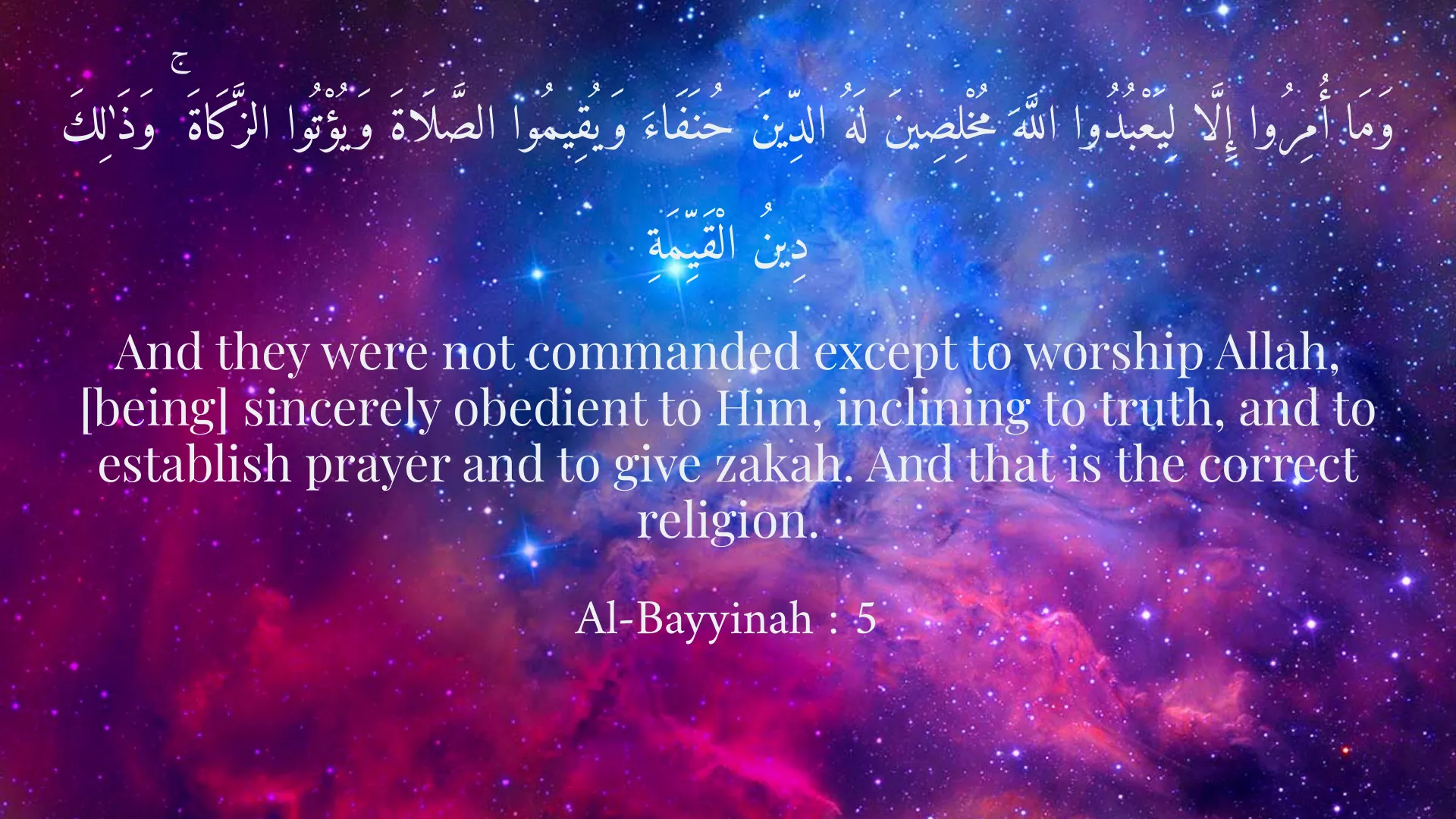
وَمَا أُمِرُوا إِلَّا لِيَعْبُدُوا اللَّهَ مُخْلِصِينَ لَهُ الدِّينَ حُنَفَاءَ وَيُقِيمُوا الصَّلَاةَ وَيُؤْتُوا الزَّكَاةَ ۚ وَذَٰلِكَ دِينُ الْقَيِّمَةِ
And they were not commanded except to worship Allah, [being] sincerely obedient to Him, inclining to truth, and to establish prayer and to give zakah. And that is the correct religion.
Al-Bayyinah : 5
الَّذِي خَلَقَ الْمَوْتَ وَالْحَيَاةَ لِيَبْلُوَكُمْ أَيُّكُمْ أَحْسَنُ عَمَلًا ۚ وَهُوَ الْعَزِيزُ الْغَفُورُ
He who created death and life to test you [as to] which of you is best in deed - and He is the Exalted in Might, the Forgiving.
Al-Mulk : 2
وَأَقِمِ الصَّلَاةَ طَرَفَيِ النَّهَارِ وَزُلَفًا مِنَ اللَّيْلِ ۚ إِنَّ الْحَسَنَاتِ يُذْهِبْنَ السَّيِّئَاتِ ۚ ذَٰلِكَ ذِكْرَىٰ لِلذَّاكِرِينَ
And establish prayer at the two ends of the day and at the approach of night. Indeed, good deeds do away with ill deeds. That is a reminder for those who remember.
Hud : 114
وَاتْلُ عَلَيْهِمْ نَبَأَ ابْنَيْ آدَمَ بِالْحَقِّ إِذْ قَرَّبَا قُرْبَانًا فَتُقُبِّلَ مِنْ أَحَدِهِمَا وَلَمْ يُتَقَبَّلْ مِنَ الْآخَرِ قَالَ لَأَقْتُلَنَّكَ ۖ قَالَ إِنَّمَا يَتَقَبَّلُ اللَّهُ مِنَ الْمُتَّقِينَ
And recite to them the story of Adam's two sons, in truth, when they both offered a sacrifice [to Allah], and it was accepted from one of them but was not accepted from the other. [The latter] said, 'I will surely kill you.' [The former] said, 'Indeed, Allah accepts only from the righteous.'
Al-Ma'idah : 27
Short Story
It is narrated that a benevolent man, for many years, sowed seeds of goodness and kindness in the hearts of people. Sometimes, he endured great hardship and seemingly saw no fruit from his labor; he neither received a smile from anyone nor heard any gratitude. Yet, he entrusted his heart to the grace of God and would say: "Perhaps the fruit of this tree will bear in another land or another season, or perhaps this water I pour nourishes dry roots that I do not see." One day, a plague befell the city, and the same man rushed to help its inhabitants. He saw that people who had previously turned away from him now came to his aid. One said: "Years ago, you saved me from despair with a kind word." Another said: "On a difficult day, unknowingly, you brought goodness to my family, the effect of which has appeared today." That benevolent man understood that good deeds never remain without effect; rather, their fruit sometimes grows in secret and returns to the doer of good in times of need, by the infinite wisdom and grace of the Lord.