Quranic Answer
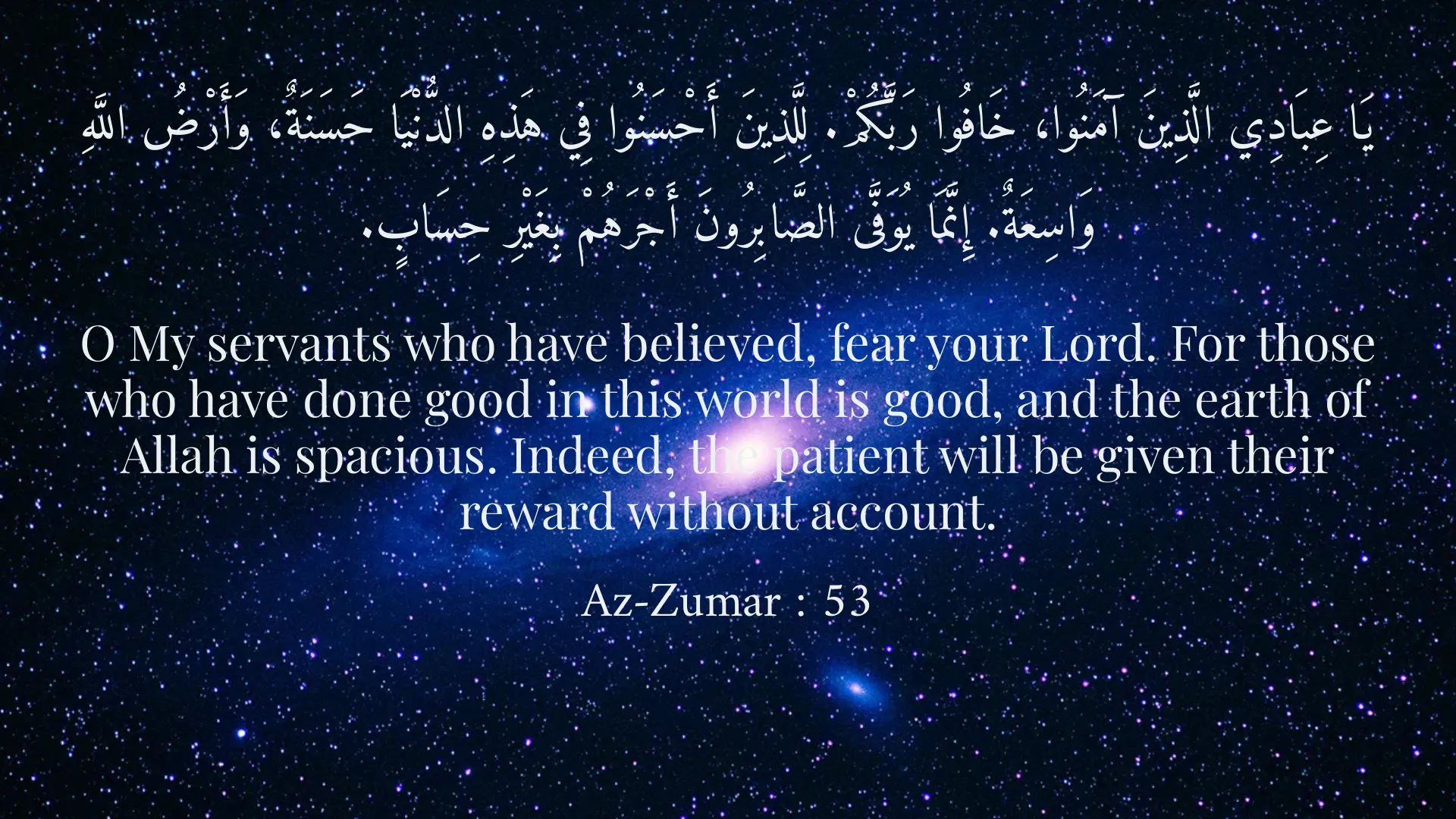
In the Holy Quran, Allah not only provides guidance on how to live a righteous life, but He also emphasizes the importance of fostering hope and unity among humanity, particularly during challenging times. With each verse, the Quran enlightens its followers with wisdom that serves as a beacon of guidance for both individuals and communities. This essay delves into the profound implications behind verses that encourage believers to support one another, understand each other’s struggles, and maintain hope in the mercy of Allah. One of the pivotal verses in this discussion is found in Surah Az-Zumar, verse 53, which states, 'O My servants who have believed, fear your Lord. For those who have done good in this world is good, and the earth of Allah is spacious. Indeed, the patient will be given their reward without account.' This verse encapsulates the essence of resilience and hope, reminding believers that beyond the trials and tribulations that life presents, there is a promise of goodness and reward in both this world and the afterlife. The verse serves as a reminder to humanity that life can be filled with hardships, but patience and good deeds will lead to ultimate triumph and reward. In today’s fast-paced world, individuals often encounter a multitude of challenges, ranging from personal struggles such as job loss, illness, or emotional distress to societal issues like discrimination or political strife. In such circumstances, it can be all too easy for one to lose hope not only in their own abilities but also in the potential for kindness and compassion from others. This is where the teachings of the Quran become particularly relevant. Allah provides guidance to His servants, advising them to fear Him, which in this context translates to approaching life's challenges with a strong moral compass and a deeper understanding of the human condition. Moreover, the Quran underscores the importance of patience during trying times. Patience (Sabr) is a recurrent theme in Islamic teachings and emphasizes maintaining faith in God’s wisdom and justice. It is the practice of remaining steadfast in the face of adversity. When believers embody patience, they naturally exude hope, not just for themselves but also for those around them. In essence, a patient person can uplift the spirits of others by showcasing resilience, thereby exemplifying that with faith and good actions, one can overcome obstacles. Additionally, maintaining hope in relationships is crucial, especially during times of conflict or misunderstanding. In Surah Al-Hujurat, verse 12, Allah warns believers: 'O you who have believed, avoid much [negative] assumption. Indeed, some assumption is sin.' This verse emphasizes the destructive nature of negative assumptions, which can lead to miscommunication and discord among individuals. In the context of building hope and unity, this verse serves as a critical reminder for believers to rise above judgment and allow understanding and empathy to flourish. Negative assumptions can originate from a variety of sources, including cultural misunderstandings, personal biases, or simply lack of knowledge about others' experiences. In a world that is becoming increasingly interconnected, it is crucial that individuals recognize the diversity of thoughts and beliefs that people hold. The Quran urges believers not only to avoid judgment but also to cultivate a spirit of empathy that recognizes the underlying struggles that others face. By doing so, individuals can create meaningful connections that serve as essential pillars in establishing hope and support within communities. Furthermore, showing compassion and understanding is paramount, particularly when external circumstances become overwhelming. People often cope with personal battles that are invisible to others. By extending a hand of support to one another, communities can foster an environment where hope reigns supreme. A simple act of kindness, a word of encouragement, or listening to someone’s struggles can make a significant difference in their life and can rekindle hope. The Quran teaches us that our relationships thrive on mutual respect and understanding. Building hope in difficult times is a collective effort that invites individuals to come together and support one another as one united front. As Allah illustrates in the Quran, it is essential for believers to uphold values of kindness, solidarity, and patience to navigate through life’s adversities. In conclusion, the teachings found in the Quran serve as guiding principles that remind humanity to maintain hope in both God and one another. In Surah Az-Zumar, Allah reassures His believers that goodness will prevail through patience and good deeds, while in Surah Al-Hujurat, He encourages the avoidance of negative assumptions that can tarnish relationships. With the cultivation of empathy, understanding, and genuine care for each other, society can stand united, resilient against the challenges it faces. Ultimately, the divine wisdom contained within the Quran serves as an eternal source of hope, urging individuals to rise above their struggles and to offer love and support to each other in times of difficulty.
Related Verses
يَا عِبَادِي الَّذِينَ آمَنُوا، خَافُوا رَبَّكُمْ. لِلَّذِينَ أَحْسَنُوا فِي هَذِهِ الدُّنْيَا حَسَنَةٌ، وَأَرْضُ اللَّهِ وَاسِعَةٌ. إِنَّمَا يُوَفَّى الصَّابِرُونَ أَجْرَهُمْ بِغَيْرِ حِسَابٍ.
O My servants who have believed, fear your Lord. For those who have done good in this world is good, and the earth of Allah is spacious. Indeed, the patient will be given their reward without account.
Az-Zumar : 53
يَا أَيُّهَا الَّذِينَ آمَنُوا اجْتَنِبُوا كَثِيرًا مِّنَ الظَّنِّ. إِنَّ بَعْضَ الظَّنِّ إِثْمٌ.
O you who have believed, avoid much [negative] assumption. Indeed, some assumption is sin.
Al-Hujurat : 12
Short Story
Once upon a time, two friends were sitting together discussing their lives. One of them felt hopeless due to his financial troubles. His friend replied, 'Never lose hope! Remember that God's mercy is vast.' He continued, 'I recall a verse from the Quran that says God brings His mercy closer to His servants.' Their friendship and support lifted the other person's spirits, enabling him to continue his life with renewed hope.