Quranic Answer
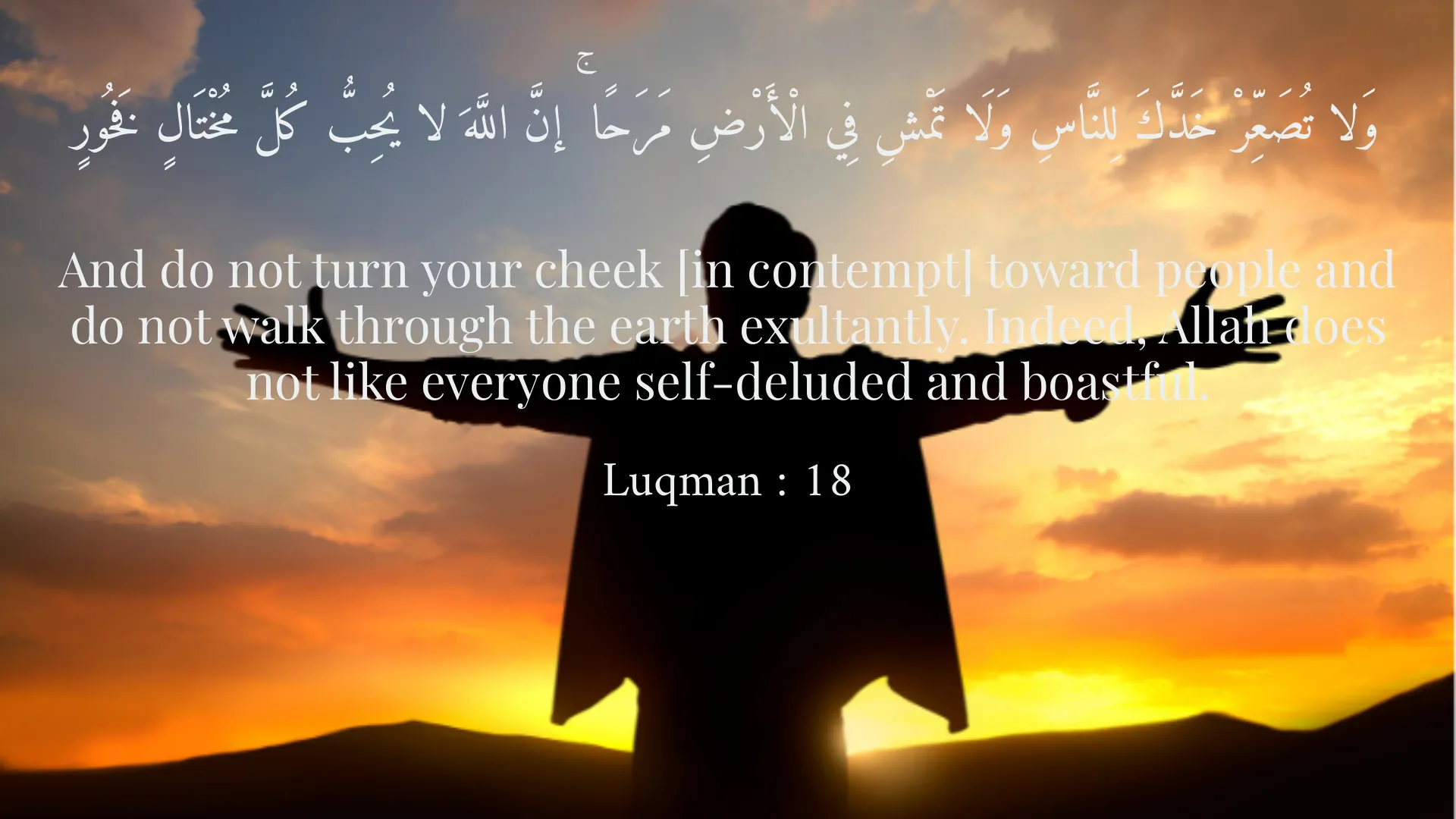
Humility and submission are often discussed in various religious texts, and the Holy Quran offers profound insight into the significance of these qualities for a true believer. Within its verses, it emphasizes that genuine faith entails a heartfelt willingness to remember that all strength, virtue, and ability are ultimately gifts from Allah. The Quran urges believers to eschew pride and arrogance, arguing that such attitudes signal an underlying weakness in one's faith and relationship with the Divine. To delve deeper, it is crucial to reference specific Quranic verses that illuminate this essential doctrine. For instance, in Surah Luqman, verse 18, Allah instructs believers: "And do not turn your cheek [in contempt] toward people and do not walk through the earth exultantly. Indeed, Allah does not like everyone self-deluded and boastful." This verse serves as a poignant reminder that arrogance manifests not merely in grand acts of pride but can also be subtler—a turning away from others, a refusal to recognize their worth, and an inflated sense of self. The very act of ignoring others or harboring contempt for them underscores a disconnect from the humility that the Quran espouses. It suggests that our spiritual state can, and often does, further influence our interactions with others. Moreover, in Surah Al-An'am, verse 152, believers are once again reminded of the perils of arrogance. Allah warns, "And do not approach the orphan's property except in a way that is best until he reaches maturity. And fulfill [every] commitment. Indeed, the commitment is ever [that which] was questioned." This is a reminder that arrogance can manifest in various forms—especially in the mistreatment or belittlement of those less fortunate. Excessive self-importance can lead individuals to overlook or dismiss responsibilities toward others. Thus, the Quran continually elevates humility, placing it as a key trait of righteous behavior. The theme of humility is pervasive throughout Islamic teachings. It posits that a true believer acknowledges their limitations, recognizes their dependence on Allah's mercy, and understands that any blessings or successes are at the hand of Divine will. This acknowledgment leads to gratitude rather than egotism. Humility fosters brotherhood, compassion, and active service to others. As believers, we should prioritize these qualities. When our actions and attitudes develop in a space of humility, we are better positioned to uplift those around us and support our communities, understanding that we all belong under the encompassing mercy of Allah. The Quran does not merely advocate for humility; it warns against the ruinous nature of pride. Arrogance leads individuals down a path of self-deception. When one believes they are superior to others, they risk isolating themselves, building barriers between themselves and the community, and ultimately distancing themselves from Allah's guidance. This detachment can lead to feelings of worthlessness and despair, for one loses sight of the very connections that enrich our lives and spiritual journeys. Furthermore, arrogance can distort one’s perception of morality and justice. A proud heart may become blind to wrongdoing and injustice, as individuals prioritize their status over the welfare of others. They may find justifications for their actions that do not align with Heavens’ mandate of compassion and kindness. The Quran teaches us that true strength lies in humility—being kind, fair, and thoughtful in our interactions, no matter our status or achievements. Pride, conversely, is a perverse form of self-worship that can ultimately lead to one’s spiritual demise. As believers, we also need to cultivate a self-awareness that counteracts the inclination toward pride and arrogance. This may involve regular reflection and self-examination, leaning into our worship practices, and seeking counsel from trusted mentors who embody the lesson of humility. Recognizing our shortcomings is liberating; it clears us of the burdens of living under false pretenses. In this way, regular prayer and supplication offer significant opportunities to seek forgiveness and realign our lives towards humility. It's about developing a mindset where serving others and offering kindness become central to our daily practice. Furthermore, understanding that our worth is derived not from worldly possessions or achievements but from our piety and adherence to the principles outlined in the Quran reshapes our identity. The society around us often equates success with fame and recognition, yet the Quran teaches that true success lies in our hearts’ orientation towards humility. The journey towards humility is not without its challenges. Cultivating humility requires continuous effort, self-discipline, and an openness to recognizing our flaws. We must seek Allah's guidance through prayer and reflection, allowing His wisdom to permeate our thoughts and actions. This pursuit is not something accomplished overnight; it is an ongoing journey that invites us to recommit ourselves daily. As we immerse ourselves in this commitment, we simultaneously cultivate a sense of gratitude for each blessing and opportunity to serve those around us. In conclusion, the principles of humility and submission are cornerstones of faith as articulated in the Holy Quran. They constitute a shield against the corrosive nature of pride and arrogance. By recognizing our inherent limitations and the source of our strength as Allah, we can nurture a spirit of humility that permeates every aspect of our lives. This practice not only enhances our relationship with the Divine but also enriches our interactions with others, fostering a community built on compassion, integrity, and mutual support. Ultimately, living humbly aligns us more closely with our ultimate purpose as believers—to serve Allah and humanity with sincerity and love.
Related Verses
وَلا تُصَعِّرْ خَدَّكَ لِلنَّاسِ وَلَا تَمْشِ فِي الْأَرْضِ مَرَحًا ۚ إنَّ اللَّهَ لا يُحِبُّ كُلَّ مُخْتَالٍ فَخُورٍ
And do not turn your cheek [in contempt] toward people and do not walk through the earth exultantly. Indeed, Allah does not like everyone self-deluded and boastful.
Luqman : 18
وَلَا تَقْفُ مَا لَيْسَ لَكَ بِهِ عِلْمٌ ۚ إِنَّ السَّمْعَ وَالْبَصَرَ وَالْفُؤَادَ كُلَّ أُولَـٰئِكَ كَانَ عَنْهُ مَسْئُولًا
And do not follow that of which you have no knowledge. Indeed, the hearing, the sight and the heart - about all those [one] will be questioned.
Al-An'am : 152
Short Story
A story from Saadi tells of a man who constantly sought attention for his good deeds and often boasted about them. One day, an old man told him, 'Do you truly forget yourself in your good deeds? Why do you think you are superior to others?' These words made him reflect and reminded him that goodness should reside in the heart, not on the tongue. He decided to quietly connect with Allah and avoid praising himself.