Quranic Answer
The feeling that one's good deeds sometimes seem ineffective is a sentiment many individuals encounter on their journey through life, especially when striving to perform righteous acts. This question stems from a deep human concern and requires an answer that not only brings peace to the heart but also offers practical guidance to ensure the effectiveness of one's actions. The Holy Quran, as the divine word and a comprehensive guide for life, addresses this issue from various angles, outlining the conditions and circumstances for the acceptance and impact of good deeds. Undoubtedly, Allah is Just and Wise, and He does not waste even an atom's weight of good deeds. However, their effectiveness in this world or the Hereafter, and their magnitude, depend on several factors, the most important of which are explored below from a Quranic perspective. The first and perhaps most crucial factor emphasized by the Quran is "Ikhlas" or pure intention. In Surah Al-Bayyinah, verse 5, Allah states: "And they were not commanded except to worship Allah, [being] sincerely obedient to Him, inclining to truth, and to establish prayer and to give zakah. And that is the correct religion." This verse explicitly states that the foundation of worship and religiosity is the purity of intention for Allah alone. If a good deed, no matter how seemingly grand or beneficial, is performed with the motivation of gaining people's approval, fame, or any worldly benefit other than Allah's pleasure, its true value in the sight of Allah diminishes, and it might have no effect in the Hereafter. Showing off (Riya'), which means performing good deeds to display them and be seen by others, is one of the major pitfalls to sincerity and is severely condemned in the Quran. Surah Al-Baqarah, verse 264, says: "O you who have believed, do not invalidate your charities with reminders or injury like one who spends his wealth [only] to be seen by the people and does not believe in Allah and the Last Day. His example is like that of a [bare] rock upon which is dust and then a heavy rain falls upon it, leaving it smooth. They gain nothing from what they have earned. And Allah does not guide the disbelieving people." This verse clearly demonstrates how showing off and reminding others of favors can nullify the reward of good deeds and render them ineffective. The second extremely important factor is the issue of "Shirk" (associating partners with Allah). Associating partners with Allah, meaning placing anything or anyone in the position of God or as a partner to Him in worship and power, is the greatest sin in Islam. According to Quranic verses, it leads to the nullification and destruction of all good deeds. In Surah Az-Zumar, verse 65, it is stated: "And it was already revealed to you and to those before you that if you should associate [anything] with Allah, your work would surely become worthless, and you would surely be among the losers." This verse is a serious warning, indicating that even prophets, if they were to commit shirk, their deeds would be nullified, and thus, others would be even more susceptible. This shirk can be overt, like worshipping idols, or more subtle, like relying on creation more than on Allah, or performing deeds for other than Allah, all of which can, in some way, lead to the loss of the deeds' effect. Furthermore, in Surah Hud, verses 15 and 16, Allah says: "Whoever desires the life of this world and its adornments - We fully repay them for their deeds therein, and they will not be deprived of it. Those are the ones for whom there is nothing in the Hereafter but the Fire. And lost is what they did therein, and worthless is what they used to do." These verses warn that if the primary goal of performing good deeds is solely to attain worldly benefits and luxuries, Allah will fully compensate them in this world, but there will be no share for them in the Hereafter, and those deeds will be ineffective there. The third reason is the "subsequent actions and behaviors" that can affect the impact of previous good deeds. Sometimes, an individual performs a good deed, but then, through major sins, injustice, arrogance, or ungratefulness, negates the effect of that deed. For example, in verse 262 of Surah Al-Baqarah, preceding the verse about showing off, Allah says: "Those who spend their wealth in the cause of Allah and then do not follow up what they have spent with reminders [of it] or [other] injury will have their reward with their Lord, and there will be no fear concerning them, nor will they grieve." This verse indicates that preserving the reward of a good deed depends on refraining from subsequent words or actions that would diminish its value. Arrogance and pride after performing a good deed can render it ineffective. One who, after doing a good deed, considers himself superior to others or takes credit from Allah, has effectively ruined the value of his deed. Finally, it is crucial to understand that sometimes, the "absence of immediate observable effect" in this world does not mean the deed is ineffective. Rather, it is part of Allah's divine wisdom and His test. Allah rewards our deeds, but not necessarily in the way we expect or at the time we desire. The true reward for many good deeds is in the Hereafter, in the form of spiritual and eternal recompense that far surpasses any worldly rewards. Sometimes, the effect of a good deed manifests as blessings in life, warding off calamities, or inner peace, which we may not recognize. A true believer is one who performs their duty regardless of immediate or apparent results, hoping for Allah's reward and grace. Therefore, if you feel your good deeds have become ineffective, reflect on your intention, avoid shirk and showing off, and be mindful of your conduct after performing good deeds. With reliance on Allah and maintaining sincerity, be assured that no righteous deed is wasted in the sight of the Lord, even if you do not witness its effect in this world. In summary, the key to the effectiveness of good deeds in the Quran lies in "sincerity," "complete monotheism," and "appropriate conduct after performing the deed." If these three pillars are upheld, righteous deeds will certainly yield results, whether in this world as blessings and ease, or in the Hereafter as immense and limitless divine rewards. What is important is not to lose our way and always strive with a pure heart and sincere intention for the pleasure of Allah Almighty, for He is the Observer of our actions and intentions and rewards in the best way. This Quranic insight gives us peace of mind that no effort in the way of Allah will be in vain, even if we do not see its immediate outcome in this fleeting world. This steadfastness and constancy in faith and action is itself a great reward from the Lord.
Related Verses
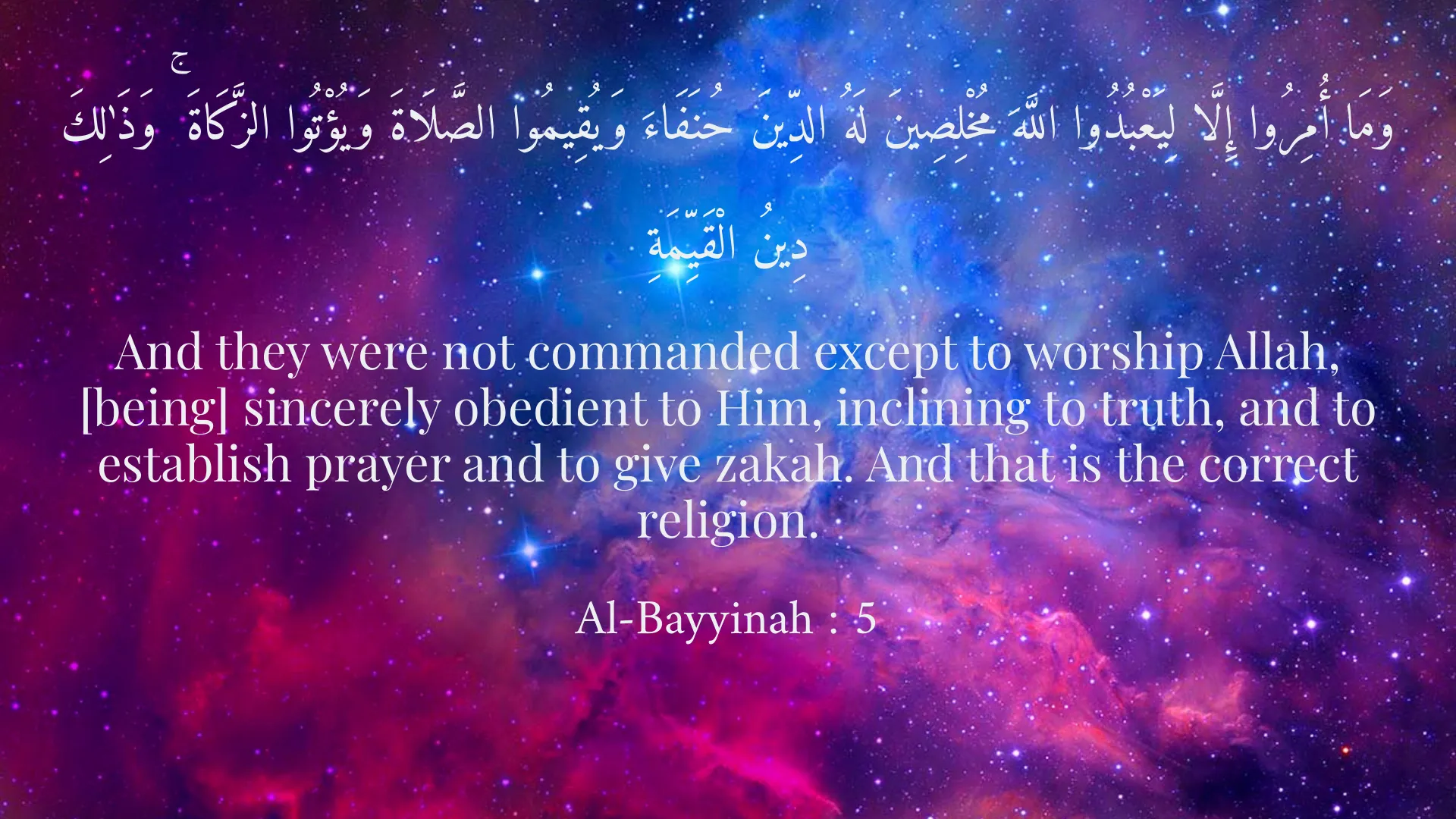
وَمَا أُمِرُوا إِلَّا لِيَعْبُدُوا اللَّهَ مُخْلِصِينَ لَهُ الدِّينَ حُنَفَاءَ وَيُقِيمُوا الصَّلَاةَ وَيُؤْتُوا الزَّكَاةَ ۚ وَذَٰلِكَ دِينُ الْقَيِّمَةِ
And they were not commanded except to worship Allah, [being] sincerely obedient to Him, inclining to truth, and to establish prayer and to give zakah. And that is the correct religion.
Al-Bayyinah : 5
يَا أَيُّهَا الَّذِينَ آمَنُوا لَا تُبْطِلُوا صَدَقَاتِكُم بِالْمَنِّ وَالْأَذَىٰ كَالَّذِي يُنفِقُ مَالَهُ رِئَاءَ النَّاسِ وَلَا يُؤْمِنُ بِاللَّهِ وَالْيَوْمِ الْآخِرِ ۖ فَمَثَلُهُ كَمَثَلِ صَفْوَانٍ عَلَيْهِ تُرَابٌ فَأَصَابَهُ وَابِلٌ فَتَرَكَهُ صَلْدًا ۖ لَّا يَقْدِرُونَ عَلَىٰ شَيْءٍ مِّمَّا كَسَبُوا ۗ وَاللَّهُ لَا يَهْدِي الْقَوْمَ الْكَافِرِينَ
O you who have believed, do not invalidate your charities with reminders or injury like one who spends his wealth [only] to be seen by the people and does not believe in Allah and the Last Day. His example is like that of a [bare] rock upon which is dust and then a heavy rain falls upon it, leaving it smooth. They gain nothing from what they have earned. And Allah does not guide the disbelieving people.
Al-Baqarah : 264
وَلَقَدْ أُوحِيَ إِلَيْكَ وَإِلَى الَّذِينَ مِن قَبْلِكَ لَئِنْ أَشْرَكْتَ لَيَحْبَطَنَّ عَمَلُكَ وَلَتَكُونَنَّ مِنَ الْخَاسِرِينَ
And it was already revealed to you and to those before you that if you should associate [anything] with Allah, your work would surely become worthless, and you would surely be among the losers.
Az-Zumar : 65
مَن كَانَ يُرِيدُ الْحَيَاةَ الدُّنْيَا وَزِينَتَهَا نُوَفِّ إِلَيْهِمْ أَعْمَالَهُمْ فِيهَا وَهُمْ فِيهَا لَا يُبْخَسُونَ
Whoever desires the life of this world and its adornments - We fully repay them for their deeds therein, and they will not be deprived of it.
Hud : 15
Short Story
Once upon a time, in a bustling city, lived two merchants. One, named Salim, whenever he gave charity or helped the needy, would do so openly and with much fanfare, so that his name would spread throughout the city and people would praise him as a benevolent man. The other, named Amin, whenever he performed a good deed, did so in solitude and secrecy, so that no one but himself and God knew about it. One day, Salim, due to his outwardly charitable deeds, received a robe of honor from the king and was lauded by everyone. He was overjoyed with this worldly prestige. But Amin, who was privately engaged in worship and serving the creation, had no reputation among the people. Years passed, and both departed from this world. In the afterlife, when their deeds were weighed, Salim was astonished to see that the scale of his deeds was light and there was little reward for him. A voice proclaimed: "O Salim! We gave you the reward for your good deeds in the world; in the praise of people and the honor from the king. Whatever you desired, you received in that world." But Amin, to his utter surprise, saw a mountain of rewards before him. Another voice declared: "O Amin! You performed your good deeds solely for Our pleasure and sought nothing from Our servants. Thus, your reward is with Us, and We do not waste the reward of goodness." Amin was grateful for this boundless grace from God and understood that deeds performed with sincerity and solely for God's sake are never ineffective, even if they do not manifest outwardly in this world.