Quranic Answer
Your question touches upon one of the deepest and most human inquiries that can occupy the mind of any believer. When we earnestly seek true peace and observe that some individuals, who seemingly pay the least attention to worship and connection with the Creator, appear calmer and more carefree in their daily lives, it's natural to wonder whether the path we have chosen (the path of worship and servitude) truly leads to tranquility. To answer this, we must delve deeper into the concept of peace from the perspective of the Holy Quran and understand the distinction between apparent calm and true inner peace. The Glorious Quran explicitly states that the primary source of peace and tranquility of the heart is the remembrance of Allah. In Surah Ar-Ra'd, verse 28, Allah Almighty says: "الَّذِينَ آمَنُوا وَتَطْمَئِنُّ قُلُوبُهُم بِذِكْرِ اللَّهِ ۗ أَلَا بِذِكْرِ اللَّهِ تَطْمَئِنُّ الْقُلُوبُ" (Those who have believed and whose hearts are assured by the remembrance of Allah. Unquestionably, by the remembrance of Allah hearts are assured.) This verse establishes a fundamental principle: true and profound peace is that which originates from within and is attained through connection with the Source of all existence, Allah. This peace does not waver with the ups and downs of life and possesses a unique steadfastness. However, why do some people appear calm without engaging in worship? Several reasons might explain this phenomenon, which we need to consider. Firstly, the calm we observe in others might only be a superficial calm, not an inner one. People often tend to present themselves as strong and unbothered to others, but inwardly, they might be grappling with numerous anxieties and worries. The outward appearance of people's lives often does not reflect their inner state. Secondly, this apparent calm could stem from 'heedlessness' or 'ghaflah'. When an individual pays no attention to spiritual matters or the consequences of their actions in the Hereafter, they might not feel the heavy burden of moral and religious responsibilities. This lack of concern for the future and divine accountability can grant them a temporary, worldly nonchalance and calm. The Quran, in Surah Taha, verse 124, warns about the consequences of turning away from the remembrance of Allah: "وَمَنْ أَعْرَضَ عَن ذِكْرِي فَإِنَّ لَهُ مَعِيشَةً ضَنكًا وَنَحْشُرُهُ يَوْمَ الْقِيَامَةِ أَعْمَىٰ" (And whoever turns away from My remembrance - indeed, he will have a difficult life, and We will gather him on the Day of Resurrection blind.) This verse indicates that apparent calm resulting from heedlessness will ultimately lead to hardship and distress in life, and punishment in the Hereafter. Thirdly, the apparent calmness of some individuals is sometimes part of a 'divine test'. Allah grants some people, even those who do not believe, comfort and ease in this world to test them or to provide an opportunity for them to return to Him. This temporary ease should not mislead us. Worldly life is a field of examination, and everyone is tested in their own way. Fourthly, individual differences in personality and temperament can also influence their apparent calm. Some people are naturally calmer and less prone to stress, while others have a more sensitive nature. However, it is crucial to understand that these natural dispositions can never replace the deep, lasting peace of heart that originates from connection with Allah. Fifth, the primary purpose of human creation is worship and servitude to Allah. In Surah Adh-Dhariyat, verse 56, Allah says: "وَمَا خَلَقْتُ الْجِنَّ وَالْإِنسَ إِلَّا لِيَعْبُدُونِ" (And I did not create the jinn and mankind except to worship Me.) This verse reminds us that our true happiness and the ultimate purpose of our lives depend on knowing and worshipping our Lord. The peace derived from this path is incomparable to any other worldly peace. This peace encompasses peace of conscience, inner contentment, and hope in divine mercy, which sustains an individual even in the most challenging circumstances. In contrast, the apparent calm of non-worshippers is fragile and dependent on external conditions. Ultimately, the most important point is never to compare your spiritual journey with that of others. Every individual has their own path, their own trials, and their own capacities. What matters is our adherence to the divine path and our effort to seek Allah's pleasure. True peace through worship calms the inner self and fills it with certainty and contentment, even if one faces apparent difficulties and hardships. This peace is a divine gift bestowed upon believing and patient servants, and it transcends the deceptive appearances of this world. Therefore, instead of comparing yourself to others, focus on deepening your connection with the Creator, and know that true peace is found only in His remembrance and worship.
Related Verses
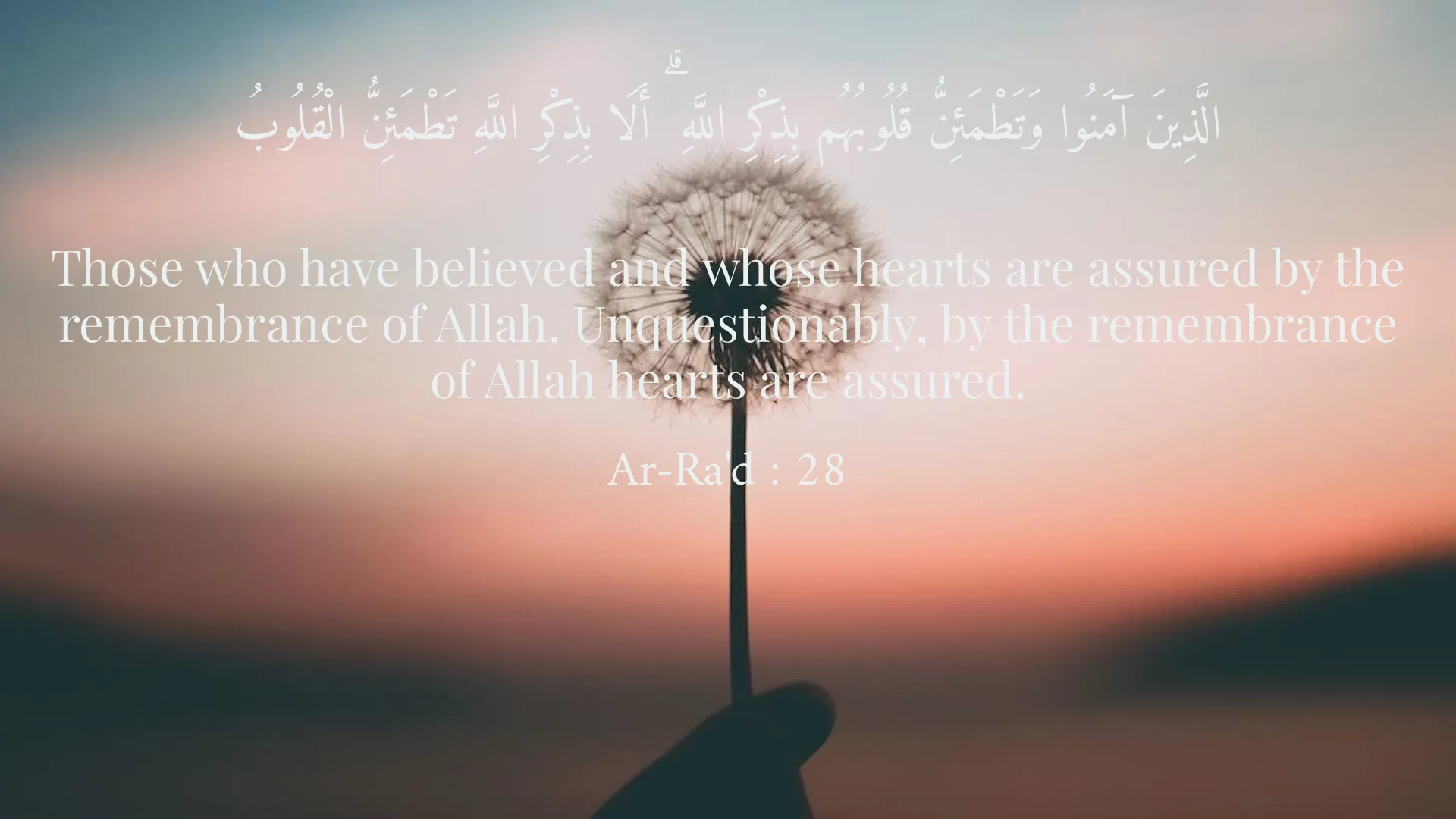
الَّذِينَ آمَنُوا وَتَطْمَئِنُّ قُلُوبُهُم بِذِكْرِ اللَّهِ ۗ أَلَا بِذِكْرِ اللَّهِ تَطْمَئِنُّ الْقُلُوبُ
Those who have believed and whose hearts are assured by the remembrance of Allah. Unquestionably, by the remembrance of Allah hearts are assured.
Ar-Ra'd : 28
وَمَنْ أَعْرَضَ عَن ذِكْرِي فَإِنَّ لَهُ مَعِيشَةً ضَنكًا وَنَحْشُرُهُ يَوْمَ الْقِيَامَةِ أَعْمَىٰ
And whoever turns away from My remembrance - indeed, he will have a difficult life, and We will gather him on the Day of Resurrection blind.
Taha : 124
وَمَا خَلَقْتُ الْجِنَّ وَالْإِنسَ إِلَّا لِيَعْبُدُونِ
And I did not create the jinn and mankind except to worship Me.
Adh-Dhariyat : 56
Short Story
It is narrated that one day, a king with a vast army and great splendor sought to expand his dominion and constantly lived in fear and anxiety. Sleep eluded his eyes at night, and despite all his servants, retinue, and wealth, he could not find a moment of peace. One day, passing by a monastery, he saw a dervish sitting alone in a corner, engaged in the remembrance of God with utmost tranquility, free from any worldly concerns. The king, astonished, asked: "O Dervish, you have neither an army nor a treasury, how is it that you sit so comfortably and calmly, while I, with all this glory and grandeur, cannot sleep peacefully even for a single night?" The dervish replied with a warm smile: "O King, my peace comes from a contented heart that is free from worldly needs, not from the abundance of possessions. Whoever ties their heart to this world is deprived of true peace, and whoever entrusts their heart to God is at ease in every situation. The tranquility of my heart stems from my freedom from the chains of worldly desires, the very chains that drag you along and keep you awake day and night." The king took heed of these words and understood that true peace lies neither in the vastness of a kingdom nor in the abundance of wealth, but in an awakened heart and the remembrance of God.