Quranic Answer
Why do some people become disillusioned with spirituality? This is a profound and crucial question that delves into complex human and psychological roots, and it can certainly be explored through the lens of Quranic teachings. The Holy Quran, as a comprehensive guide for life, not only illuminates the path to salvation but also depicts the obstacles and challenges that individuals may encounter along this journey. Disillusionment with spirituality is not a sudden phenomenon; rather, it is the gradual outcome of a combination of factors that pull an individual away from their innate, divine path, ultimately leading them to experience feelings of emptiness and meaninglessness. This process often begins with a gradual decline in enthusiasm and, if left unaddressed, can lead to complete indifference and even antagonism towards spiritual matters. One of the primary reasons for this disillusionment is "becoming ensnared by the worldly life" and forgetting the Hereafter. The Quran repeatedly warns humanity that this worldly life is merely a deceptive and transient provision, and the ultimate goal should not be solely to accumulate wealth, power, or fleeting pleasures. In Surah Al-Hadid, verse 20, Allah Almighty beautifully states this truth: "Know that the life of this world is only play and amusement, pomp and mutual boasting among you, and rivalry in respect of wealth and children. [It is] like the example of a rainfall whose vegetation has pleased the disbelievers; then it dries and you see it [become] yellow; then it becomes [scattered] debris. And in the Hereafter is severe punishment and forgiveness from Allah and approval. And what is the worldly life except the enjoyment of delusion." This verse clearly indicates that when a person dedicates all their effort and concern to these worldly matters, forgetting that the true and eternal life lies in the Hereafter, they gradually drift away from spirituality and divine values. They seek satisfaction in things that are inherently unstable and ephemeral, and when these things fail to provide genuine peace, feelings of frustration and disillusionment set in. Such individuals become trapped in a vicious cycle; the more they pursue worldly desires, the less satisfied they become, and the further they distance themselves from spirituality, to the point where they might become completely disheartened by any spiritual activity. This attachment to the world is like a chronic disease that slowly erodes the soul, emptying it of divine light. Another reason is the "lack of a correct understanding of the purpose of creation and Divine wisdom in trials and tribulations." This worldly life is a field of testing and examination, and the Holy Quran explicitly states this. In Surah Al-Ankabut, verses 2 and 3, we read: "Do people think that they will be left alone because they say, 'We believe,' and will not be tested? But We have certainly tested those before them, and Allah will surely make evident those who are truthful, and He will surely make evident the liars." These verses demonstrate that trials are an integral part of the path of faith. Some individuals, when confronted with problems, hardships, illnesses, or the loss of loved ones, instead of seeking refuge in God and understanding these as divine tests for growth and elevation, fall into despair and hopelessness. They might assume that if they are spiritual, they shouldn't suffer, or if suffering befalls them, it signifies God's indifference. This incorrect understanding of divine tradition can lead to deep disillusionment with God and religion, as they expected faith to be a form of worldly insurance, rather than a path of growth and elevation accompanied by challenges. This superficial understanding of faith, when confronted with the realities and sufferings of life, quickly crumbles, leaving the individual in a state of confusion and disbelief. "Heedlessness and turning away from the remembrance of Allah" is also a significant factor in spiritual disillusionment. The Quran places great emphasis on Dhikr (remembrance of God), because true peace of heart is only achieved through the remembrance of Allah. In Surah Ta-Ha, verse 124, we read: "And whoever turns away from My remembrance - indeed, he will have a difficult life, and We will gather him on the Day of Resurrection blind." This verse clearly shows that turning away from the remembrance of God, whether in the form of prayer and supplication or in contemplation of divine signs, leads to a constricted and difficult life, even if one is materially wealthy. When a person becomes disconnected from the primary source of peace and meaning, their heart becomes dry and restless. They might outwardly engage in spiritual activities, but if these activities are not accompanied by presence of heart and reflection, they become lifeless and tedious habits. This emptiness and lack of deep connection alienates them from spirituality and makes them feel that this path offers them no benefit. The result is that the individual gradually distances themselves from prayer, supplication, Quran recitation, and anything that brings them closer to God, simply because they have not tasted the sweetness of intimacy with the Divine. This heedlessness is like rust that settles on the mirror of the heart, preventing the reflection of divine light within it. Furthermore, "hypocrisy and lack of sincere intention" in acts of worship can be a major cause of disillusionment. Some individuals might adhere to the outward forms of religion due to social pressure, or to gain status and respect, or even for personal worldly gain. The Holy Quran severely condemns hypocrites. When acts of worship are performed without sincere intention and merely to attract the attention of others, they not only lose spiritual value but gradually exhaust and weary the individual from within. They come to resent themselves and their religion, feeling that they are acting and deceiving themselves and others. This internal conflict depletes their spiritual energy, causing them to eventually flee from any religious activity. This 'display of religiosity' not only offers no benefit to the individual but also wounds their soul and distances them from the truth of spirituality. Finally, "negative experiences" with religious individuals or institutions can also play a significant role. When people witness improper behavior, fanaticism, judgmental attitudes, or hypocrisy from those who claim to be religious, they may mistakenly attribute these individual behaviors to the religion itself and become disillusioned with spirituality. The Quran, in numerous verses, emphasizes good ethics, justice, kindness, and avoidance of extremism and negligence. If a distorted image of religion and spirituality is presented to people, or if those who claim religiosity are not good examples themselves, this can act as a significant barrier on the spiritual path of others. Understanding that the actions of individuals, however religious, cannot be the sole criterion for judging the truth of religion is crucial for maintaining one's spiritual journey. Such experiences sometimes create a deep cynicism that is difficult to overcome, except by directly referring to the primary sources of religion and understanding them deeply. In summary, disillusionment with spirituality stems from a combination of internal and external factors, the most important of which include: excessive attachment to worldly life and forgetting the Hereafter, an incorrect understanding of the philosophy of divine trials and hardships, heedlessness and turning away from the remembrance of God that hardens the heart, lack of sincerity and hypocrisy in acts of worship, and in some cases, negative experiences with religious individuals or environments. The Quranic solution to overcome this disillusionment is to return to one's monotheistic nature, ponder deeply over divine verses and the signs of creation, continuously increase the remembrance of God in all states, persevere patiently through trials with an understanding of their hidden wisdom, purify intentions and perform deeds solely for the pleasure of Allah, and seek the true meaning of life in connection with the Creator. This path requires patience, continuous effort, and a deep understanding of the noble purpose of creation and one's responsibilities towards their Lord, so that one can once again taste the sweetness of intimacy with the Beloved and be freed from emptiness and despair, achieving true peace.
Related Verses
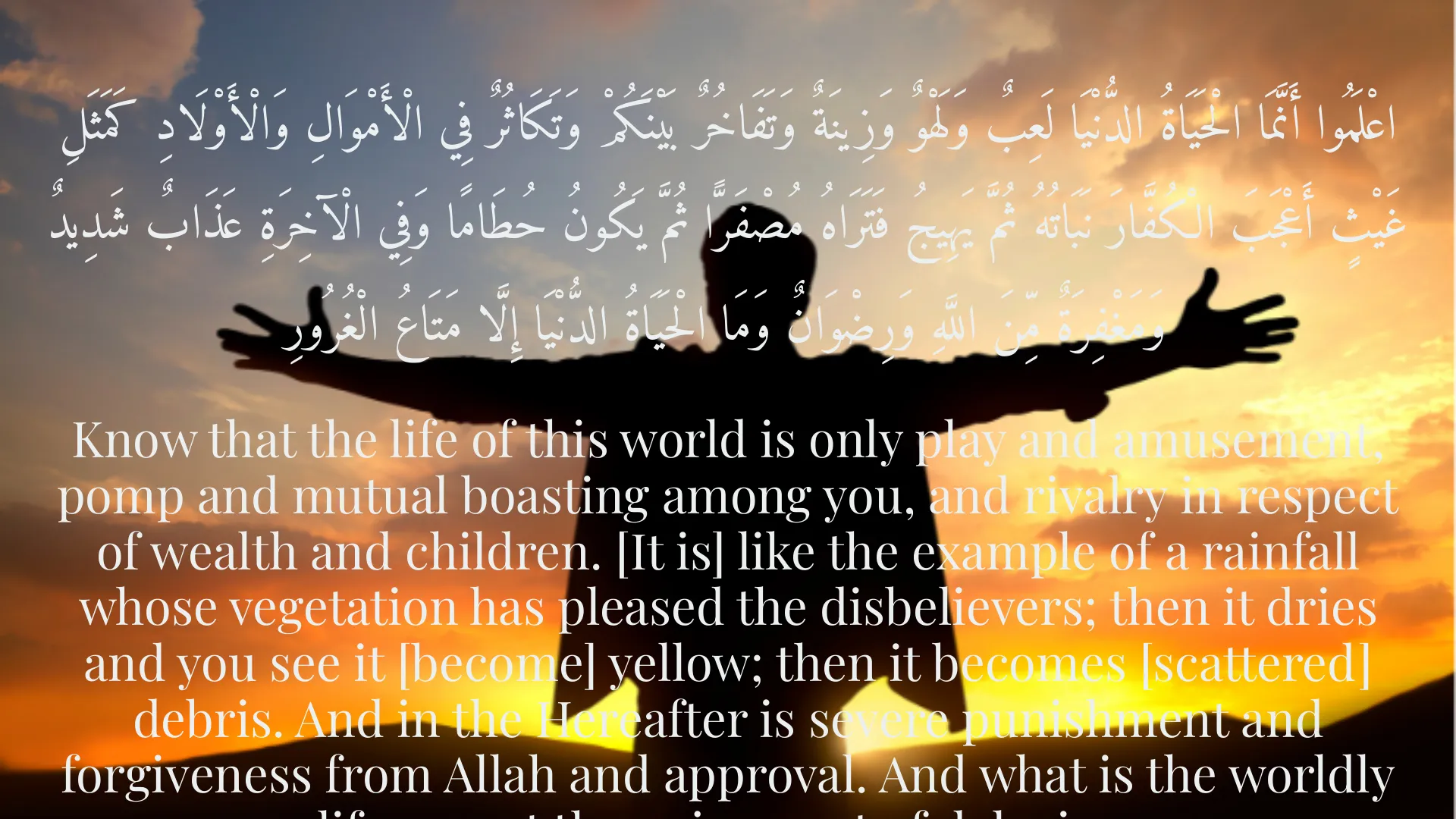
اعْلَمُوا أَنَّمَا الْحَيَاةُ الدُّنْيَا لَعِبٌ وَلَهْوٌ وَزِينَةٌ وَتَفَاخُرٌ بَيْنَكُمْ وَتَكَاثُرٌ فِي الْأَمْوَالِ وَالْأَوْلَادِ كَمَثَلِ غَيْثٍ أَعْجَبَ الْكُفَّارَ نَبَاتُهُ ثُمَّ يَهِيجُ فَتَرَاهُ مُصْفَرًّا ثُمَّ يَكُونُ حُطَامًا وَفِي الْآخِرَةِ عَذَابٌ شَدِيدٌ وَمَغْفِرَةٌ مِّنَ اللَّهِ وَرِضْوَانٌ وَمَا الْحَيَاةُ الدُّنْيَا إِلَّا مَتَاعُ الْغُرُورِ
Know that the life of this world is only play and amusement, pomp and mutual boasting among you, and rivalry in respect of wealth and children. [It is] like the example of a rainfall whose vegetation has pleased the disbelievers; then it dries and you see it [become] yellow; then it becomes [scattered] debris. And in the Hereafter is severe punishment and forgiveness from Allah and approval. And what is the worldly life except the enjoyment of delusion.
Al-Hadid : 20
أَحَسِبَ النَّاسُ أَن يُتْرَكُوا أَن يَقُولُوا آمَنَّا وَهُمْ لَا يُفْتَنُونَ
Do people think that they will be left alone because they say, 'We believe,' and will not be tested?
Al-Ankabut : 2
وَلَقَدْ فَتَنَّا الَّذِينَ مِن قَبْلِهِمْ فَلَيَعْلَمَنَّ اللَّهُ الَّذِينَ صَدَقُوا وَلَيَعْلَمَنَّ الْكَاذِبِينَ
But We have certainly tested those before them, and Allah will surely make evident those who are truthful, and He will surely make evident the liars.
Al-Ankabut : 3
وَمَنْ أَعْرَضَ عَن ذِكْرِي فَإِنَّ لَهُ مَعِيشَةً ضَنكًا وَنَحْشُرُهُ يَوْمَ الْقِيَامَةِ أَعْمَىٰ
And whoever turns away from My remembrance - indeed, he will have a difficult life, and We will gather him on the Day of Resurrection blind.
Ta-Ha : 124
Short Story
It is narrated that in ancient times, there was a merchant named Faridun, who, due to the abundance of blessings and wealth, had become heedless of the remembrance of God. Every day, his trade and prosperity increased, and he spent less time in worship and contemplation of divine signs. When someone called him towards spirituality and the remembrance of God, he would laugh and say, "What is spirituality? Does not wealth and worldly status bring happiness?" One day, by fate, his ships sank in a sea storm, and his entire fortune was lost. Faridun, who until yesterday was proud of his possessions, suddenly found himself poor and alone. Having dedicated his life to worldly pursuits, he was now disheartened and despairing of all spirituality, believing that if there was a God, why had He tested him so severely? In that distressed state, one of the mystics who knew him came to him and said, "O Faridun, you assumed that the world is lasting and that spirituality is only for times of hardship? Know that God tests His servants to reveal the essence of their being. Your disillusionment stems from not understanding divine wisdom, not from a flaw in spirituality itself. Now that worldly attachments have been taken from you, perhaps it is an opportunity for you to find the true gem within yourself." Faridun came to his senses with these words. He understood that his disillusionment was not with the essence of spirituality, but with his incorrect perception of it. From then on, even though he had lost his wealth, by turning to the remembrance of God and contemplating divine wisdom, he found a peace that no worldly wealth had ever given him. This story illustrates that sometimes hardships and losses lift the veil of heedlessness and pave the way for a return to the light of spirituality.